

Why Fast Turnaround Now Decides Reach
Publishing speed used to be a nice-to-have. Today it is closer to a ranking factor in how platforms decide which creators get distribution. A creator who posts three strong videos a week will out-learn, out-test, and out-iterate someone who posts one polished video a fortnight, even if the single video is technically better. The reason is simple: short-form feeds reward volume plus signal. Every upload is a data point about hook style, pacing, subject matter, and thumbnail framing.
The bottleneck for most influencers is not ideas. It is the middle of the pipeline: shooting, reshooting, syncing audio, cutting b-roll, exporting multiple aspect ratios, writing captions. That middle section is exactly where an AI video maker changes the economics of content production. It does not remove craft. It removes the repetitive labour that keeps craft from shipping.
This guide is a practical workflow for creators who want to produce fast without producing generic. It covers pipeline design, prompt structure, continuity control, audio polish, batch production, quality gates, and the metrics that should decide what you make next.
What an AI Video Maker Really Does (and What It Does Not)
It helps to separate the tool from the hype. An AI video maker is a production assistant with three core abilities.
The three core capabilities
Text-to-video and image-to-video generation. You describe a shot or provide a still frame, and the model produces moving footage. Text-to-video is best for establishing shots, abstract transitions, and scene-setting. Image-to-video is best when you already have a look you want to preserve, because the still frame locks composition, wardrobe, and colour before the model touches motion.
Voice and audio generation. Synthetic narration, voice cloning with consent, sound effects, and music beds. This is what makes a generated clip feel finished rather than like a slideshow.
Assembly assistance. Automatic captions, scene detection, rough cuts, aspect-ratio reframing, and beat-matched pacing. These features rarely make headlines, but they save more hours than generation itself.
What it will not do for you
It will not give you a point of view. It will not know that your audience responds to dry humour and distrusts hype. It will not protect you from a flat hook. The creators who get the most from these tools treat them as a fast rendering layer on top of a creative decision that was already made by a human.
The practical consequence: spend your saved hours on the first three seconds and the last three seconds of every video. Everything in between can be accelerated.
Designing a Repeatable Pre-Production System
Speed is a systems problem, not a software problem. If you start every video from a blank page, generation speed will not save you.
Build an idea bank with hooks attached
Keep a running document with three columns: topic, hook line, and payoff. Fill it during the week whenever something catches your attention. Aim for twenty rows at all times. When you sit down to produce, you are choosing, not inventing.
Write hooks as spoken lines, not concepts. "Three things nobody tells you about freelance invoicing" is a concept. "I lost money for two years because of one invoice line" is a hook.
Write the script for the edit, not for the page
Scripts written as prose produce slow videos. Write in beats instead:
- Beat 1 (0-3s): the claim or the tension.
- Beat 2 (3-8s): proof, example, or escalation.
- Beat 3 (8-20s): the demonstration or the story turn.
- Beat 4 (20-30s): the payoff plus a single call to action.
Each beat maps to one generated shot or one A-roll segment. If a beat needs two shots, split it. This structure keeps generated footage subservient to narrative instead of the other way around.
Prompt structure that survives iteration
A useful prompt formula for video generation has five slots:
- Subject — who or what, described precisely.
- Action — one clear verb. Two actions in one clip usually produce mush.
- Environment — location, time of day, weather, background texture.
- Camera — shot size, lens feel, movement (slow push in, handheld drift, locked-off).
- Style and light — film reference, colour palette, lighting direction.
Example: "Close-up of a ceramic coffee cup on a windowsill, steam rising slowly, morning light from the left, shallow depth of field, slow push in, warm neutral palette, documentary style."
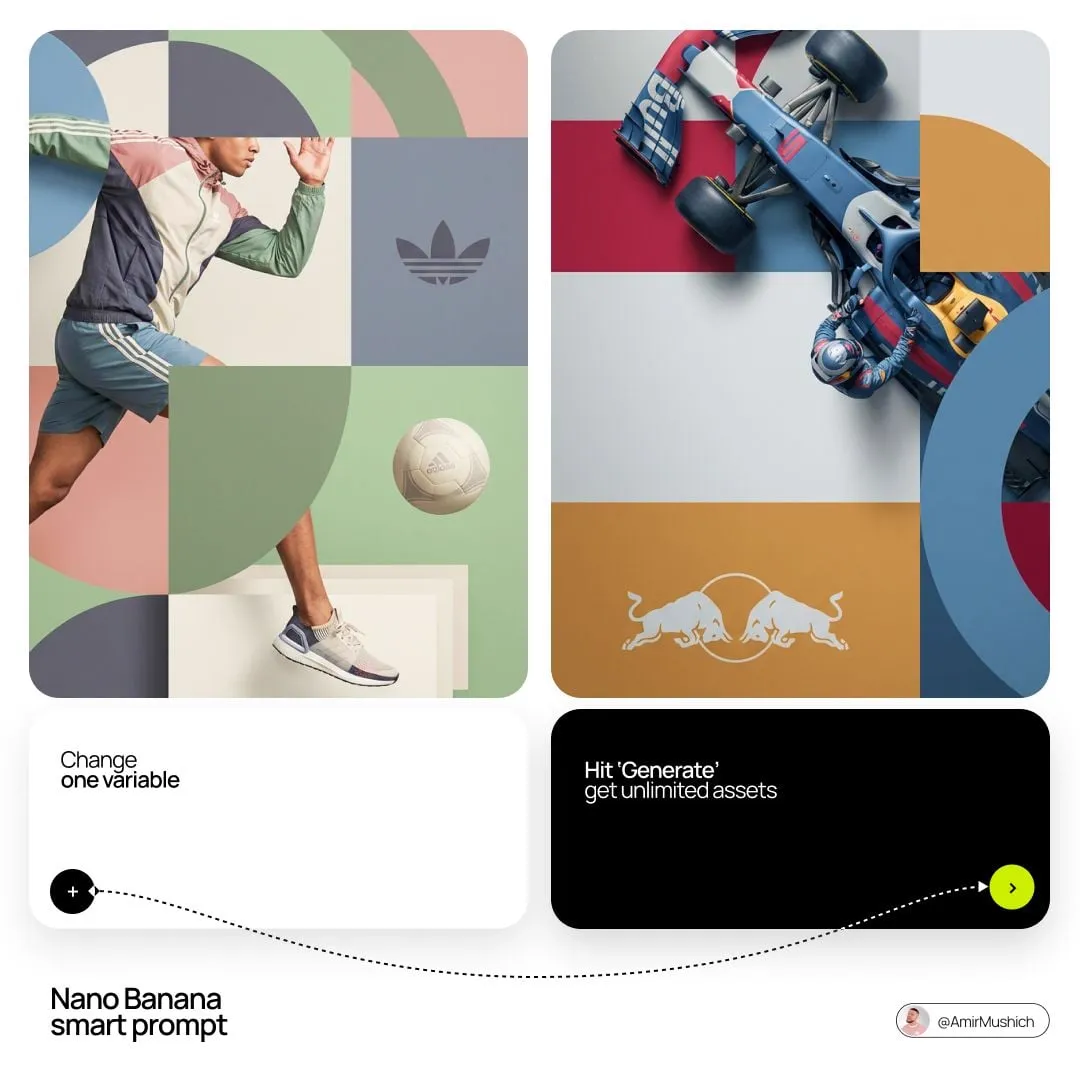
One action per prompt. One camera move per prompt. When a clip fails, change one slot at a time so you learn which variable broke it.
Production: Consistency, Style, and Character Continuity
This is where most AI-assisted channels fall apart. Individual clips look great; the channel looks like a collage of unrelated aesthetics.
Lock a visual bible before you generate anything
Create a one-page reference document containing:
- Two or three colour swatches with hex values.
- A lighting rule (for example, "always soft side light, never overhead").
- A lens rule ("35mm equivalent for talking-head beats, 85mm for product beats").
- A wardrobe and palette rule for recurring characters.
- A list of banned looks (heavy lens flares, neon gradients, over-saturated skies).
Paste the relevant lines of this bible into every prompt. It feels repetitive. It is also the single biggest reason one creator's feed looks intentional and another's looks random.
Use reference images to anchor identity
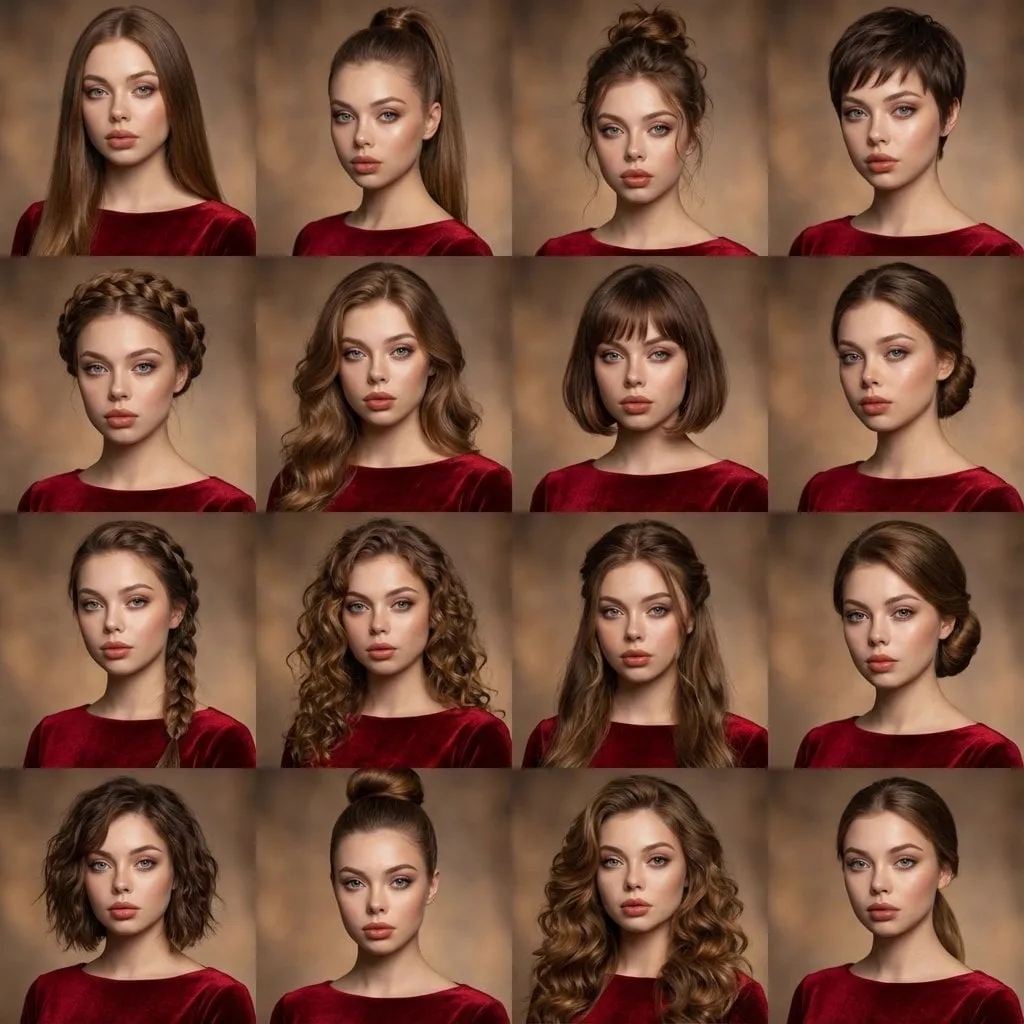
Character consistency improves dramatically when you generate from a reference still rather than from text alone. Keep a folder of approved frames: a front-facing portrait, a three-quarter angle, a full-body shot, and a couple of environment shots. Reuse those frames as the visual anchor for new clips. Multi-image or multi-reference features in modern tools exist precisely for this, allowing you to blend a face reference with a lighting reference and a style reference in one generation.
Match editing rhythm to the audio bed
Generated footage often feels artificial because it is cut on a grid rather than on sound. Before assembling, place your music or narration track and mark the beats. Cut on those marks. A clip that starts half a beat early reads as more natural than a clip that starts perfectly on the downbeat every time.
Polish the audio layer deliberately
A three-step audio chain lifts almost any AI-assisted video:
- Normalise and de-ess narration. Synthetic voices tend to hiss on sibilants.
- Duck music under speech by 8-14 dB rather than turning the bed down globally.
- Add two or three diegetic sounds — a door, a keyboard, ambient room tone — under generated scenes. Silence is what makes AI footage feel uncanny.
Post-Production and Platform-Native Delivery
Delivery is not a formality. It is where a good video becomes a performant one.
Reframe instead of re-cutting
Every vertical-first video should have a 16:9 variant and a 1:1 or 4:5 variant for other placements. Modern editing tools can track the subject and reframe automatically, but always review the result: automatic tracking loves to centre a face at the very edge of frame. Check the first frame, the middle, and the last frame of each reframed clip.
Front-load the hook visually, not just verbally
Assume the viewer sees the video muted for the first second. That means the opening frame must communicate the topic: a before/after split, an on-screen text overlay, a prop that signals the subject. Voice is a bonus at that stage, not the primary carrier.
Captions are a design element
Burned-in captions increase completion on mobile. Style them intentionally: two to four words per line for punchy content, a font with weight, a subtle stroke or background pill for contrast, and placement that avoids the platform's UI overlays. If you publish to several platforms, keep a safe-region template so captions never sit under the interface.
Export settings that do not get punished
- 1080x1920 for vertical, 1080p or higher for horizontal.
- 30 or 60 fps consistently within a single video.
- High bitrate for the master file, so the platform's re-encode starts from a quality source.
- Loudness around -14 LUFS for streaming-style platforms, with true peak under -1 dB.
Scaling Output Without Losing Quality
Scaling means producing more without producing worse. That requires batching and gates, not just faster rendering.
Batch by asset type, not by video
Generating video by video keeps you in context-switching mode. Batching by asset type is faster in practice:
- Session 1: write five scripts and hooks.
- Session 2: generate all b-roll and establishing shots across the five videos.
- Session 3: record or synthesise all narration in one pass for vocal consistency.
- Session 4: assemble, caption, and colour all five in one sitting so the visual grade stays uniform.
- Session 5: export all variants, schedule, and write descriptions.
Use queues and overnight renders
Most generation tools let you queue jobs and process them sequentially. Push long renders and upscales to periods when you are not actively working. A creator who queues twenty clips before bed has a full editing day ready in the morning.
Install quality gates
Before any video leaves your workspace, run a five-point check:
- Does the first frame make sense muted?
- Is the character or subject consistent with the previous video?
- Are there any obvious generation artefacts — extra fingers, drifting text, warping edges?
- Do captions fit inside the safe region on every target platform?
- Does the last frame lead naturally to the next video or to a follow?
Anything that fails goes back one step, not into the feed.
Know your limits before you hit them
Every platform caps generation, storage, or export length somewhere. Check the practical ceiling before you commit to a publishing calendar: how many minutes you can render in a session, how long a single clip can be, whether upscaling counts against the same limit, and how long files persist. Creators get burned not by quality issues but by discovering a ceiling halfway through a scheduled week.
Measuring Performance and Feeding It Back
Speed without feedback is just noise. Track a small number of metrics and attribute them to specific creative decisions.
- Three-second retention: the hook's report card.
- Average watch percentage: pacing and length.
- Saves and shares: whether the video delivered utility or emotion.
- Follows per thousand views: whether the channel promise is legible.
Review weekly, and change one variable at a time. If retention drops when you switch from narration to text-only openers, you have learned something durable. If you change hook style, video length, and music genre in the same week, you have learned nothing.
Keep a simple log: date, hook type, format, length, and the four metrics. After twenty videos, patterns appear that no amount of intuition can replicate.
Common Mistakes That Kill AI-Assisted Channels
Generating before scripting. The result is technically impressive footage with nothing to say.
Treating consistency as optional. Audiences recognise a channel by its look within a fraction of a second. Drifting style resets that recognition every upload.
Over-relying on spectacle. Camera fly-throughs and neon cityscapes are widely available now, which means they are no longer differentiating. Specificity is.
Ignoring disclosure norms. Many platforms require labelling synthetic or manipulated media. Use the built-in disclosure flags and, where relevant, mention it in the description or on screen. It costs nothing and protects trust.
Skipping audio. Most AI-assisted videos that underperform do so because the sound layer was an afterthought.
Publishing the first generation. Almost every clip improves on the second or third attempt with one variable changed. Generate alternatives, then choose.
Letting the tool choose the idea. Tools are excellent executors and poor editors. Your taste is the product.
How to Choose the Right Tool Stack
Rather than chasing a single do-everything app, build a stack with clear roles and evaluate each role against four criteria: output quality, consistency controls, speed at your typical batch size, and export flexibility.
- Drafting and scripting: a writing assistant that can structure beats from a rough idea, plus a plain document as the source of truth.
- Still generation: an image model you can control with references, for characters, thumbnails, and storyboards.
- Motion generation: at least two video models with different strengths — one for realism and faces, one for stylised or abstract motion. Switching between them per shot beats forcing one model to do everything.
- Voice: a narration tool with adjustable pace, plus a consent-based clone of your own voice if you want channel-wide continuity.
- Editing: a standard editor with strong caption, reframing, and audio-ducking features.
Before committing to any paid plan, test one complete video end to end. If a tool cannot carry a whole video from script to export without a workaround, it is a component, not a platform — which is fine, as long as you know it.
A Realistic Weekly Workflow Example
To make this concrete, here is a sustainable cadence for a solo creator publishing five short videos a week.
Monday, 90 minutes. Review last week's metrics. Choose five ideas from the bank. Write hooks and beat sheets. Approve character and style references.
Tuesday, 60 minutes. Generate all stills and b-roll across the five videos in one queue. Reject anything with artefacts; regenerate those clips with one prompt variable changed.
Wednesday, 45 minutes. Record narration in a single session for vocal consistency. Generate any synthetic voice segments and normalise the whole audio set.
Thursday, 120 minutes. Assemble all five videos. Apply the same grade, the same caption template, and the same transition set to every one.
Friday, 45 minutes. Run the five-point quality gate. Export vertical, square, and horizontal variants. Schedule. Write descriptions and disclosure labels.
Total: about six hours for five videos, with rendering happening in the background during other work. That is a pace that survives a busy month, which matters more than a heroic sprint.
Frequently Asked Questions
Can AI-generated video perform as well as filmed video?
For talking-head and personality-led content, filmed footage still wins on trust. For b-roll, explainers, listicles, product context, and abstraction, generated footage performs comparably when pacing and audio are handled well.
How do I keep a consistent look across videos?
Lock a visual bible, reuse approved reference frames, and paste the same style descriptors into every prompt. Consistency is a discipline, not a feature.
What is the biggest time saver?
Batching by asset type and queueing renders. The generation step is fast; context switching is what actually costs hours.
Do I need to disclose synthetic media?
Check the rules of each platform you publish to. Many require a disclosure label for realistic synthetic content. Labelling is low-cost and protects long-term credibility.
Should I clone my own voice?
Only with clear consent and for content you would be comfortable recording yourself. Voice cloning works best as a repair and continuity tool, not as a replacement for your presence.
How many videos should I generate per idea?
Generate two or three variants of any shot you consider important. Comparing options takes a minute; reshooting after publication is impossible.
What kills AI-assisted channels fastest?
Generic aesthetics, absent audio design, and publishing the first generation without review. Fix those three and the rest becomes a matter of reps.
The creators who win with these tools are not the ones with the most models at their disposal. They are the ones who built a repeatable system, protected their visual identity, and shipped consistently enough to learn what their audience actually wants.
