

Why Short-Form Video Has Become the Default Sales Format
Product discovery has migrated almost entirely into vertical feeds. A shopper who once read a bullet list now watches someone open a box, pour a liquid, or wear a jacket while walking. The practical consequence is uncomfortable for teams built around still photography: the clip that sells is rarely the polished brand film. It is a nine-to-sixteen second piece of footage that answers one question, shows one transformation, and ends with a reason to tap.
Three pressures converged to make this the norm. First, attention. Viewers decide whether to keep watching within the first second or two, which means the opening frame carries more persuasive weight than everything after it. Second, distribution. Short video earns organic reach that static assets simply do not, so platforms reward stores that publish frequently. Third, channel economics. Paid social performance is driven less by budget than by creative volume — more hooks, more variations, faster retirement of losers.
That combination turns creative supply into the bottleneck. When e-commerce teams list their real constraints, they usually name the same four: time to a first cut, the number of product variants (colors, sizes, bundles), the cost of reshoots, and consistency across a catalog of hundreds of SKUs. AI video generation attacks all four, but only when it is wrapped in a workflow that protects the truth about the product.
The core idea behind everything below is simple. Generation tools compress the distance between an idea and a reviewable clip. They do not remove the need for shot planning, product accuracy, or post-production judgment. Teams that treat AI as a camera replacement get inconsistent output. Teams that treat it as a fast rough-cut machine, then finish deliberately, get a catalog of usable ads.
What AI Video Changes — and What It Does Not
It is worth separating the genuine gains from the wishful thinking before you build a pipeline.
What changes:
- Generation speed. A single shot that once needed a studio booking can be produced and reviewed in minutes.
- Variant explosion. One shot recipe can be re-applied across forty SKUs with new reference images.
- Localization. Voiceover, on-screen text, and cultural context can be regenerated per market without reshooting.
- Concept validation. You can test a hook before committing to a location, a model, or a photographer.
- Context without scouting. Lifestyle backgrounds, seasonal environments, and abstract textures are all cheap to produce.
What does not change:
- Product accuracy. Packaging copy, label typography, logo proportions, and material finish still have to survive a side-by-side comparison with the physical item.
- Hook strategy. Someone still has to decide what claim the first frame makes and to whom.
- Legal and regulatory work. Claims, disclosures, talent likeness terms, music licensing, and commercial-use rights for generated footage are still your responsibility.
- The last twenty percent. Sound design, pacing, captions, and color continuity decide whether a technically fine clip performs.
One more thing that does not change: model quality varies by shot type. A generator that renders skin and fabric beautifully may mangle the text on a glass bottle. Plan shot by shot rather than asking one tool to do everything.
A Seven-Stage Workflow From Brief to Published Clip
This sequence works for a single hero clip and for a batch of a hundred. The order matters more than the tools you choose.
1. Define the job of the video
One clip, one job. Choose from a short list: hook awareness, product demonstration, objection handling, comparison, social proof, or offer. Write the job at the top of the brief along with the metric you expect it to move — hold rate, click-through, add-to-cart. A clip with two jobs usually fails at both, because the editor cannot decide what to cut.
2. Lock the product truth
Before prompting, build a one-page truth sheet: exact dimensions, materials, color names, label copy, what is in the box, what is not included, and any claim that cannot legally be made. Attach two or three hero stills shot in even light. Every generated frame that features the product gets checked against this sheet. Teams that skip this step produce beautiful clips of a product that does not exist.
3. Build the shot list in beats, not seconds
Think in narrative beats rather than a timeline:
- Hook (0–1.5s): the single most arresting image you can produce.
- Setup (1.5–4s): context — the problem, the environment, the before state.
- Demonstration (4–9s): the product doing the thing it is bought for.
- Proof (9–12s): texture, close-up, scale, or social evidence.
- Close (12–15s): offer, price framing, or a soft call to action.
Each beat becomes one generation task with its own prompt and its own acceptance criteria.
4. Write prompts like shot directions
A prompt that behaves reliably reads like a director's note, not a wish. Use a consistent structure: subject, action, camera position, lens feel, lighting, environment, motion, mood, aspect ratio, and negative constraints. For example: "matte ceramic mug on a light oak counter, steam rising, slow push-in from a low three-quarter angle, soft window light from the left, shallow depth of field, muted warm palette, 9:16, no text, no hands."
Keep a prompt library per product category. When one prompt produces a good beat, save it with the reference images and the model settings that produced it. This is how a team gets faster instead of merely busier.
5. Generate, then select ruthlessly
Produce four to eight variations per beat. Reject on first defect: warped label text, morphing geometry, impossible reflections, extra fingers, drifting shadows, or a background that contradicts the product's category. Keep a "near miss" folder — clips that failed one criterion often work for a different beat or a different SKU.
6. Assemble for the platform, not for the timeline
Vertical feeds are watched muted, on small screens, at speed. Burn in captions, respect safe zones, make the first frame readable without audio, and design the ending so the clip loops cleanly. Cut hard between beats; generated footage rarely benefits from long dissolves.
7. Ship, measure, iterate
Tag every variant by the beat it belongs to and the hypothesis it tests. When a clip underperforms, the tag tells you whether the hook, the demonstration, or the close failed. Without that tagging, all you learn is that something did not work.
Keeping Visual Consistency Across a Campaign
Visual inconsistency is the most common reason AI-assisted catalogs feel cheap. Fix it with constraints rather than with luck.
- Reference images. Feed the same product stills and the same character references into every generation, rather than describing them again in words.
- Style bible. Keep six to ten approved frames that define palette, contrast, lighting direction, and lens feel. Compare new output against them before approving.
- Lighting direction lock. Decide once whether light comes from the left, from above, or from behind, and hold it across the campaign.
- Grade once, apply everywhere. Build a single look — a LUT or a saved adjustment stack — and apply it to every clip rather than grading each one by eye.
- Aspect ratio discipline. One master ratio per channel family, with a defined crop strategy for the others.
- Prop and wardrobe lists. If a hand, a model, or a room recurs, define it in writing so it can be recreated.
Multi-image reference workflows, where several images are supplied at once to control product, person, and environment simultaneously, are the most reliable way to hold a look. They are also the fastest way to spot when a generator is quietly inventing detail.
Choosing the Right Kind of Model for Each Shot Type
Not every shot should go through the same generator. Use these categories as a decision framework.
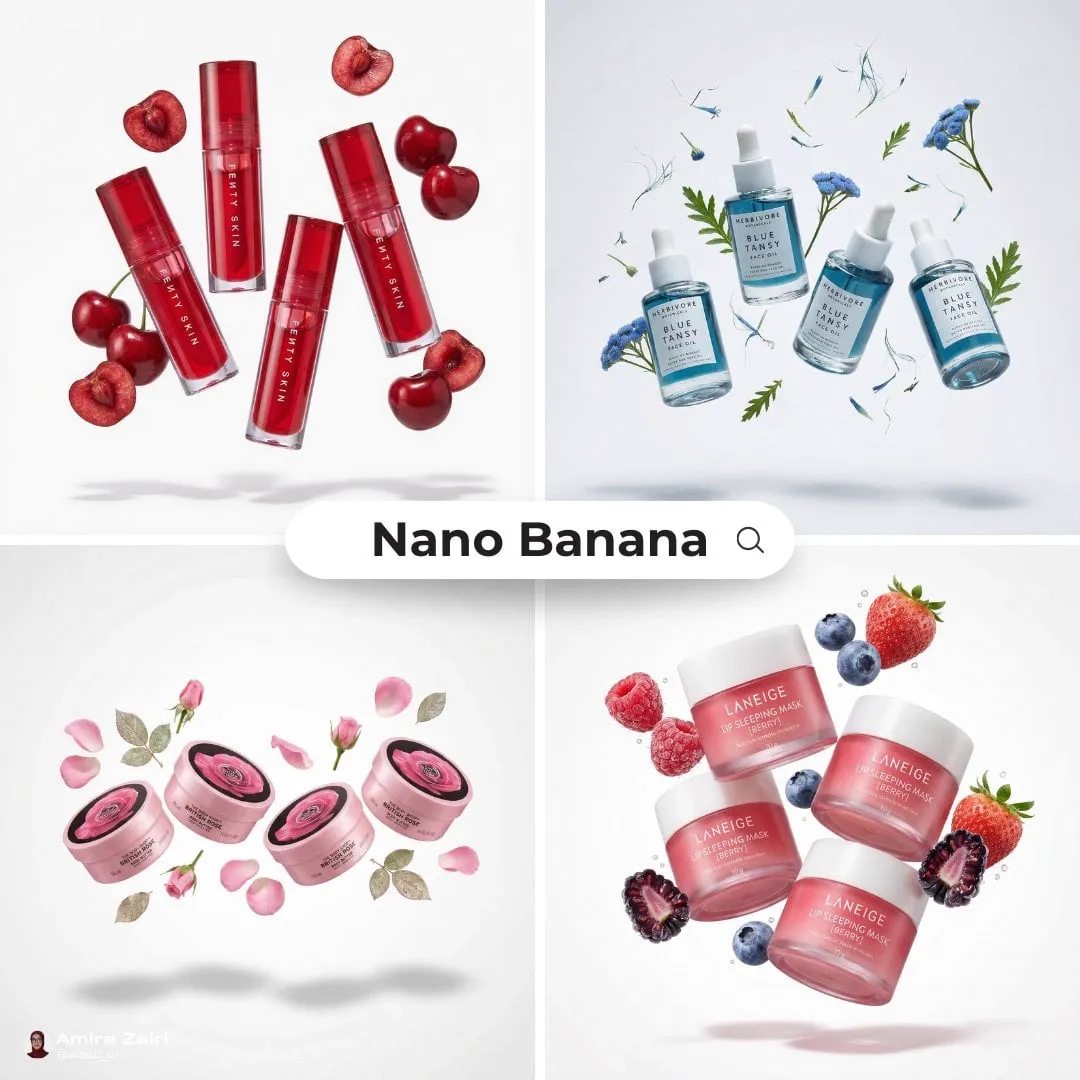
- Photoreal product hero. Prioritise text fidelity, sharp edges, and stable reflections. Often better served by image generation plus a subtle camera move than by full video synthesis.
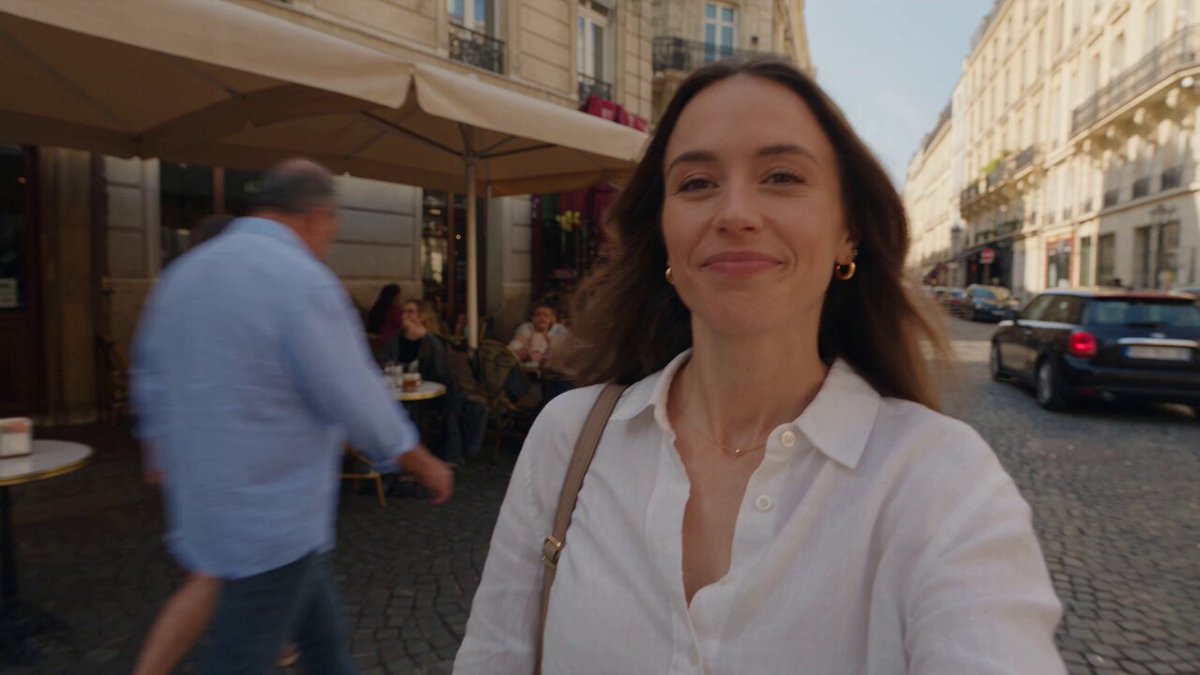
- Person-centric lifestyle. Prioritise skin, hair, hands, and natural motion. Test with a close-up of hands first; hands are the fastest quality signal.
- Motion-heavy shots. Pouring, splashing, fabric in wind, powder falling. Prioritise temporal coherence and physical plausibility.
- Abstract and background plates. Prioritise cheap iteration; these shots rarely need the most expensive model.
- Talking-head and dialogue. Use dedicated lip-sync or avatar tools rather than general video models.
- Voice and narration. Handle audio separately with a text-to-speech tool, and confirm commercial usage rights for any cloned voice.
Decision criteria to weigh for each: suitability for the shot type, resolution and clip length, control features such as image-to-video and keyframe guidance, iteration speed, and commercial licensing terms. Most teams stabilise on two defaults — one photoreal model for product truth, one more expressive model for motion and mood — and reach for specialists only when a shot demands it.
Platform-by-Platform Delivery Notes
- TikTok, Reels, Shorts. Vertical 9:16, hook in the first frame, captions burned in, eight to twenty seconds for cold audiences, sound-on design but readable when muted.
- Marketplace listing video. Square or 4:5, fifteen to thirty seconds, sound-off by default, emphasise scale, use, and what is in the box.
- Website product page. Square, autoplay muted on loop, product visible within the first two seconds, no hard sell.
- Email and SMS. Six to ten seconds, small file size, heavy text overlay, one idea only.
- Paid social. Three to five hook variants sharing one body, retired quickly on weak hold rates.
- Retail media and display. Follow the placement spec exactly; a beautiful clip cropped badly performs worse than a plain one.
Quality Control Checklist Before Anything Goes Live
Run this list on every clip, every time. It takes ninety seconds and prevents most embarrassments.
- Product text is legible and spelled correctly.
- Logo shape and proportions match the brand guide.
- Color matches the physical sample under neutral light.
- No anatomical errors — fingers, limbs, teeth, eyes.
- Reflections and shadows behave plausibly.
- Background is consistent with the product category and season.
- Every claim on screen is substantiated and permitted.
- Captions match the audio and are free of typos.
- Audio levels are normalised and music is licensed.
- Safe zones are respected on the target placement.
- Aspect ratio, codec, and file size meet the spec.
- Commercial usage rights are documented for every asset.
Common Mistakes That Waste Time and Budget
- Chasing one perfect generation. Batch eight variations and pick; do not regenerate a single clip forty times.
- Prompting cinematography instead of physics. Describe what the material does — how syrup drips, how linen folds — not just "cinematic."
- Letting the model invent product details. Anything the generator adds that is not in the truth sheet gets cut.
- Producing sound-dependent clips for muted feeds. Captions are not optional.
- Grading each clip separately. It destroys catalog coherence.
- Ignoring the first half-second. The strongest frame belongs at the start, not after an intro.
- No naming convention. Untagged files become an unusable library within a month.
- Testing everything at once. Change one variable per test or the result is unreadable.
Measuring What Matters
Judge clips on the behaviour you actually want. Three-second hold rate tells you whether the hook works. Average watch time and completion rate tell you whether the middle earns its length. Click-through and add-to-cart rate tell you whether the close works. Return rate and review sentiment tell you whether the clip promised something the product did not deliver — the most expensive failure mode in e-commerce video.
Attribution across platforms is imperfect, so combine platform-reported numbers with blended store metrics and treat the pattern, not the decimal, as the signal. Run experiments at the beat level: same hook, two demonstrations; same demonstration, two closes. Small, controlled changes compound faster than full redesigns.
FAQ: Practical Questions From E-commerce Teams
Do we still need a videographer? For hero brand films, yes. For catalog-scale performance creative, a photographer, an editor, and an AI-literate producer will usually outperform a traditional crew on cost per usable asset.
How long does one clip take? A single beat takes minutes to generate and roughly an hour of human judgment across prompts, selection, and cleanup. A finished fifteen-second clip with captions and sound typically takes half a day for a first version and much less once your prompt library exists.
Will AI video make our brand look generic? Only if you accept default output. Brand specificity comes from constraints: fixed palettes, fixed lighting, real product stills, and a consistent grade.
Can we use it for regulated categories? Yes, with care. Never let a generator produce claim text. Add claims in the editor, keep them substantiated, and check platform policies for the category.
How many clips should we publish? Most stores see better results from a steady three to five assets a week than from a monthly burst, because the platforms reward consistency and you learn faster.
What about audio? Treat it as a separate production line. One licensed track bed, one voice style, consistent loudness. Recognisable audio does more for brand recall than most visual tweaks.
Can we reuse one clip everywhere? Reuse the master, then re-crop and re-caption per placement. A vertical hook rarely works uncropped in a square placement.
Where should a new team start? Pick ten best-selling products, write one truth sheet and one beat-based shot list, produce three variations of a single fifteen-second clip, and measure hold rate before scaling anything. The workflow you build in that first week is the asset; the individual clips are disposable. Once prompts, references, and quality checks are documented, adding a hundred SKUs becomes an operations problem rather than a creative one — and that is exactly the position an e-commerce team wants to be in when a product launch arrives with two days' notice.
