
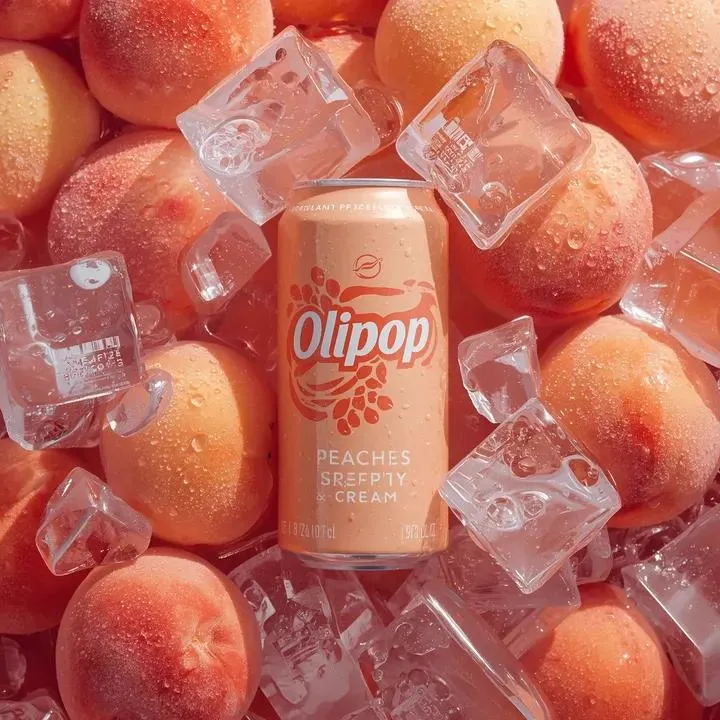



Why Video Strategy Now Runs on Iteration Speed
Generative video models have collapsed the cost of a usable shot. A sequence that once required a crew, a location, a lighting kit, and a two-week edit calendar can now be drafted in an afternoon by one person with a clear brief. That sounds like a production story, but it is really a decision-making story. When output is cheap, the scarce resource is judgement: knowing which version to publish, when to retire it, and what the data is actually telling you.
That shift explains why so many marketing teams feel busier than ever while seeing flatter results. They produce more, but they do not have a system for deciding. The workflow below is designed to fix that. It treats AI video generation as one station on an assembly line, not the whole factory. Around it sits a brief, a reference library, a testing structure, a measurement plan, and a retirement schedule.
Three practical changes drive most of the gain:
- Shorter shot cycles. Generate in 3-6 second beats instead of long continuous takes. Short beats are easier to regenerate, easier to reorder, and easier to test.
- Parallel packaging. One master video becomes 15-25 assets through hook variants, aspect ratios, caption styles, and sound-on/sound-off versions.
- Explicit shelf-life tiers. Every asset gets an expected lifespan before it is published, which determines how long you promote it, when you refresh it, and when you archive it.
If you adopt only one idea from this guide, adopt the third. Shelf life is the quiet multiplier behind every other decision.
What Shelf Life Means for AI-Assisted Video
Shelf life is the window in which a video keeps earning attention, trust, or conversions after it goes live. A decade ago, that window was mostly shaped by search behaviour and evergreen usefulness. Today it is shaped by feed velocity, trend cycles, and how quickly your own category moves.
AI generation compresses shelf life in one direction and extends it in another. It compresses because anyone can produce a polished-looking clip, so visual novelty fades faster than ever. It extends because you can cheaply refresh an old asset — swap the opening, update the on-screen text, regenerate a product shot — instead of rebuilding from zero.
Three shelf-life tiers worth tracking
Ephemeral (hours to a few days). Trend-reactive clips, meme-adjacent edits, reactive commentary, event coverage. These exist to catch a wave. Success is measured in reach and follower growth, not conversions. Budget them low, ship them fast, and do not mourn them.
Campaign sprint (one to eight weeks). Product launches, seasonal pushes, promos, feature announcements. These need a coherent visual identity across platforms and a clear conversion path. Most teams under-invest in the packaging here: they make one hero film and stop, when the same effort could yield twenty variants.
Durable asset (three months to two years). Explainers, onboarding sequences, category education, comparison videos, testimonial compilations. These should be built with modular elements so a single update does not require a full reshoot. A durable asset is a small platform, not a single video.
Estimating shelf life before you publish
Score each new asset from 1 to 5 on these five questions:
- Does it reference a current event, trend sound, or viral format? Higher dependence means shorter life.
- Would a competitor announcement make this feel outdated? If yes, plan a refresh date.
- Is the visual style tied to a trend aesthetic — a specific transition, filter, or synthetic look? Trend aesthetics age fast.
- How likely is the product, price, or interface to change within six months? If likely, keep the demo modular.
- Does the message work without sound and without context? Assets that do tend to last longer and travel further.
A total of 5-9 suggests a durable asset. 10-16 suggests a campaign sprint. 17-25 means you are making ephemeral content, and you should treat it as disposable by design.
Designing a Repeatable AI Video Workflow
A workflow that survives contact with a real calendar has four stages. Skipping any of them pushes the cost downstream, where it becomes expensive.
Stage 1: Brief and reference bank
Write a one-page brief before opening any generator. It should state the audience, the single promise, the hook line, the proof point, the call to action, the required aspect ratios, and the shelf-life tier. One page. If it takes three, the idea is not sharp enough yet.
Then maintain a reference bank: 15-30 short clips tagged by camera movement, lighting quality, pacing, palette, and framing. This is your style DNA. When a new campaign starts, you pull from the bank instead of searching the internet for inspiration. Over time the bank becomes the fastest way to align a freelancer, an agency, or a new hire with your visual language.
Stage 2: Generation and shot design
Convert the script into a shot list organised by beats, each 3-6 seconds. For every beat, write the shot as a sentence with subject, action, camera, and light. Then generate three to five takes per shot and select on motion integrity rather than beauty. A gorgeous frame with drifting geometry will ruin the edit.
Common failure modes and their fixes:
- Warping hands or objects. Switch to image-to-video with a clean first frame, or reframe so the object is partially out of shot.
- Inconsistent characters across shots. Lock a character reference image and reuse it, or shoot the character in a single continuous angle set and cut around it.
- Garbled on-screen text. Never rely on a model for legible text. Generate clean plates and add type in the edit.
- Camera drift. Specify a static or locked-off camera in the prompt; drifting cameras are hard to match across cuts.
Stage 3: Assembly, sound, and polish
Build a beat map from your music or voice track first, then cut shots to it. In practice, editing to audio produces better pacing than editing to a script and hoping the music fits.
Sound does more for perceived quality than resolution. Layer music, ambience, and foley. Normalise loudness so a viewer scrolling through a feed does not have to adjust volume. Then produce two versions: sound-on with a full mix, and sound-off with burned-in captions that carry the story alone.
Finally, unify the synthetic look. A light grain overlay, a single grade or LUT, consistent black levels, and a touch of chromatic aberration will make generated and practical footage sit together in the same world.
Stage 4: Variant packaging
For each master, produce:
- 3-5 hook variants covering the first three seconds
- 2 aspect ratios, typically 9:16 and 1:1 or 16:9
- 2 caption treatments, one minimal and one bold
- 1 sound-on and 1 sound-off cut
That is a minimum of 12 assets from one production pass. This is where AI video pays for itself: not in the first render, but in the variation economy it unlocks.
Reading Retention Curves Like a Storyteller
Retention graphs are the closest thing video has to a reader's face. Benchmarks vary wildly by platform, audience, and format, so treat any universal number with suspicion. What is stable is the shape of the curve.
Four shapes you will see most often
The cliff. A steep drop in the first two seconds. This is almost never an editing problem. It is a hook problem: the thumbnail, title, or opening frame promised something the first seconds did not deliver.
The staircase. Steady step-downs at each transition. Viewers are leaving at cuts. Tighten transitions, remove redundant beats, or reorder so the second-strongest moment arrives earlier.
The spike. A segment that retains above 100%, meaning rewatches. This is your best material. Clip it, make it the new hook, and build a follow-up around it.
The plate. A flat but low line throughout. Nobody hates it, nobody loves it. Usually this indicates a mismatch between the packaging and the content, or a message so generic that it creates no tension.
Attribution across platforms
Cross-platform attribution is messy because each platform defines a view differently and reports on its own schedule. Standardise what you can:
- Use consistent UTM parameters for every destination link.
- Fire server-side events where possible so ad blockers and cookie restrictions do not erase the signal.
- Track a blended metric such as site sessions per 1,000 video views rather than comparing raw view counts between platforms.
- Keep a single source of truth in a dashboard, and accept that platform-native numbers are directional.
Measuring Emotional Response Without Overengineering
Emotional response is easier to observe than to instrument. You do not need facial coding or sentiment AI to get 80% of the insight.
- Comment sampling. Pull 200 recent comments and label them positive, neutral, or negative, plus an intent tag: question, praise, joke, complaint, or purchase intent. The intent mix tells you more than the sentiment split.
- Shares per 1,000 views. Shares are the strongest available proxy for an emotional peak. Segment your library by this metric and study what the top decile has in common.
- Rewatch concentration. Segment-level rewatch data shows exactly where attention peaks. Most analytics suites let you export per-segment retention; do it monthly and log the top three moments.
- Saves and sends. Saves indicate utility, sends indicate social currency. A video with high saves and low shares is a reference asset. A video with high sends is a hook you should imitate.
Run one lightweight survey per quarter if you have the audience for it. A single question in a story poll — what did you take away from this? — produces more actionable language than most dashboards.
Choosing Tools: A Decision Framework
Tool choice matters less than workflow, but the wrong pick creates real friction. Evaluate against the job, not the demo reel.
| Job to be done | What actually matters | Watch-outs |
|---|---|---|
| Text or image to video | Motion coherence, duration limits, resolution | Inconsistent characters, watermarks on lower tiers |
| Character consistency | Reference-locking, multi-shot continuity | Prompt sensitivity, identity drift over long sequences |
| Voice and dubbing | Natural prosody, language coverage, timing control | Mouth-sync quality, tonal flatness on emotion |
| Editing and captions | Speed, template reuse, collaboration | Export codecs, caption styling limits |
| Grading and finishing | Node-based control, grain and texture tools | Learning curve, hardware requirements |
| Localisation | Subtitle accuracy, cultural adaptation | Literal translation, on-screen text overflow |
| Analytics and dashboards | Cross-platform connectors, segment retention | Attribution gaps, sampling limits on free tiers |
Decision criteria that save time later:
- Commercial rights. Read the terms for generated output and confirm you can use it in paid media.
- Consistency features. If a tool cannot lock a character or style reference, it is a B-roll tool, not a storytelling tool.
- Export control. Aspect ratios, codecs, and frame rates should match your distribution list without workarounds.
- Cost shape. Seat-based pricing suits steady teams; usage-based pricing suits spiky campaigns. Model both against your realistic monthly volume.
- Data policy. Know where your prompts, references, and footage are stored, and whether they are used for training.
- API availability. If you plan to produce at volume, automation will eventually matter more than the interface.
A sensible stack is one primary generation model, one secondary model for shots the primary struggles with, one editor, one caption tool, one voice tool, one dashboard. Resist adding a seventh tool until you have exhausted the first six.
Personalisation at Volume Without Losing the Brand
The usual failure of personalisation is that every variant looks slightly different and the brand disappears. Solve it with a two-layer template.
The locked layer contains typography, colour system, logo animation, transition grammar, caption style, and tone of voice. It never changes between variants.
The variable layer contains the hook, the product or feature shown, the offer, the locale, and the proof point. This is where you personalise.
Segment by job to be done rather than demographics. A viewer deciding whether to switch tools and a viewer deciding whether to upgrade have different objections, and short-form video has room for one objection at a time.
For localisation, dubbing alone is rarely enough. Idioms, humour, on-screen text length, and even scene pacing vary by market. Keep a per-market glossary of preferred terms and a list of culturally risky visuals, and review the first cut of every localised asset before it scales.
Guardrails worth writing down once and reusing forever: a three-sentence tone brief, a banned claims list, a substantiation file for every performance claim, and an accessibility standard covering caption size and contrast.
Common Mistakes and How to Avoid Them
Producing volume without a measurement plan. More variants without a hypothesis just multiplies noise. Write the hypothesis first: if we lead with the price, hold rate at three seconds will rise among returning visitors.
Confusing polish with performance. Hyper-real generated footage can look expensive and convert poorly because it feels impersonal. Test a slightly rougher, more human cut against the glossy one.
Letting the model write the story. Generation is the last step of the creative process, not the first. Hook, promise, and proof come from strategy.
No naming convention. Six weeks later, nobody knows which file is the winner. Standardise a naming pattern with campaign, tier, hook ID, ratio, and version.
Ignoring sound. A poor mix destroys retention on sound-on viewing; missing captions destroy it on sound-off. Both versions should be deliverables, not afterthoughts.
Optimising the platform metric instead of the business metric. Views are a means. Decide in advance whether success is qualified sessions, demo requests, add-to-carts, or retention in a product.
Never retiring anything. Assets with a short shelf life should be reviewed on a schedule. Keep a simple calendar: ephemeral assets reviewed after a week, sprints after the campaign, durable assets quarterly.
A Practical 30-Day Rollout
Days 1-7: Audit and baseline. Inventory every video asset you have produced in the last two quarters. Tag each by shelf-life tier and current performance. Identify your three best-performing hooks and your three worst. Set one primary metric and one secondary metric for the next month.
Days 8-14: Build the foundation. Create the reference bank with at least twenty tagged clips. Write the one-page brief template. Build the locked brand layer as an editable project file with title cards, caption styles, and transitions ready to drop in.
Days 15-21: Run one structured test. Take a single proven topic and produce one master with three hook variants and two caption styles. Publish on your primary channel with a clear rotation schedule. Do not touch anything else.
Days 22-30: Read, decide, standardise. Compare hold rate at three and ten seconds, shares per 1,000 views, and destination sessions. Write down what you learned in two sentences. Update the brief template so the lesson is baked into the next campaign. Then — and only then — increase volume.
Teams that complete this loop three times usually find that output doubles without any increase in headcount, because the second and third campaigns inherit the templates, the reference bank, and the decision rules from the first.
FAQ
How long should an AI-assisted marketing video be?
It depends on the tier. Ephemeral social clips work best at 7-20 seconds. Campaign sprints usually land between 15 and 45 seconds. Durable explainers can run 90-180 seconds if the structure is tight and the value is clear in the first five seconds.
Will AI video tools replace editors?
Not in any workflow that performs well. They replace the expensive, slow parts of acquisition — location work, stock licensing, simple product shots — and increase demand for editors who can structure a story, cut to music, and diagnose a retention curve.
How many variants do I need to test?
Start with three hooks and two caption treatments against one master. That is six assets, which is enough to detect a meaningful difference in hold rate without drowning your sample in noise. Scale after you find a reliable pattern.
How do I know a video's shelf life has ended?
Impressions decline with stable or improving click-through rate — that usually means saturation, not a bad video. If both impressions and click-through rate fall together, the creative itself has aged out and needs a refresh.
Can AI-generated footage be used commercially?
Often yes, but terms differ substantially between models and tiers. Confirm the commercial rights for generated output, avoid generating recognisable people or protected characters, and keep a record of which model produced which asset.
Which metrics actually matter for short-form video?
Hold rate at three seconds, hold rate at ten seconds, shares per 1,000 views, saves, and assisted conversions. Reach is a distribution metric, not a quality metric — useful context, poor target.
Should I use one generation model or several?
Route by shot need. One primary model for most shots, one secondary for the specific things the primary struggles with, such as consistent characters or fast action. Adding more models without a routing rule just adds inconsistency and cost.
How do I keep a consistent brand look across generated footage?
Lock the grade, grain, type system, and transition grammar in a reusable project template, and use reference images for style across every generation. The locked layer should be identical across campaigns; only the content inside it changes.
