

Why Text-to-Video Prompts Fail More Often Than People Expect
Most disappointing AI video output is not caused by a weak model. It comes from a prompt that forces the model to make dozens of unstated decisions at once: how fast the camera moves, whether the subject is alone, what time of day it is, how the light falls, whether the shot ends on a hold or a cut. A generative system will happily answer all of those questions for you. It just rarely answers them the way you pictured.
The useful reframe is this: prompting is shot specification, not creative writing. A good prompt reads less like a poem and more like a shot card an assistant director would hand to a camera crew. When you accept that, the workflow changes. You stop typing paragraphs and hoping, and you start building a repeatable pipeline: shot list first, prompt template second, tool selection third, quality control last.
This guide walks through that pipeline end to end. It is written for anyone producing short videos with generative models — social clips, product spots, explainer sequences, mood pieces — and it focuses on decisions that survive whatever model is trending this month. Models change fast. The structure of a reliable shot does not.
The Anatomy of a Reliable Video Prompt
A prompt that produces usable footage usually contains five kinds of information in a predictable order. When one is missing, the model improvises. When all five are present, you get something you can actually cut into a timeline.
Subject, action, and camera
Lead with who or what is on screen, what they are doing, and how the camera behaves. This triple removes the largest sources of randomness.
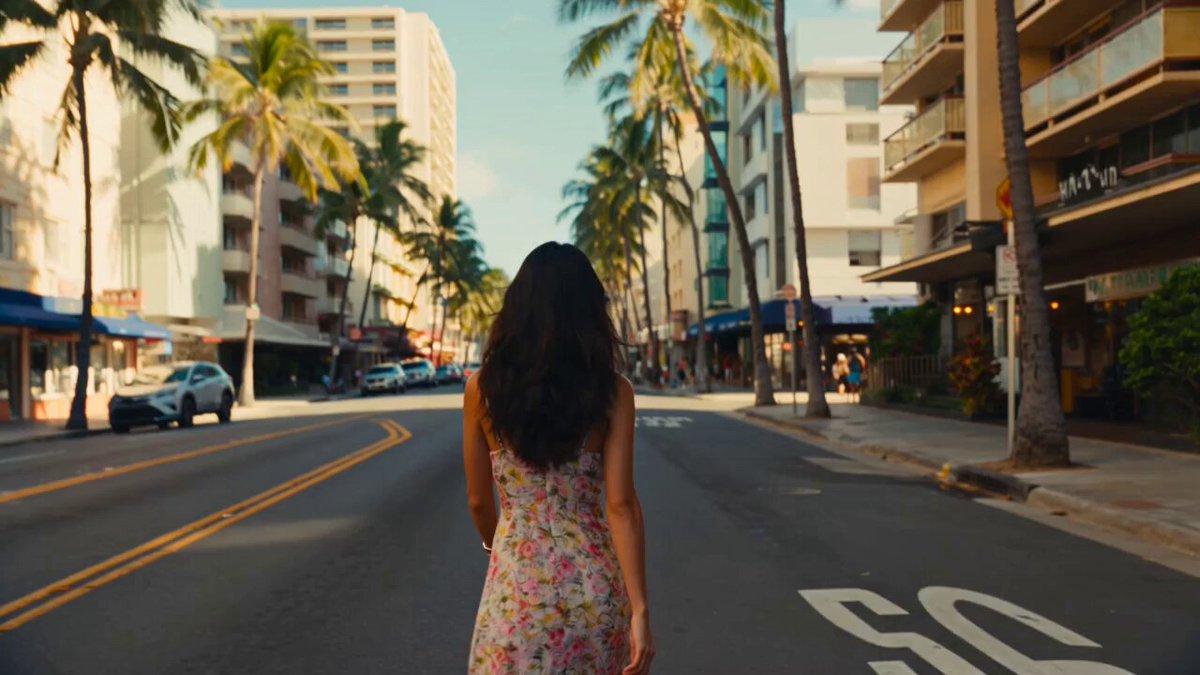
Medium close-up of a woman in a charcoal raincoat walking toward the camera on a wet cobblestone street; camera tracks backward at a steady walking pace, slight handheld sway.
Notice that the action contains a direction and a speed. "Walking" alone is ambiguous; "walking toward the camera at a steady pace" gives the model a motion target it can hit.
Environment, lighting, and lens
The second block anchors the look. Environment sets the world, lighting sets the mood, lens and grade set the texture.
Overcast late-afternoon light, soft shadows, shallow depth of field, 35mm lens look, muted teal-and-amber grade, fine film grain.
Use physical language rather than adjectives about feelings. "Melancholic" tells the model little. "Overcast light, low contrast, desaturated" tells it exactly what to render.
Motion limits and shot length
Generative clips degrade when too much changes too quickly. State how much motion you want and how long the shot should feel.
Single continuous take, no cuts, minimal camera movement after the first second, subjects remain in frame for the full duration.
Style references that are safe to name
Naming a specific film, director, or living artist is unreliable and often restricted. Instead, describe the visual grammar: "documentary handheld," "1970s newsreel," "clean studio product lighting with a soft key from the left." Descriptive style language travels better between models and does not depend on a model's training data quirks.
What to leave out
Avoid stacking negations. Long lists of "no text, no watermark, no extra fingers, no distortion" tend to be partially ignored and waste prompt space. A single short constraints line is fine; anything longer is better handled by regenerating or by cleaning up in post. Also cut vague hype words — "epic," "stunning," "4K ultra HD masterpiece" — which add tokens without adding information.
Build the Shot List Before You Open Any Tool
A shot list is the cheapest artifact you will produce all week and the one that saves the most time. It is a simple table: shot number, duration, subject, action, camera, location, continuity anchor, audio note.
| Shot | Dur | Subject | Action | Camera | Continuity anchor |
|---|---|---|---|---|---|
| 01 | 5s | Woman, raincoat | Walks toward camera | Track back | Wet street, teal grade |
| 02 | 4s | Same woman | Opens shop door | Static, wide | Same coat, same street |
| 03 | 6s | Interior, warm | Reaches for a mug | Slow push in | Warm grade shift |
Two things make this worth the effort. First, it forces you to decide how many shots you actually need before you start generating, which prevents the classic spiral of producing forty clips that do not connect. Second, it gives you verbatim strings you can reuse. The phrase "charcoal raincoat, wet cobblestone street, overcast light" should appear identically in every prompt for that scene. Copy-paste is your consistency engine.
Keep the list to durations your chosen model can realistically deliver in one pass. Most produce cleaner results in short bursts than in long ones, and you can always extend a shot later by generating a continuation from its final frame.
Matching Tools to Shot Types Without Chasing Hype
There is no single best platform, only tools that suit particular jobs. Think in four buckets and keep one reliable option in each.
Fast draft models
Use these for storyboard-level tests: rough motion, rough framing, rough timing. They are the cheapest way to find out whether a shot works at all. Quality is secondary; decision speed is the point. If a shot cannot read at draft quality, no amount of upscaling will save it.
Cinematic models
These deliver better lighting, texture, and physical plausibility, and they usually need shorter, more literal prompts to stay coherent. Reserve them for hero shots — the two or three frames in a piece that carry the visual identity. Feeding every shot through the most expensive pipeline is the fastest way to burn a production window on footage you will not use.
Image-to-video and reference-frame workflows
When a shot must match a specific product, face, or location, start from a still. Generate or photograph the keyframe first, approve it, then animate it. This splits the problem in two and makes both halves debuggable. It is also the only reliable way to include real brand assets without drift.
Audio-first generation
Some sequences are driven by rhythm: a beat drop, a line of dialogue, a sound effect landing on a cut. In those cases, build the audio bed first and generate video to fit its timing rather than the reverse. It is a small change in order that dramatically improves the final edit.
Runway, Sora, Kling, Pika, Luma, and Veo all sit somewhere in these buckets, and each release cycle reshuffles the ranking. What matters is that your workflow can swap the engine without rewriting the prompt library.
Consistency Across Shots: Characters, Products, and Locations
Ask any editor what breaks an AI-generated sequence and they will say continuity. Small changes compound: a jacket that shifts shade, a room that rearranges itself, a face that morphs between cuts.
Four habits solve most of it.
Lock your descriptive strings. Build a small library of reusable blocks — character block, wardrobe block, location block, grade block — and paste them verbatim into every prompt in the scene. Never paraphrase. "Charcoal raincoat" and "dark grey jacket" produce two different people.
Work from approved stills. Once a character or product looks right, treat that image as canon. Use it as a reference for every subsequent shot, including angles you would not have chosen. Reference-driven generation holds identity far better than text alone.
Use first and last frame control when available. If you know how a shot begins and ends, providing both frames turns the model into an interpolator, which is a much easier task than inventing motion. Chained shots — where the last frame of one clip becomes the first frame of the next — create seamless transitions without a visible cut.
Keep the lighting plan stable inside a scene. Change lighting only when the story changes location or time. A grade shift mid-scene reads as a mistake even when it is intentional.
If a character still drifts after all four, simplify. Fewer moving parts, slower camera, tighter framing, shorter duration. Consistency problems are almost always complexity problems.
A Step-by-Step Workflow: From Script to First Cut
Here is the sequence that holds up under deadline pressure.
- Write the beat sheet. Three to eight beats, one sentence each. What changes between the first and last beat?
- Convert beats to shots. One beat may need one shot or four. Keep each shot to a single idea.
- Draft prompts in a template. Subject and action, then environment and light, then lens and grade, then motion limits.
- Generate cheap drafts. Low-cost passes for every shot. Approve or reject fast. Do not polish anything yet.
- Lock the keyframes. For shots that survive, produce or approve a still that defines the look.
- Generate finals from references. Animate the approved stills with the cinematic engine. Keep prompt text identical to the draft so only the engine changes.
- Assemble a rough cut. Drop everything into an editor in shot order with placeholder music. Watch it once without stopping. Problems in pacing show up here, not in the timeline of individual clips.
- Repair, then finish. Regenerate weak shots, add audio, colour-match, and only then export.
The order matters more than the tools. Teams that jump straight to step six spend their week regenerating shots that were never going to fit the edit.
Audio, Voice, and Lip Sync in the Assembly Stage
Audio is where AI video stops looking like a demo and starts looking like a finished piece. Three layers do most of the work.
Ambience grounds a shot in a place. Rain, room tone, distant traffic, a refrigerator hum. Even a whisper-quiet bed prevents the uncanny silence that makes generated footage feel artificial.
Music sets pace. Cut to the beat rather than stretching clips to fit a track; if a shot is half a beat too long, trim the shot. When generating music or sound effects with AI tools, check the licence terms for commercial use before publishing.
Voice should be handled with care. If you are using synthetic narration, choose a neutral voice that matches the register of your script, and write for the ear: short sentences, no nested clauses. If you are cloning a voice, get explicit written consent from the speaker and document it. This is both an ethical requirement and, increasingly, a legal one.
Lip sync is the hardest layer. Generate dialogue audio first, then generate or animate the performance to match it, rather than the other way around. If sync tools still produce drift, hide it the way film editors always have: cut away to a reaction, a detail shot, or a hand gesture during the longest line.
Finally, mix and normalise. Aim for consistent levels across all clips, keep narration clearly above the music bed, and export at a standard loudness target so the piece does not sound quieter or harsher than everything else on the platform it lands on.
Quality Control: A Checklist Before You Export
Run this pass on every clip. It takes minutes and catches the majority of embarrassing defects.
- Text artifacts: signage, labels, and logos often render as garbled glyphs. Remove them from frame or replace them with clean graphic overlays.
- Hands and faces: check fingers, teeth, and ear shapes at full resolution. These are the first things viewers notice.
- Flicker and morphing: scrub frame by frame at the start and end of each clip, where instability concentrates.
- Camera continuity: confirm that a push in does not become a pull out across a cut, unless that is the intention.
- Aspect ratio and frame rate: keep every clip identical before assembly. Mixed frame rates cause judder that no viewer can name but everyone feels.
- Colour banding: wide gradients in dark scenes expose compression. Slight grain or a tighter grade hides it.
- Audio sync: check the first and last two seconds of every dialogue clip, where drift usually appears.
- Safe areas: keep critical detail away from the edges if the video will be cropped for vertical formats.
Common Mistakes and How to Fix Them
| Symptom | Likely cause | Fix |
|---|---|---|
| Everything looks generic | Prompt has no lens, light, or grade block | Add physical camera language |
| Subject morphs mid-shot | Too much motion, too long a duration | Shorten the clip, slow the camera |
| Character changes between shots | Paraphrased descriptions | Use verbatim reusable blocks and reference stills |
| Shot feels chaotic | Two actions in one prompt | Split into two shots |
| Output ignores half the prompt | Prompt is too long | Cut to the five essential blocks |
| Motion looks unnatural | No motion constraint | State speed and direction explicitly |
| Final edit feels flat | No rough cut stage | Assemble early, judge pacing before polishing |
One meta-mistake sits above all of these: treating each clip as a finished deliverable. Clips are raw material. Judge them by how well they serve the edit, not by how impressive they look in isolation.
Frequently Asked Questions
How long should an AI-generated shot be?
Most shots work best between three and six seconds. Long enough to read, short enough for the model to keep the frame stable. If a scene needs more time, chain two clips using the last frame of the first as the first frame of the second.
Do I need to write prompts for every single shot?
No. Build four or five reusable blocks — subject, wardrobe, location, grade — and combine them. Most of a prompt is copy-paste; only the action and camera lines change.
What is the fastest way to improve output quality?
Add a lens and lighting description, and shorten the clip. Those two changes fix more problems than switching tools ever will.
Should I generate video or animate a still?
Animate a still whenever identity, product accuracy, or location consistency matters. Generate from text when you are exploring and do not yet know what the shot should look like.
How do I keep a character looking the same across shots?
Create one approved reference image, reuse the exact same descriptive text in every prompt, and keep lighting stable within the scene. If drift persists, reduce motion and shorten durations.
Can I use AI-generated video commercially?
It depends on the platform, the model, and the input material. Check the terms for commercial use, avoid trademarked or celebrity likenesses, keep documentation of generated assets, and secure consent for any cloned voice or real person's image.
How many versions should I generate per shot?
Plan for three to five drafts at low cost, then two finals from the best keyframe. More than that usually means the prompt is ambiguous rather than that the model is failing.
What is the single biggest workflow upgrade?
Approving a still before animating. It converts an unpredictable generation problem into a controlled one, and it lets you catch composition mistakes before you have spent time on motion.
Once the pipeline is in place, the tools become interchangeable. You can swap engines, chase new releases, and test whatever arrives next — because your shot list, prompt library, and quality checklist survive every one of those changes.
