

Why Sound Decides Whether an AI Video Feels Professional
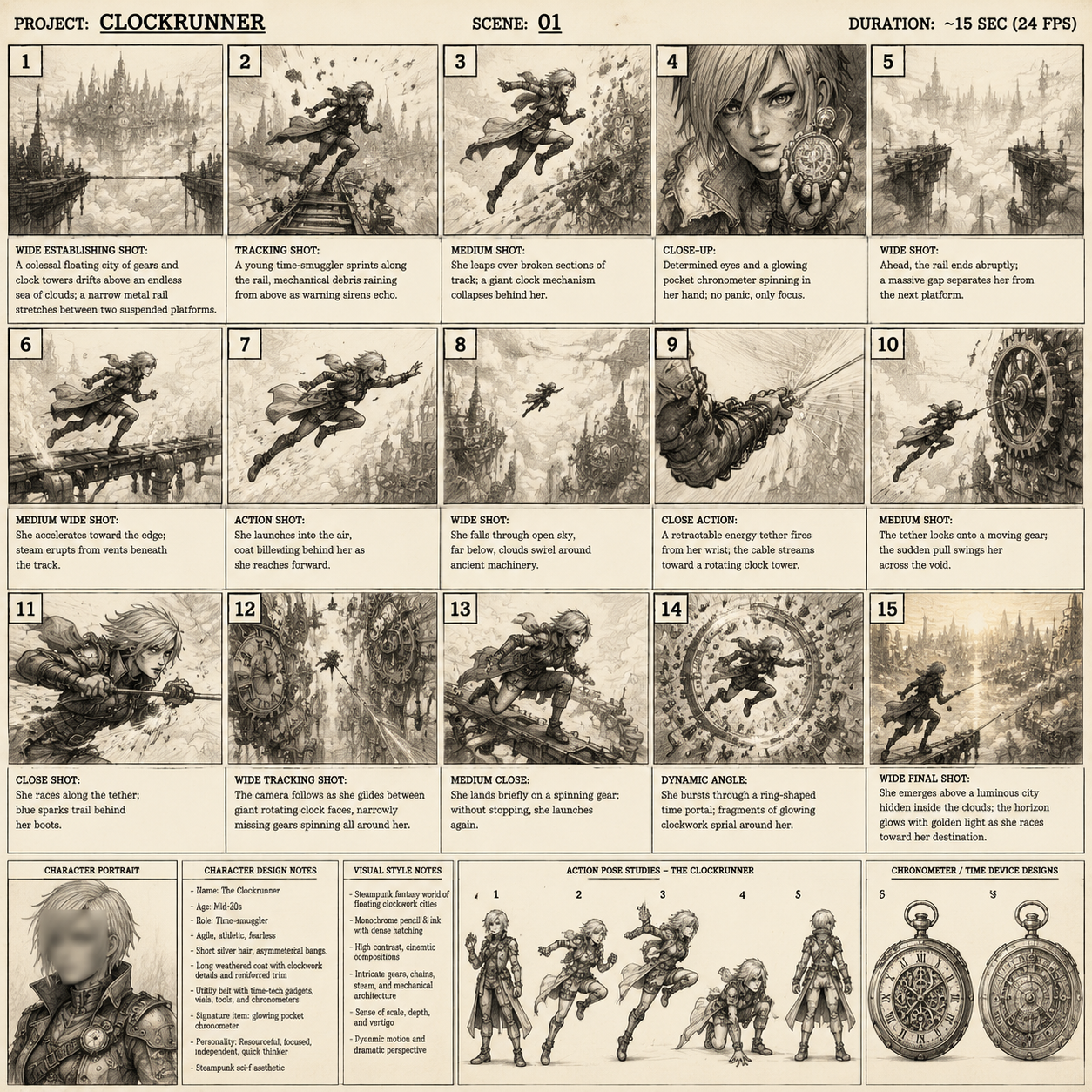
Generative video has reached the point where a striking shot is no longer the hard part. A convincing establishing shot, a stylized character close-up, an impossible camera move — all of it can be produced in minutes. What still separates a clip people scroll past from one they watch to the end is almost always the audio layer. Viewers forgive soft focus, slightly odd hands, and mild temporal shimmer. They do not forgive dialogue that sounds like a phone call from two decades ago, music that stops mid-phrase, or an environment with no room tone at all.
Audio is also the cheapest quality upgrade available to you. Re-rendering video costs time and compute; re-cutting a music bed, replacing a voice take, or adding three well-placed foley hits takes minutes. Treat the soundtrack as its own production with its own plan, and the perceived value of the finished piece rises faster than any visual tweak you could make.
There is a second reason to take sound seriously: it carries information the image cannot. A low-frequency swell tells the audience a reveal is coming. A click of a door latch explains why a character turned. The absence of ambience signals a memory or a dream. When you generate video from a prompt, you get motion and composition, but narrative subtext usually has to be added in the mix.
Finally, audio drives retention metrics. Short-form platforms weight watch time heavily, and the first two seconds of a clip are judged largely by sound: an attention-grabbing vocal hook, a satisfying impact, or a sudden silence. If you plan the audio as an afterthought, you are optimizing for the part of the experience viewers notice last.
The Audio Layer Cake: Four Stems Every AI Video Needs
Professional post-production separates a project into stems — groups of related sounds that can be adjusted independently. Even for a 30-second AI clip, thinking in four layers keeps you organized and makes revisions painless.
Dialogue and voiceover
This stem contains narration, character lines, and any spoken text-to-speech. It should be the loudest and cleanest element in the mix because human hearing prioritizes speech intelligibility. Record or generate dialogue first, before music, so you can cut the music around the words rather than fighting a finished track.
Music bed
Music sets emotional temperature and tempo. For AI video, the music often doubles as a timing device: if the track has a clear beat grid, you can cut shots to the beat, which makes generated footage feel intentional even when the motion itself is imperfect.
Foley and sound effects
These are the short, specific sounds tied to on-screen actions: footsteps, cloth movement, a mug set on a table, a whoosh on a transition, a riser into a title card. They sell physical reality and mask the uncanny smoothness that AI video often has.
Ambience and room tone
This is the continuous background: wind, traffic, café murmur, server hum, or a deliberately synthetic drone for sci-fi. Ambience is the glue. Cut it out and every edit becomes a jarring jump; keep it continuous across cuts and the scene reads as one space even when shots were generated separately.
Plan the Sound Before You Generate the First Frame
Most amateur AI videos fail at the audio stage because audio was never planned. Before generating a single clip, build a shot list that includes an audio column. For each shot, write down four things: what the audience hears from the environment, what action sound is needed, whether music is playing, and whether anyone speaks.
Next, decide diegetic versus non-diegetic sound. Diegetic sound exists inside the story world — a radio, footsteps, a character speaking. Non-diegetic sound exists only for the audience — a narrator, a score, a stylized whoosh. Mixing these categories accidentally is the single most common source of confusion in AI-generated content. If your narrator is speaking, the ambience should duck slightly but never vanish, or the voice will sound disembodied.
Then map a tempo. Choose a target pace in beats per minute and mark your story beats against it: hook at beat four, product reveal at beat sixteen, call to action on the final downbeat. This tempo map becomes your edit skeleton. When you later generate or select music, you already know the length and energy curve you need, so you are not forcing a three-minute track into a 42-second edit.
Finally, write a short audio brief for yourself: genre, reference tracks, voice character, and the emotional arc in one sentence. This sounds like overhead, but it prevents the expensive loop of generating ten music options and liking none of them because you never defined what "right" meant.
Choosing Tools for Each Audio Job
The tool market has fragmented into specialists, and using each for what it does best produces better results than forcing one app to do everything.
Text-to-speech and voice work
Modern neural text-to-speech tools such as ElevenLabs, PlayHT, and the speech features inside large creative suites produce highly natural narration when you give them properly punctuated text. Write for the ear: short sentences, explicit pauses, and spelled-out numbers. If you need a consistent character voice across episodes, use voice design or a cloned voice and keep the same settings. Add a small amount of room reverb to a synthetic voice so it sits in the scene rather than floating above it.
Music generation
Text-to-music tools like Suno, Udio, Stable Audio, and MusicGen let you describe genre, instrumentation, tempo, and mood. The practical trick is to request instrumental-only output and specify a tempo, then generate several candidates and pick by energy curve rather than by melody. Loops and stingers usually work better than full songs for short AI clips, because a full song brings its own structure that will fight your edit.
Sound effects and foley
Search-based libraries such as Freesound and the bundled libraries in most editing suites cover 90 percent of needs. When nothing fits, generative sound designers — including text-to-SFX features in the same tools as your voice work — can create a bespoke impact, riser, or texture from a written description. Always keep a curated personal folder of your twenty favorite whooshes, impacts, and transitions; reusing them builds a recognizable sonic signature.
Cleanup, separation, and repair
Stem separation tools like Demucs, LALAL.AI, and iZotope RX's music rebalance can split a finished track into vocals, drums, bass, and other, which is invaluable when you only have a mixed reference track. Noise reduction and dialogue isolation handle hum, hiss, and wind. Automatic leveling tools such as Auphonic or Adobe Podcast Enhance can normalize a rough voiceover, but use them gently — over-processing creates metallic artifacts that are harder to fix than the original noise.
A Repeatable Workflow for Scoring a Short AI Clip
This sequence works for anything from a 15-second social ad to a three-minute explainer.
- Lock the picture. Never score against footage you plan to re-cut. Export a clean reference video and treat it as final.
- Lay scratch audio. Drop a temporary music track and a rough read of the narration so you can feel the pacing. This scratch track is disposable.
- Build the tempo map. Mark the exact timecode of every cut and note which cuts should land on a musical accent.
- Generate or select the final music. Match tempo and length to the map, and leave two to four seconds of tail for a natural ending.
- Record or generate dialogue. Do this before final music so you can adjust the bed around the words.
- Add ambience first, then foley. Ambience creates the space; foley populates it. Adding foley before ambience makes it hard to judge how much is needed.
- Mix with automation. Ride the music down under dialogue, ride ambience up in dialogue gaps, and add a small amount of compression on the master bus for cohesion.
- Check on real devices. Listen on a phone speaker, a laptop speaker, and headphones. If dialogue is unintelligible on a phone speaker, it will be unintelligible for most of your audience.
Sync: Making Audio Land on the Cut
Synchronization is where AI video projects are won or lost. Generated footage rarely has consistent frame timing, so you cannot rely on the visuals to carry the rhythm. Instead, let the audio define the beat and cut the picture to it.
Start by placing your hit points: the moments where a sound effect, a musical accent, and a visual change coincide. A cut that lands one or two frames before the beat feels energetic; landing exactly on the beat feels mechanical; landing just after feels heavy. Nudge by frames rather than milliseconds when your editor allows it.
Use split edits deliberately. A J-cut brings the next scene's audio in before its picture, which creates anticipation. An L-cut lets the previous scene's audio continue over new visuals, which smooths transitions. Both are easy in any editing suite and instantly read as professional.
Watch out for drift. If you generate a voice track and a music track separately, their perceived timing can diverge as the music's internal groove shifts. Re-check sync at the beginning, middle, and end of the timeline rather than only at the top. And always confirm your project frame rate matches the exported video frame rate; a 24 fps timeline opened in a 30 fps project will mysteriously slip out of sync.
Mixing and Loudness Targets for Different Platforms
A good mix is not about volume, it is about hierarchy. Dialogue should sit on top, music underneath, ambience beneath that, and sound effects placed where they punctuate rather than compete.
Set dialogue peaks around -6 to -3 dBFS with an average level near -18 dBFS. Duck music by 4 to 8 dB under speech rather than muting it; a fully muted bed creates audible pumping. Keep music peaks below dialogue peaks at all times, and check that no single effect clips the master bus.
For loudness, work to integrated loudness targets and a true peak ceiling of about -1 dBTP. Streaming video platforms generally normalize toward roughly -14 LUFS integrated, podcast and music platforms toward -16 LUFS, and short-form social feeds often sound best slightly hotter because playback happens on small speakers in noisy environments. Whatever you choose, keep it consistent across an episode or campaign so viewers do not adjust volume between clips.
Mono compatibility matters more than ever. Many viewers watch social video on a single phone speaker. Check your mix in mono — if a wide stereo pad or a phase-heavy riser disappears, rebalance it rather than assuming listeners will use headphones.
Common Mistakes That Ruin AI Soundtracks
The same problems appear again and again in AI-generated video, and all of them are avoidable.
- No room tone. Silence between lines makes edits feel broken. Always leave a low ambience bed running.
- Music that ends abruptly. Fade the tail or write a deliberate button ending; do not let the track stop mid-phrase at the final frame.
- Over-loud music. A bed that competes with narration forces viewers to strain, and they leave.
- Duplicate ambience on every shot. Layering three different cityscapes produces a muddy wash. Use one bed for the whole scene.
- Synthetic voices with no breath. Insert short pauses and slight level variation; unbroken monotone reads as robotic even when the timbre is convincing.
- Effects on every cut. Constant whooshes become noise. Reserve them for transitions that matter.
- Ignoring the first second. Viewers decide almost instantly. Front-load a hook, an impact, or a line of dialogue.
- Scoring after the final render. Fine-tuning a mix inside a video render wastes time. Mix in an audio editor, then marry the stems to picture.
Quality Control Checklist Before Export
Run this list every time, even on short clips.
- Dialogue is intelligible on a phone speaker with the volume at 50 percent.
- No clip indicator lights up on the master bus.
- Ambience continues across every cut without restarting.
- Music has a deliberate beginning and a deliberate end.
- Every on-screen action with narrative weight has a matched sound.
- Loudness is consistent with your previous published pieces.
- The mix survives mono summing.
- Exported audio sample rate and bit depth match the platform's preference, typically 48 kHz and 24-bit for video.
- A final listen happens on headphones, with eyes closed, to check whether the story still makes sense by sound alone.
FAQ
How long should a music bed be for a short AI video?
Match the video length plus a two-to-four second tail. Requests for a 40-second track usually return something usable; asking for a full three-minute song and cutting it down wastes the track's intro and outro.
Should I generate sound effects or use a library?
Use a library for anything common — doors, footsteps, rain, traffic. Generate effects only for unusual, stylized sounds where no library match exists, since generative effects still need the most manual cleanup.
Can I mix AI narration with real recorded voice?
Yes, and it often works well. Record real voice for emotional lines and use synthetic voice for narration or pickups. Match them with the same EQ curve, reverb, and compression so the switch is not obvious.
What if my generated video has inconsistent motion?
Let audio hide it. Continuous ambience, a steady music bed, and well-placed impact sounds give viewers a stable rhythm to hold onto, and the eye forgives more when the ear is anchored.
Do I need separate stems for a social cutdown?
Absolutely. Keep dialogue, music, ambience, and effects as separate files so you can rebuild a nine-by-sixteen version, a silent autoplay version with captions, or a version with alternate music without redoing the mix.
How do I keep a consistent sound across a series?
Create a preset: the same voice, the same music palette, the same two transition effects, and the same loudness target. Consistency is what makes a channel feel like a brand rather than a series of unrelated uploads.
