


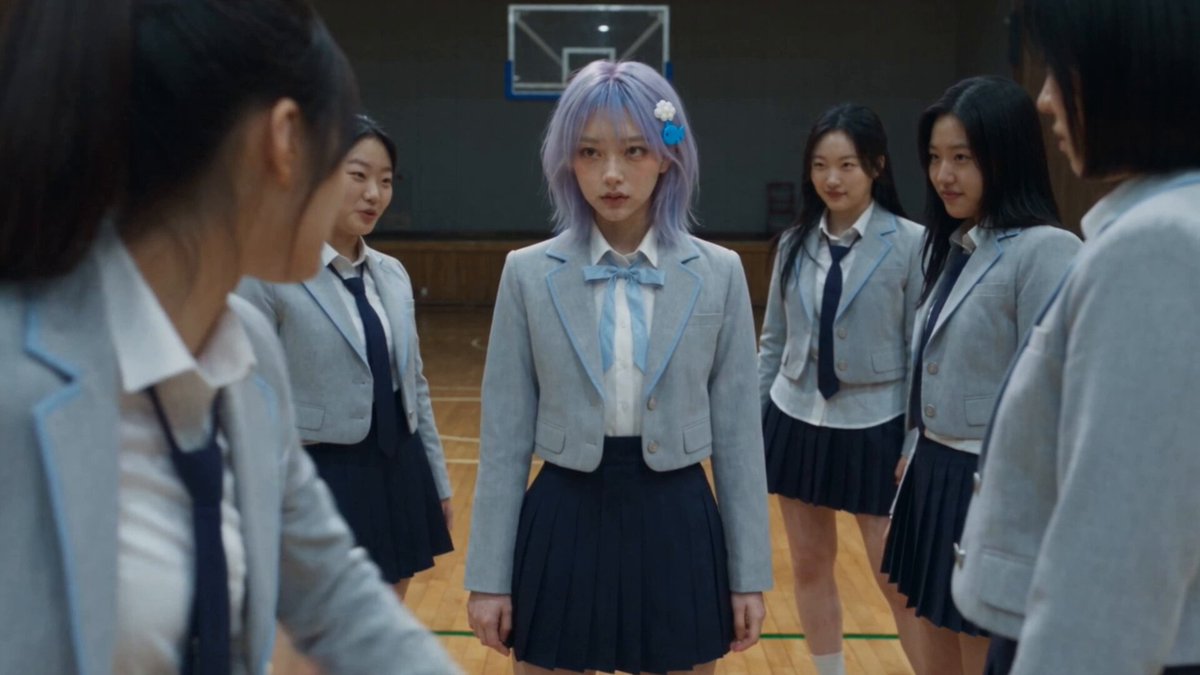
Why AI Video Storytelling Changed the Production Equation
For most of film history, the distance between an idea and a finished scene was measured in crew size, location permits, and post-production schedules. A director with a strong visual instinct but no funding had essentially two options: storyboard the idea and hope, or abandon it. Generative video tools have collapsed that distance dramatically. A single creator with a laptop can now produce a coherent short film with moving camera, consistent characters, synchronized dialogue, and a musical score, often within a weekend.
That shift matters beyond convenience. When the cost of producing a scene falls toward zero, the bottleneck moves from execution to taste. The people who thrive in this environment are not the ones with the largest render capacity; they are the ones who can write a tight script, define a visual language, and make disciplined decisions about which tool to use for which shot. Production knowledge still wins, but it now expresses itself through prompt architecture, reference management, and editing rhythm rather than through grip trucks and lighting crews.
This guide walks through the entire pipeline: model selection, pre-production, character consistency, AI-assisted directing, post-production, and the mistakes that ruin otherwise promising projects. It is written for independent filmmakers, marketing teams, educators, and hobbyists who want repeatable results rather than one-off lucky generations.
The Core Building Blocks of an AI Video Pipeline
Before comparing tools, it helps to understand the four capabilities every AI video workflow needs. Most frustration comes from expecting one model to do all four well.
Text-to-video, image-to-video, and video-to-video
Text-to-video generates motion from a written prompt. It is the fastest way to explore tone, but it offers the least control over composition. Image-to-video takes a still frame, whether a generated image, a photograph, a 3D render, or a hand-painted concept, and animates it. This is the workhorse of serious production because it lets you lock framing, lighting, and wardrobe before committing to motion.
Video-to-video sits at the other end of the spectrum: you supply existing footage and ask the model to restyle, extend, or transform it. Documentary teams use it to restore archival material, adjust the apparent age of a subject, or convert live-action plates into stylized animation without reshooting. Understanding which of these three modes a given shot requires is the first skill to develop.
Where audio fits
Silent video is rarely the goal. Mature pipelines separate dialogue, ambience, Foley, and music into distinct stages. Voice synthesis handles the spoken word, ideally with per-line emotional direction rather than one flat read for the entire script. Sound libraries cover room tone, footsteps, cloth movement, and weather. Music generation covers score. Treating audio as an afterthought is the most common reason an AI short film feels amateurish even when the images are genuinely beautiful.
Clip length, resolution, and the economics of shots
Every model has a practical ceiling on continuous clip length. Rather than fighting that ceiling, experienced creators design around it. They build shots that last three to six seconds, which is also roughly how long most audiences consciously register a composition before attention drifts. Longer continuous takes are assembled from multiple generations stitched with match cuts, whip pans, foreground wipes, or a passing object that hides the seam. Planning for seams from the start produces better results than trying to hide them later.
Choosing a Model Stack: Decision Criteria That Actually Matter
Model choice is where beginners lose the most time. The temptation is to chase whichever tool looks best in a demo reel. A better approach is to define your project requirements first, then match tools to those requirements.
The premium tier
The highest-quality video models excel at photoreal human motion, complex camera moves, and physical consistency such as liquid, smoke, and cloth. They typically cost more per second of output and may have longer queue times. Use them selectively: hero shots, the opening image, the final emotional beat, and any frame the audience will study closely. Sparing use of a premium model across a two-minute piece often looks better than uniform use of a mid-tier model across the whole thing.
Specialist and regional models
A healthy stack includes specialists. Some models are tuned for anime and illustration, some for product turntables and e-commerce, some for architectural flythroughs, and some for vertical social formats. Regional ecosystems in East Asia have produced particularly strong stylized and character-driven models, often with distinctive regional aesthetics that default Western models struggle to reproduce. Building a shortlist of three to five specialists gives you coverage without overwhelming your workflow.
Practical selection criteria
- Output duration per generation: does the clip length match your average shot length?
- Reference support: can it accept multiple character images, style frames, or motion references?
- Physics behavior: does it handle hands, crowds, and reflections without melting?
- Controllability: camera commands, keyframe conditioning, motion brushes, and inpainting.
- Cost predictability: flat subscription versus usage-based pricing, and how quickly a failed generation drains your plan.
- Commercial licensing: critical if the output is client work.
- Export quality: resolution, frame rate, and codec flexibility.
- API availability: essential if you plan to automate or batch.
A practical test is to run the same ten-second scene through three candidate models, then compare not just image quality but how many attempts each required to get a usable take. Attempts per usable second is the real metric, and it is the one rarely shown in marketing material.
The Pre-Production Layer: Scripts, Shot Lists, and Look Books
AI video rewards pre-production more than traditional film does, because every prompt is a small specification. Vague intent produces vague motion.
Write the script first, in shot language
Instead of writing prose, write a shot list in which each line describes one image and one action. For example: wide shot, rain-soaked alley, character enters from left, slow push in. That single line contains framing, environment, subject blocking, and camera movement. Four elements, four controllable variables.
Build a look book
Collect twelve to twenty reference images that define your palette, contrast ratio, lens character, and wardrobe. These references serve double duty: they align your team, and they can be fed to image models to generate consistent style frames. Keep the look book small and opinionated. A look book with eighty images produces muddled output; one with fifteen decisive images produces a coherent world.
Define your continuity rules
Decide in advance which details must never change: hair length, eye color, scar position, jacket zipper direction, the layout of a room, the color of a car. Write them down. When you are generating two hundred clips, memory is unreliable and a single inconsistency will read as a continuity error to any attentive viewer.
Character Consistency: The Hardest Problem in Serialized AI Video
Nothing separates amateur AI video from professional-looking AI video more than character consistency. A viewer forgives slightly soft detail; they do not forgive a protagonist whose face changes between shots.
Multi-image fusion and reference conditioning
The most reliable technique is multi-image fusion: supply several reference images of the same character from different angles and expressions, then let the model blend identity features into each new generation. Feed it a neutral portrait, a three-quarter view, a profile, and a full-body shot. The model builds a stable internal representation that survives changes in lighting and pose.
Wardrobe, lighting, and lens discipline
Consistency is not only about faces. Lock the wardrobe to two or three outfits per act and change them only at narratively justified moments. Keep your lighting scheme consistent within a scene; if a conversation takes place at golden hour, every reverse angle needs the same warm kick. Use a single focal length per scene where possible. Swapping between an extreme wide and a tight telephoto shot within one continuous conversation makes a model feel different even when the identity is technically correct.
When consistency breaks down
Three failure modes dominate. The first is identity drift, where the character slowly morphs over many generations; the fix is to always regenerate from the original reference set rather than from the last output. The second is costume creep, where small accessories appear or vanish; the fix is an explicit wardrobe line in every prompt. The third is facial expression collapse, where the model defaults to a neutral stare; the fix is to specify the emotion, the gaze direction, and the micro-action, such as jaw tightening or a half-smile forming.
Directing With an AI Agent: Human-in-the-Loop Workflow
An AI directing assistant changes the workflow from prompt-by-prompt improvisation to structured decision-making. Instead of asking a single generative call to produce a final shot, you delegate planning, coverage, and iteration to an agent while retaining creative control at key checkpoints.
A reliable loop looks like this. First, the human writes the scene intent in plain language. Second, the agent decomposes it into a shot list with lens, movement, and duration suggestions. Third, the human approves or edits the shot list. Fourth, the agent generates keyframes and proposes two or three variations per shot. Fifth, the human selects the strongest frame. Sixth, the agent animates the approved frame and returns candidate takes. Seventh, the human selects takes and flags re-shoots.
This structure keeps the expensive, taste-driven decisions with the human and the repetitive, combinatorial work with the agent. It also creates a natural paper trail: every shot has an approved keyframe, a chosen take, and a reason for re-shooting. Teams that adopt this loop report far fewer dead ends than teams that prompt reactively.
One caution: agents are confident even when wrong. Always inspect the intermediate artifacts, especially keyframes, before spending time on animation. A beautiful prompt that produces a technically flawless shot of the wrong location is still a wasted generation.
Post-Production: Assembly, Sound, and Color
The edit is where fragments become a film. Assemble in a timeline editor, placing your best takes in rough order before fine-tuning. Resist the urge to fix individual shots in isolation; rhythm problems are almost always structural.
The rough cut pass
Lay in all selected clips at their intended durations. Watch without sound. If the story does not read visually, better audio will not save it. Cut anything that does not advance emotion or information, even if it is beautiful.
The sound pass
Add dialogue first, then ambience, then Foley, then music. Dialogue with a consistent room tone dramatically improves believability. Ambience is what convinces the ear that the environment is real: distant traffic, a fluorescent hum, wind through grass. Foley adds the small physical sounds that make movement feel weighted. Music comes last and should be mixed lower than beginners expect.
The color and finishing pass
Apply a consistent grade across all shots. AI models often produce slightly different white balance and contrast per generation, and a unifying grade is the fastest way to make a sequence feel intentional. Add subtle grain, a gentle vignette, and a consistent sharpen level. Finish with a title treatment and export at your delivery resolution, keeping a high-bitrate master for future re-cuts.
A Practical End-to-End Walkthrough
Imagine a three-minute science fiction short about a lighthouse keeper receiving a message from the sea.
Day one, morning: write the script as twenty-eight shots. Build a fifteen-image look book: cold blues, sodium lamp warmth, wet stone textures. Generate the protagonist reference set from a consistent description and lock five approved images.
Day one, afternoon: generate keyframes for all twenty-eight shots using image-to-video conditioning. Approve or regenerate. Expect roughly one in three frames to need a second attempt.
Day two, morning: animate approved keyframes, three seconds each. Review takes at full speed and at quarter speed. Flag six shots for re-animation with adjusted motion strength.
Day two, afternoon: generate dialogue for four exchanges, record ambience layers, and produce a two-minute ambient score. Assemble a rough cut.
Day three: sound pass, color pass, titles, and export. Total output: three minutes of finished narrative video, produced by one person with no crew and no location.
The important lesson is not that three days is fast. It is that every phase had a defined deliverable and an approval gate. That structure is what makes the result reproducible on the next project.
Common Mistakes and How to Avoid Them
Over-prompting. Long prompts full of adjectives confuse motion models. Write short prompts with concrete nouns and one clear action.
Ignoring duration limits. Asking a five-second model for a ten-second continuous pan produces stretching and warping. Design shots around the ceiling.
Regenerating from the last output. Identity compounds errors. Always branch from the original references.
Neglecting audio. Silent drafts hide pacing problems and destroy immersion in the final piece.
Skipping the shot list. Improvisation feels creative but produces coverage gaps you only discover in the edit.
Uniform quality choices. Spending top-tier resources on background shots and mid-tier resources on the emotional climax is a common inversion. Match effort to narrative weight.
No continuity document. Without written rules, consistency depends on memory, and memory fails at scale.
Editing in isolation. Show the rough cut to someone who has no context. Their confusion is your shot list for the next pass.
Frequently Asked Questions
How long does a typical AI video project take?
A one-minute narrative piece usually takes two to four focused days for a solo creator once the workflow is established. The first project takes significantly longer because you are also learning your tools and building reference libraries.
Do I need video editing experience?
Basic timeline editing skills are essential. Understanding cuts, pacing, and sound layering matters more than knowing advanced compositing. Most modern editors are approachable within a week of practice.
Can AI video handle dialogue scenes?
Yes, with care. Generate clean keyframes for each speaker, animate them with subtle head and eye movement, and layer synthesized or recorded dialogue. Avoid long continuous takes of two characters talking; cut on reactions instead, which is also better film grammar.
What is the best way to keep a character consistent across many shots?
Build a lock set of four to six reference images from different angles, always generate from those references rather than from previous outputs, and document wardrobe and hair details explicitly in every prompt.
How do I decide between a premium model and a faster, cheaper one?
Use premium output for shots the audience will linger on and standard output for transitional or background shots. Run a ten-second test scene through both candidates and compare attempts per usable second rather than peak image quality.
Is AI-generated video commercially usable?
It depends entirely on the specific tool and license. Check the terms for commercial use, training-data restrictions, and any requirements about disclosure. Keep records of which model produced which shot so you can answer client questions.
What resolution should I export at?
Match your delivery platform. Deliver vertical social content at the platform native aspect ratio, and keep a high-bitrate master at the highest resolution your source footage supports so you can re-cut later without losing quality.
How many reference images should I prepare?
Between twelve and twenty for the overall look, and four to six per recurring character. More than that adds noise without improving consistency.
Where This Is Heading
The trajectory is clear: generation quality keeps rising, clip lengths keep extending, and control surfaces keep becoming more precise. The creators who benefit most are those who treat these tools as a production pipeline rather than a magic button. Write the script, build the shot list, lock the references, approve the keyframes, animate deliberately, and finish the sound properly. Do the unglamorous parts well, and the glamorous result takes care of itself. The technology will keep changing; the discipline of storytelling will not.
