

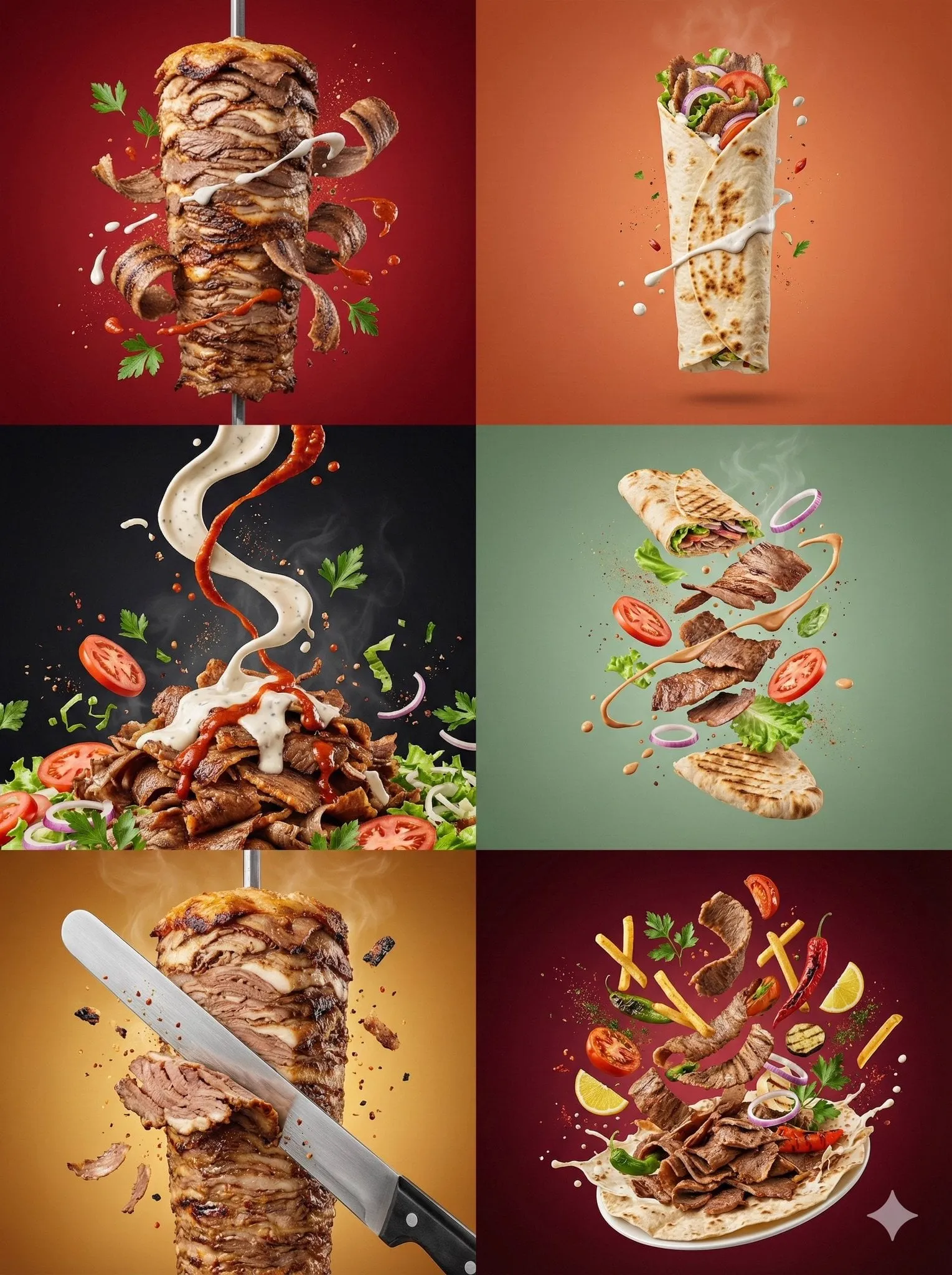

Why video has become the default product surface
For most online stores, the product page stopped being a page a long time ago. It is now a short film with a checkout button attached. Shoppers arrive from social feeds where motion is the default mode of communication, and they carry that expectation into the store. They want to see the hinge move, the fabric drape, the app respond, the packaging open, the food steam. Static galleries still matter for comparison shopping, but they rarely create the first spark of desire.
The economics behind this shift are what make it strategic rather than cosmetic. Producing motion used to require a studio, a crew, lighting, a model, and a retouching cycle measured in weeks. Today a lean team can sketch a concept in the morning, generate background plates and variations by the afternoon, and ship a localized cut to three markets before the day ends. The bottleneck has moved from production capacity to decision quality: which videos deserve to exist, and how do you keep them from drifting away from the brand?
That is the real subject of an AI video strategy for e-commerce. Not the models, not the render times, not the novelty of a synthetic camera move, but the system that turns product truth into motion at a pace the market rewards. A system has repeatable inputs, documented standards, and a feedback loop. A pile of clever clips does not.
This guide walks through that system layer by layer: what the technology actually does, how to build a workflow your team can run every week, how to protect brand identity, where personalization pays off, and how to measure the whole thing without drowning in vanity metrics.
What "AI video" actually means in a commerce context
The phrase gets used loosely, so it helps to separate the jobs it covers before you decide what to buy or build.
- Generation: creating pixels that never existed — a synthetic environment, a stylized camera move, an exploded diagram of a product's internals, a seasonal backdrop that would be absurd to build physically.
- Transformation: restyling or extending footage you already own. Converting a warehouse clip into a campaign asset, cleaning up a phone shoot, changing the time of day, or upscaling a legacy master.
- Automation: assembling variants from a template. Swapping copy, aspect ratios, languages, and product SKUs without a human opening an editor each time.
- Augmentation: adding voiceover, captions, translations, music, and motion graphics on top of an existing edit.
Most mature commerce programs use all four, but they use them in a specific order. Automation multiplies whatever quality you already have. If the underlying concept is weak, scaling it simply produces more weak video, faster, and with a bigger bill. Generation without a reference library produces beautiful footage that looks nothing like the actual product. Augmentation applied to a bad edit just makes a bad edit louder.
A useful mental model: generation and transformation create raw material, automation creates volume, augmentation creates accessibility. Build them in that order.
The four layers of a production stack
Layer one: concept and scripting
The script remains the highest-leverage artifact in the entire pipeline. A reliable commerce structure is hook, proof, objection, action. The hook earns the first two seconds. The proof demonstrates the product doing its job. The objection handles the reason a buyer hesitates — size, durability, compatibility, smell, sound, effort. The action tells them exactly what to do next.
Write the script as spoken language, not marketing language. If a sentence would sound strange coming out of a friend's mouth, it will sound strange in a voiceover. Read it aloud and cut anything you stumble on.
Layer two: reference assets
The single biggest quality upgrade in any AI video workflow is a well-organized reference library. Collect clean product photography from multiple angles, color-accurate swatches, packaging shots, lifestyle photography, and short clips of the product in real use. Tag them by SKU, colorway, and region.
References do two things. They anchor generated output to reality, and they make brand consistency a matter of retrieval rather than memory. When a freelancer six months from now needs to produce a new variant, the reference library tells them what correct looks like.
Layer three: generation
This is where tools such as Runway, Pika, Kling, and similar systems enter. The practical rule is to match the tool to the shot. Product-accurate close-ups rarely tolerate heavy generation; you are better off shooting the product and generating the world around it. Concept scenes, transitions, and abstract backgrounds tolerate much more creative freedom.
Expect iteration. A good ratio is five to ten generated candidates for one usable shot. Budget accordingly in time, not just money.
Layer four: assembly, delivery, and feedback
Editing, color, sound design, captions, and export variants live here. So does the feedback loop: performance data flowing back into the concept layer. A stack without this loop is a content factory. A stack with it is a growth system.
A repeatable workflow, step by step
Here is a workflow that a two-person team can run weekly without collapsing.
- Pick the job to be done. Name it precisely: reduce returns on a specific size, launch a colorway, counter a competitor's comparison claim, reactivate lapsed buyers. "Make a brand video" is not a job.
- Audit existing assets. Before generating anything, list what you already own. Most teams discover they have usable footage that was never cut.
- Write the script and a shot table. One row per shot: purpose, duration, source (shoot, generate, reuse), reference asset, and owner. This table is the project plan.
- Lock the look. Decide aspect ratios, color grade, typography, and audio identity before generation starts. Changing these mid-project multiplies rework.
- Generate and shoot in parallel. Shoot what must be accurate. Generate what must be imaginative. Do not let one block the other.
- Assemble a single master. Cut the longest, highest-quality version first — typically the product page hero. Shorter cutdowns derive from it.
- Create variants systematically. Crop to vertical and square, swap openings for different channels, substitute language tracks, replace the featured SKU.
- Quality check against a checklist. Product accuracy, claims compliance, caption timing, audio levels, thumbnail frame, first-frame hook.
- Publish and tag. Consistent naming matters more than most teams admit. If you cannot find last quarter's assets, you will pay to recreate them.
- Review after two weeks. Look at retention curves, not just totals. Then feed the learnings back into step one.
Keeping brand identity consistent across generated output
Consistency is not about a logo in the corner. It is about a set of recognizable decisions that repeat: how the camera moves, how much negative space a frame carries, whether light is hard or soft, how products are handled, how quickly cuts land, what the audio bed feels like.
Write these down as rules with examples. "Camera movement is slow and lateral, never handheld" is a rule. "Modern and premium" is a wish.
Three practical controls make consistency achievable at volume:
- A locked style block. A short paragraph describing palette, lighting, lens character, and motion, appended to every generation prompt. Keep it under sixty words and never improvise it per project.
- A rejection library. Save failed outputs with a note about why they failed. This trains both people and prompts, and it prevents the same mistake across hires.
- A single color pipeline. Decide once whether you grade in the editor or bake a look into generation. Mixing the two produces footage that cannot be matched later.
Personalization: connecting product data to video variants
Personalization in video rarely means a unique film for every viewer. It means structured variation. The product feed already contains most of what you need: category, price band, colorway, size range, region, availability, review highlights.
Map those fields to controllable video slots. Background can vary by season. The hero shot can vary by colorway. The on-screen copy can vary by price band. The voiceover can vary by region. The call to action can vary by inventory status.
A practical starting point is a matrix with four to six variables and no more than forty total combinations. Test the matrix on one category before rolling it out. Personalization only pays when the variants differ in ways customers actually notice and prefer; cosmetic differences that no one perceives simply add production overhead.
One caution: keep a canonical master. When variants diverge too far, support teams start getting questions about which version is "the real one."
Formats that beat the standard product demo
Most stores default to a rotating product on a white background. It works, and it is also the most forgettable option available. Formats with higher retention tend to share one trait: they answer a question the viewer already has.
- The three-second proof. A single continuous shot demonstrating the product's core promise with no cuts and no narration. Extremely effective for durability, speed, and capacity claims.
- The comparison. Your product beside the alternative. Honest comparison builds more trust than superlatives.
- The objection film. Open with the hesitation — "will it fit in a small kitchen?" — and resolve it visually.
- The assembly and teardown. Show it working, then show what it is made of. Great for considered purchases.
- The use-case story. A short narrative with a named character and a specific problem. Costs more to produce and usually outperforms on brand metrics.
- The reactive cut. A fast turnaround video responding to a trending question, a competitor claim, or a seasonal moment.
Pick two formats and master them before adding more. Teams that produce six mediocre formats consistently lose to teams that produce two excellent ones.
Measuring what actually matters
Video analytics can become an ocean of numbers nobody acts on. Narrow it to a handful of decision-ready metrics.
- Three-second retention tells you whether the hook works. If this is low, fix the opening frame, not the middle.
- Fifty-percent retention tells you whether the promise holds. Drops here usually mean the proof section is too slow or too abstract.
- Click-through to product is the bridge between content and commerce.
- Conversion rate on video sessions versus non-video sessions is the closest thing to a direct business case.
- Return rate for products with video often improves when the video set accurate expectations — a frequently overlooked benefit.
- Cost per finished variant keeps the system honest. If automation is not reducing this over time, the pipeline has a manual bottleneck somewhere.
Segment by channel, because a vertical cut on social and a hero film on the product page are doing different jobs and should be judged differently.
Rights, governance, and quality control
Generated media raises questions that traditional shoots never did. Handle them before a campaign, not after.
Keep a written record of which tools produced which assets and under what terms. Avoid depicting real people without consent. Avoid generating logos, trademarks, or identifiable locations you have no right to use. Be careful with claims: a synthetic demonstration of a medical, safety, or performance outcome is a compliance risk, not a creative choice.
Establish a two-person sign-off for anything that makes a factual claim. One person checks the claim against the product specification. One person checks the edit against the checklist. This small ritual prevents the most expensive category of mistake in commerce video.
Accessibility belongs here too. Captions on every asset, readable contrast for on-screen text, and audio that still communicates when muted. It is both a legal consideration in many markets and a straightforward conversion improvement.
Common mistakes that stall AI video programs
- Starting with tools instead of a job. Teams pick a platform, then hunt for something to make with it.
- Skipping the reference library. Generated footage drifts off-model within a few projects.
- Scaling before validating. Ten thousand variants of a concept that never converted is expensive noise.
- Treating generated footage as finished footage. It usually needs color, sound, and pacing work to feel professional.
- Ignoring sound. Poor audio destroys perceived quality faster than mediocre image quality.
- No naming convention. Six months later, nothing is findable and everything gets recreated.
- No feedback loop. Content ships, nobody reviews retention, the same mistakes repeat each quarter.
FAQ
Do I need to replace real product photography?
No. Product-accurate stills and footage remain the anchor. AI is most valuable for environments, variations, motion, and volume — not for faking the product itself.
How much footage should a small store produce each month?
Enough to test two or three concepts and refresh the top product pages. Volume without testing is waste. A realistic starting cadence is four to eight finished cutdowns per month derived from one or two master edits.
Can AI video handle multiple languages?
Yes, and this is one of its strongest use cases. Generate a single master, then produce localized voice tracks, captions, and on-screen copy. Always have a native speaker review the final cut; translation errors in commerce video are unusually public.
What is the biggest quality risk?
Product inaccuracy. A generated shot that shows the wrong texture, proportion, or color creates returns and trust damage that outweighs any production savings.
How do I get started with a small budget?
Pick one product, one channel, and one format. Build a reference folder, write a thirty-second script, produce three variants, and measure retention at three seconds. Expand only after you know what worked.
Will this replace my creative team?
It changes what they spend time on. Less time on repetitive assembly, more time on concept, taste, and judgment — which is exactly where human skill has the highest return.
