

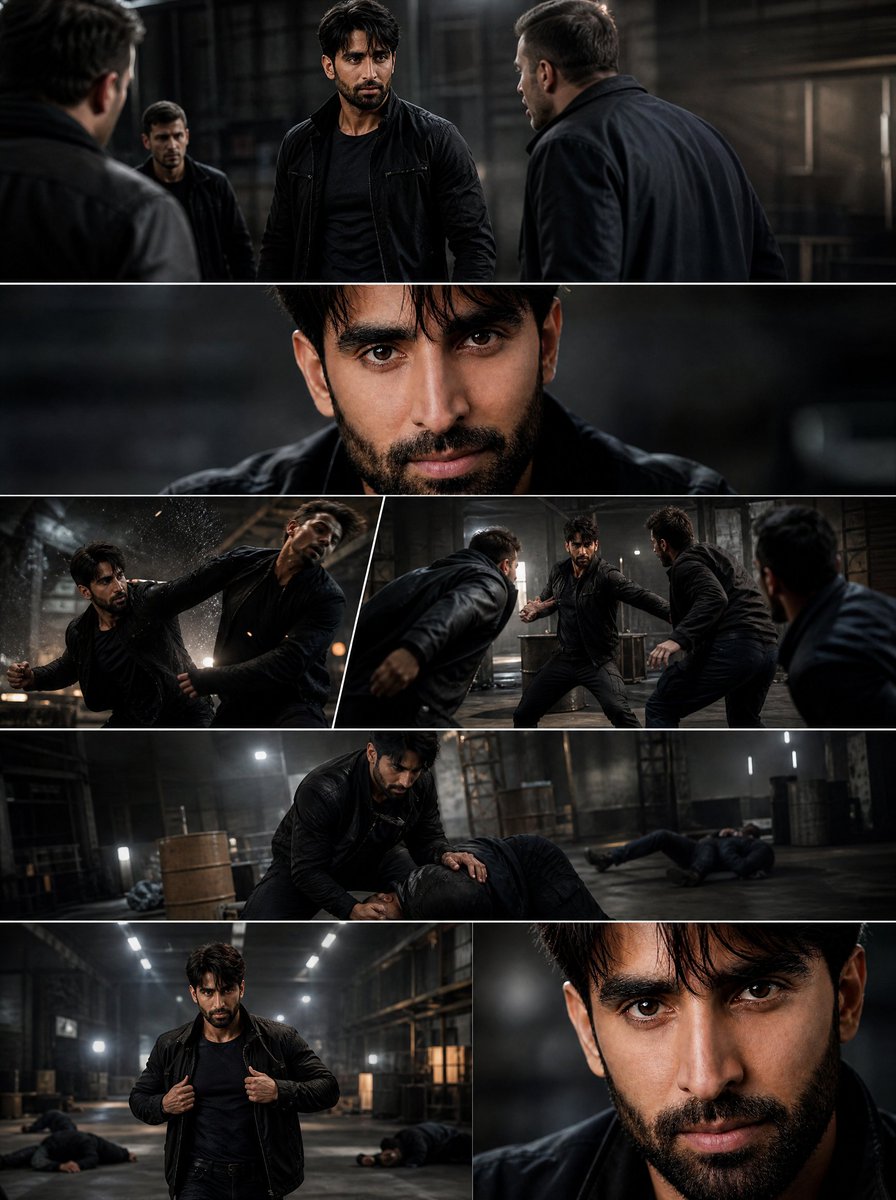
Why AI video tools belong in a director's kit
Short films are the most demanding format in filmmaking per minute of runtime. You have a feature-style script, a compressed schedule, a crew of five people doing the work of thirty, and a festival deadline that does not move. Anything that shortens the distance between an idea in your head and a watchable image on a screen is worth learning.
That is the honest case for AI video tools. Not that a model writes your film, and not that a prompt replaces a lighting plan. The case is that generation, control, and iteration have become fast enough and precise enough to sit inside a real production pipeline. A director can now previz a chase scene on a Tuesday, change the lens language on Wednesday, and arrive on set Thursday with a shot list that has already survived one round of visual criticism.
The directors getting the most out of these tools treat them like a second unit that never sleeps: tireless, cheap to redeploy, and completely dependent on clear instruction.
What AI handles well today
- Rapid look development: generating mood boards, color studies, and lighting references that actually match your script's tone instead of pulling from a stock library.
- Previz and animatics: turning storyboard panels into moving shots so you can judge pacing before you rent anything.
- Impossible or expensive shots: drone-like moves in tight interiors, crowd extensions, period detail, weather, and practical effects that would blow a short film's entire budget.
- Repetitive finishing work: upscaling, deflicker, rotoscoping assistance, dialogue cleanup, and captioning.
What it still cannot do
AI will not fix an unclear story. It will not make unmotivated camera movement feel motivated. It will not hold a performance nuance across a two-minute take without heavy supervision. And it will not tell you which take is emotionally right. Those remain the director's job, and they are the reason the job still exists.
The AI-assisted short film pipeline, stage by stage
Think in stages, not in tools. Every stage has a creative decision that belongs to you and a labor task that can be delegated.
| Stage | Where AI helps | Your decision |
|---|---|---|
| Concept and script | Scene breakdowns, coverage suggestions, dialogue passes | Theme, tone, structure |
| Look development | Reference frames, palette tests, wardrobe and location studies | Visual grammar |
| Previz | Animatics, camera moves, timing tests | Shot order and rhythm |
| Principal generation | Shot creation, alternates, coverage variants | Which take serves the scene |
| Assembly | Auto-transcription, rough sorting, alt tracking | Edit rhythm and performance |
| Sound | Voice, ambience, score sketches, cleanup | Performance intent, mix balance |
| Finish | Upscale, deflicker, grade assist, captions | Final look and delivery specs |
Directing with agents inside the pipeline
Agent-style tools are the newest layer. Instead of a single prompt producing a single clip, an agent takes a higher-level instruction, breaks it into subtasks, generates variants, evaluates them against criteria, and returns a shortlist. In practice this looks like asking for three versions of a shot with different focal lengths and getting them back in a few minutes rather than running each prompt manually.
The value is not autonomy. The value is throughput. An agent can hold a long list of constraints, apply them consistently across a batch, and remember them when you move to the next scene. You still make the choice. You just make it from a curated set instead of a blank input box.
Pre-production: script, shot list, and storyboard
Pre-production is where AI returns the most value per hour invested, because mistakes caught here cost nothing.
Script work and coverage planning
Language models are excellent coverage partners. Paste a scene and ask what information the audience still needs, what the scene's turn is, and which four shots would carry it if you only had four. Ask for a version where the scene plays entirely on faces, then a version where it plays entirely in the environment. You will not shoot either one literally, but the exercise exposes what the scene is actually about.
Useful prompts for this stage:
- Identify the emotional beat of each scene in one sentence.
- List the facts the audience must absorb and the facts that can stay implied.
- Suggest an opening image for the film that echoes its final image.
- Flag any scene that could be cut without breaking the story.
Storyboarding and previz
Image models turn a written shot into a frame you can react to. The workflow that works best is boring on purpose: write a shot description with a subject, an action, a lens, a lighting condition, and a composition note. Generate eight panels. Discard six. Keep two and refine them.
Build a storyboard with a consistent aspect ratio from the start, ideally the same one you will deliver in. Nothing derails a previz session faster than realizing in week three that half your boards are square.
Naming, versioning, and shot hygiene
This is the least glamorous advice in this article and the most important. Adopt a naming convention on day one: film_scene_shot_take_version. Keep a single source of truth for shot descriptions so that when you regenerate shot 14, you are regenerating the same shot and not a slightly drifted memory of it. Directors who skip this step end up with four hundred files named final_v2_really.
Choosing a generative video model: decision criteria
There is no single best model, only models that fit a specific shot. Evaluate along five axes.
1. Input flexibility
Some shots start from text, some from a still, some from an existing clip you want to extend or restyle. Check whether a model accepts a reference image, a start frame and end frame, or a motion reference. A model that only accepts text is a fine brainstorming tool and a poor production tool.
2. Temporal coherence
Play every clip at full speed and watch for warping limbs, melting backgrounds, and objects that change identity mid-shot. Coherence matters more than raw resolution, because a slightly soft shot can be upscaled while a morphing hand cannot be saved.
3. Control surface
Look for camera controls, motion strength, seed locking, region-based editing, and the ability to keep a subject stable while the background moves. Control is what turns a lucky generation into a repeatable one.
4. Duration and extension
Short clips are easy. Long takes are the hard problem. Test whether the model can extend a shot without a visible reset in framing or lighting, since that seam is where audiences lose trust.
5. Iteration economics
If you need forty attempts to get one usable shot, that changes your schedule, not just your wallet. Measure how many generations a specific shot type actually costs you, then plan the shooting ratio accordingly. Some shots are cheap and some are expensive; a chase across water is not a close-up of a hand.
A practical tiering approach
- Exploration tier: fast, low-resolution models for thumbnailing and rhythm tests. Volume matters more than polish.
- Hero tier: the model that produces your best dialogue shots, beauty shots, and anything the audience will study.
- Utility tier: reliable mid-range models for inserts, transitions, background plates, and B-roll you will grade and cut around.
Assign every shot in your list to a tier before you generate anything. This single habit prevents the classic failure of spending your best model on an insert nobody remembers.
Consistency: characters, wardrobe, and locations
Consistency is the number one technical complaint about AI-assisted filmmaking, and it is solvable with process rather than luck.
Build a character sheet, not a prompt
Create a reference set for every principal character: a neutral portrait, a three-quarter view, a full-body frame, and one frame under your film's key lighting condition. Save these as your canonical references and feed them into every shot with that character. Descriptive prompts drift; images anchor.
Use multi-image fusion for identity lock
Tools that accept several reference images let you combine a face reference, a wardrobe reference, and a lighting reference in one generation. This is the closest thing to a continuity department in a generative workflow. Keep the wardrobe reference stable across a scene and only vary lighting and angle.
Locations and props
Treat a location like a character. Generate six establishing views of your apartment, alley, or diner and reuse them as references for every shot in that scene. Do the same for hero props: the letter, the ring, the broken phone. Audiences forgive a lot but they notice when a red mug becomes blue between cuts.
The three-shot test
Before committing to a look, generate three consecutive shots of the same scene and cut them together with no effects or music. If the sequence holds, scale up. If it falls apart, fix the references now, not after you have generated sixty clips.
Camera language and style control
Generative video is only cinematic when the camera behaves like a camera.
Keyframes and start/end frames
Specifying a start frame and an end frame is the most reliable way to direct motion. You define the composition you want to leave and the composition you want to arrive at, and the model solves the movement. This is how you build a motivated push-in or a reveal without praying to a prompt.
Motion control and camera paths
Motion brushes, camera presets, and path controls let you say how much movement happens and in which direction. Use them sparingly. Amateur AI footage is almost always over-moved: dolly, crane, and orbit in the same three seconds. A locked-off shot with a subtle drift reads as confident.
Style transfer and look development
Reference-based style transfer lets you pull grain, contrast, and color behavior from a still you love. Use it at the look-development stage to establish a palette, then apply that palette consistently across the film. Resist the temptation to restyle individual shots, because inconsistency in texture is as distracting as inconsistency in faces.
Shoot more coverage than the edit needs
Real productions shoot a ratio. Do the same. Generate an extra wide, an extra close-up, and one insert for every scene beat. The edit will demand something you did not anticipate, and having an alternate costs you minutes instead of a reshoot.
Sound, dialogue, and the finishing pass
Audiences judge image quality intellectually and sound quality emotionally. A mediocre image with great sound reads as a real film; a great image with hollow sound reads as a demo.
Voice and dialogue
Synthesized voice works best for temp tracks, narration, radio, phone calls, and voices heard through a wall. For an on-screen performance, record a real actor. If you must synthesize, vary pacing and breath deliberately, because uniform cadence is the tell that breaks immersion.
Score, ambience, and effects
Music generation tools are strong at sketching tone quickly: ask for three takes on the same emotional brief at different intensities and cut against them. For ambience, build layers rather than a single bed. Room tone, distant traffic, HVAC hum, and footsteps do more for believability than any score.
The finishing stack
- Upscale and cleanup: increase resolution, remove flicker, stabilize unwanted jitter.
- Grade: match generated shots to each other before you match them to a look. Uniformity first, style second.
- Captions and subtitles: generate, then hand-correct. Festival programmers notice bad captions.
- Loudness: deliver to standard broadcast loudness targets so your film does not sound quiet next to the film before it.
Rights, ethics, and delivery
This section protects your film's festival run.
Provenance and training data
Understand what you are licensing. Read the terms of every tool you use, keep a record of which shots came from which system, and avoid generating anything that imitates a living artist or an existing franchise. A disputed shot can disqualify a film from a festival.
Likeness and consent
Never generate a recognizable person's face without written permission. If you use an actor's likeness in a model, get that in the contract. Keep a signed release for every performer, including voice performers.
Disclosure requirements
Many festivals now ask whether a submission contains AI-generated material. Answer honestly and specifically. Disclosure rarely hurts a film; being caught hiding it usually does.
Deliverables checklist
- Master file at the required resolution and frame rate.
- Correct aspect ratio for your intended screening format, plus a vertical cut if you are releasing socially.
- Caption and subtitle files, properly timed.
- A dialogue and music cue sheet if the festival requests one.
- Backup copies of project files, references, and generation logs.
Common mistakes to avoid
- Prompting without a shot list. You end up with pretty clips that do not cut together.
- Chasing realism when stylization would be stronger. An illustrated or textured look forgives more than a near-realistic one.
- Generating before locking the script. Every script change invalidates generated material.
- Ignoring aspect ratio and frame rate until the end. Conforming is expensive.
- Using the same generic prompt for every shot. Vary lens, distance, and lighting language deliberately.
- Skipping sound during previz. Timing lives in the soundtrack, not the image.
- No version control. You will regenerate over your best take and not notice for a week.
- Letting the tool set the pacing. Cut to your rhythm, not the model's default clip length.
- Over-relying on faces. Faces are the hardest thing to keep consistent, so design coverage that sometimes hides them.
- Treating AI as a shortcut for a weak idea. It accelerates whatever you feed it.
FAQ
How much of a short film can realistically be AI-generated?
It depends on genre. Experimental, animation-adjacent, and effects-heavy films can be almost entirely generated. Dialogue-driven drama usually works better with real actors and AI used for inserts, establishing shots, and post-production. A hybrid approach, sometimes called AI-assisted rather than AI-generated, is the most common structure for festival work right now.
Do I need a powerful machine?
Most generation happens in the cloud, so a mid-range laptop with a stable connection is enough to start. Local tools and heavier compositing benefit from a dedicated GPU, but you can build a complete short film on rented cloud capacity if you prefer to avoid hardware.
How do I keep a character consistent across many shots?
Build a reference set, feed it into every generation, lock wardrobe and lighting references separately from identity, and test three consecutive shots before generating more. Consistency is the result of a controlled reference system, not of writing a longer prompt.
Will festivals reject a film made with AI?
Some festivals have category rules or disclosure requirements, and a small number restrict generated material. Read the regulations of every festival you submit to, disclose accurately, and keep documentation. Most programmers care about whether the film works.
What is the biggest trap for a first-time AI filmmaker?
Generating before planning. The tools are fast enough to make you feel productive while you accumulate footage that cannot be edited into a scene. Write the shot list, define the look, assign tiers, then generate.
How long does an AI-assisted short film take?
A five-minute piece with a two-person team typically runs four to ten weeks from concept to master, depending on how many hero shots you need and how much you shoot practically. The generation itself is often the fastest part; sound, editing, and conformity take the longest.
A closing note on craft
The tools will keep changing faster than any article can track, so build your process around things that do not change: a clear story, a shot list you can defend, references that hold together, and a sound mix that carries emotion. Those are the skills that made short films worth watching before any of this existed. The generation layer just removes some of the friction between having an idea and seeing whether it works. Use it to take more creative risks, not to skip the thinking.
