
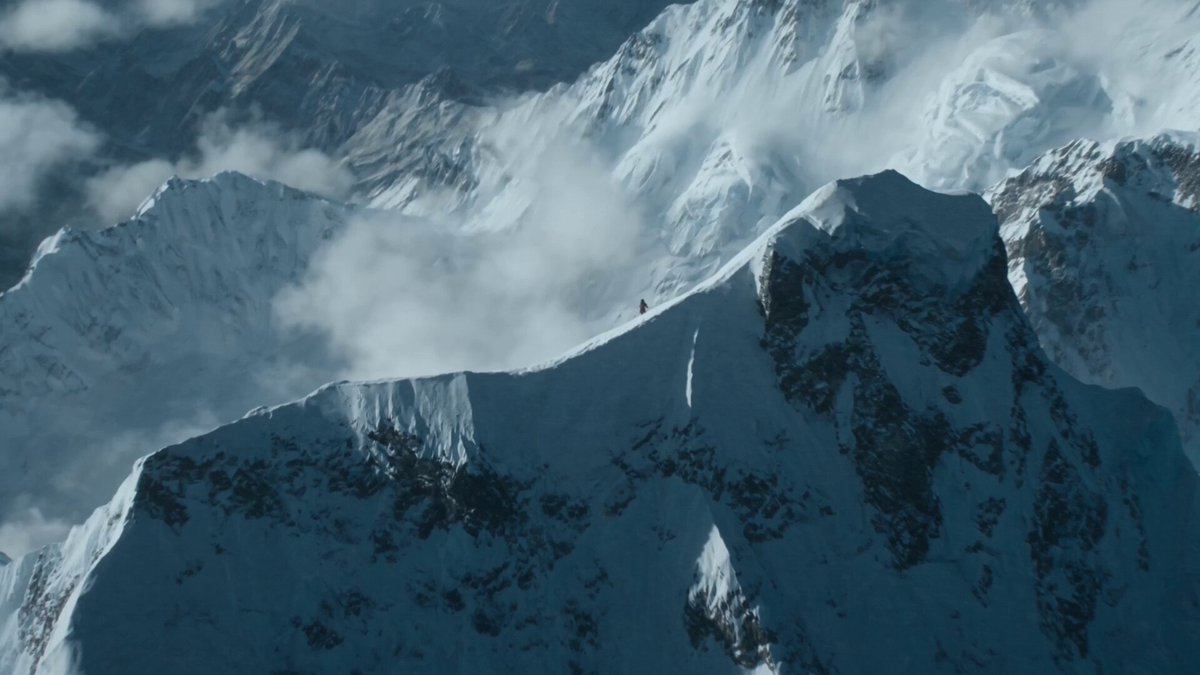
Generative video has crossed a practical threshold. What used to be a lottery — type a sentence, wait, hope something usable appears — now feels closer to directed production. Modern systems hold character identity across shots, follow described camera moves, and render believable motion for smoke, water, fabric, and crowds. Teams that once used AI clips as decorative inserts now build entire campaigns around them.
This is a workflow guide rather than a model review. It covers how to plan, prompt, review, and finish AI-generated video so the output survives contact with a real deadline and a real client. Model names change constantly; the process is what compounds.
Why Generative Video Moved From Demo to Deliverable
Three shifts pushed generated footage into mainstream production.
First, duration and coherence improved together. Earlier models could produce a striking eight seconds but rarely extended that into a sequence with continuity. A single generation can now carry a scene long enough to be cut into coverage, and the same reference image can anchor multiple shots so wardrobe and lighting stay consistent between them.
Second, control interfaces matured. Text prompts remain the fastest way to explore, but the reliable path to a finished shot usually runs through image references, motion brushes, camera presets, and region-based edits. When you can say "hold this face, move the camera left, keep the background still," the tool becomes a camera rather than a slot machine.
Third, review and iteration got cheaper. A generation that takes ninety seconds to produce can be re-run ten times in a quarter of an hour. That changes the economics of experimentation: instead of storyboarding on paper and hoping, teams generate a dozen rough variants, watch them, and converge on the one that reads clearly on a phone screen.
The practical consequence is that AI footage now competes with filmed footage rather than replacing it. Directors use it for environments that would be expensive to shoot, transitions that would be tedious to animate, and abstract sequences that would be impossible to stage. Understanding where it wins and where it still struggles is the foundation of a sane workflow.
What Actually Improved in Modern Video Models
Not every improvement matters equally. For production work, four capabilities decide whether a model is genuinely usable.
Temporal consistency and physical plausibility
A shot fails the moment a hand grows an extra finger, a jacket changes color mid-pan, or a ball bounces with impossible energy. The strongest current models keep object identity stable across frames and approximate real physics closely enough that viewers do not consciously notice anything. That standard — nothing draws attention to the rendering — is the bar for commercial use.
It is worth testing this deliberately. Generate a shot with a person walking past a reflective window, a glass of water being poured, and a piece of fabric moving in wind. Those three tests reveal more about a model's physics understanding than any marketing page.
Style and character control through references
Style is no longer only a prompt keyword. Reference images, style frames, and character sheets let a director lock a look and reuse it across many generations. In practice this means one approved portrait can drive twenty shots, which is the difference between an experiment and a campaign.
The subtlety is that references do two jobs: they constrain appearance and they constrain camera behavior. A reference shot with shallow depth of field tends to push every generation toward shallow depth of field, which is usually helpful but occasionally fights you when you need a wide establishing view.
Understanding of camera language
Models increasingly respond to cinematographic vocabulary: dolly in, crane up, whip pan, shallow depth of field, handheld drift, slow push. This matters because camera movement is how editors create rhythm. A model that ignores camera instructions forces you to fake motion in post, and faked motion rarely looks convincing at full resolution.
Where models still struggle is compound movement — a push in combined with a pan combined with a subject turn. Splitting compound moves into two shots and cutting between them is usually faster than fighting the generator.
Native resolution and aspect flexibility
Vertical, square, and widescreen delivery are all standard now. A pipeline that can only output one aspect ratio adds a manual step to every deliverable, so flexibility saves real hours across a project. Check native output resolution as well as aspect ratio; upscaling a low-resolution generation rarely survives compression on social platforms.
Choosing the Right Model for Each Shot
Most teams get better results by treating models as specialists rather than picking one and forcing it to do everything.
Decision criteria that actually matter
Run this short checklist against every candidate shot:
- Does the shot depend on a recognizable face or a returning character? Prioritize models with strong reference-image fidelity.
- Is the shot primarily motion — a car chase, a dancer, flowing water? Prioritize models with strong physical simulation.
- Is the shot text-heavy or graphic, such as a product interface or a title card? Often better handled in a compositing tool than a video model.
- Is the delivery vertical-first? Prefer models that generate vertical natively instead of cropping.
- How many revisions will stakeholders need? Factor re-run time into the schedule before you commit.
- Does the shot need to match filmed footage in the same edit? Prioritize lens and grain control over raw spectacle.
Matching model strengths to shot types
A useful habit is to build a small internal table: shot type, preferred model, fallback model, typical number of attempts. An establishing shot of a landscape with slow drone movement is forgiving and usually succeeds quickly. A close-up of a speaking character is unforgiving — lip sync, micro-expressions, and eye movement all have to hold. A product close-up with reflections is deceptively hard because glass and metal reveal inconsistencies fast.
The practical rule: start with the most difficult shot in your list, not the easiest. If the hero shot works, the rest of the sequence usually falls into place. If it does not, you learn early and can reshape the concept before the schedule is committed.
A short worked example
Imagine a thirty-second product teaser for a travel bag. The shot list might be: an opening skyline push-in, a hand zipping the bag on a wet pavement, a slow orbit around the bag on a station platform, a traveller walking through a crowd with the bag in frame, and a closing hero shot with the logo added in post.
Of those five, the hand shot and the crowd shot are the risky ones. Generate those first. The skyline and the orbit are low risk and can be produced in a single batch later. The logo shot should not be generated at all — generate a clean plate and composite the branding, because generators still garble text.
A Repeatable Workflow From Script to Final Cut
The following sequence works for a thirty-second ad, a five-minute explainer, and a music video alike. Adapt the depth; keep the order.
1. Script with the generation in mind
Write the script first, but mark the lines that must be generated and the lines that can be filmed, animated, or built from stock. A common mistake is assuming everything must be generated. Mixed pipelines — real footage for hands and faces, generated footage for environments and transitions — consistently outperform all-generated sequences.
2. Build a shot list with fixed variables
For each shot, define duration, aspect ratio, camera move, subject, action, lighting, and mood. Keep the list short enough that you can hold it in your head. If a shot has more than two simultaneous actions, split it. Constraint at the planning stage is what buys freedom at the generation stage.
3. Prepare references before you prompt
Approved style frame, character reference, location reference, color palette note. Reference preparation is the single highest-leverage hour in the whole project. A generation with a good reference typically needs two or three attempts; without one it can take twenty.
4. Write structured prompts
Order matters more than vocabulary. A structure that works well: subject, action, environment, camera, lighting, style, constraints. Put the most important element first, because early tokens carry the most weight.
Example: "A cyclist in a dark green jacket rides through a rain-soaked Tokyo alley at night, neon reflections on wet asphalt, slow tracking shot from the side, shallow depth of field, moody cyan and amber lighting, cinematic realism, no text, no logos."
5. Generate in batches, then select
Generate four to six variants per shot rather than one at a time. Watch them at delivery size — usually a phone — not full screen. Problems that are obvious on a monitor often disappear in a feed, and vice versa; what matters is the viewing context of the audience.
6. Assemble a rough cut before polishing
Place the selected clips in order with temporary music. Watch the whole sequence. Shots that looked impressive in isolation often fail in sequence because of mismatched energy, color, or pacing. This is the moment to replace, not to color correct. Replacing a weak shot now costs minutes; replacing it after finishing costs days.
7. Finish with post-production
Stabilize, color match, add sound design, and add titles. Sound matters more than most newcomers expect: clean foley and ambience make generated footage feel real, while silence draws attention to small rendering flaws. A simple ambient bed, footsteps on the right surface, and a subtle whoosh on transitions will do more for believability than another round of generation.
8. Archive the project
Store prompts, references, model names, settings, and selected clips together. Six weeks later, when a client asks for a variation, this archive turns a two-day rebuild into a two-hour adjustment.
Prompt Architecture That Survives Model Updates
Prompting is a craft, but it is also a discipline with reusable patterns.
Describe relationships, not just objects. "A woman walks past a market stall" is stronger than "woman, market" because it defines spatial interaction. Models respond to verbs and prepositions more than to noun lists.
State what should stay still. Models often animate everything. Saying "background static, only the curtain moves" reduces that tendency and keeps focus where you want it.
Use cinematic terms deliberately. "Slow push in" and "handheld" produce different results and different emotional reads. Do not stack three conflicting moves in one prompt; the model will average them into mud.
Separate style from content. Content prompts describe what is happening; style prompts describe how it looks. Mixing them makes it harder to isolate what caused a bad result when you iterate.
Keep a prompt library. When a prompt works, save it with a note about the model and settings. Over six months this becomes the most valuable document on the team, and it survives every software migration.
Prefer positive phrasing where possible. "No text" is useful, but describing the frame you do want — a clean wall, an empty sky — is often more reliable than listing everything you want removed.
Mistakes That Derail Otherwise Good Projects
Overloading a single generation. A shot that needs three cuts, two locations, and a character transformation will produce mush. Split it. Each generation should carry one idea.
Ignoring the first frame. The first frame sets viewer expectations. If it is blurry or oddly composed, everything after feels wrong, even if the motion is excellent.
Chasing photorealism when stylization would serve better. A stylized look hides small inconsistencies and often reads as more intentional. Many strong campaigns deliberately choose illustration, paper craft, or archival aesthetics for exactly this reason.
Skipping sound. Unfinished audio is the fastest way to make generated video look generated. Viewers forgive visual oddities far more readily than they forgive hollow audio.
No rights review step. Talent likeness, music, brand marks, and location permissions still apply. Build a review checkpoint before the edit locks, not after.
Generating before writing. Teams that open a generation tool before they know what the story is spend hours producing beautiful footage with no home. Story first, always.
Treating one good take as a finished shot. A single pass usually contains a moment of drift, a stray anomaly, or a framing wobble. Review frame by frame at the most exposed second.
Quality Control Checklist Before Delivery
Run the same checks every time, in the same order:
- Character and wardrobe consistent across all shots in a sequence
- Hands, teeth, and eyes inspected frame by frame at the two most exposed moments
- Background continuity: signage, weather, time of day
- No unintended text, watermarks, or logo-like shapes
- Motion cadence matches the music edit
- Color and contrast consistent with surrounding footage
- Audio present, mixed, and free of clipping
- Safe areas respected for vertical and square crops
- File formats and frame rates match the delivery specification
- Captions and titles proofread at final size
Any item that fails is a re-generation or a compositing fix, not a "good enough" note. Writing the checklist down and assigning each line to a named person prevents the most common source of embarrassing escapes.
Team, Timeline, and Cost Considerations
Generated footage changes who does what. A small team can now cover roles that used to require a crew: art direction happens in reference images, cinematography happens in prompts, and editing stays editing. But it also concentrates risk. If one person holds all prompt knowledge, the project stalls when they are unavailable.
Practical habits that hold up under pressure:
- Keep a shared shot list with status per shot: reference ready, generated, selected, finished.
- Log the model, settings, and prompt for every approved shot.
- Budget time by attempts, not by minutes of footage. A difficult five-second shot may need twelve attempts; an easy fifteen-second sequence may need three.
- Reserve roughly a third of the schedule for finishing, sound, and color. It is consistently underestimated.
- Assign one person as the approval gate. Collective sign-off on each shot slows everything down.
It also helps to define what "finished" means before you start. For one project it may be a broadcast-ready master; for another, a set of vertical clips with burned-in captions. Agreeing on deliverables early prevents the awkward discovery that the aspect ratio, length, or audio standard was never specified.
Frequently Asked Questions
Do I need multiple video models?
Not necessarily, but most teams end up with two: one for realistic motion and one for stylized or character-driven work. Rotating between them on the same project is normal, and it is often faster than coaxing a single system into unfamiliar territory.
How long does a finished shot take?
For a prepared reference and a clear prompt, expect twenty to forty minutes from first attempt to approved clip. Unprepared concepts can take several hours, mostly spent diagnosing the prompt rather than generating.
How many attempts should I budget per shot?
Plan for three to five for straightforward shots and eight to fifteen for hero shots involving faces, complex motion, or precise framing. If you exceed fifteen attempts on the same prompt, the concept is usually the problem, not the wording.
Can generated footage match filmed footage in the same edit?
Yes, with effort. Match grain, color temperature, lens character, and shutter feel in post. Shoot real footage at a comparable depth of field so the cut does not feel like a format change.
What about vertical video?
Generate vertical natively where possible. Cropping widescreen footage sacrifices framing, and the subject often drifts out of the safe area once captions and interface elements are added.
How do I handle revisions?
Cap them explicitly. Ask stakeholders to comment on the shot list before generation begins, then treat changes after that as new work. Without this boundary, endless revision loops are guaranteed.
Is a script still necessary?
More than ever. Generation is cheap; direction is not. The script and shot list are what turn a folder of clips into a story.
Which capability should I learn first?
Reference preparation. It has the largest effect on output quality per hour spent, and it transfers across every model you will ever use.
What are the warning signs a shot will fail?
More than two simultaneous actions, detailed text in frame, a compound camera move, or a character who must speak on camera. Each of these multiplies the number of attempts required, so treat them as scheduling risks rather than minor details.
Where This Is Heading
The tools will keep changing names and versions. What stays constant is the discipline: decide what the story needs, define each shot precisely, prepare references, generate in batches, select at delivery size, and finish with sound and color. Teams that build this muscle early can adopt whichever model leads next quarter without rebuilding their process from scratch.
It is also worth watching how these systems handle longer sequences and multi-shot continuity, since that capability is what turns AI video from a source of inserts into a way of shooting whole scenes. When that maturation arrives, the teams with a documented workflow will absorb it in a week; teams without one will spend a month relearning basics.
Start small. Pick one shot type — a product close-up, a landscape push-in, a single character moment — and run the full loop five times. The second attempt will be faster, the fifth will look intentional, and by then you will have a workflow rather than a curiosity.
