
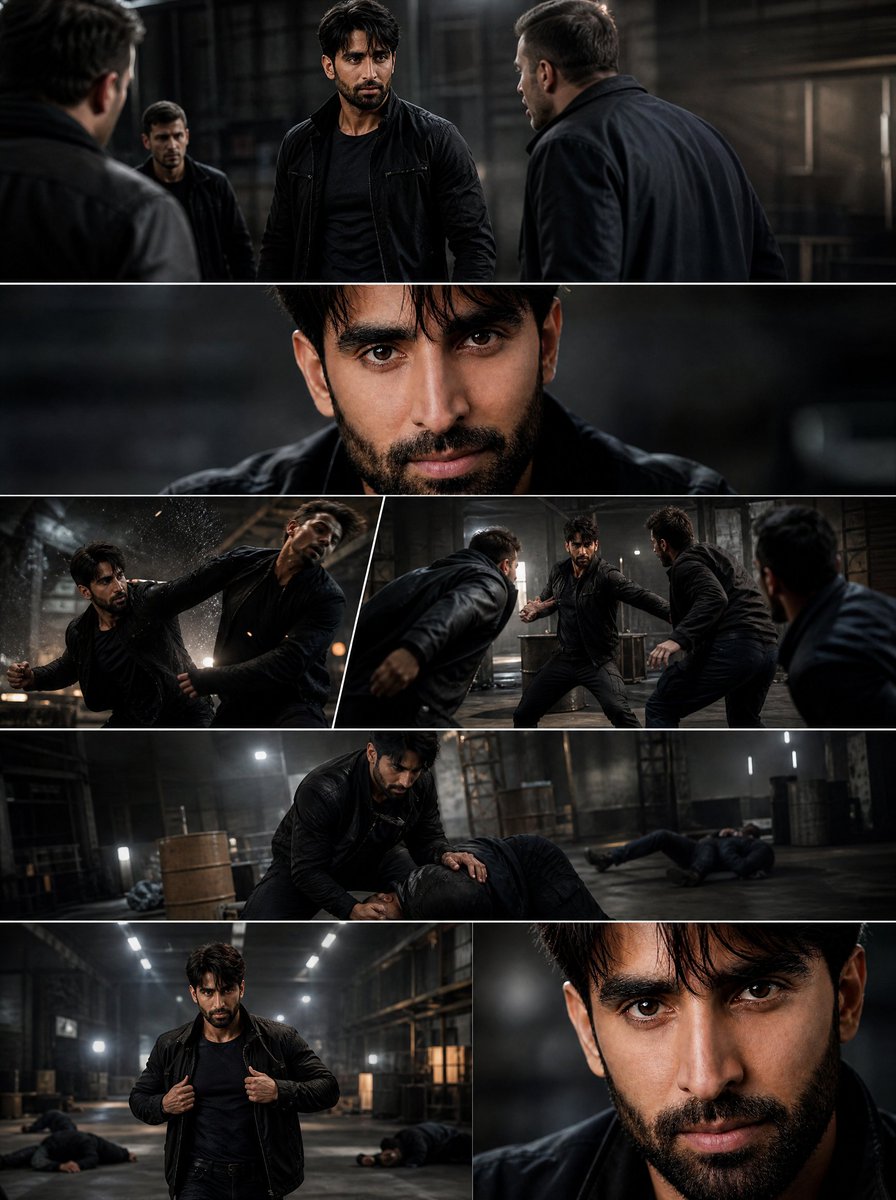
Most people who try to make an AI video start with a text box. They type a sentence, hit generate, watch something strange and beautiful appear for eight seconds, and then spend three hours trying to make the next eight seconds match it. That is not a workflow. That is gambling with extra steps.
The teams that consistently produce AI video that looks intentional work in the opposite direction. They start with a script, break it into scenes and beats, translate those beats into a shot plan, and only then let a generator touch the project. The generator becomes a camera and a crew rather than a slot machine.
This guide walks through that full pipeline: narrative structuring, shot design, prompt construction, continuity management, sound, editing, quality control, and the templates that keep it repeatable across projects. It is written for people making short films, ads, explainers, music videos, and social content where the visuals need to hold together for more than one shot.
Why Script-First AI Video Beats Prompt Roulette
Generated footage is cheap. Coherence is expensive. Any single frame from a modern video model can look stunning; it is the tenth frame that reveals whether you have a film or a collection of unrelated wallpaper.
When you begin with prompts, you are making directorial decisions in the wrong order. You decide lighting before you know the emotional beat, camera movement before you know where the character is standing, and style before you know whether the piece is a thriller or a product demo. Every later decision inherits the confusion of the earlier one.
Script-first production flips the dependency chain. Story determines scene. Scene determines beat. Beat determines shot. Shot determines camera, lens, light, and prompt. When something looks wrong in the final render, you can trace it back up the chain and find the actual cause instead of regenerating blindly.
There is also a practical benefit: scripts are editable in seconds, shot plans in minutes, and renders in hours. You want to burn your cheap iterations early, on paper, where changing your mind costs nothing.
The Four Layers of a Reliable AI Video Pipeline
Every stable AI video pipeline can be described in four layers. If a project is falling apart, one of these layers is usually missing or being skipped.
Layer 1: Narrative
What happens, to whom, and why should anyone care? This layer includes the logline, the emotional arc, and the specific beats that must land. It is written in plain language with no visual instructions at all. If you cannot summarize the piece in three sentences, generation will not fix that.
Layer 2: Shot plan
A numbered list of shots with duration, subject, action, framing, camera behavior, and purpose. This is the layer most AI creators skip. A shot plan turns a script into something a generator can actually receive.
Layer 3: Generation
Prompting, reference images, seeds, model choice, resolution, and clip length. This layer is technical and fast-moving, but it is downstream of the first two. Good inputs make this layer boring, which is exactly what you want.
Layer 4: Assembly
Editing, sound design, music, color, titles, and delivery specs. In AI work, assembly is where mediocre footage becomes convincing, because pacing and audio mask continuity gaps that a static viewing would expose.
Breaking a Script Into Scenes, Beats, and Shot-Worthy Moments
A scene is a unit of place and time. A beat is a unit of change. A shot is a unit of coverage. Confusing these three is the most common structural error in AI video.
Start by marking your script with scene headers: location, time of day, who is present. Then walk through each scene and mark beats with a one-line description of what changes: "she realizes the door was never locked," "the product survives the drop test," "the crowd stops talking." Each beat is a candidate for one to three shots.
Not every beat deserves a shot. Build a simple priority pass:
- Must-have beats carry the story. Give them the clearest framing and the most generation attempts.
- Supporting beats provide rhythm — a hand on a railing, a phone lighting up. One shot each, often short.
- Transitional beats exist only to move us between places. These can be inserts, wipes, or a single wide shot.
- Cuttable beats are the ones you will remove when the piece runs long. Mark them now so you do not over-invest.
A useful rule of thumb: an AI video of ninety seconds usually needs between eighteen and thirty shots. Fewer and the pacing drags; more and you spend your budget on renders that flash past in half a second.
Shot Design That Survives the Generator
Shot design is where AI video separates from AI image-making. You are not composing a still; you are composing a moment that has to hold up while something moves.
Composition rules that keep working
Generators handle simple, readable composition far better than busy frames. Favor one dominant subject per shot, place it off-center, and leave negative space where the model is most likely to invent artifacts. Avoid crowds, intricate hands doing delicate tasks, and frames with three or more competing focal points unless you are prepared to render repeatedly.
Foreground, midground, and background should be declared explicitly in your prompt. "A woman at a desk" is vague. "A woman at a desk in the midground, foreground blurred plant on the left, city window behind her in soft focus" gives the model a structure to obey.
Lens and movement language
Write your shot plan with a lens vocabulary even if the generator does not accept lens parameters directly — it still shapes your prompt and your consistency. Wide lenses imply environment and isolation; long lenses compress and imply intimacy or surveillance. Slow push-ins create tension. Lateral tracking creates momentum. Handheld implies immediacy and imperfection.
Assign each shot exactly one movement. Two movements in one clip confuse the model and produce drifting, morphing footage that is hard to cut.
Lighting and palette continuity
Decide two things before you generate anything: the key light direction and the palette. A piece shot with warm side light and a teal-shadow palette will feel unified even if the locations change drastically. Write the lighting into every prompt as a fixed phrase — same words, same order — rather than improvising synonyms.
Writing Prompts That Match Your Shot Plan
A prompt is not a wish; it is a work order. Build it from the same fields as your shot plan so the two can never drift apart.
Use a consistent stack:
- Subject and wardrobe — who or what, with only the details that are visible in this frame.
- Action — one verb, present tense, happening now.
- Environment — location, time of day, weather, atmosphere.
- Camera — framing, angle, lens feel, single movement.
- Light — direction, quality, color temperature.
- Style — film stock, rendering style, palette, grain, aspect treatment.
- Exclusions — what must not appear: text, watermarks, extra limbs, duplicated faces, logos.
Keep the order identical across all shots in a project. Models attend to early tokens more strongly, so stability in structure produces stability in output.
Negative prompts earn their keep
Exclusion lists are the cheapest quality improvement available. Typical entries include extra fingers, warped faces, floating objects, inconsistent eye direction, on-screen text, and sudden zoom. Add exclusions to a shared project block so you never retype them inconsistently.
Version your prompts like code
Copy the exact prompt that produced a good shot into your shot plan next to the shot number, along with the seed and settings. When you need a matching shot later — a reverse angle, a second take, a different location with the same feel — you start from a known-good configuration instead of a vague memory.
Continuity: Characters, Locations, and Camera Logic
Continuity is the difference between a sequence and a slideshow.
Character continuity works best with a reference image and a fixed descriptive phrase used verbatim in every prompt that includes that character. Describe the three most visually distinctive traits — hair shape, jacket color, build — and nothing else. Long character descriptions dilute the signal.
Location continuity requires the same discipline plus a spatial map. Sketch where the door, window, table, and key light are, and reference those anchors in prompts. If a character sits by a window in shot four, the window should be behind them in shot twelve unless the geography has been re-established on screen.
Camera logic means respecting the line of action. If two people face each other, keep one on the left of frame and one on the right for the whole scene. Crossing the line between shots reads as chaos, even to viewers who cannot name what is wrong.
Eyeline continuity is the detail that sells dialogue. If a character looks slightly left of camera in one shot, their scene partner should look slightly right in the reverse. Generated footage frequently defaults to center-facing subjects, so specify gaze direction explicitly.
Audio, Pacing, and Edit Rhythm
AI video lives or dies in the edit. Two rules matter more than the rest.
First, cut on motion. When a hand reaches, a head turns, or a car passes, cut in the middle of the movement. This hides frame-to-frame inconsistency and makes clips feel related.
Second, let sound lead. Music, ambience, and effects are the connective tissue that persuades the viewer two shots belong together. Lay a scratch track before you fine-tune visuals: a rising pad under a reveal, a room tone under interior dialogue, a sub-bass hit on a cut.
Practical timing guidance for short-form AI video:
- Establish shots: 2–4 seconds.
- Dialogue or reaction shots: 1.5–3 seconds.
- Inserts and detail shots: 0.5–1.5 seconds.
- Hero beauty shots: allow 4–6 seconds, but only once per piece.
If a shot is beautiful but slows the piece, cut it. Watch the sequence with sound off, then with picture off. If the story survives both, the edit is working.
Quality Control and Repeatable Workflows
Review AI footage in three passes and do not mix them. Pass one is story: does the sequence make sense with the sound off? Pass two is technical: flicker, warping, extra appendages, mismatched color, dead frames. Pass three is polish: grade, grain, sharpening, speed ramps, transitions.
Keep a project folder structure that matches your pipeline, for example: script, shot plan, references, prompts, renders, selects, audio, exports. Name files with shot number first, then version: s07_v03_push-in.mp4. Sorting stays sane and handoffs stay possible.
When a shot fails twice, change the shot, not just the words. Reduce complexity, change the angle, shorten the duration, or convert it into an insert. Generators rarely rescue an over-ambitious frame; they reward a simpler one.
Finally, build a small library of reusable blocks: a lighting phrase, a palette phrase, a font and title treatment, an intro and outro. Reuse is what turns a one-off video into a recognizable channel.
Common Mistakes and How to Fix Them
Generating before planning. Symptom: beautiful clips that cannot be cut together. Fix: write the shot plan first, even a rough one.
Prompt improvisation. Symptom: each shot feels like a different film. Fix: lock prompt structure and style phrases.
Too many camera moves. Symptom: drifting, morphing footage. Fix: one movement per clip.
Overloaded frames. Symptom: warped faces and duplicated objects. Fix: one subject, one action, declared depth layers.
Ignoring audio until the end. Symptom: a cut that feels random and a runtime that feels long. Fix: build a scratch track early and cut against it.
Rendering at maximum resolution for drafts. Symptom: slow iteration and exhausted budgets. Fix: draft low, finish high.
No versioning. Symptom: you cannot reproduce the good shot. Fix: log prompts, seeds, and settings as you go.
FAQ
How long should an AI video be? For social, 15–45 seconds; for narrative or explainer content, 60–120 seconds. Longer pieces work when they are built from scenes with clear beats, not from a single extended idea.
Do I need a storyboard? Not a drawn one, but you need a shot list. A written plan with framing, movement, and duration captures most of the value.
How many generation attempts per shot should I expect? Plan for three to six for simple shots and considerably more for faces, hands, and complex actions. Budget time accordingly, and reduce complexity rather than increasing attempts indefinitely.
How do I keep a character consistent? Use one reference image, one short fixed description, identical phrasing in every prompt, and consistent lighting direction. Change one variable at a time when testing.
Can I mix footage from different models in one piece? Yes, if you unify them afterward with a shared grade, grain, and aspect treatment. Consistency is a post-production promise you can keep even when sources differ.
What is the fastest way to improve quality? Simplify shots, fix your prompt structure, and cut on motion. Those three changes outperform switching tools.
How do I handle dialogue? Generate visuals separately, then record or synthesize voice, then cut picture to the audio waveform. Trying to make generators deliver lip-synced performance across many shots is the most expensive path available.
When should I stop iterating? When the shot communicates the beat and passes the technical pass. Perfection in a single frame rarely survives the cut anyway.
A script-first, shot-planned, sound-led workflow will not make generators flawless. It will make them predictable. And predictability is what turns AI video from a novelty into a production method you can repeat, delegate, and improve with every project you finish.
