
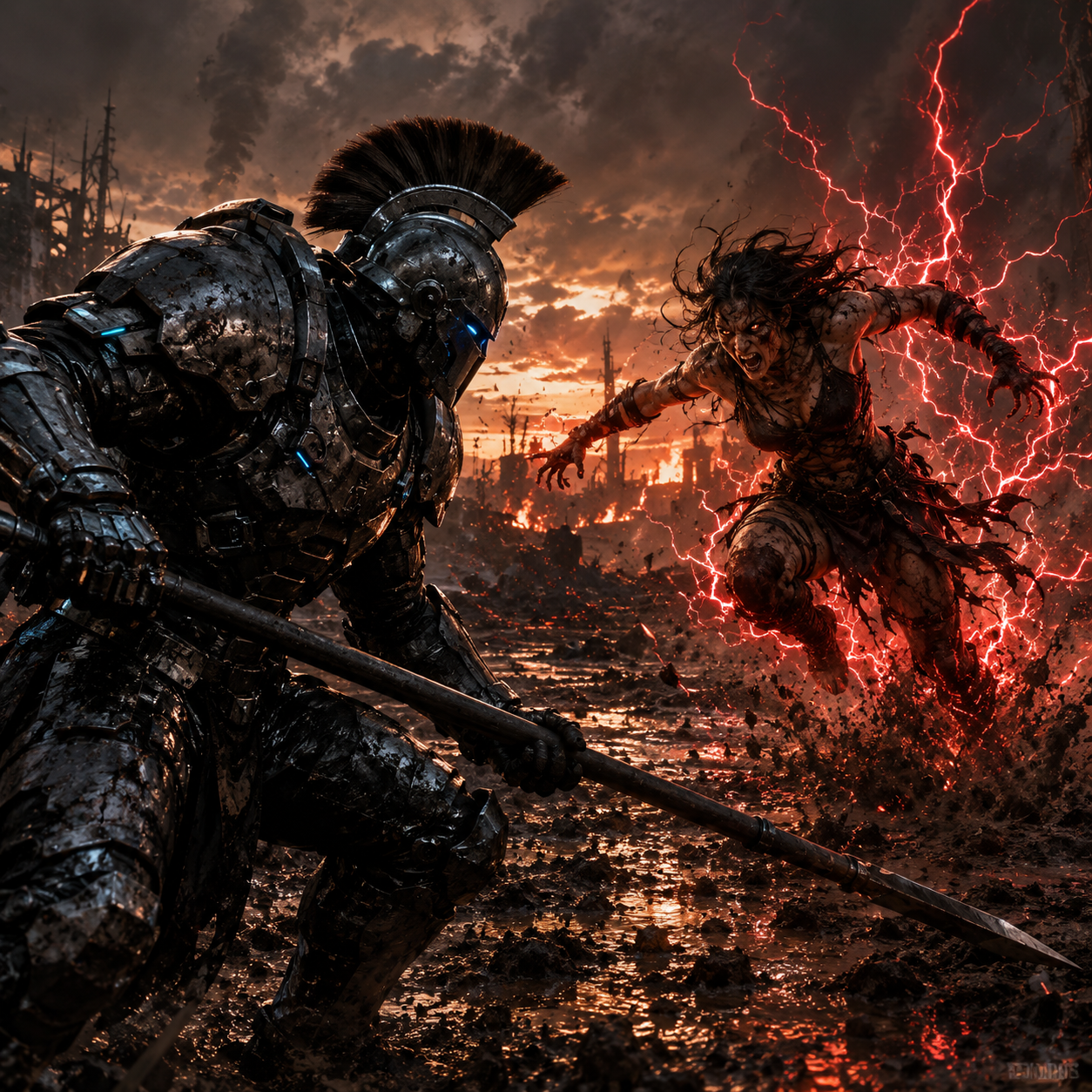
Why Trend Velocity Rewards Fast Production
Every short-form platform runs on the same underlying mechanic: a format appears, gets copied by unrelated accounts within hours, peaks, and then dissolves into a sea of late imitations. The peak is short. Sometimes it lasts a weekend; often it lasts a single afternoon. The creators who benefit are almost never the ones with the best cameras or the largest teams. They are the ones who can recognize a format early, produce a competent version of it, and publish while the reference still reads as current.
That is the practical case for AI video generation in trend work. A concept that would once have required a location, a performer, a lighting setup, and a day of editing can now be prototyped between coffee breaks. You can test three angles before lunch, keep the one that lands, and discard the rest without mourning sunk effort. The bottleneck has moved. It is no longer production capacity; it is decision speed — how quickly you can judge an idea, generate a version worth watching, and ship it.
This guide is a working manual rather than a prediction piece. It covers the loop from signal detection to upload, the hardware decisions that actually matter on macOS and Windows, prompt structures that return usable footage, continuity techniques that keep a sequence believable, and the editing work that still separates a generated clip from a finished video. Nothing here assumes a large team or an expensive rig. It assumes you have a laptop and a deadline measured in hours.
The Five Stages of a Trend Capture Loop
Treating AI video generation as a single step is the most common reason creators miss the window. It is better understood as five stages, each with its own time budget and its own quality bar. When something goes wrong, this structure also tells you exactly where to look — most failures are stage failures, not tool failures.
Stage One: Signal Detection
Spend fifteen minutes, no more, identifying what is genuinely moving. Look for formats that have appeared across multiple unrelated accounts in a short period. That repetition is the signal: it means a trend is spreading rather than being one person's one-off joke. Note the specific ingredients — framing, pacing, caption style, music, and the emotional beat that makes people stop scrolling.
Keep a lightweight capture system. A shared note, a bookmark folder, or a screenshot board all work. What matters is separating "this is rising" from "I personally enjoy this," because those two things diverge constantly. A format you find tedious can still be the strongest opportunity of the week.
Stage Two: Angle Selection
A trend is a container, not a script. Decide what your version adds: a different setting, an unexpected subject, a reversal of the expected ending, or simply a more polished execution of the same joke. Write one sentence describing your clip and why someone would share it. If you cannot finish that sentence in under a minute, the idea is not ready and no amount of rendering will rescue it.
Resist stacking multiple trends into one video. Audiences recognize one reference at a time, and a second reference usually dilutes the first rather than doubling the payoff.
Stage Three: Generation
This is where AI video tools earn their place. Generate short fragments — three to six seconds each — rather than attempting a single long take. Short generations fail faster, cost less time to review, and give you more usable material per attempt. Expect a hit rate between roughly one in three and one in six, depending on how unusual your prompt is. A ten-second attempt that fails wastes more time than three quick attempts that each teach you something.
Stage Four: Assembly
Cut the surviving clips into a sequence in your editor of choice, then add the elements models still handle poorly: precise timing, sound design, captions, and the small pauses that make a joke read. This stage is where a generated clip becomes a video. Skipping it is the fastest way to produce something that looks like a demo rather than a post.
Stage Five: Publishing
Upload, caption, and distribute. If a trend is genuinely hot, publishing three hours earlier matters more than a marginal improvement in color grading. Save the polish for a version you post a day later to a different audience or a different platform, where it can find a second life without competing with your own earlier post.
Choosing Hardware: Mac, Windows, or Hybrid
The reassuring news is that modern AI video work is far less hardware-bound than it used to be, because most generation happens on remote servers. Your machine mainly needs to handle browser-based tools, local editing, and the occasional upscale, frame interpolation, or background removal pass.
Apple Silicon Machines
An Apple silicon laptop with 16 GB of unified memory comfortably handles browser generation, 4K timeline editing in Final Cut Pro or DaVinci Resolve, and local captioning. Machines with 32 GB or more can run smaller local models for upscaling and masking, which is useful when you would rather not upload sensitive footage. The tradeoff is that heavy local diffusion work remains slower than on a dedicated desktop GPU with a large power budget.
Windows Machines with a Discrete GPU
A Windows desktop with a recent discrete GPU and 32 GB of system memory gives you the fastest local processing for upscaling, interpolation, and any on-device generation you choose to run. If your workflow involves batch-processing dozens of clips, this configuration saves the most wall-clock time. Laptops in this class work too, but sustained performance depends heavily on cooling — a thin chassis will throttle exactly when you need it most.
When Local Processing Beats Cloud
Three situations justify local processing: you are iterating on a masking or upscaling step hundreds of times, your footage is confidential, or your internet connection is unreliable enough to break a batch mid-run. Everything else is usually faster in the cloud, where model variety and throughput are simply better than anything a single machine can offer.
The practical answer for most creators is hybrid. Generate remotely for speed and model variety, then finish locally for control. Keep a dedicated browser profile for your video tools so sessions, uploads, and project history stay organized, and sync source clips to a fast external SSD instead of juggling a downloads folder.
Prompt Structures That Return Usable Footage
Most disappointing AI clips are not model failures. They are prompt failures. A prompt that reads like a wish — "make a cool trending video" — gives the model nothing to anchor on, so it invents its own anchors, usually the wrong ones.
The Five-Part Prompt Skeleton
A reliable structure includes five elements:
- Subject and action: who or what, doing exactly what, in the first second.
- Shot language: close-up, wide, handheld, drone, locked-off tripod, slow push.
- Light and palette: time of day, key light direction, and two or three dominant colors.
- Motion: what moves and how fast. Specify camera motion separately from subject motion, because they are different instructions.
- Style reference: film stock, animation style, or a plain description such as "clean commercial product lighting."
Keep the whole prompt under about eighty words. Longer prompts tend to dilute the important instructions rather than refine them. If you must add detail, add it to the subject line, not the style line.
Working With Seeds and Short Fragments
Generate four short variations before you judge the idea. Change one variable at a time — camera motion on one pass, lighting on the next — so you learn what the model actually responds to. When a clip works, note the seed value and the exact prompt text in a notes file. Reproducing a good result is a skill in itself, and it is what makes a second or third shot in the same video possible at all.
One Idea, Three Prompt Variations
Suppose the trend involves an unexpected object behaving like a living thing. Three useful variations might be: a locked-off close-up with soft window light, a handheld medium shot with warm interior tones, and a slow push-in under cool overcast daylight. Same subject, same action, three different visual premises. You review all three in ninety seconds and learn which framing the idea actually supports — far cheaper than debating it in a planning document.
Keeping Characters, Wardrobe, and Style Consistent
Continuity is the hardest part of AI video, and it is where amateur trend clips fall apart. If a character's jacket changes color between shots, the illusion collapses and the viewer starts analyzing rather than watching.
Reference Images and Locked Vocabulary
Start with a reference still. Generate or choose one image that defines the face, hair, wardrobe, and lighting, then use that image as input for every subsequent shot. Describe the character in identical language each time, pasting the same wardrobe sentence into every prompt. Small wording changes produce visible drift, even when the meaning is unchanged.
Do the same for style. If you called the light "soft overcast daylight," do not switch to "moody ambient light" on shot two. Reuse the same phrasing across the entire sequence and keep a notes file listing the exact strings you settled on. This sounds pedantic until the first time a two-word change ruins an otherwise good shot.
Solving Continuity Without Regenerating
When a shot refuses to match, do not fight it. Reframe so the inconsistency is hidden — a tighter crop, a different angle, or a cutaway to a detail. Editors have solved continuity problems this way for a century, long before any of these tools existed. A hand seen only from the wrist up cannot wear the wrong watch.
Where Human Editing Still Decides the Outcome
AI generation handles spectacle well and timing badly. The moments that make a short video funny, satisfying, or rewatchable — the beat before a reaction, the cut on a movement, the silence before a punchline — still come from an editor making decisions frame by frame.
Sound Design
Layering a whoosh, a click, or a low tone under a cut changes how the image reads. Most generated clips arrive silent, which makes them feel like test footage until you add texture. Build a small personal library of transitions, impacts, and room tones so you are not searching for a file while a trend cools.
Captions and Text
Burned-in captions remain essential for silent viewing. Keep them short, place them away from faces, and animate them sparingly. A caption that repeats the voiceover wastes a line of screen space; a caption that adds a second joke earns its place. Check legibility on an actual phone at arm's length rather than on a desktop monitor.
Trimming the Wind-Up
Generated clips often start with half a second of setup before the interesting motion begins. Cutting those frames makes the result feel intentional and buys you time elsewhere in the sequence. A useful rule of thumb: if a viewer can tell which shots were generated, the edit is not finished.
A Pre-Publish Checklist That Takes Two Minutes
Run through this before exporting. It is short on purpose, because a long checklist gets skipped exactly when you are in a hurry.
- Does the first second communicate the premise without audio?
- Is the character, wardrobe, or subject consistent across every shot?
- Are captions legible on a phone screen at arm's length?
- Does the audio peak anywhere unpleasant, and does music sit clearly under dialogue?
- Is the aspect ratio correct for each destination platform?
- Does the export bitrate match the clip length and motion level?
- Is the post caption adding context rather than repeating the video?
The last item matters more than most creators admit. A caption that tells viewers what to look for can rescue a clip that is otherwise ambiguous, while a caption that spoils the payoff removes the reason to watch twice.
Mistakes That Flatten a Promising Clip
Chasing a format after it has peaked. If your feed has stopped showing a format, the audience has moved on. Publish anyway if the clip stands on its own merits, but do not expect trend momentum to carry it.
Generating one long take. Long generations accumulate errors and leave you with nothing usable when they fail. Work in fragments and assemble later.
Ignoring aspect ratio. Generate in the ratio you will publish. Cropping a wide composition into vertical framing usually destroys the framing decisions the model made.
Overloading the prompt with plot. Models do not understand narrative arcs. Describe one moment, not a story with a beginning, middle, and end.
Skipping the hook. The first second has to sell the premise. If your best moment happens at second six, move it to second one and let the rest of the clip support it.
No fallback plan. Keep a simple, non-generated version of the idea in reserve. If rendering stalls or a tool goes down, you can still publish something while the topic is live.
Never resetting the project. Working in one sprawling timeline for weeks makes every export slow and every change risky. Start a fresh project per clip and archive the old one.
Realistic Timelines for a Hot Trend
The Ninety-Minute Version
Fifteen minutes for signal detection and angle selection. Twenty minutes for generation, running batches in parallel while you review. Fifteen minutes for assembly and sound. Ten minutes for captions and export. Ten minutes for upload, description, and cross-posting. That leaves twenty minutes of buffer for the failed render or the software update that always seems to arrive at the wrong moment.
The Forty-Five-Minute Sprint
When a format is moving extremely fast, compress the loop: fewer variations, one pass of captions, no color work, and a single platform first. Publish the sprint version, then refine it later if the concept deserves a second release to a different audience.
The Next-Day Follow-Up
If the first clip performs, a follow-up posted a day later often outperforms the original, because the algorithm has already learned who watches that kind of content. Plan the follow-up as a variation rather than a sequel: same premise, different setting or twist, so it stands alone for viewers who never saw the first one.
FAQ
Do I need a powerful computer to work with AI video generation?
No. Remote generation runs in a browser. A mid-range laptop with 16 GB of memory and a stable connection is enough for most work. Strong local hardware helps with upscaling, batch processing, and footage you would rather not upload.
Is Mac or Windows better for this workflow?
Both are viable. Apple silicon machines are efficient, quiet, and excellent for editing plus light local processing. Windows machines with a discrete GPU are faster for heavy local tasks. Choose based on the software you already know rather than on benchmark charts.
How long should an individual generated clip be?
Three to six seconds. You will collect more usable material and spend less time scrubbing through failures. Assemble longer sequences in an editor where you control the cut points.
How do I keep a character consistent between shots?
Use one reference image, paste identical wardrobe and lighting descriptions into every prompt, and change only one variable at a time. If a shot still drifts, reframe so the inconsistency falls outside the frame.
What should I do when a generation looks wrong?
First check the prompt for contradictory instructions, then shorten it. Most artifacts come from prompts asking for several incompatible things at once. If a model consistently fails on one specific motion, redesign the shot around a different action instead of retrying the same prompt ten times.
Can this workflow keep up with a trend in real time?
Yes, if you keep it narrow. Pre-plan your prompt skeleton, your editor template, and your export presets so that only the creative decisions change when a format appears. Preparation is what turns a ninety-minute loop into a forty-five-minute one.
Is it worth publishing a trend video late?
Only if the clip works without the trend context. Trend momentum fades quickly, but well-made videos keep finding audiences through search and recommendation long after the wave has passed.
How many variations should I generate before abandoning an idea?
Four to six short attempts is a reasonable cutoff. If none of them suggest a direction worth pursuing, the problem is usually the concept rather than the prompt, and a different angle will cost you less time than another round of rendering.
Should I disclose that a clip was generated?
Follow the platform's rules and your own audience's expectations. Many creators add a small label or mention it in the caption. Clear disclosure rarely hurts performance, while a surprised audience tends to comment about the technique instead of the content.
