

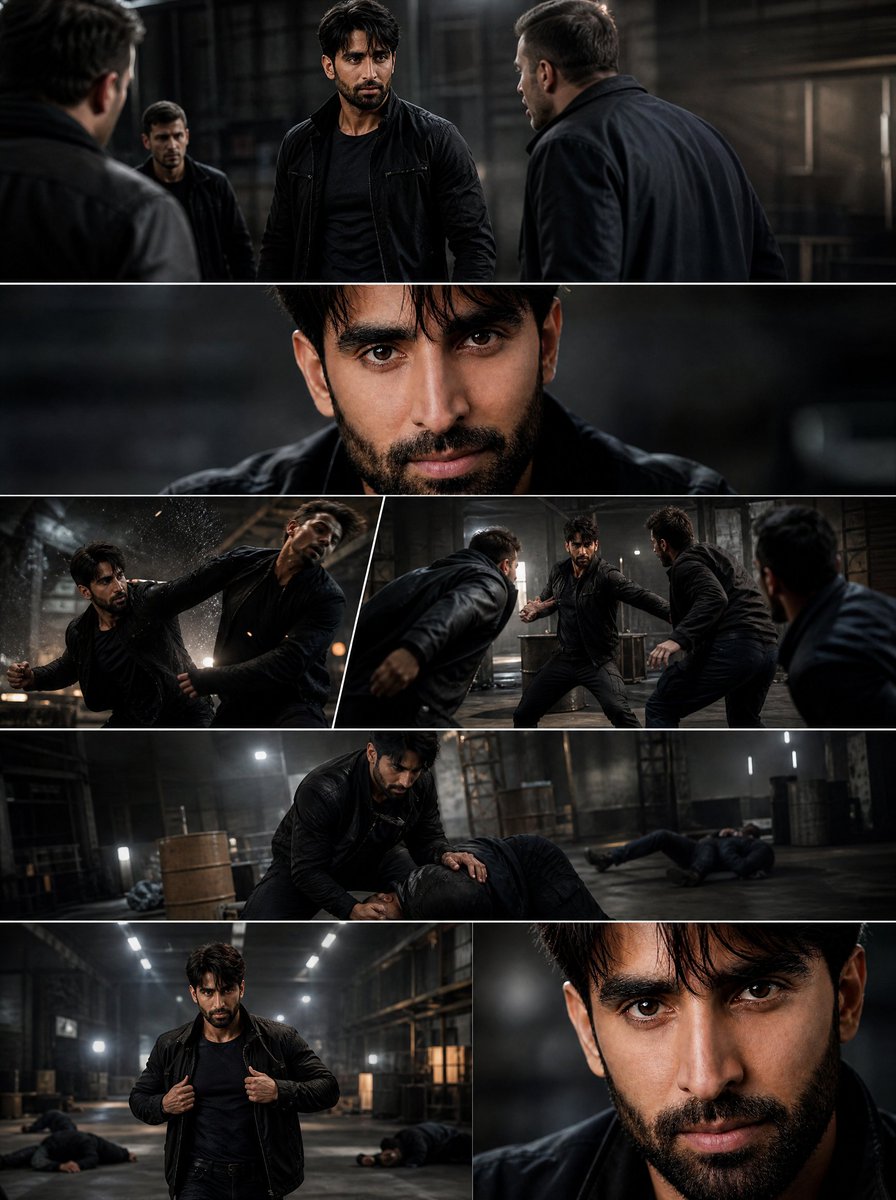

Why marketing teams automate video production now
Short-form video has become the default surface for both paid and organic distribution. A campaign that once meant a single hero film now means a hero film plus twenty vertical cutdowns, three hook variants per audience segment, and localized versions for every market you sell into. Producing that volume through a traditional shoot-and-edit pipeline requires a crew, studio time, talent releases, and weeks of post-production. Most teams simply cannot keep up, so they either publish less or publish worse.
Generative video changes the arithmetic. Instead of paying per shoot day, teams pay per generation attempt, and the marginal cost of a variant approaches the cost of writing a prompt and reviewing the output. That shift matters most for the middle tier of content: the explainer clips, feature demos, testimonial-style snippets, and social cutdowns that keep a brand present between big campaigns. These are the assets that rarely justify a dedicated shoot but absolutely justify an automated pipeline.
The realistic goal is not "press a button, get a campaign." It is a managed production system where humans own strategy, brand rules, and final approval, while models handle drafting, variation, and repetitive assembly. Teams that frame automation this way ship consistently. Teams that expect full autonomy usually end up with a flood of on-brand-adjacent clips that nobody trusts enough to publish.
Three forces make this practical right now: video models that understand narrative beats rather than isolated frames; tooling that stitches generation, voiceover, music, and captions into one timeline; and analytics that close the loop by telling you which hook actually held attention past the third second.
The four layers of an AI video production system
Automation is not one tool. It is a stack of four layers, and most failures trace back to skipping one of them. Build the layers in order and each one amplifies the next; skip the brief layer, for example, and your generation layer will produce beautiful footage that says nothing.
Layer 1 — Brief and narrative engine
Everything starts with a structured brief: objective, audience, single core message, proof point, tone, call to action, target duration, aspect ratios, and a must-avoid list. Convert that brief into a beat sheet before you touch a model. A reliable beat sheet for a 20–30 second marketing clip looks like this: hook (0–3s), problem or tension (3–8s), demonstration (8–18s), proof or benefit (18–24s), call to action (24–30s).
Once the beat sheet is stable, templatize it. Store prompt scaffolds per beat so a writer fills in variables rather than reinventing structure every time. This is the difference between a team that produces four concepts a week and a team that produces four concepts a quarter.
Layer 2 — Visual generation
This is where model choice and prompt craft live. Different shot types call for different approaches: photoreal product beauty shots, stylized motion graphics, talking-head avatar segments, abstract background plates, and B-roll that establishes a setting. Generate in batches of four to six variations per shot rather than one at a time, because judging a single generation tells you almost nothing about a model's real hit rate.
Layer 3 — Assembly, voice, and sound
Generation produces clips; assembly produces videos. This layer handles timeline order, pacing, transitions, voiceover, music beds, sound effects, caption burn-in, loudness normalization, and safe zones for platform UI. It is the layer that non-specialists underestimate most. A mediocre clip with excellent pacing and clean audio outperforms a stunning clip with sloppy cuts and inconsistent levels almost every time.
Layer 4 — Distribution and feedback
Naming conventions, metadata, variant IDs, and platform-specific exports belong here. So does measurement. If you cannot trace a performance number back to the specific prompt, model, and hook that produced it, your pipeline is generating content without generating learning.
Choosing models by job, not by hype
Model rankings change weekly. Job categories do not. Instead of chasing whichever model is trending, classify each shot in your storyboard by the property that matters most.
| Shot type | What matters most | What usually fails |
|---|---|---|
| Product beauty shot | Surface detail, lighting control, label accuracy | Warped text on packaging |
| Character-driven scene | Identity consistency across shots | Faces drifting between cuts |
| Motion graphics | Precise timing, editable layers | Rasterized output you cannot adjust |
| Talking head | Lip sync, natural cadence | Uncanny mouth shapes on long lines |
| Establishing B-roll | Camera motion, believable physics | Object morphing mid-move |
| Stylized or animated | Coherent art direction | Style flicker between shots |
A practical decision framework uses five criteria: control (how much you can steer output), speed (how fast you get a usable take), editability (whether you can fix it in post), licensing (whether commercial use is covered), and cost per usable second. That last metric is the one that matters financially. A model that costs twice as much per generation but returns a usable clip every second attempt is cheaper than a budget model that returns one usable clip in twelve.
Keep a small internal scorecard. For every project, log the model, the shot type, the number of attempts, and whether the result survived review. Within a month you will have a private ranking that is far more useful than any public leaderboard.
A repeatable weekly workflow, end to end
The value of automation is repeatability. A weekly cadence keeps quality stable and prevents the pipeline from becoming a scramble.
Day 1: brief intake and constraint mapping
Marketing, brand, and production agree on the brief, the beat sheet, and the constraints. Capture aspect ratios, subtitle safe areas, banned claims, required disclaimers, and legal review needs. Freeze the script at the end of the day.
Days 2–3: generation sprints
Writers and editors work shot by shot, batching prompts and reviewing in groups. Two rules keep this fast: never evaluate a single generation in isolation, and never rewrite the brief to fix a bad model. If a shot keeps failing, change the shot, not the strategy.
Day 4: assembly
Build the timeline, record or generate voiceover, choose music, and add captions. Produce one master file plus every required aspect ratio. Add two to four seconds of tail so platform autoplay loops do not clip your call to action.
Day 5: QA, captions, and publishing
Run the QA checklist, verify captions against the spoken track, export platform-specific versions, and schedule. Reserve the last hour for a short retro: what generated cleanly, what fought back, what to change in the prompt library.
Keeping visual consistency across shots and platforms
Consistency is the hardest part of AI video and the most important for brand recognition. Audiences forgive imperfect realism; they do not forgive a character who changes face between cuts or a product that changes color between scenes.
Start with a reference sheet. For character-driven work, define the character once with a clear description, reference images, wardrobe, and lighting conditions, then reuse that definition verbatim across every prompt. Keep seeds constant where the model supports it, and vary only the action or camera angle within a shot—not the identity attributes.
For brand consistency, lock a small palette of two or three colors, one or two lens languages (for example, a wide establishing look and a tight product look), and a consistent grade. Write these into a shared style block that gets appended to every prompt. It feels repetitive; that repetition is the point.
For cross-platform work, design crop-safe framing from the start. Keep the subject in the central third, place text no closer than ten percent from any edge, and check that subtitles do not collide with platform overlays. Generating in the widest ratio first and cropping down is usually safer than the reverse, provided you plan headroom.
Quality control: catching the artifacts audiences notice
Reviewers who know what to look for catch problems in seconds. Reviewers who watch passively ship mistakes. Build a checklist and enforce it.
- Hands and fingers: count them, check grip and occlusion.
- On-screen text: verify spelling, kerning, and that logos are not distorted or invented.
- Physics: liquids, cloth, hair, and thrown objects should behave plausibly.
- Identity drift: compare the first and last frame of every character shot side by side.
- Lip sync: check plosives and pauses, not just open/close timing.
- Temporal flicker: watch at half speed for texture and lighting popping.
- Continuity: wardrobe, props, and background must match across cuts.
- Audio: confirm consistent loudness, no clipped peaks, and no mismatched room tone.
- Captions: read them against the voice track; auto-captions routinely mangle brand names.
Also review the first three seconds separately with sound off. If the hook does not work muted, it will not work in a feed.
Localization and cultural adaptation without losing your voice
Translating a script is the easy part. Adapting a hook is the real work. Idioms, humor, references, and pacing differ across markets, and a literal translation of a punchy English hook often lands flat. Use transcreation: give the local reviewer the beat sheet and the intent of each line, then let them rewrite for effect rather than accuracy.
On-screen text needs its own pass. Some languages expand thirty percent or more in length, and right-to-left scripts change the entire layout logic. Leave generous padding, avoid baked-in text where you can overlay it later, and keep a textless master export for every video so future localization does not require regeneration.
Imagery carries cultural meaning too. Wardrobe, settings, gestures, food, and holiday references all need a local sanity check. Build a short adaptation brief per market covering tone, taboo topics, required disclaimers, and preferred proof points. It takes an afternoon to write and saves months of rework.
Measuring results and improving the pipeline
Automation only compounds if results feed back into prompts. Track four numbers per variant: three-second hold rate, completion rate, click-through rate, and cost per acquisition or cost per qualified lead. Anything else is nice to have.
Tag every export with a variant ID that maps to a log entry containing the model, prompt, shot type, hook angle, and edit version. When a variant wins, you can identify whether the win came from the hook, the visual style, or the offer. That is how you avoid the classic trap of scaling a lucky clip and then failing to reproduce it.
Run a short review every week. Kill the bottom performers, promote the top performers into a small "proven" library, and rewrite the prompt scaffolds that produced them. Over a quarter, your prompt library becomes the most valuable asset your team owns—far more valuable than any individual video, because it is the machine that produces them.
Common mistakes that stall AI video programs
Automating before standardizing. If you cannot describe your video format on one page, a pipeline will only produce inconsistency faster.
Judging single generations. One output is noise. Four to six outputs is a signal. Evaluate in batches or you will discard models that are actually working.
Ignoring audio. Viewers forgive visual imperfection and never forgive bad sound. Budget as much review time for audio as for picture.
No brand guardrails. Palettes, typography, logo rules, and claim restrictions belong in the prompt scaffold, not in a reviewer's memory.
Treating prompts as disposable. Every prompt that worked is documented knowledge. Every prompt that failed is a boundary worth recording.
Bottlenecking review at the end. Review per shot, not per finished video. Catching a drifting character in generation is cheap; catching it after assembly is not.
Overproducing before validating the hook. Generate five hooks, test them cheaply, then expand only the winner into a full clip.
FAQ
Do I still need an editor if I automate generation? Yes, and their role shifts upward. Editors become the people who own pacing, sound design, brand coherence, and the final cut. That judgment is the hardest part to automate and the part audiences actually feel.
How many variants should I produce per concept? Start with five hook variants and three visual treatments, then expand the single best combination into full-length versions. Producing twenty full videos before testing hooks wastes most of the effort.
How do I keep a character consistent across many shots? Define the character once in precise language, attach the same reference images to every prompt, keep seeds fixed where possible, and change only action or camera angle between shots. Then verify by comparing first and last frames side by side.
Is AI-generated video safe for regulated industries? It can be, with process. Keep claims reviewable, preserve textless masters, document your generation log, and route anything with health, financial, or legal implications through the same approval path as your traditional creative.
What is the smallest viable pipeline? One writer, one editor, one model account, a shared prompt library, and a fixed weekly cadence. Volume comes later; repeatability comes first.
How do I avoid output that looks obviously synthetic? Favor simpler camera moves, avoid extreme close-ups of hands, keep shots short, lean on motion graphics for abstract ideas, and always finish with strong sound design and clean captions. Restraint reads as polish.
How long does it take to see results? Give the pipeline four to six weeks of consistent use. The first two weeks are calibration; the real gains appear once your prompt library reflects what your audience actually responds to.
