
Why the Editor You Pick Matters More Than the Model You Prompt
Generating a striking eight-second clip is no longer difficult. Almost every serious platform can turn a well-written prompt into footage that looks expensive. The hard part starts after that first clip works: keeping the face, wardrobe, color grade, and camera language identical across forty more shots so the finished piece feels like one film instead of a loose collection of experiments.
That shift changes how you should evaluate tools. Comparing AI video editors by browsing a list of supported models is like choosing a camera by counting menu options. The model is the sensor; the editor is the body, the lens mount, the storage, and the workflow around it. A mediocre editor with deep multi-image fusion and a well-designed asset pipeline will outproduce a feature-rich editor that forces you to rebuild your character from scratch on every shot.
This guide lays out a practical framework for choosing an AI video editor. It focuses on the capabilities that actually determine finished quality: multi-image fusion, custom model support, agentic direction, storage architecture, and the cost behavior of iterative work.
A Decision Framework for AI Video Editors
Before comparing specific products, score candidates against seven criteria. Write the scores down. Most buying mistakes happen because a single flashy feature crowds out everything else in memory.
| Criterion | What to Measure | Why It Decides Projects |
|---|---|---|
| Model access | Range of generation models, update cadence | Creative ceiling and fallback options |
| Multi-image fusion | How many references, how well identity holds | Character and style continuity |
| Custom training | Ability to train, store, and reuse your own model | Brand consistency at scale |
| Agentic control | Whether an agent can plan and revise sequences | Fewer manual retries |
| Editing surface | Timeline, masking, audio, color tools | Whether you still need a second app |
| Asset handling | Storage, versioning, search, collaboration | Speed on projects over 30 seconds |
| Cost behavior | What consumes budget and how predictably | Whether iteration is affordable |
Model Breadth Versus Model Fit
A large library matters, but not for the reason most marketers claim. You rarely need dozens of models on a single project. You need three things: a reliable workhorse for the bulk of shots, one premium model for hero moments, and at least one specialized model for unusual tasks such as stylized animation, product turntables, or volumetric lighting.
Breadth is insurance against model churn. When a headline model changes its output style between versions, or a provider changes availability, an editor that aggregates multiple backends lets you swap without rebuilding your project. If you have ever had a look devolve overnight because an upstream model was updated, you already understand the value.
Model fit is what you actually edit with. Test candidates with the same three prompts: a medium shot of a person speaking, a wide establishing shot with complex motion, and a close-up with fine texture such as hair or fabric. The model that handles all three consistently is worth more than the one that wins a viral demo.
Coherence Across Shots, Not Single-Clip Beauty
Run a shot-continuity test before you commit to any tool. Build a five-shot sequence with the same character, the same wardrobe, and the same location, then watch it back at full speed. Ask:
- Does the skin tone drift between shots?
- Do the hands and eyes survive?
- Does the light direction stay consistent across the cut?
- Do costumes, props, and set dressing remain stable?
- Does the camera language feel like one operator?
Most editors fail at least two of these. The ones that pass are the ones you should shortlist, regardless of how their pricing page reads.
Predictable Consumption Costs
Iterative generation is where budgets quietly die, because a single usable shot can require ten to thirty attempts. Before subscribing, model the real loop: rough generation, refinining, upscaling, and re-rendering after an edit. Understand what triggers consumption — seconds generated, resolution, model tier, training runs, storage — and whether unused allowance rolls over.
A tool with a higher headline price but transparent per-generation behavior is usually cheaper than a low-priced tier that charges unpredictably for every retry. Build a small spreadsheet with your expected number of shots and iterations. The answer often surprises people who assumed the cheaper plan was cheaper.
Where the Edit Actually Happens
Some AI video editors stop at generation and hand you a folder of clips. Others include trimming, transitions, audio ducking, subtitles, and color. Neither is inherently better — but mismatches cause pain. If your team already lives in a traditional NLE, prioritize clean exports, consistent naming, and project interchange over built-in editing features. If you are a solo creator producing social-first content, an all-in-one suite saves hours you would otherwise spend on manual assembly.
Multi-Image Fusion: The Real Consistency Test
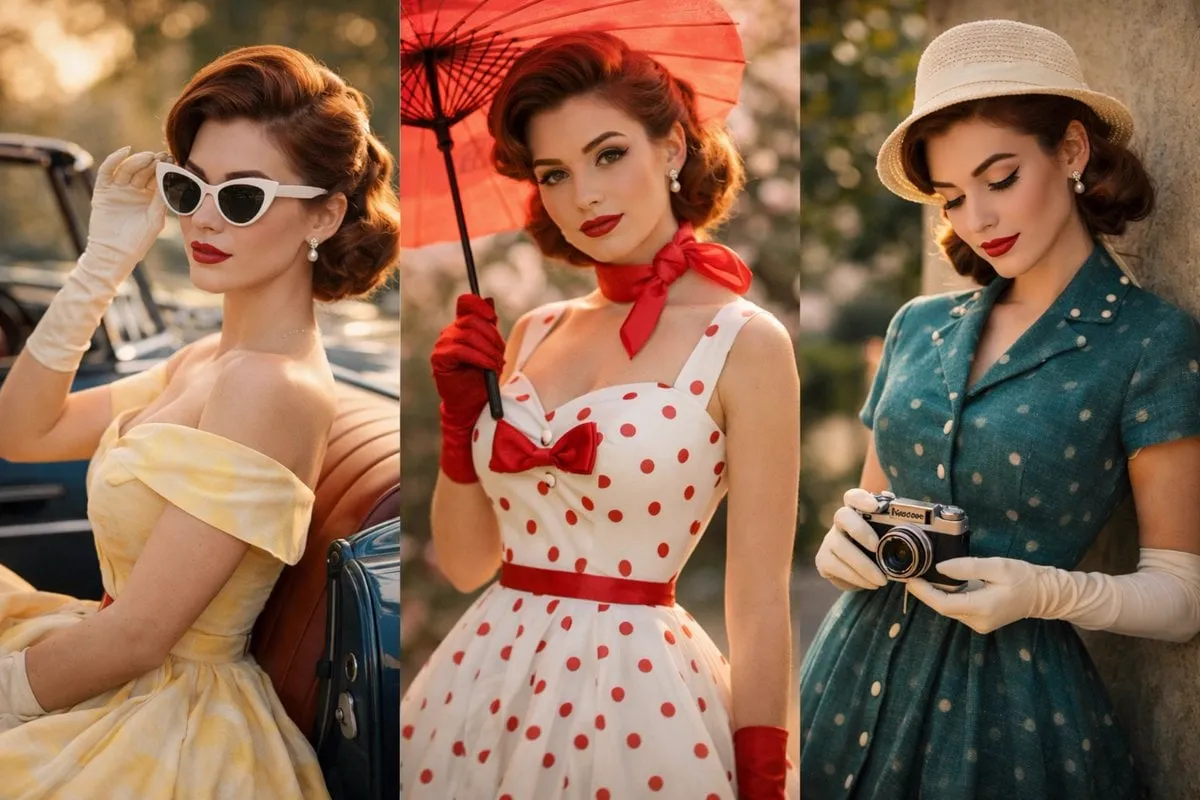
Fusion is the feature that separates a toy from a production tool. In practice it means supplying several reference images — a face, a costume, a location, a color palette, a prop — and having the generator combine them into a new shot while preserving each element's identity.
What Fusion Is Doing Under the Hood
A single text prompt carries no visual memory. Fusion introduces conditioning: the model receives reference features alongside your text and is asked to respect them. How well a platform does this depends on how many references it accepts, how it weights them, whether it separates identity from style, and whether it can carry a reference set across an entire sequence rather than one shot.
Good implementations let you tag references by role. A face reference should influence identity; a palette reference should influence color; a lighting reference should influence contrast and direction. When a platform treats all references as one undifferentiated blob, you get identity leaking into your color grade and lighting bleeding into faces.
Building a Reference Board That Works
Quality of references matters as much as the tool. A sensible board includes:
- Character identity — three to five images of the same person from different angles, neutral expression, even lighting, no heavy filters.
- Wardrobe — one clean image per outfit, ideally on a similar body type.
- Environment — two or three wide shots of the location with consistent time of day.
- Palette — a small color strip or a graded still that establishes the film's look.
- Props and vehicles — isolated images with clean backgrounds.
- Negative references — examples of what must not appear, such as the wrong logo or a competing style.
Then test the board for contradictions. If your character reference is lit by warm window light and your location reference is a cool overcast street, you are asking the model to resolve a conflict. Fix it in the references rather than in twenty prompts.
Diagnosing Fusion Failures
When continuity breaks, the cause is usually one of five things: too many references fighting each other; a low-resolution reference with compression artifacts; reference images that show different people; a prompt that contradicts the reference; or a platform that resets conditioning between shots. Test each in isolation. Change one variable at a time and keep a log. Teams that document their fusion settings reproduce good results months later; teams that do not end up re-discovering them.
Custom Model Training and Style Ownership
Generic models produce generic-looking output. If your brand has a signature visual language — a particular grade, a recurring character, a product rendered in a consistent way — training your own model is the most durable investment you can make.
Deciding Whether You Need a Trained Model
Train when at least two of these are true:
- The same character appears across many episodes or campaigns.
- The visual style is a brand asset, not a one-off choice.
- You are spending more than a few hours per project fixing drift manually.
- You need output that competitors cannot easily replicate with a prompt.
Do not train for a single short project. The dataset work, training time, and evaluation cycles only pay off with reuse.
Dataset Hygiene Checklist
- Twenty to sixty images per concept is a common starting range.
- Consistent subject framing and lighting across the set.
- No watermarks, text overlays, or compression blocking.
- Avoid near-duplicate frames; variety beats volume.
- Separate datasets by concept — one for character, one for style — instead of mixing both into a single model.
- Record captions that describe what is visible, not what you hope to see.
Reading Your Training Results
Judge a trained model on three axes: identity retention under new poses, style retention under new subjects, and flexibility. A model that reproduces your look perfectly but can only generate one composition is overfit. A model that ignores your look but generates anything is undertrained. Aim for the middle: recognizable style, wide range of shots.
Keep every training run and its dataset version. When a model starts drifting after an upstream update, you want the ability to retrain from a known-good baseline rather than reverse-engineer what changed.
Agentic Direction: Turning Prompts Into a Timeline
An AI agent director is a planning layer that reads a script or treatment, breaks it into shots, assigns models and references to each shot, generates, reviews the result against the brief, and revises. This is the difference between prompting one clip at a time and directing a sequence.
What to look for:
- Shot decomposition that respects narrative beats rather than chopping text arbitrarily.
- Reference routing, so the character model is used only on shots containing the character.
- Self-review loops that catch obvious continuity breaks before you see them.
- Human checkpoints, because automated approval of every shot is a fast route to usable-but-boring footage.
A practical workflow is to let the agent produce a rough assembly with cheap, fast settings, review the sequence as a whole, then re-generate only the shots that fail. This hybrid approach costs far less than generating every shot at maximum quality from the start.
Integrating AI Video Into an Existing Post Workflow
Generation is only one stage. The rest is plumbing, and plumbing determines how quickly you can ship.
Asset Storage and Naming
Adopt a naming convention before your first project, not after your two-hundredth clip. A workable pattern is project_episode_shot_take_version. Store references separately from renders. Keep a plain-text manifest listing the prompt, model, reference set, and settings for every approved shot — this single habit removes most of the pain of reproducing a look later.
Review Loops and Versioning
Decide who approves what. A common split: the director approves motion and performance, the brand lead approves wardrobe and logo accuracy, the editor approves pacing and transitions. Route feedback to specific shots rather than to whole sequences, or you will regenerate work that was already fine.
Keep the last two approved versions of every shot at minimum. Disk is cheap; re-rendering a shot you accidentally overwrote is not.
Common Mistakes That Sink AI Video Projects
- Chasing the newest model every week. Version churn destroys continuity. Lock a model per project and only migrate between projects.
- Skipping the reference board. Prompt-only continuity is guesswork.
- Generating at maximum quality too early. Rough cuts first, final renders last.
- Ignoring audio. Dialogue, ambience, and music carry more perceived quality than resolution.
- Treating every shot as equally important. Spend your budget of time and compute on the four or five hero shots.
- No documentation. Undocumented settings become unreproducible magic.
- Letting the tool dictate the story. The script should drive shot selection, not the other way around.
A Worked Example: A Sixty-Second Brand Film
Here is how the framework looks in practice for a one-minute product story with a single recurring character.
Pre-production. Write a twelve-shot treatment. Build a reference board with four character images, three location images, one palette strip, and two product images. Train a character model on forty curated stills and a style model on thirty graded frames.
Assembly. Use an agent pass to decompose the treatment into shots and assign the character model to the eight shots containing the protagonist and the style model to the six environment shots. Generate at low resolution with fast settings.
Review. Watch the full assembly at normal speed. Flag continuity breaks, awkward motion, and any shot where the product reads incorrectly. Expect to flag four to six shots.
Refinement. Regenerate flagged shots with the highest-quality model and tightened prompts. Rebuild the reference board if a specific reference is causing drift.
Finish. Upscale approved shots, add transitions, lay in voiceover, music, and sound design, then color-match across the sequence. Export a master plus platform-specific versions.
The difference between teams that finish this in two days and teams that flounder for two weeks is almost never model choice. It is preparation, documentation, and disciplined review order.
Frequently Asked Questions
Do I need custom model training, or are good prompts enough?
Good prompts are enough for one-off clips and moodboards. Once the same character or style must appear across multiple videos, training pays for itself. The break-even point is usually somewhere around the third or fourth project reusing the same visual identity.
How many reference images should I provide for fusion?
Start with three to five for a face and one to three for each other element. More references are not automatically better; conflicting references cause more drift than too few. Add references only when a specific inconsistency keeps recurring.
Is multi-image fusion better than training a model?
They solve different problems. Fusion handles per-project continuity and quick changes. Training encodes a durable style or character that persists across projects. Mature workflows use both: a trained model for the protagonist, fusion for scene-specific wardrobe and props.
How do I keep spending under control on iterative projects?
Generate rough cuts at low resolution, review sequences rather than individual clips, and regenerate only failed shots at high quality. Track which settings actually consume your allowance and avoid stacking premium models on shots nobody will notice.
What should I do when a model update breaks my look?
Freeze model versions per project where the platform allows it. Keep a documented baseline with a reference set and settings so you can retrain or re-tune quickly. If version pinning is not available, finish active projects before migrating.
Can I use these tools without a traditional editing suite?
For social-first, short-form, and explainer content, a capable AI editor with timeline tools, audio, and export presets is often enough. For long-form narrative work, expect to finish in a dedicated editing application and use the AI tool for generation and assembly.
How do I evaluate a tool in a single afternoon?
Run three tests back to back: a five-shot continuity sequence, a fusion test with conflicting references to see how the tool resolves them, and a cost test where you generate the same shot at three quality tiers and compare time and output. The results will tell you more than any feature list.
Making the Decision
The best AI video editor for your team is the one that keeps your characters recognizable, your style repeatable, and your iteration affordable. Model libraries are a necessary baseline, but fusion quality, custom model support, agentic planning, and asset discipline are what turn a promising generator into a production pipeline you can rely on season after season.
Score your candidates honestly. Run the continuity test. Document everything. Then commit to one tool long enough to learn its quirks — consistency, in the end, is a habit as much as a feature.
