

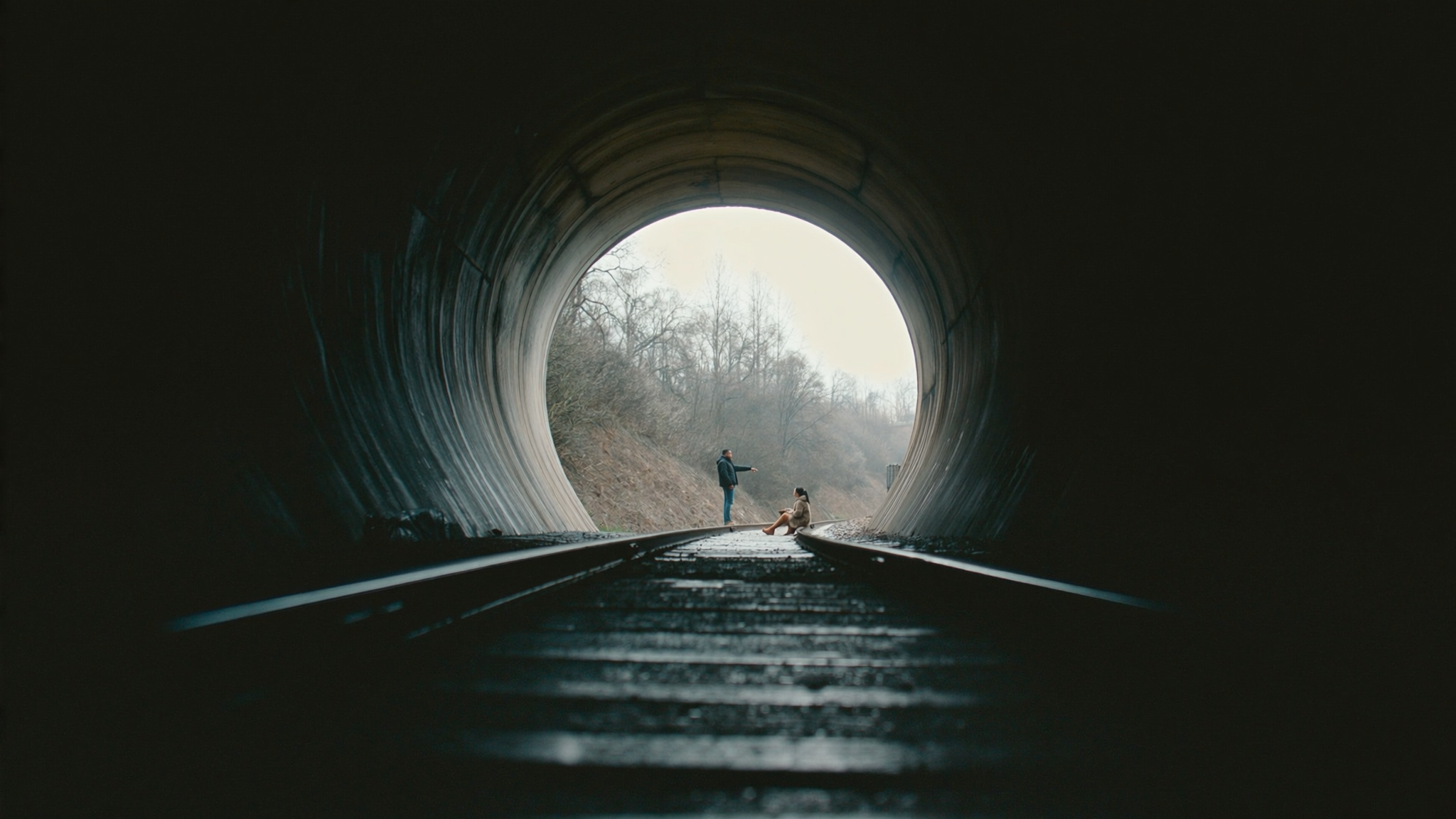
Web storytelling has quietly become a video-first discipline. Articles, newsletters, and long-form landing pages still matter, but the formats that travel furthest across social feeds, embedded players, and vertical screens are short, character-driven video episodes. That shift has made AI video generation tools a practical part of the publishing stack rather than a novelty.
This guide compares the main categories of AI video tools and, more importantly, shows how to build a workflow that keeps a series coherent across dozens of episodes. The goal is not to crown a single winner. The goal is to help you pick tools that fit your story, your team, and your publishing rhythm.
Why web storytelling changed shape
For most of the web's history, a story was text plus images. Video was an expensive add-on produced by a dedicated team. Two changes broke that pattern.
First, distribution fragmented. A single story now lives as a long-form page, a 60-second vertical clip, a square teaser, a narrated explainer, and a silent captioned loop. Producing all of those from one shoot is expensive. Producing them from one script is much cheaper.
Second, generation quality crossed a threshold. Synthetic footage that once looked like a lava lamp now holds up in close-up, handles camera movement, and preserves a face across multiple shots. That reliability is what makes episodic storytelling possible. A single impressive clip is a demo. Twenty consistent clips are a series.
The practical consequence: the bottleneck moved. It is no longer "can we generate a good shot?" It is "can we generate a hundred shots that look like they belong to the same world, on a schedule, without a director watching every frame?"
How to evaluate AI video tools before committing
Most comparison articles rank tools by visual quality. Visual quality matters, but it is rarely the reason a project fails. These four criteria predict success far better.
Narrative control
Ask a simple question: how precisely can you describe what you want and get it? Prompt-only tools are fast but loose. Tools that accept a shot list, a reference frame, a camera move, and a timing cue give you the directorial leverage that episodic work demands. If the tool cannot hold a composition while the subject moves, it will fight you on every dialogue scene.
Consistency mechanics
Consistency is the hardest problem in AI video. Look for these specific capabilities:
- Character references that survive changes in lighting, angle, and wardrobe
- Style references that lock color grade, grain, and lens character
- Multi-image fusion, where several reference stills are blended into one coherent subject
- Seed control or scene memory so a re-roll does not reset the look
- Motion transfer for reuse of a performance across shots
A tool with average fidelity and strong consistency beats a tool with stunning fidelity and no memory. You will reshoot less.
Output specifications
Check resolution, frame rate, aspect ratio support, clip length limits, and whether you can export clean plates and alpha channels. If you plan to composite in a traditional editor, you want predictable codecs and no baked-in overlays. Vertical-first tools that only output 9:16 will force awkward reframing when you need a widescreen hero cut.
Iteration cost and speed
The real metric is cost per accepted shot, not cost per generation. A tool that produces 90 percent usable clips on the first try is cheaper than one with a lower per-render rate and a 30 percent hit rate. Track two numbers for every tool you test: generations per accepted shot, and minutes from prompt to usable file.
The main categories of AI video generators
It helps to stop thinking about brands and start thinking about categories, because most teams end up combining two or three of them.
Text-to-video engines
These generate motion from a written prompt. They are best for establishing shots, abstract transitions, environmental b-roll, and any moment where specific facial identity is not critical. They are weakest at dialogue and precise continuity.
Use them when you need volume and atmosphere: a rainy street, a slow push into a server room, a dream sequence. They are also excellent for title-card backgrounds and animated textures.
Image-to-video and multi-image fusion
You supply one or more stills and the model animates them. This is the workhorse category for character-driven web series, because the stills give you control. Generate or select a hero portrait, feed it as a character reference, and the animation inherits the face.
Multi-image fusion is particularly useful: combine a face reference, a wardrobe reference, and a lighting reference, and the model builds a composite subject. This is how you get the same protagonist to appear in a beach scene and a courtroom scene without looking like a different person.
Avatar and voice-led tools
These generate a talking performer from a script, often with lip sync, gesture, and voice cloning. They are ideal for explainer content, interviews, and host-led formats where a consistent presenter carries the show.
The trade-off is expressiveness. Avatar systems excel at clarity and reliability but can flatten subtle emotion. If your story depends on micro-expressions, generate the performance with an image-to-video model and use avatar tools for the segments where information delivery matters more than nuance.
Editing, assembly, and post-production assistants
Generation is only half the pipeline. These tools handle the other half:
- Automatic rough cuts based on script and dialogue timing
- Text-based editing, where you delete a word and the video shortens
- Caption generation, translation, and burned-in or sidecar subtitle export
- Music and sound-effect suggestion matched to scene mood
- Silence removal, jump-cut creation, and vertical reframing
- Color matching between AI-generated clips and real footage
A strong assembly assistant often improves perceived quality more than a marginally better generator, because pacing is what makes a story feel professional.
Building a consistent look across an episodic series
The single most common failure in AI web storytelling is the drift problem: episode one looks cinematic, episode five looks like a different show. Fix it with documentation, not luck.
Create a story bible before the first prompt
Write down the things that must never change:
- Character sheets: age, build, hair, distinguishing marks, default wardrobe, and two or three reference images per character
- Palette rules: primary colors, accent colors, and forbidden hues
- Lens language: focal lengths you use for intimacy versus distance
- Grade rules: contrast curve, saturation ceiling, grain amount, and any color cast
- World rules: architecture, technology level, weather, and recurring props
This document becomes your prompt library. Every generation prompt pulls from it, which means every shot inherits the same DNA.
Use a reference-first generation order
Generate your key art first. Then generate every subsequent shot by referencing that key art. Never generate a character cold from text once the look is established. This single habit eliminates most consistency problems.
Control the camera deliberately
Camera language is a storytelling tool, not decoration. A locked-off wide shot creates distance and calm. A slow dolly-in creates intimacy and tension. A handheld micro-shake creates unease. Decide what each beat needs, then specify it explicitly in the prompt or the camera-control panel.
Consistency in camera language matters as much as consistency in faces. If episode one uses static compositions and episode two is all sweeping drone moves, the audience feels the disruption even if they cannot name it.
A practical workflow from script to published episode
Here is a repeatable six-step pipeline that works for a small team producing one episode per week.
Step 1: Write the beat sheet, not the script
Start with eight to twelve beats. Each beat is one sentence describing a change: a decision, a reveal, a reversal. This structure survives format changes. A beat sheet can become a 90-second vertical clip or a four-minute widescreen piece without rewriting the story.
Step 2: Convert beats into a shot list
Each beat becomes one to four shots. For each shot, note:
- Subject and action
- Shot size (wide, medium, close)
- Camera behavior
- Lighting and time of day
- Duration in seconds
- Whether it is generated, animated from a still, or shot as a real insert
This table is the project's spine. It also tells you which generation category to use for each line.
Step 3: Generate in batches, not one at a time
Batch by scene, character, and lighting setup. Generating all night-scene shots together keeps the grade consistent and reduces prompt rewriting. Expect a selection ratio: for every ten generated clips, you might keep three or four. Budget your time accordingly and never fall in love with the first output.
Step 4: Assemble for rhythm before polish
Drop the selected clips onto a timeline with rough timing and a temporary music bed. Watch it once with the sound off. If the story reads visually, your structure is sound. If it does not, more visual polish will not save it.
Step 5: Layer sound and captions
Sound carries more perceived production value than resolution. Add:
- Room tone under every dialogue scene
- Foley for footsteps, fabric, doors, and handling
- A music bed that changes at act breaks, not continuously
- Captions with correct line breaks and reading speed under 20 characters per second
Step 6: Publish in multiple aspect ratios from one master
Cut a widescreen master, then derive vertical and square versions. Reframe rather than crop blindly: move the subject within the frame, adjust caption placement, and shorten the opening two seconds for feed autoplay. Publish, then log what worked. Retention data at the three-second and ten-second marks tells you which hook style your audience responds to.
Choosing a tool by team size
Solo creators should prioritize speed and template quality. A tool with strong presets, automatic captions, and one-click vertical export removes the need for a dedicated editor.
Small teams of three to eight people should prioritize collaboration features: shared asset libraries, comment threads on the timeline, version history, and role-based permissions. When two people generate shots for the same episode, shared character references are non-negotiable.
Larger production groups should prioritize pipeline integration: API access for batch generation, predictable file naming, export of intermediate assets, and compatibility with professional editing and color tools. At this scale, a slightly weaker generator with a clean API beats a better generator with no automation path.
Common mistakes that break AI video series
These recur often enough to be treated as a checklist of things to avoid.
- Prompt recycling without references. Reusing a text prompt across episodes does not preserve a face. Use image references.
- Ignoring aspect ratio plans. Discovering you need vertical after finishing a widescreen edit means recutting everything.
- Over-relying on motion. Constant camera movement exhausts viewers. Stillness makes movement meaningful.
- Generating dialogue in a text-to-video model. Use avatar or lip-sync tools instead; faces degrade under speech in general-purpose models.
- Skipping sound design. Silent AI footage reads as a demo. Sound makes it read as a story.
- No continuity log. Keep a simple spreadsheet of wardrobe, props, and time of day per scene. Ten minutes of logging saves an hour of regeneration.
- Chasing maximum realism. Stylized looks hide artifacts, age better, and differentiate your series. A slight illustration or film-grain treatment often outperforms photorealism.
A quality-control checklist before publishing
Run every episode through the same pass:
- Does the first three seconds establish a question or a face?
- Do all characters match their reference sheets in every shot?
- Is the color grade consistent across scene boundaries?
- Do captions match the audio exactly and stay on screen long enough to read?
- Is there room tone under silence, or does the audio drop to dead air?
- Does the episode end on a hook, a question, or a clear next step?
- Do the vertical and square cuts make sense on their own?
- Is the file exported in the correct codec, resolution, and loudness target for each platform?
FAQ
Do I need more than one AI video tool?
Most teams use two to four: one text-to-video engine for atmosphere, one image-to-video or fusion model for characters, one avatar or voice tool for dialogue, and one assembly tool for editing and captions. Trying to do everything in a single tool usually means compromising on consistency or speed.
How do I keep a character's face consistent?
Create a reference sheet with two or three high-quality portraits in neutral lighting. Feed those images as character references with every generation. Avoid reusing only text prompts, and avoid changing the reference set mid-series unless the story requires it.
How long should an episode be?
For feed-driven storytelling, 45 to 90 seconds works well for vertical, and two to five minutes for widescreen explainers. Anything longer needs a strong narrative reason and tighter pacing than most creators expect.
Is AI-generated video good enough for professional publishing?
For storytelling, explainers, marketing, and education, yes, provided the sound design and pacing are handled professionally. Audiences judge the whole experience, not individual frames. Weak audio or sloppy captions will damage credibility far more than a slightly soft background.
What is the biggest time saver?
The shot list. Teams that write a detailed shot list before generating report far fewer wasted generations and faster assemblies. It converts vague creative intent into testable requirements.
How do I handle style drift over a long series?
Lock a style reference image, store your grade settings, and re-check a sample frame from each new scene against episode one. If the saturation or contrast has crept, correct it in the edit rather than regenerating everything.
Should I always use the newest model?
No. Switching models mid-series resets your look and your prompt library. Upgrade at season boundaries, and test the new model on a throwaway scene before committing the whole production to it.
Final thoughts
The best AI video tool is the one that fits your story's specific demands: consistent characters, controllable camera work, clean exports, and fast iteration. Quality matters, but workflow matters more. Build a story bible, work from a shot list, reference your own key art instead of relying on text alone, and treat sound design as half the job.
Do that, and AI video generation stops being a gamble and becomes what it should be for web storytelling: a dependable production method you can plan around, episode after episode.
