
Why consistency is the real bottleneck in AI video production
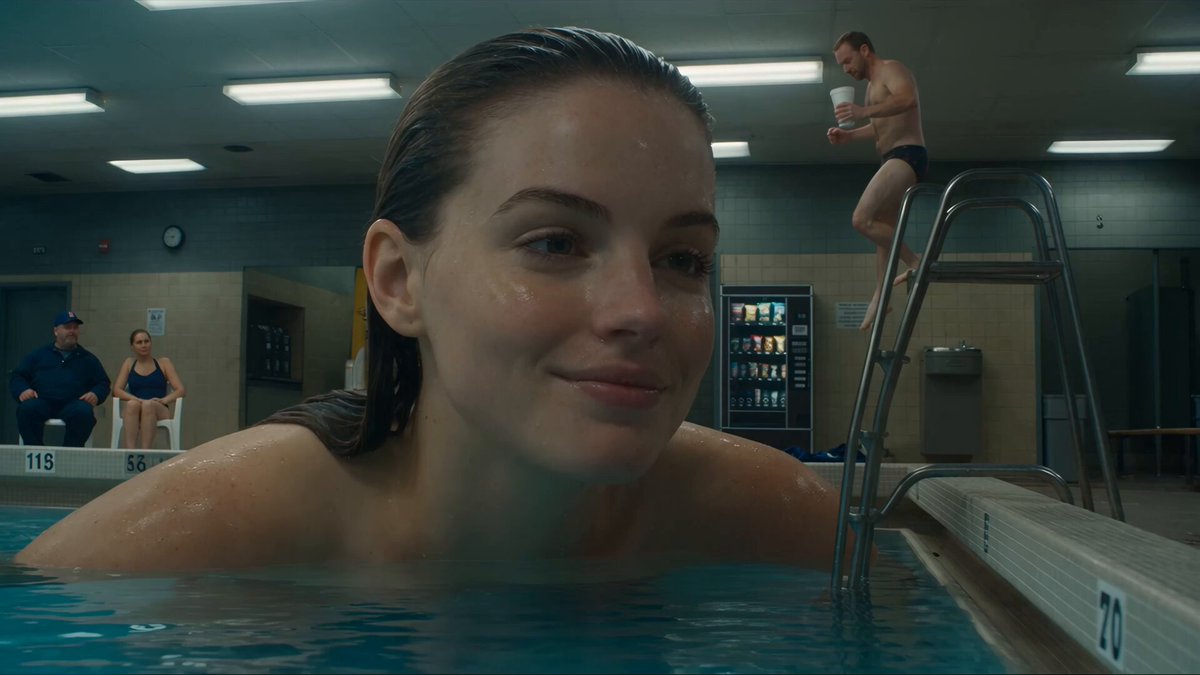
Generative video tools have become remarkably good at producing one impressive shot. Ask for a neon-lit alley with rain bouncing off the pavement, and you will get something that looks like a still from a feature film. The trouble starts on shot two.
The character's jacket changes color. Their jawline softens. The grain structure shifts from fine to chunky. By shot five, you are no longer editing a film — you are negotiating with a model that has quietly forgotten what your protagonist looks like.
This is the central problem of AI-assisted production, and it is not solved by better prompts alone. Two techniques have emerged as practical answers: block-pixel stylization, a modular approach to image treatment that gives you precise, repeatable control over how frames are rendered, and image fusion, a multi-reference strategy that anchors a character's identity across scenes, camera angles, and lighting changes.
Used separately, each helps. Used together, they change what is possible on a small team's timeline. This guide walks through how both work, how to combine them, and where most creators go wrong.
Block-pixel stylization: a modular approach to visual control
Block-pixel stylization is often described as "pixel art for video," which undersells it. The technique converts a generated frame from a smooth continuous-tone image into a structured matrix of discrete, quantized blocks. Each block becomes an addressable unit: you can interrogate it, restyle it, re-color it, or hold it stable while everything around it moves.
The result is a deliberately low-fidelity aesthetic with high internal logic — retro in appearance, but far more controllable than a raw photoreal render. If you have ever tried to keep a photoreal AI character looking identical across twelve shots, you already understand why trading a little realism for stability is often the right deal.
What makes a pixel-block pipeline different
Most stylization workflows are global. You pick a look, apply it to the whole frame, and hope the next frame receives the same treatment. Small numeric differences in the sampling process compound, and the look drifts.
A block-based pipeline is structured instead. The frame is reduced to a grid, and the grid is governed by rules: how large each block is, which colors are permitted, how edges between blocks are resolved. Because the rules are explicit, they can be reapplied shot after shot and produce the same visual signature.
This matters for series work. A ten-episode animated short built on block rules looks like one continuous production. The same project built on prompt-only styling looks like ten unrelated experiments stitched together.
The three dials: block size, palette, and edge treatment
Nearly every block-pixel decision reduces to three parameters.
Block size. Small blocks preserve detail and read almost like a mosaic or halftone effect. Large blocks abstract faces into iconography. For character-driven work, medium blocks with a slightly larger grid on backgrounds gives you readable faces and cheap, stylized environments. For set-piece action, large blocks can hide a surprising amount of generation noise.
Palette. Restricting the color set is the single fastest way to unify shots. A limited palette of twelve to twenty colors forces every frame into the same tonal family, which means cuts feel intentional rather than jarring. Restrained palettes also age well; saturated full-spectrum looks date faster.
Edge treatment. Do block borders snap to hard steps, or do they blend across a one-pixel seam? Hard edges read as classic sprite art. Soft seams read as a painterly mosaic. Pick one per project and never mix them mid-scene, because the eye notices edge-style changes even when it cannot name them.
Where block-pixel styling earns its keep
This is not a universal look. It works best when:
- The subject matter is stylized anyway — game-inspired shorts, nostalgic ads, explainer sequences, music visuals.
- You need brand consistency more than photorealism, particularly for social formats where a frame is glanced at rather than studied.
- You are producing a high volume of shots and cannot afford per-shot art direction.
- You want motion to read clearly at small sizes. Block-based frames survive aggressive compression and thumbnails far better than fine detail does.
It works less well for intimate realism, documentary aesthetics, or anything where the audience is meant to forget they are watching a generated image.
Image fusion: locking a character's identity across shots
Image fusion solves a different problem. Stylization controls how a frame looks; fusion controls who is in it.
The core idea is that instead of describing your character in text and hoping the model converges, you supply a set of reference images that define the character visually — face shape, hair, build, wardrobe, proportions — and the pipeline merges the identity information from those references into each new shot.
Text descriptions are lossy. Two people writing "mid-thirties, angular face, dark curly hair, olive jacket" will picture different humans, and so will two sampling runs. Reference images remove that ambiguity. The model is no longer guessing at a description; it is matching a target.
The idea behind latent synchronization
Diffusion-based video models build frames in a compressed internal representation rather than in raw pixels. When multiple references are supplied, the pipeline can align the identity-bearing features of those references into a shared region of that internal space, then hold that region stable while the rest of the frame is generated freely.
Think of it as a stencil. Motion, lighting, background, and camera angle can all vary, but the stencil keeps reproducing the same face. Practically, this means a character can walk from a sunlit street into a dim interior and remain recognizably the same person, rather than becoming a cousin who looks vaguely familiar.
Building a multi-reference set that actually works
Quality of references matters more than quantity. A useful set usually contains:
- A clean frontal portrait in neutral lighting, eyes to camera.
- A three-quarter view to define cheekbones, nose profile, and hair volume.
- A profile shot for silhouette accuracy.
- A full-body frame to fix proportions and silhouette, not just the face.
- A wardrobe reference for the specific outfit used in the scene, ideally on the same character.
Avoid references that contradict each other. If one image shows a character with a beard and another without, the pipeline will average them and produce a soft, uncertain jaw. Consistency in your inputs produces consistency in your outputs.
Drift, bleed, and wardrobe flicker: the three classic failures
Identity drift is gradual. The character looks right at the start and subtly wrong by the end. It usually comes from too few references or from a long shot sequence generated in a single uninterrupted pass. Fix it by re-anchoring: regenerate from a locked reference and cut the drift-prone stretch into shorter segments.
Identity bleed is the opposite problem — the protagonist starts borrowing features from a second character in the same frame. Distinctive silhouettes and strongly contrasting palettes help the model separate them.
Wardrobe flicker is texture-level instability: a jacket's weave, a pattern's scale, or an accessory's shape changing between cuts. Fusion handles this better when you supply a wardrobe-specific reference and keep lighting conditions relatively similar across a sequence.
A practical end-to-end workflow
Theory is cheap. Here is the sequence that produces reliable results.
Step 1: write a visual bible before you generate anything
One page, plain language. It defines palette, block size if you are using stylization, edge treatment, lens feel, lighting direction, and the character reference requirements. Every creative decision after this point gets checked against the bible. Without it, you will make the same decision five different ways across five shots.
Step 2: build the reference library
Collect and, where necessary, generate the five reference types above for each recurring character. Name files clearly — lead-front-neutral, lead-profile-walk, lead-wardrobe-act2. Folder discipline sounds unglamorous until you are fourteen shots deep and cannot remember which reference produced the good take.
Step 3: generate in passes, not in one take
This is the most important habit in the whole workflow. Break the project into sequences of three to six shots. Generate one sequence, review it, lock the best take, then move to the next sequence using the locked frame as an additional reference.
Chaining each sequence to the previous one's approved frame keeps continuity tight without requiring the model to hold a fifteen-minute film in its head at once. It also makes failures cheap: a bad take costs you one short regeneration, not a whole project restart.
Step 4: review at full size and with a checklist
Scrub every frame. Watch at 100% zoom for identity drift, then at thumbnail size for tonal consistency across cuts. Check wardrobe, hands, background geometry, and edge treatment. Log problems with timecode so you can regenerate narrowly instead of redoing a whole sequence.
Step 5: lock, upscale, and composite
Once a sequence is approved, treat it as frozen. Upscale with a model that respects stylized edges — generic enhancers love to smooth away block structure and ruin the look. Then composite: titles, overlays, grain passes, grade. Keep the grade consistent last, after all shots exist, so you are matching a single reference frame rather than guessing per shot.
Combining stylization and fusion in a single pipeline
The two techniques compound well when ordered correctly.
Generate first with fusion doing identity work at a moderately realistic fidelity. Apply block-pixel treatment second, as a consistent pass across the whole sequence. If you stylize first and fuse second, you often lose the reference detail the fusion step depends on.
A typical hybrid pipeline looks like this:
- Reference set assembled and color-matched.
- Base shots generated in short sequences with multi-reference fusion.
- Sequence approval and locking.
- Global block-pixel pass with fixed block size and palette.
- Stylized upscale that preserves hard edges.
- Grade, grain, titles, export.
Keeping stylization global at step four is what makes the project feel like a single film. Per-shot stylization is where continuity dies.
Tooling decisions: what to look for in a video generator
When evaluating any generative video platform for this kind of work, prioritize these capabilities over headline resolution numbers:
- Multi-reference input. Can you supply several images per shot and weight them?
- Frame chaining or continuation. Can an approved frame seed the next sequence?
- Deterministic seeds. Can you reproduce a take exactly when you need a small change?
- Consistent sampling settings. Do parameters persist between runs, or reset silently?
- Stylization support or export flexibility. Can you push frames into an external pixel or mosaic pipeline without quality collapse?
- Batch generation. Can you produce four or eight variants of one shot cheaply enough to compare?
A tool that is slightly weaker per-shot but strong on references and seeds will beat a spectacular one-shot generator every time on a multi-scene project.
Common mistakes that break visual continuity
- Prompt-only character definition. Text alone cannot hold a face across cuts. Use references.
- Mixing reference styles. Photoreal references blended with illustrated ones produce mush.
- Stylizing per shot. Apply the style pass to the finished sequence, not frame by frame during generation.
- Generating long uninterrupted runs. Drift accumulates. Short sequences, locked frames.
- Ignoring background consistency. Audiences forgive faces more than they forgive a room that changes shape.
- Over-upscaling stylized footage. Aggressive enhancement erases the block structure you worked for.
- Skipping the visual bible. Every ad-hoc decision becomes a continuity bug later.
- No naming convention. Untraceable files mean untraceable continuity problems.
Quality-control checklist you can reuse
Run this after every sequence lock:
- Identity holds from first frame to last, checked at full resolution.
- Wardrobe texture and color unchanged across cuts.
- Block size and edge treatment identical to previous sequences.
- Palette within the limits defined in the visual bible.
- Background geometry stable; no warping walls or shifting furniture.
- Motion cadence reads naturally at final playback speed.
- No unwanted characters entering frame or bleeding features onto the lead.
- Compression test passed at the target delivery size.
- Filenames, versions, and notes logged for the next editor.
FAQ
Can I use image fusion without any stylization?
Yes. Fusion is a consistency technique and works for realistic looks as well. Many projects use references alone and skip block treatment entirely.
How many references should I supply?
Three to five well-chosen images usually outperform ten mediocre ones. Prioritize a clean frontal portrait, a three-quarter view, and a full-body frame.
Does block-pixel styling reduce render time?
Not necessarily. The savings come from fewer regeneration cycles and faster review, because continuity problems surface less often.
What if my character still drifts in long dialogue scenes?
Cut the scene into shorter segments, lock the first approved frame of each, and use it as an additional reference for the next. Avoid single continuous generations beyond a few seconds.
Is this workflow viable for a solo creator?
It is, precisely because it is built around short sequences and reusable references rather than long, risky generation passes. The main cost is discipline, not equipment.
Can multiple characters share one reference set?
They can share a project folder, but each recurring character needs their own references with clearly distinct silhouettes and palettes to prevent identity bleed.
Where to take this next
The shift from generating isolated impressive shots to producing coherent sequences is what separates a demo from a deliverable. Block-pixel stylization gives you a repeatable visual signature; image fusion gives you characters who survive from the first frame to the last.
Start small. Pick one thirty-second sequence, define a visual bible, assemble five references for one character, and generate it in three short passes. Review with the checklist, lock the best takes, and only then apply the style pass globally. The difference in the finished piece will be obvious — and the workflow you build along the way scales to episodes, campaigns, and full series without being rebuilt from scratch.
