
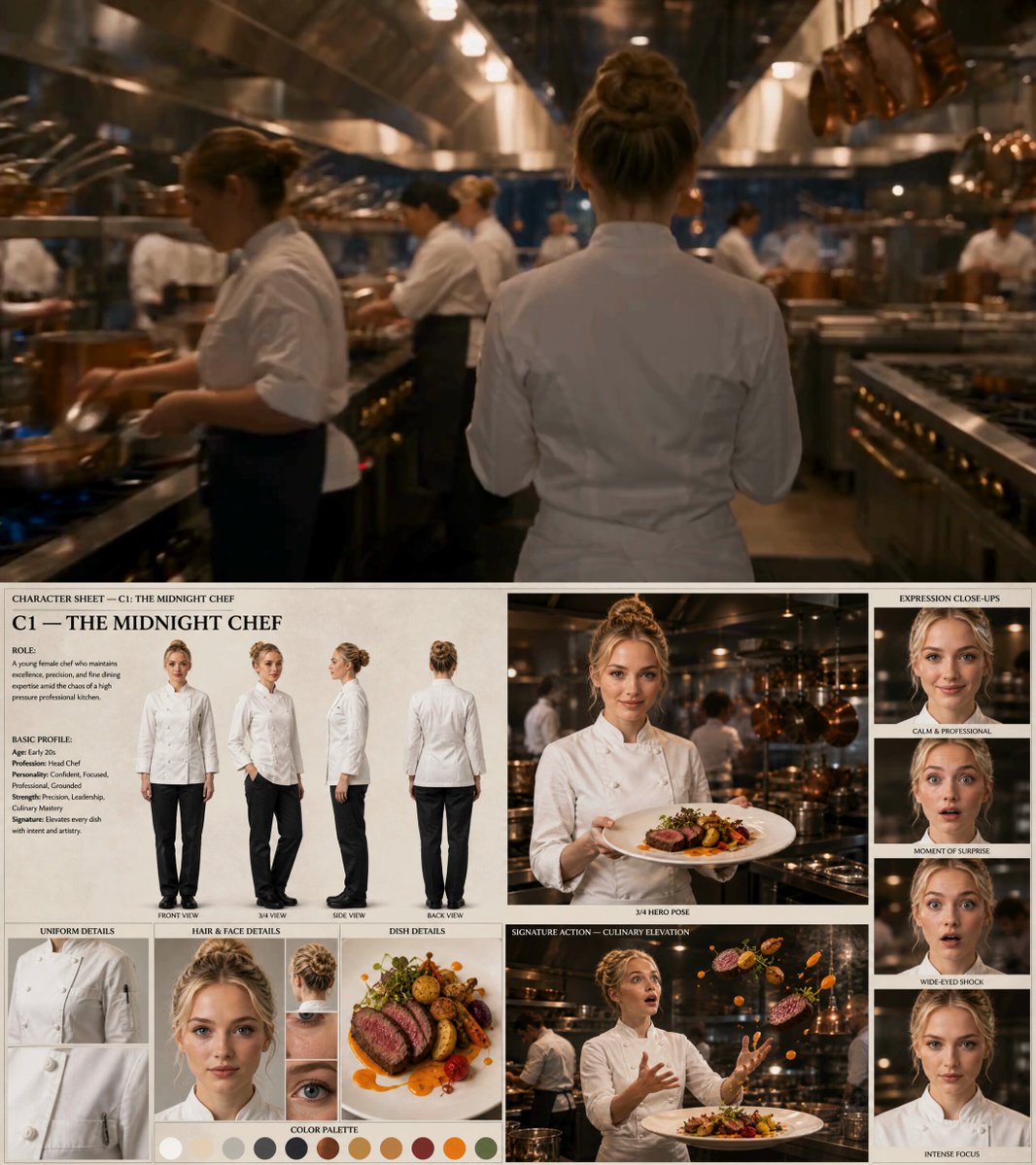
The Challenge of Character Consistency in AI Video Generation
The rise of AI video generators has opened up incredible possibilities for creators, but one persistent problem has kept professional projects grounded: character consistency. Ask most text-to-video systems to show the same person in different scenes, and you'll often get a character whose face shifts, wardrobe changes, or age fluctuates unpredictably. This lack of continuity separates amateur experiments from polished productions.
In 2025, this issue has become a market-defining bottleneck. As studios and brands increasingly adopt generative video for serialized content, the ability to keep a character's visual identity locked across multiple generations is no longer a luxury—it's a requirement. The business case is clear: projects that solve character continuity can reduce rework by up to 30%, cut delivery times by a quarter, and significantly boost audience retention because viewers stay immersed when they aren't jarred by inconsistencies.
How Multi-Image Fusion Technology Works
Multi-image fusion technology addresses this challenge by moving beyond simple text prompts. Instead of relying on potentially ambiguous descriptions, it ingests multiple reference images of a character and builds a deep structural blueprint that remains constant across all subsequent generations.
Reference Encoding: Locking the Visual Blueprint
At the core of multi-image fusion is reference encoding. The system analyzes several high-quality photos of your character—capturing face structure, lighting preferences, skin texture, and distinguishing features like a birthmark or a specific hairstyle. These visual attributes are converted into latent space vectors using advanced embedding techniques, such as CLIP embeddings or proprietary feature extraction tuned for facial geometry.
These vectors act as 'immutable constraints' during generation. When you feed a prompt to the underlying model, it doesn't interpret your character from scratch; it uses the encoded identity as an anchor to suppress any tendency to drift toward a probabilistic average. On any robust platform, you'll usually upload three to five clear reference images during project setup. That initial input defines the character's canonical look, regardless of the scene's environment or lighting.
For creators using tools like the AI image generator on Domer, a similar multi-reference approach can be applied to maintain consistency across stills before moving to video. The same principle makes it possible to reuse a character across an entire campaign.
Model Orchestration Across Different Engines
True consistency isn't just about a single generation—it's about maintaining the same look no matter which model does the actual rendering. Modern AI platforms often aggregate many different models, each excelling at a particular aesthetic or style. A cinematic realism model might handle your primary shots, while a faster, more stylized model generates supplementary clips. Without orchestration, each model would interpret your character differently.
Multi-image fusion solves this by treating the encoded identity as a global variable that's injected into whatever model you select. Whether you're using a photorealistic engine or an anime-focused one, the identity data remains the same, while only the style parameters change. This requires a sophisticated API translation layer that maps the identity vector to each model's input format—no trivial task.
Platforms like Domer's text-to-video pipeline handle this under the hood, letting you switch between models such as Seedance 2.0 for high-end visual quality or GPT Image 2 for still-image generation, without losing your character's identity.
Keyframe Control for Temporal Coherence
Static identity is only half the battle. When your character moves, you need their face to remain recognizable frame-to-frame. Multi-image fusion integrates with keyframe control to achieve this temporal coherence. Rather than letting the model interpolate randomly, the system generates strategic reference frames that define posture, expression, and lighting at key moments. The interpolation engine then fills the gaps, guided by these anchors.
Effective keyframe control means your character can jump, spin, or transition to an extreme close-up without morphing into someone else. This is critical for professional filmmaking, where simple seed values fail under complex camera movements. Some systems even let you manually override specific frames, giving you non-destructive creative control when the AI's interpretation goes off track.
Practical Implementation in Modern AI Platforms
For all its technical sophistication, multi-image fusion only becomes valuable if it's accessible in a practical workflow. The best platforms abstract the complexity away, presenting consistency as an intuitive, one-click option.
Managing Character Data and Model States
Behind the scenes, character identities must be stored securely and retrieved efficiently. That requires robust database architecture capable of handling the latent vectors, reference images, and model-specific calibration data for each character. A relational database is ideal for tracking which encoding parameters perform best with which model, ensuring that when you switch from one generation engine to another, the system automatically applies the right adjustments.
For example, vectors optimized for one model might need slight recalibration before being used with another. A well-designed platform handles this centrally, so you don't have to think about the technical details—you just select your character and hit generate.
Task Queues for Consistency-Heavy Workloads
Consistency-heavy generations are computationally intensive. When a multi-frame sequence requires the same character across multiple shots, the platform's task queue must allocate GPU resources intelligently. Consistency tasks often need iterative refinement, which demands more VRAM and processing time than a simple one-off generation.
Modern platforms use message brokers and dependency management to ensure that pre-processing steps complete before later stages begin. If you're rendering a sequence where each clip depends on the previous one maintaining character lock, the queue sequences the jobs correctly. This kind of orchestration is invisible to the user but essential for reliable output.
Workflow Integration for Creators
For creators, the workflow should feel natural. In an ideal setup, you upload your reference images once, click a 'Lock Character Identity' button, and that character becomes available across all your projects. Advanced systems go further by integrating with AI director agents that can plan an entire narrative and automatically apply the locked identity to every shot.
This abstraction layer is what makes the technology accessible to filmmakers, advertisers, and digital artists who don't want to understand the underlying vector math. They just want the same character to look consistent across a five-scene short film, and that's precisely what multi-image fusion delivers.
Artistic Control and Narrative Depth
Beyond pure consistency, multi-image fusion opens up new dimensions of creative control. When you're confident the character's face will stay intact, you can focus on directing their emotions and actions.
Expressing Emotion Without Losing Identity
Changing a character's expression—from a subtle frown to a joyful laugh—shouldn't alter their underlying facial proportions. Multi-image fusion uses advanced masking to separate dynamic facial regions from static identity landmarks. When a prompt requests an emotion, the system manipulates only the relevant muscles and contours, leaving the defining features untouched.
This precision is particularly valuable for serialized content. A character's distinctive nose, jawline, or eye shape must remain constant across emotional beats, whether they're rendered in photorealistic detail or a stylized aesthetic. The fusion layer acts as a digital sculptor, preserving what makes the character recognizable while allowing expressive range.
Styling Variations While Preserving Core Looks
Your character might need to appear in a sci-fi epic, a historical drama, and a commercial—all with wildly different visual styles. Multi-image fusion separates identity data (who the character is) from style data (what the character looks like right now). When you switch from a realistic model to a painterly one, the style weights change, but the identity embeddings remain constant.
This capability is a game-changer for advertising, where a brand mascot must feel like the same entity across different campaigns and formats. It also enables ambitious projects like depicting a character aging, time-traveling, or changing costumes without losing their facial geometry.
Scaling From Single Characters to Full Casts
The true test of any character consistency system is whether it can scale from a single hero to an entire ensemble. Managing multiple characters simultaneously requires the system to keep separate identity anchors for each, preventing cross-contamination between characters during generation.
Modern multi-reference systems handle up to seven images at once, mapping each reference to the correct subject in the scene. This enables creators to build comprehensive casts for long-running series, where each character's identity is locked and callable on demand. The infrastructure must support hundreds of distinct character modules, with fast retrieval and reliable storage.
With multi-image fusion technology maturing, we're moving toward a future where AI-generated characters are as reliable as their live-action counterparts. The ability to control a digital cast across entire universes—not just isolated clips—is what will drive the next wave of creative storytelling, and it's already within reach for creators willing to master these tools.
Whether you're just starting with AI image generation or producing full-scale AI video productions, understanding multi-image fusion puts you at the forefront of this creative revolution.
