
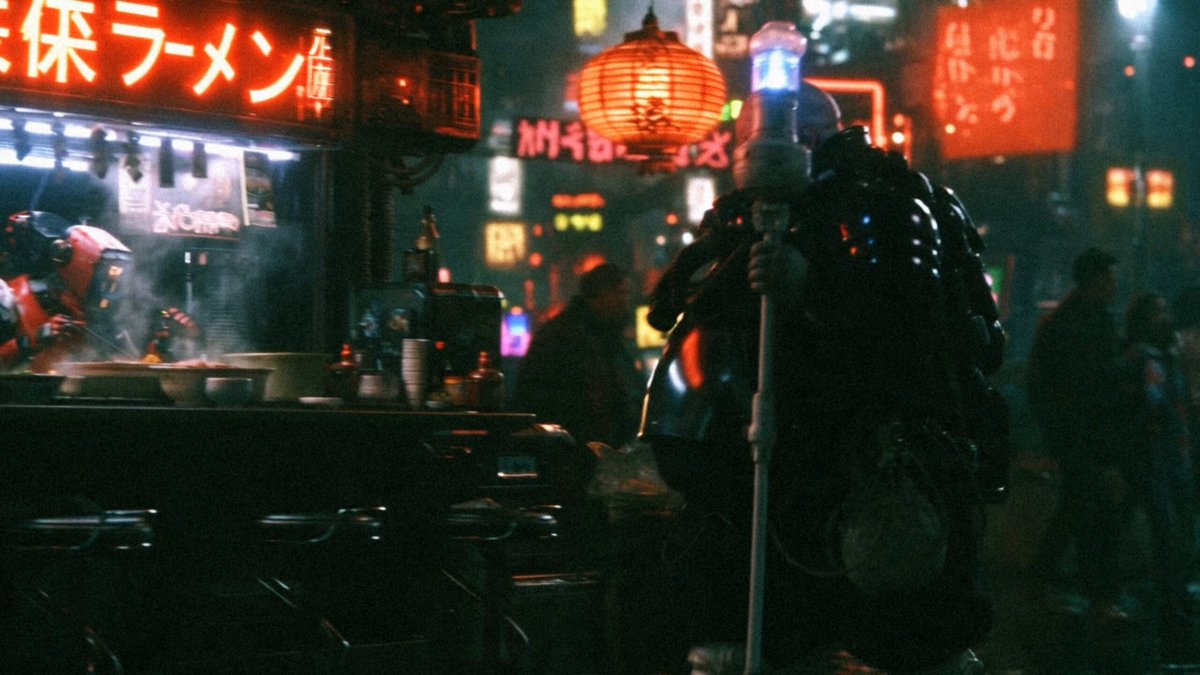


Why cinematic short-form video wins attention
Short vertical video stopped being a novelty years ago. It is now the default surface where audiences discover people, products, and ideas. That shift created a strange paradox: the format is easier than ever to publish, and harder than ever to stand out in.
The reason is simple. When everyone can post, volume stops being an advantage. What remains scarce is craft. A viewer scrolling through a feed is running a constant, subconscious cost-benefit analysis on every frame: is this worth another second of my life? Cinematic technique is how you answer yes.
Watch the short videos that actually travel. They almost always share a handful of traits:
- A visual hook readable in under two seconds, even with sound off
- Deliberate framing rather than a centered talking head
- Movement that carries the eye instead of distracting it
- Light and color that create a mood before a single word is spoken
- Sound design that makes the image feel bigger than it is
- A rhythm that varies shot length instead of metronoming at three seconds
None of that requires a cinema camera or a crew. It requires knowing what you are building before you build it, and then using AI tools to close the gap between the idea in your head and the footage on your timeline.
This guide walks through a complete workflow: the visual principles worth keeping, the pre-production habits that make generation predictable, the production techniques that reduce rerolling, the audio layer most creators skip, and the editing decisions that make a vertical video feel intentional rather than assembled.
The four visual pillars of a cinematic short video
Cinematography is a deep field, but for short vertical video you only need to control four variables well. Get these right and almost everything else follows.
Composition and framing in a vertical canvas
The 9:16 frame is not a cropped widescreen frame. It is its own shape with its own gravity. It pulls the eye up and down, not left and right, and it punishes lazy framing more aggressively than horizontal video does.
Start with these habits:
- Respect the safe zones. Platform interfaces cover the bottom and the edges with captions, buttons, and profile information. Keep faces and key objects in the middle band of the frame.
- Use the thirds, then break them on purpose. A subject on the lower third with headroom above reads as vulnerable or contemplative. A subject filling the center reads as confrontational and direct. Both are valid; neither should happen by accident.
- Build depth in layers. Foreground occlusion, a mid-ground subject, and a background that suggests a world beyond the frame will always look richer than a flat wall behind a person.
- Give captions a home. If you plan text overlays, frame the shot with intentional empty space where the words will land.
- Find leading lines. Railings, corridors, roads, and architectural edges direct attention. When they point at your subject, the viewer follows without noticing.
A useful exercise: take a still from a short video you admire, cover the subject with your thumb, and look at what remains. If the remaining composition still has structure, the creator was thinking about framing. If it collapses into noise, they were not.
Camera movement as narrative
Movement in a short video is not decoration. It is a sentence. Every camera move communicates something specific:
- Push in builds intimacy, tension, or focus. Use it when you want the viewer to lean forward.
- Pull out reveals context or scale, or signals an ending.
- Orbit or arc shows a subject from multiple angles inside a single shot, which is efficient for product and portrait work.
- Handheld drift creates immediacy and documentary energy.
- Crane or rise signals scale, triumph, or a shift in perspective.
- Whip pan transfers energy and hides a cut.
The governing rule: choose one dominant move per shot and commit to it. Two competing movements in a two-second clip produce visual noise. Also ask whether the movement is motivated. If the camera moves because your subject moves, or because the reveal demands it, it feels inevitable. If it moves because the tool can, it feels random.
Light and color as mood
Before editing, before music, before the hook, light sets emotional temperature. Direction, quality, and contrast matter more than brightness.
Hard light with sharp shadows reads as dramatic, cinematic, and often a little dangerous. Soft, diffused light reads as warm, intimate, and safe. Backlight separates a subject from the background and creates a glow that flatters almost anything. Side light sculpts features and adds dimension that flat frontal light destroys.
Color then layers meaning on top. Warm tones push comfort and nostalgia; cool tones push distance and precision; high contrast pushes intensity. The temptation is to reach for a signature blockbuster palette, but the more useful discipline is consistency. Ten shots with the same palette and slightly boring grading will always beat ten shots graded in ten different directions.
If you are working with AI generation, define your palette in words before you generate anything: time of day, light source, color temperature, contrast level, and one accent color. Then put those exact words in every prompt. Consistency in prompts produces consistency in output.
Pacing, cuts, and rhythm
Rhythm is the least discussed and most powerful tool in short video. A clip that cuts every 1.5 seconds for twenty seconds exhausts the viewer. A clip that holds a beautiful shot for four seconds earns trust and attention.
The productive approach is variation with intent:
- Open with a fast cut or two to establish energy
- Hold the hero shot longer than feels comfortable
- Use a pattern interrupt every few seconds: a new angle, a sound effect, a text card, a speed ramp
- Land a final beat, then loop cleanly back to the opening frame
Match cuts, where a shape or motion in one shot rhymes with the next, make edits feel invisible. J-cuts and L-cuts, where audio leads or lags the picture, smooth transitions and pull viewers across scene changes without them noticing the seam.
Building an AI-assisted pre-production workflow
Most disappointing AI video output is a pre-production failure wearing a production costume. The generation was fine; the thinking was missing.
From idea to shot list
Write one sentence that describes the video's job. Not the topic, the job: make a viewer want to try a product, teach a single technique, or create a specific feeling. Then build the skeleton.
A practical short video has six to ten shots:
- Hook shot: the most visually arresting image you can produce, readable instantly
- Context shot: where we are and who we are watching
- Problem or tension shot: what is at stake
- Detail shot: a close-up that makes the subject tactile
- Turn shot: the reveal, transformation, or payoff moment
- Scale shot: wider frame that shows consequence
- Button shot: a final image that loops back to the hook
For each shot, note the subject, action, environment, lens feel, camera movement, light, and duration. That is your shot list, and it becomes your prompt source. Write it in a spreadsheet or a plain text file. The point is to make decisions once, in a calm moment, instead of improvising while a generation queue is running.
Style references and consistency
Create a one-page style bible before generating anything. It should contain:
- Aspect ratio and target resolution
- Color palette with three to five named colors
- Lighting description in plain language
- Lens character, such as 35mm natural or 85mm compressed
- Texture notes, such as subtle grain or clean digital
- Movement vocabulary: which moves you are allowed to use
- Reference images, three to six of them, for framing and mood
That document is what keeps a ten-shot sequence from looking like ten unrelated experiments. When a shot comes back off-style, compare it to the style bible instead of to your memory of what you wanted.
Prompt writing that survives iteration
A reliable prompt has a predictable shape:
Subject and action → environment → camera and lens → lighting → mood and palette → format
For example: "A ceramicist's hands shaping a bowl on a spinning wheel, small studio with dusty shelves behind, shot on a 50mm lens with a slow push in, soft window light from the left with warm shadows, calm and focused mood, muted earth palette, vertical frame."
The discipline is to change one variable at a time. If you rewrite subject, camera, and lighting together and the result improves, you have learned nothing you can reuse. Keep a prompt ledger: the prompt text, the settings, and your notes on the result. After twenty generations you will have a personal reference document more valuable than any generic guide.
Negative descriptions matter too. Naming what you do not want, such as text overlays, distorted hands, or a busy background, often does more work than adding another adjective to what you do want.
Production: generating and directing shots
Motion prompts and camera language
When you describe movement to a video model, be literal and physical. Words like "push in slowly," "orbit left around the subject," "tilt up from feet to face," and "static locked-off shot" work far better than "dynamic" or "cinematic movement," which mean nothing specific.
Two techniques raise hit rates dramatically. First, specify start and end framing: "begins as a wide shot, ends as a medium close-up." Second, generate a strong still first, then animate it. Starting from a still you already like removes an entire dimension of randomness, and if the motion fails you still have a usable image for a pan-and-zoom treatment.
Keep individual generations short. Four to six seconds is usually enough for a vertical short, and shorter clips are more stable. You can always slow a good shot down in the edit; you cannot repair a shot that melts halfway through.
Handling character and object consistency
Consistency is the hardest problem in AI video, and the solution is a combination of constraints rather than a single setting:
- Use the same reference image of a character in every shot
- Keep wardrobe, hair, and accessories identical in the description
- Change the angle but not the identity between shots
- Limit what each shot has to do, since complex action breaks likeness fastest
- Generate connecting inserts, such as hands, objects, and environments, to bridge moments where a face would be risky
- Prefer a cutaway over a morphing face when continuity is fragile
The practical framing is that consistency is a coverage problem. Professional productions hide continuity gaps with inserts and cutaways all the time. You can do the same.
Fixing common artifacts
Most generation artifacts fall into predictable categories and have predictable fixes.
Warping hands and limbs. Shorten the clip, reduce the complexity of the action, reframe so hands are less prominent, or cut before the warping begins.
Flickering or crawling textures. Often caused by too much fine detail in the scene. Simplify the background in the prompt, or add a subtle grain pass in post to unify the texture.
Morphing backgrounds. Happens when the camera moves too fast or the scene is too busy. Reduce motion, constrain the camera, and describe the environment more specifically.
Unstable faces at distance. Generate tighter framing and let the edit imply the wider space.
Jitter between shots. This is a grading and grain problem, not a generation problem. Apply one consistent look across the whole sequence.
Finally, upscale and sharpen at the end, not the beginning. Upscaling an unstable clip just produces a higher-resolution unstable clip.
Audio design: the half of the picture nobody sees
Audiences forgive imperfect images far more readily than they forgive bad audio. Sound is also the cheapest way to make generated footage feel expensive.
Build your audio in layers:
- Music bed. Choose tempo to match your cut rhythm. A track at 90 BPM gives you a beat roughly every 0.66 seconds, which is useful for timing cuts.
- Ambience. Room tone, wind, city hum, or a subtle drone gives a scene a sense of place and stitches cuts together.
- Foley. Footsteps, fabric, glass, clicks, and impacts. Small sounds create physical presence.
- Transitions. Whooshes, risers, and sub-bass hits cover cuts and mark transitions.
- Dialogue or voiceover. Record it cleanly, then normalize thoroughly.
- Silence. Removing music for one second before a reveal is one of the most effective dramatic devices available to a short-form creator.
For platforms where most viewers watch muted, captions are not optional. Burn them in, keep them to two lines maximum, and place them inside the safe zone. Style them once and reuse the same preset so your videos feel like a series rather than a collection of experiments.
Editing and finishing for vertical platforms
Structure your timeline so the hook can be swapped without rebuilding anything. Many creators cut a version, watch retention data, and then re-cut the first two seconds. If your opening is a separate sequence at the top of the timeline, that is a five-minute job instead of an hour.
Finishing checklist:
- Normalize loudness to the platform's target so your video does not sound quieter than the one before it
- Check color consistency across every shot at full speed, not frame by frame
- Verify text and faces sit inside safe zones on an actual phone, not just in the editor preview
- Confirm the loop: the last frame should feel like it could lead back into the first
- Export at the highest resolution and frame rate the platform will preserve
- Choose a cover frame that reads as a thumbnail, since many viewers decide before playback starts
A repeatable weekly production rhythm
Ad hoc creation burns out fast. A batch rhythm keeps quality stable and decisions cheap.
Research day. Save ten short videos that stopped your scroll. Note the specific technique that did it, not just the topic.
Script and shot-list day. Write three to five scripts, each with a hook, six to ten shots, and a button. Keep them short on purpose.
Generation day. Generate all shots for all scripts in one session. Setup cost is shared, and you will notice prompt patterns faster when working in volume.
Edit day. Assemble, sound design, caption, grade, export.
Review day. Look at retention curves. Identify where viewers drop. Rewrite the opening of your next script based on that data rather than on taste alone.
Name your files with a consistent convention, such as project, shot number, and version. Keep a library of reusable assets: ambient beds, sound effects, caption presets, and grade looks. Templates compound.
Common mistakes and how to avoid them
Trying to say too much. One idea per video. If you have three ideas, make three videos.
Starting with a logo or an intro. Nobody has agreed to watch you yet. Earn the first two seconds with an image.
Chasing a preset look. Filters do not create mood. Lighting, framing, and pacing do.
Ignoring sound until the end. Sound decisions often change the edit. Do not leave them for the last ten minutes.
Grading each shot separately. It looks fine shot by shot and incoherent as a sequence. Grade the whole timeline with one look.
Leaning on the AI aesthetic. Smooth, weightless, oddly lit footage reads as synthetic. Add grain, contrast, and deliberate imperfection. Let one frame be underexposed.
Forgetting the loop. Short videos are rewatched. A clean loop multiplies watch time without costing you a single extra shot.
Skipping the analysis. Without retention data you are guessing. With it, every video becomes a test.
Choosing tools without locking yourself in
Tools change constantly, so optimize for flexibility rather than for any single product. Judge each option on these criteria:
- Control versus speed. Some tools trade directing precision for instant output. Match the trade-off to the shot.
- Duration and resolution. If a tool caps out at four seconds, know that before you build a script around it.
- Consistency features. Reference images, character locking, and seed control matter more than raw resolution for narrative work.
- Motion realism. Test camera moves specifically. Smooth, motivated movement separates usable tools from impressive demos.
- Audio support. Native sound design saves hours.
- Export flexibility. Confirm you can get clean files at your target resolution without watermarks.
- Commercial terms. Read the licensing terms for your use case before you scale.
- Iteration speed. A tool that renders in thirty seconds changes how you work compared with one that takes ten minutes.
A small, stable stack usually includes a script and shot-planning assistant, an image generator for references and storyboards, a video generator, an upscaler, a sound library, and a timeline editor you already know well. Boring editors are a feature, not a compromise.
FAQ
Do I need professional equipment to make cinematic short videos?
No. A modern phone with deliberate framing, controlled light, and clean audio outperforms an expensive camera used carelessly. If you generate footage with AI, your constraint is not gear at all, it is your shot plan and consistency discipline.
Can AI video replace filming entirely?
For abstract, environmental, and product-focused content, often yes. For talking-head authority content and anything requiring authentic human presence, hybrid workflows work better: film the person, generate the b-roll.
How long should a short video be?
Long enough to deliver the idea, short enough to be rewatched. Many effective pieces run between fifteen and thirty seconds. Test both tight and longer cuts, and let retention data decide.
What aspect ratio should I use?
Vertical 9:16 remains the primary format for discovery feeds. Produce a 1:1 or 16:9 variant only if you have a specific placement that requires it.
How do I keep characters consistent across shots?
Use the same reference image, keep descriptions identical, limit action complexity per shot, vary camera angle rather than identity, and use inserts and cutaways to bridge risky transitions.
How many shots does a good short video need?
Six to ten is a reliable range: a hook, context, tension, detail, turn, scale, and a button that loops back.
Do captions really matter?
Yes. A large share of viewers watch with sound off. Burned-in captions keep the video comprehensible, and consistent caption styling makes your work recognizable in a feed.
How do I avoid the telltale AI look?
Simplify scenes, slow the camera, add grain and contrast, grade the entire sequence with one look, and let some shots be imperfect. The synthetic feel usually comes from hyper-smooth motion and uniformly perfect lighting, not from the technology itself.
What is the single highest-leverage improvement?
Rewriting the first two seconds. Retention decisions happen almost immediately, and a better hook lifts everything downstream without touching the rest of the edit.
