
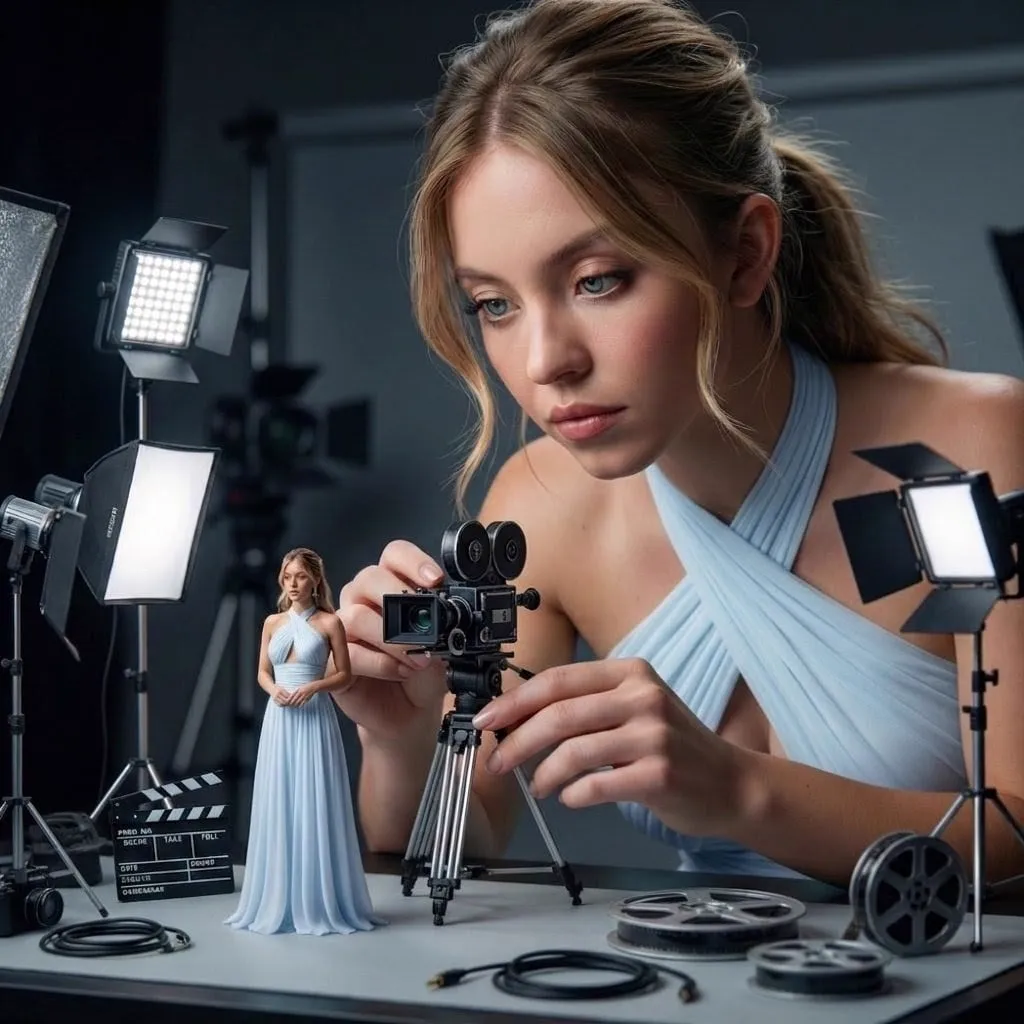
The Modern Cinematography Stack at a Glance
Cinematography has always been a craft of trade-offs, but the trade-offs themselves have changed. Two decades ago the decision tree started with film stock and ended at a lab. Today it starts with a sensor spec sheet and ends with a delivery specification that includes aspect ratios, HDR metadata, subtitle formats, and platform loudness targets. Between those two points sit lenses, lighting, support, sound, data management, and post-production — plus an increasingly capable layer of AI-assisted tools that touches everything from storyboards to final cleanup.
The practical consequence is that gear and workflow are no longer separate conversations. A camera choice determines your data rate, which determines your storage plan, which determines how quickly you reach editorial, which determines whether you hit a release date. A lens choice determines how much light you need, which determines the lighting package, which determines crew size and day-rate math. Every decision propagates forward.
This guide walks through the full stack in the order a real production encounters it: camera body, glass, light, software, storage, and the learning resources that keep a professional current. It also covers where generative and AI-assisted tools genuinely save time, and where they quietly create new problems.
Who this is for
If you shoot corporate documentaries, branded content, music videos, short narrative films, or product footage, the sections below are written for you. The assumptions are modest: you own or rent a camera that shoots log or raw, you cut in a mainstream NLE or color suite, and you deliver to at least two platforms.
Cameras: Sensor Size, Color Depth, and Data Rates
Camera bodies have converged. The gap between a mid-tier mirrorless body and a dedicated cinema camera has narrowed to a handful of practical differences: internal recording formats, timecode and genlock, cooling, audio inputs, and ergonomics. What still separates them clearly is how they behave on a long shooting day and how much latitude they give a colorist.
Sensor size and what it actually buys you
A larger sensor does three things: it narrows depth of field at a given field of view and aperture, it gathers more total light, and it forces you to think harder about lens coverage. Super 35 remains the default for fast-paced work because lens options are abundant, depth of field is manageable, and focus pullers can breathe. Full-frame and larger formats are worth the effort when you want subject isolation, low-light performance, or a specific falloff character.
Do not choose a format because it sounds premium. Choose it because the shot list demands shallow separation, or because your lighting package is limited and you need the extra stop.
Codecs, bit depth, and the arithmetic nobody enjoys
Data rate math is the least glamorous skill in the craft and one of the most consequential. A common compressed 4K intermediate runs at roughly 700 Mbps, which works out to about 90 MB per second and roughly 320 GB per shooting hour. A raw or high-bitrate format can triple or quadruple that. Multiply by camera count, add proxies and backups, and a modest two-camera documentary day can produce three to five terabytes before anyone opens an editor.
Bit depth matters more than resolution for most color work. Ten-bit log footage grades comfortably; twelve-bit raw survives aggressive windows, extreme keys, and heavy secondary correction. If your final delivery is a bright, contrasty, socially optimized cut, ten-bit log is plenty. If you are building a look with heavy tonal separation, raw pays for itself.
Lenses: The Math of Light and AI-Assisted Calibration
Lenses outlive camera bodies by a wide margin, which is why experienced crews spend disproportionate money on glass. A good set of fast primes will still be earning rent when the body you bought alongside it has been replaced twice.
The numbers that matter
Three specifications drive most lens decisions: maximum aperture, breathing behavior, and coverage circle. Maximum aperture determines your lighting budget. A set of f/1.4 primes versus f/2.8 zooms can be the difference between two HMI units and six LED panels on a night exterior. Breathing — the slight change in field of view as you pull focus — matters for narrative work and gimbal moves, and is a common reason cinematographers choose cinema primes over stills glass.
Coverage circle is where sensor format decisions come home. Full-frame glass on a Super 35 body is safe. The reverse is not.
Where calibration software fits
Modern lens calibration has moved from graph paper to software. Tools can map focus breathing, distortion curves, and color rendering across a lens set, then apply corrections automatically in post. The practical benefit is faster matching between focal lengths during a cut — a subtle continuity issue that audiences feel even when they cannot name it. For multi-camera shoots, a calibration pass before the first setup can save hours in the grade.
The caveat: calibration data is only as good as the test conditions. Repeat it at each aperture you plan to use, not just wide open.
Lighting: From Tungsten to Software-Controlled LED
Lighting has changed more than any other department in the last fifteen years. Tungsten still exists for good reasons — perfect color rendering, cheap fixtures, heat that is sometimes welcome — but the working default is now a battery of bi-color or RGBWW LED panels, tubes, and flexible mats, all addressable from a tablet.
The real shift is control granularity. A modern setup can dial color temperature in 50 K increments, adjust green-magenta tint to match a practical location, and store a look that another unit can recall instantly. That reproducibility is worth more than raw output on any production that spans multiple days or locations.
Practical lighting rules that still hold
- Motivate your sources. If a viewer cannot guess where the light comes from, the shot feels artificial regardless of how beautiful the key is.
- Protect the shadows. Fill everything and you lose shape; the fastest way to make a scene look cheap is to light the back wall as brightly as the face.
- Color temperature is a storytelling tool. Mixed temperatures read as realism in some scenes and chaos in others. Decide which you want.
- Measure, do not guess. A light meter and a waveform monitor settle arguments faster than opinions.
Power and grip
Do not underestimate the boring parts. Circuit capacity, cable runs, distro, and safety are what actually constrain a lighting design on location. A pre-light day spent mapping available power is rarely wasted.
AI in the Video Pipeline: Where It Genuinely Helps
There is a lot of noise around AI in video production, and most of it obscures a simple truth: the tools are excellent at a narrow set of tasks and mediocre at the rest. Knowing the boundary is the whole skill.
Previsualization and shot planning
This is the strongest current use case. Text-to-image and text-to-video tools let a director generate a coherent board of shot ideas in an afternoon instead of a week. You can iterate on framing, blocking, and color before anyone touches a camera, then hand the visual references to the crew as a shared language. Storyboard artists have largely adapted by using these tools as a first pass rather than a replacement.
Generative inserts, backgrounds, and fixes
Short generated clips are useful for plates, dream sequences, screen content, and pickup inserts that would otherwise require another shooting day. They are also effective for set extensions when the alternative is a costly reshoot. The limitation is continuity: keeping a generated element consistent across cuts still requires careful prompting and manual finishing.
Post-production assistance
The unglamorous wins matter most here. Automatic rotoscoping and matting have compressed work that used to consume days. Speech-to-text gives you searchable transcripts and rough subtitles in minutes. Noise reduction, upscaling, and stabilization have improved to the point where footage that would have been unusable five years ago can now make the cut.
Where AI still fails
Emotional performance, precise physical interaction, and long-form narrative logic remain weak. Generated footage also carries provenance and rights questions that matter for commercial delivery. Treat AI output as a component, not a finished scene, and always keep the source of every generated asset documented.
Storage and Archiving: On-Set Drives to Hybrid Cloud
Data handling is where most low-budget productions quietly fail. Cards get reformatted too early, a single backup drive dies, or an editor discovers on day three that half the footage was never verified.
On-set capture and redundancy
A workable minimum on any paid shoot is three copies of everything before the original media is reused: two physical drives, ideally on separate power circuits, plus a third copy somewhere else. Verify with checksums, not with a file count. A card that copies 98 percent of its contents looks fine in a folder view and is catastrophic in an edit.
Local storage tiers
DAS (direct-attached storage) is the fastest option and the right choice for active editorial. NAS gives a small team shared access without a server room. SAN remains the answer for facilities running multiple simultaneous edit suites on shared media. Whatever you choose, keep the active project tier separate from the archive tier so that a bad drive cannot take both with it.
Archive strategy
Cloud storage has become practical for finished projects, but check egress pricing before committing a large library. LTO tape still delivers the lowest long-term cost per terabyte for deep archives, provided you maintain a working drive and a rotation schedule. A hybrid approach — fast local tier, cloud for active collaboration, tape or cold cloud for the master archive — covers almost every production size.
Journals and Learning Resources Worth Your Time
Staying current is a discipline, not a subscription. The most useful resources fall into four buckets, and each serves a different purpose.
Trade publications and technique magazines
Monthly print and digital magazines remain the best source of deep technical reporting: how a specific film was lit, which format was chosen and why, and what went wrong. Read them for the reasoning, not the gear list.
Manufacturer white papers and firmware notes
Unglamorous and extremely valuable. Sensor readout times, log curve documentation, and codec specifications live here. Firmware release notes tell you what actually changed — and occasionally warn you about a regression worth skipping.
Community forums and testing channels
Forums surface real-world problems months before they reach official documentation. Focused testing channels give you measurable comparisons of dynamic range, rolling shutter, and autofocus behavior. Treat both as leads to verify, not verdicts.
Structured courses and workshops
Hands-on training remains the fastest route to competence in lighting, focus pulling, and color. A two-day workshop usually beats a year of reading.
A Practical Workflow: From Prep Day to Final Delivery
This is a condensed production flow that works for a small professional crew. Adapt the scale, keep the sequence.
1. Pre-production. Lock the script or treatment, build a shot list, and generate visual references for the key scenes. Define delivery specs before you shoot: resolution, aspect ratio, bit depth, HDR or SDR, subtitle languages, and loudness targets.
2. Technical prep. Format-test the camera, verify card compatibility, and run a calibration pass on your main lens set. Confirm the data rate math against your available storage and decide whether proxies are needed on set.
3. Pre-light and power survey. Map circuits, rig practicals, and set a base look with the gaffer and colorist's reference in mind. Photograph the setup so it can be recreated.
4. Shoot day. Record with consistent metadata. Slate properly, keep timecode discipline, and log every take with a short note. Themed logging feels tedious and is worth a full day in the edit.
5. Data wrangling. Copy, checksum, verify, and back up before the media leaves the set. Never let the only copy sit in a camera bag overnight.
6. Editorial. Assemble with proxies, maintain a locked-cut discipline, and keep a version history. Get picture lock before spending time on effects and generated elements.
7. Finishing. Conform, grade, mix audio, and generate deliverables with correct metadata. Run a final compliance check against the platform specs you documented in step one.
Budget, Decision Criteria, and Common Mistakes
Where to spend and where to save
Spend on glass, lighting control, and sound. Those three determine perceived production value more than sensor resolution ever will. Save on camera bodies, monitors, and accessories that are easy to rent for a short window. If a tool sits idle 340 days a year, renting is almost always correct.
A simple decision framework
Ask three questions before any purchase. Does this improve the image or the sound in a way the audience will notice? Does it reduce risk on set — fewer failures, faster setup, safer data? And does it hold value if you change formats, crews, or clients? Two yeses justify the spend. One yes means rent first.
Mistakes that recur
- Buying a camera body before deciding on a lens mount and a codec workflow.
- Shooting raw for a project that will be delivered as a bright, compressed social cut.
- Treating backups as a single copy with a different folder name.
- Ignoring audio in pre-production, then discovering the location hums at 120 Hz.
- Using generated footage in commercial work without documenting its origin and licensing.
- Skipping calibration and then fighting continuity in the grade.
- Over-lighting. More fixtures usually make a scene look flatter, not better.
FAQ: Gear, AI, and Delivery Questions
Do I need a cinema camera to make professional-looking video?
No. A modern mirrorless body recording ten-bit log, paired with good glass and controlled lighting, will outperform a cinema camera in weak light with a kit zoom. What a cinema camera adds is reliability, internal raw, timecode, and fewer compromises on a long day.
How much storage should I plan per shooting hour?
Budget roughly 300-400 GB per hour for a standard 4K compressed format, and two to four times that for raw or high-bitrate recording. Then multiply by three for redundancy and add a working tier for proxies and project files.
Is AI-generated video ready for client work?
For inserts, backgrounds, previz, and short stylized sequences, yes — with disclosure and clear documentation of the tools used. For hero performances and continuous narrative scenes, no. Plan for a finishing artist, because generation rarely produces a usable final frame without work.
What is the single highest-return upgrade for a small crew?
Better lighting control, followed closely by better audio. Both change perceived quality more than any camera upgrade at the same price.
How often should footage be verified after a shoot?
Every day during production, and once more before the primary backup drive is retired. Restore a random file from each archive tier at least once a year to confirm the archive still works. An untested backup is a hope, not a plan.
