
Why character consistency is the hardest problem in AI video
Anyone who has generated more than a handful of AI video clips has hit the same wall: the first shot looks perfect, and by the third shot your hero has a slightly different face, a different jawline, a different jacket, or hair that shifted from copper to auburn. Individually each clip can look stunning. Cut together, they read as a compilation of strangers who happen to share a wardrobe.
The root cause is that most text-to-video models do not carry an identity forward. Every generation is a fresh interpretation shaped by a prompt, a seed, and whatever the model learned about faces in general. Text is a lossy description of a person. Phrases like "mid-thirties woman, freckles, short red hair" describe a category, not an individual, so the model resolves the gaps differently every single time it renders a frame.
A second cause is physics drift. Motion models re-derive faces in each new camera angle. A profile shot reveals a nose bridge that the front-facing shot never defined. A wide shot puts the character at forty pixels tall and the model improvises. A low-light scene destroys the color information that made the hair recognizable in the first place.
A third cause is production drift, and it is entirely human. You tweak a prompt between shots, you change the aspect ratio, you swap a model version, you forget which seed produced the take you liked. None of these feel like continuity errors in the moment. All of them show up in the edit.
The practical result is that teams spend more time repairing identity than designing scenes. Multi-image fusion exists to move that work upstream, into a controlled reference stage, so that identity stops being a lucky accident and starts being an input.
What multi-image fusion actually does
Multi-image fusion is the practice of conditioning a generation on several images of the same subject at once, rather than on one hero image or on text alone. Instead of hoping the model infers the right face, you hand it a small, curated set and let it build a stable internal representation.
Feature extraction across a reference set
The system does not average your images into a blurry compromise. It extracts features across multiple dimensions: geometry of the face, skin tone, hair color and texture, eye shape, and the stylistic signature of the source images. Those features are then weighted and combined into something closer to a character profile than a photo. A good fusion pipeline learns the invariants — the things that stay the same across every reference — and treats the variables as noise.
That distinction matters. If your reference set contains six images with six different hairstyles, the system cannot tell whether hair is an invariant or a variable. It may lock onto a compromise that looks like none of them. Curated reference sets are the single biggest lever you control.
The role of identity adapters and control layers
In open pipelines you will meet this idea through identity adapters, reference attention layers, and structural controls. Identity adapters inject subject features into the diffusion process. Structural controls such as pose or depth guidance keep composition predictable while identity adapters handle who is in frame. Face-restoration passes sit at the end of the chain and fix small artifacts without reinterpreting the whole face.
The important mental model is a stack: composition control, identity conditioning, style conditioning, then cleanup. When consistency fails, you want to know which layer failed, because each has a different fix.
Where the model stops and the director starts
Fusion solves identity. It does not solve storytelling. You still decide eyelines, wardrobe continuity, screen direction, and the emotional arc of a scene. Teams that expect a model to handle continuity of meaning usually end up disappointed; teams that use fusion purely to hold a face steady and keep the rest of the craft human get far better results.
Building a reference set that survives many shots
A reference set is not a mood board. It is a technical asset. Treat it like a costume fitting, not like inspiration collecting.
Shot angles and expression coverage
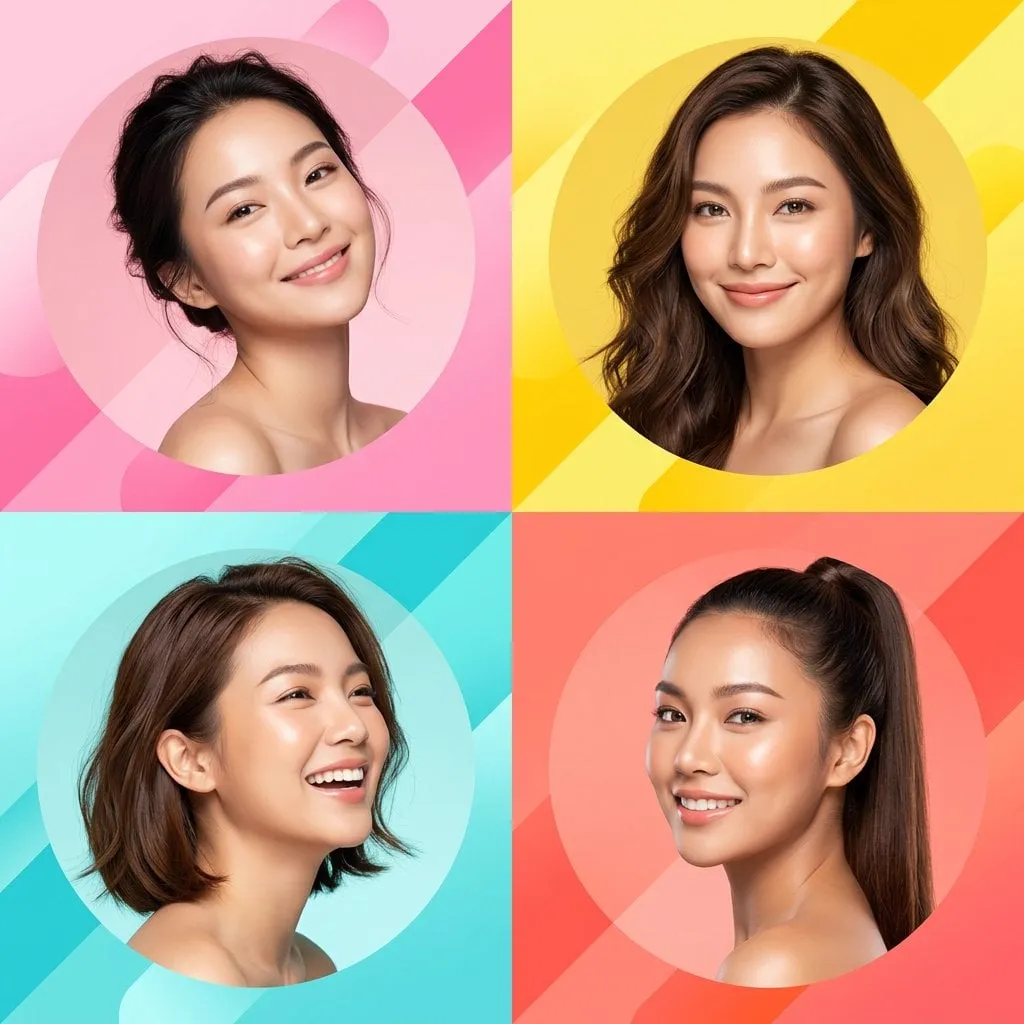
Aim for six to twelve images. Cover the angles you plan to shoot: front, three-quarter left, three-quarter right, profile, and a slight low angle. Include two or three expressions — neutral, smiling, and one intense look. Avoid extreme expressions in the core set; a wide-open laugh distorts jaw geometry and can leak into every future render.
Lighting should be consistent across the set: soft, even, front-facing light with no harsh shadows across the face. If two references have dramatically different color temperature, the model may treat skin tone as a variable and drift between shots.
Wardrobe, hair, and props
If the character wears the same jacket in every scene, include that jacket in most references. If the wardrobe changes per scene, keep the core identity set neutral and create a second, scene-specific set that adds the new outfit. Mixing identity references with outfit references in one batch is one of the most common causes of a face that looks familiar but slightly wrong.
Props are a hidden continuity trap. A character who wears glasses in two references and none in the other six will produce a flickering glasses problem that no prompt can fix. Decide early whether the glasses are identity or costume.
Common reference-set mistakes
- Too few images. One reference gives the model one interpretation. Three or more give it a range.
- Too many images. Twenty references with different lighting, makeup, and lenses dilute the signal.
- Low resolution. Small faces produce soft identity. Crop tightly around the head and shoulders.
- Mixed art styles. A painterly reference next to a photoreal one produces a character who looks neither.
- Background clutter. Busy backgrounds compete for attention in fusion layers. Plain or softly blurred backgrounds work better.
- Screenshots of previous renders. Compounding artifacts teaches the model your mistakes.
A repeatable production workflow
The following sequence works for short-form social clips, explainer series, and narrative shorts. It is deliberately boring, because boring is what produces consistency.
Step 1: write the character sheet before generating anything
Define six to ten fixed attributes in text: age range, ethnicity if relevant, hair color and length, eye color, distinguishing marks, default wardrobe, and posture. Keep it short enough to paste into every prompt. This sheet becomes your continuity bible, and it protects you when you switch models or hand a project to a collaborator.
Step 2: generate and prune a master reference set
Generate thirty to fifty stills from the character sheet. Then be ruthless: keep only images that share a recognizable face, consistent lighting, and clean backgrounds. If you would not cast all of them as the same person in a live-action film, they do not belong in the set. A typical final set is eight to twelve images, and the pruning takes longer than the generation.
Step 3: lock look and style separately
Create a style brief that describes the visual language of the project — lens, film grain, color grade, contrast — and keep it constant across every shot. If you change style mid-project, the model may re-derive the face to match the new lighting. Change style once, at the start, and freeze it.
Step 4: generate shot by shot with continuity notes
Write your shot list with a continuity column. Note eyeline direction, whether the character is screen-left or screen-right, wardrobe state, and any prop in hand. Generate one shot at a time, review immediately, and only then move on. Batch-generating twenty clips and reviewing them later is how you discover a roofline change in shot nineteen with no time left to fix it.
Step 5: repair, then assemble
Expect to regenerate roughly a quarter of your shots. When a shot fails, change one variable at a time: first the prompt, then the seed, then the reference subset, then the model. Changing all four at once teaches you nothing. Once shots are approved, assemble in your editor, apply a single color grade across everything, and only then judge whether the identity holds. Grades hide small inconsistencies surprisingly well.
Prompt patterns that protect identity
Prompts should describe action and camera work, not the character's face. The reference set already answers the question of who. Repeating facial descriptors in text invites the model to re-interpret them, which weakens the fusion signal.
A workable prompt structure looks like this: subject tag, action, camera movement, lens and framing, environment, lighting, style tag. For example: "Cloe walks along a fog-lit forest path, slow dolly-in, 35mm, medium shot, cool ambient light, cinematic grade." Note that the name acts as a label tied to the reference set, not as a description.
Three habits worth adopting:
- Keep a negative list. Extra fingers, duplicated facial features, warped jawline, text overlays, and flickering details are worth naming explicitly in most models.
- Freeze camera language. If shot one is a 35mm medium, do not jump to an 85mm close-up in shot two unless the story needs it. Large focal-length jumps force the model to re-derive facial proportions.
- Version your prompts. Store them in a text file alongside the seeds and reference subset used. Reproducibility is the difference between a hobby and a pipeline.
Hard scenes: motion, crowds, and transformations
Some scene types stress identity more than others, and it helps to know which ones will cost you extra passes.
Fast action. Running, dancing, and fighting produce motion blur and extreme angles. Reduce this by using shorter clips, adding a stabilizer-friendly camera path, and letting the editor stitch takes rather than asking one generation to do everything.
Crowds. Extra people in frame pull the model's attention and can swap features between faces. Keep supporting characters in soft focus, far from your lead, or composit them separately.
Profile and rear shots. The model has less reference data for the back of a head. Generate a dedicated turnaround reference — profile, three-quarter back, full back — if your scene depends on it.
Transformations. Aging, costume changes, and magical effects are identity events. Build a second reference set for the transformed state instead of asking the prompt to interpolate.
Underwater, smoke, and heavy fog. These reduce visible detail, which is exactly what identity fusion relies on. Reduce fog density, add a subtle rim light, and grade later.
Choosing tools: decision criteria
Rather than chasing whichever platform is loudest this month, evaluate options against your actual constraints.
- Reference input count. How many images can you supply at once, and does the tool expose any weighting control?
- Duration per generation. Longer clips mean fewer stitches but more opportunity for mid-clip drift. Mid-length clips with clean cuts often beat one long take.
- Shot control. Can you direct camera movement, or does the model choose? Directability matters more than raw resolution for series work.
- Consistency across versions. If the tool's model updates silently, your locked look may shift. Keep an exported master of your best takes.
- Pipeline fit. Can you export clean plates for compositing, or are you locked into a single-pass output?
- Local versus hosted. Local open pipelines give you fine control through identity adapters and structural controls but demand GPU time and setup. Hosted tools trade control for speed.
For most teams the answer is a hybrid: generate identity stills locally or in an image-focused model, run video generation in a hosted tool with reference conditioning, and finish in a conventional editor. The editor, not the model, is where continuity is finally guaranteed.
Troubleshooting: fix drift fast
Face changes between shots. Compare your reference subsets. Nine times out of ten, a shot used a different subset.
Face is right but hair color shifts. Your references likely had mixed lighting. Rebuild the set under one lighting condition.
Character looks generic. Your references are too similar to each other. Add angle variety while keeping lighting constant.
Character looks like a blend of two people. Background faces or a second person in the reference set are leaking in. Crop everything except your subject.
Artifacts accumulate over a series. A previous render is in the reference set. Rebuild from clean sources.
Eyes drift or flicker. Reduce motion speed, lower clip duration, and add an eye-region restoration pass in post.
Everything looks slightly off in the edit. Apply a unified grade and a light grain pass over the whole timeline before deciding. Many perceived identity breaks are actually exposure mismatches between shots.
Measuring success and scaling a series
Once a character holds across three shots, the next question is whether it holds across thirty. Track two simple numbers: the share of shots that pass review without regeneration, and the average number of identity-related fixes per finished minute. Both should improve as your reference set and prompt library mature. When your pass rate stops improving, the bottleneck is usually style drift, not identity.
Scaling a series means templating. Save your character sheet, reference subsets, prompt structure, and grade settings as one reusable package. New episodes then start from a known-good baseline rather than from scratch. Keep a changelog for anything that alters the look, including model version changes, because silent updates are the most common cause of a series that suddenly looks different in episode twelve.
Finally, protect your best takes. Export finished clips at high quality and store them with their metadata. A locked master take is worth more than any prompt you can write later.
FAQ
Do I need a dedicated fusion feature, or can I just paste a reference image?
Single-image conditioning works for short clips and simple scenes. The moment you need multiple angles, longer runtime, or a series, a multi-reference workflow becomes essential.
How many reference images is ideal?
Six to twelve clean, consistently lit images. Fewer than four usually produces drift; more than fifteen usually dilutes the signal unless the images are near-identical in style.
Can I fix an inconsistent character in post?
Partially. Face restoration and small compositing fixes work well. Wholesale identity replacement is slow and rarely convincing, so it is better to fix the reference set and regenerate.
Should I use the same seed for every shot?
Not necessarily. A fixed seed helps within a scene, but changing camera angles legitimately requires different sampling. Prioritize a locked reference set over seed locking.
Does a character name in the prompt do anything?
It acts as a label. If the tool supports named reference sets, the name binds to those images. If it does not, the name is meaningless filler and your references are doing the real work.
Why does the character look better in wide shots than close-ups?
Close-ups expose every detail the model had to invent. Improve resolution and add a dedicated close-up reference to your set.
How do I keep style consistent across a whole series?
Freeze lens language, lighting direction, and grade before you shoot anything. Style is a project-level constant, while identity is a character-level constant. Mixing the two layers in one prompt is the fastest route to drift.
