

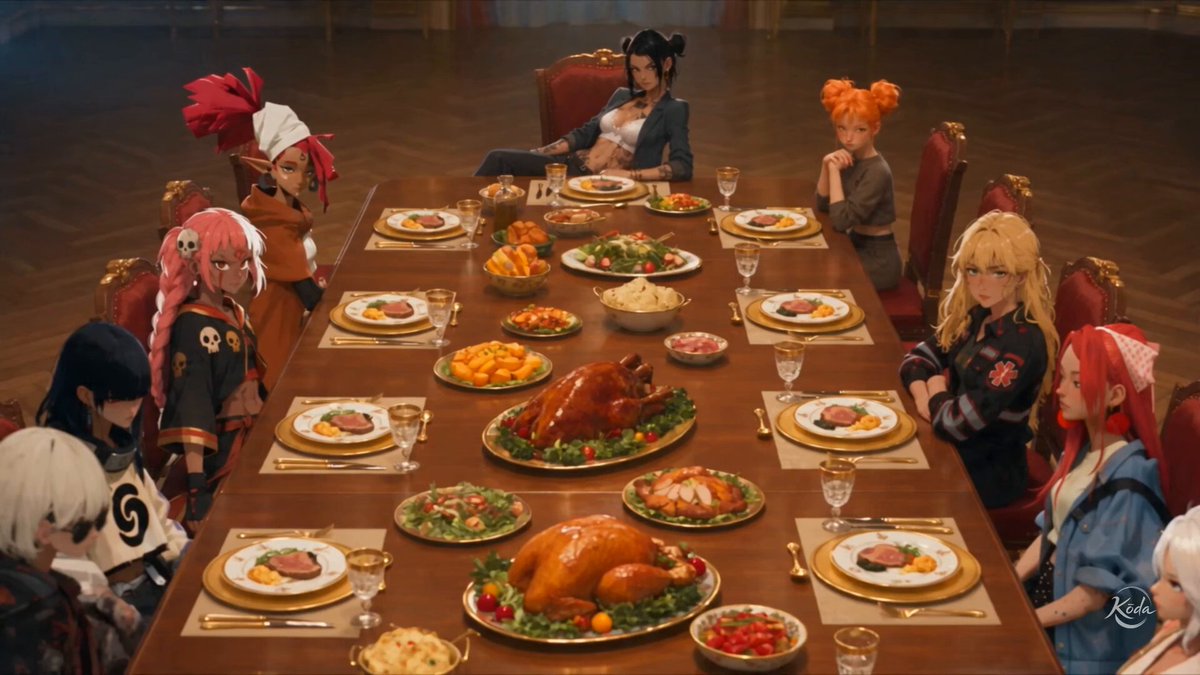

The ambition in generative video has shifted. A few years ago, the exciting thing was that a machine could make a moving image at all. Now the exciting thing is that it can keep one person alive across an entire piece. Serialized stories, recurring spokespeople, and feature-length ambitions all depend on a single promise: that the protagonist you meet in scene one is recognizably the same person in scene thirty. In practice, this is far harder than it sounds, because the default behavior of a generative model is to reinvent everything on every new prompt.
This article digs into the technical heart of that problem and the solutions that are actually working. We will look at the core reasons characters drift, the role of a fixed reference frame, how multi-image fusion is engineered, the director-level coordination that keeps scenes coherent, and how a creator assembles all of it into a practical, queued production workflow. By the end you should understand both why consistency is hard and exactly what to build to achieve it.
The Technical Challenge: Keeping Identity Across Many Models
The modern creator rarely uses one model for a whole project. They switch between generation engines for different shots, styles, and speeds, a realism-focused model for hero shots, a fast one for ideation, a stylized one for specific moods. Every switch is a chance for the character to change, because each model has its own idea of what your words mean.
The problem is that a character is not a string of adjectives. It is a face, a build, a way of moving, a wardrobe, a set of tiny recurring details that together read as one person. Language is a lossy description of all of that. Describe "the detective with the grey coat," and hundreds of plausible detectives appear. The model keeps the coat and drops the face, or keeps the mood and changes the age, and you are left with somebody new every other scene.
This is why the naive approach, describing the character fresh in every prompt, fails the moment a project has any real length or any real number of scenes. Consistency cannot be promised in words. It has to be carried in data.
The Fixed Reference Frame That Holds It All
The breakthrough that made sustained consistency practical is the fixed reference frame. Instead of trusting the model to remember a character from your description, you give it a canonical image of that person and instruct it to maintain that identity wherever it shows up. The reference is the fixed point. Every scene is generated against it, so no matter how many times the model improvises, it has the same anchor to come back to.
A single reference image is a large improvement over words alone, but it has limits. A front-facing portrait tells the model the face and maybe the outfit, but a character is a three-dimensional being who turns, walks, and reacts. When a scene calls for a back view or a running pose, the model has to invent how the whole person looks from that angle, and it can drift as it guesses.
The natural escalation is to give the model several reference images rather than one: a face, a full body, a profile, a moment of action. More coverage means fewer guesses, and fewer guesses means less drift. This is the practical foundation of almost every reliable consistency workflow.
How Multi-Image Fusion Is Engineered
Multi-image fusion is more than blending a few pictures together. It is the process of reading a set of reference images, extracting a compact mathematical representation of the character's identity, and using that representation to guide every subsequent generation. The model learns what is essential about this person: the proportions, the features, the signature details, and it re-renders that identity under whatever new conditions the scene requires.
Two ideas make fusion strong. The first is core vector extraction: the model distills the images down to what actually defines the character and drops the incidental noise, so lighting or pose in a reference do not get confused for identity. The second is style tracking: keeping not just the face steady but also the world around it, the palette, the texture, the mood, so a consistent character does not end up in an inconsistent universe.
Engineered well, multi-image fusion lets a character stand in scenes that were never part of any source image. The identity holds under new light, new action, and new locations. That is the capability that transforms consistency from a hope into a controlled outcome.
Multi-Mask and Variable Styles: Guiding What Changes
Pure identity, the face and body, is only half the battle. Characters are not static statues; hairstyles change, outfits change, a character is injured and bandaged between scenes, another loses a jacket in an action sequence. The ideal workflow lets some things remain fixed while others deliberately change.
This is where a multi-mask or layered-control approach comes in. Instead of treating the entire image as one fixed block, the system lets you designate which parts must stay exactly the same and which parts are free to vary. The face stays anchored while the wardrobe can swap. The body proportions hold while the costume changes. You keep the identity and still allow the story's needs.
For a story-driven creator this is liberating, because it removes the tension between "consistent character" and "character who actually does things." You can evolve a character over a narrative without sacrificing who they are. The control mechanism, deciding what is fixed and what may change, becomes a genuine authorial tool rather than a technical detail.
Coordination at the Director Level
Multi-image fusion solves the character; it does not by itself solve the scene. A coherent piece also needs a consistent world, correct emotional pacing, and a visual language that behaves as if one person directed every shot. This is the layer where a director-style orchestration earns its place.
A director layer interprets the overall intent and coordinates the production: it decides which scene needs which model, what should be consistent versus variable, and how the pieces lock together into a sequence. It holds the visual language steady so that a shift from a close-up to a wide shot does not feel like a jump to a different show. It is the difference between a gallery of related clips and an actual scene.
For a creator, this layered structure is what makes ambitious projects feasible alone. You are not conjuring every shot out of nothing and then hoping it matches. You decide the intent, and the coordination layer keeps identity and world intact while your fast and capable machines do the rendering.
The AIGC Task Queue: Keeping Scale From Collapsing
Every project that reaches real length runs into the same wall: rendering is expensive and slow, and heavy jobs pile up. A single high-fidelity render can take a long time, and if every job is fired synchronously, the whole production stalls waiting on the slowest shot.
The engineering answer is a distributed task queue. Jobs are not run in line with your work; they are submitted into a queue that processes them in order, spreading work across available capacity and retrying anything that fails. A batch of scenes can be submitted and the results collected later, turning what would be a blocking bottleneck into a background pipeline.
This is what makes serialized consistency and longer stories practical. The reason people can produce whole episodes rather than one-off clips is the queue, and the reason it matters here is that consistency work, more references, more passes, more careful re-renders, is inherently heavier. If the heavy lifting is not queued and backgrounded, it simply cannot fit into a working week.
Building a Reliable Consistency Workflow
The practice, then, is to assemble the pieces into a repeatable loop. Start by curating a strong reference set for the character, face, body, profile, action, all in agreeing light and style. Define which parts of the character are fixed anchors and which may vary with the story. Write the intent for each scene, and let the references and the coordination layer carry the identity.
Iterate on a fast model first. Prove the character holds across the key sequences cheaply, then spend high-fidelity budget only on the shots that will be seen closely. Check the important frames yourself, because one drifted close-up undoes good work elsewhere. And keep a healthy task queue so the heavy, careful renders run in the background instead of blocking the loop.
Keep your reference library organized as a reusable asset. A well-built set lets you drop a character into a whole new project and stay consistent from the first frame. Over time, that library is worth more than any single render, because it is what turns "make a video with this person in it" into a fast, controlled reality.
Why Consistency Changes the Kind of Work You Can Make
The payoff is not merely technical polish. It is a change in what you are allowed to attempt. Without consistency you are restricted to isolated moments: a striking clip, a single demo, a poster brought to motion. With it, you can attempt serialized stories, recurring branded characters, feature-length narratives, anything that asks the audience to follow the same person through many scenes.
Everything that makes people believe, that holds attention across a piece, that turns clips into stories, depends on the eye believing it is watching one being throughout. When the identity holds and the world holds around it, the technique disappears and the story appears. That is the real reward of mastering character consistency, and it is entirely worth the engineering.
Frequently Asked Questions
Is one reference image enough? For a short clip, often yes. For more scenes and more variation, add coverage: a face, a body, a side view, a moment of action.
How do I keep the world consistent when the character moves? Feed consistent style references alongside the character references, a palette, a lighting example, so the system tracks the look of the universe, not just the face.
Can a consistent character still change outfits or hairstyle? Yes, if you let those elements vary deliberately while anchoring the identity. Layered or multi-mask control decides what is fixed and what may change.
Why are my renders so slow? Consistency work is heavy. Use a task queue to run renders in the background, iterate on fast models first, and reserve high-fidelity rendering for the shots that matter most.
A Worked Example: One Recurring Character, Three Scenes
It is easiest to see how all these pieces fit with a short worked example. Suppose you are building a three-scene spot around a single host. In scene one, the host introduces a product in a bright, clean studio. In scene two, the same host is shown at home at night. In scene three, they return to the studio for the call to action. Without a plan, the host would look slightly different in every location and the piece would feel fragmented.
You start with a reference set: one front portrait, one full-body frame, one side view, all in the studio's bright palette, plus a single dark palette reference for the night scene. You lock a few keyframes, the opening close-up, the moment they appear in the home, the final return. You brief each scene with clear intent, "bright inviting," "intimate and candid," "warm and confident," and let the consistency live in the references rather than in your words. Each scene renders on a fast model first to confirm the host holds, and only the final frames are re-rendered at higher fidelity.
The result is a three-scene piece where the audience never questions that it is one person throughout, even though they move between a studio and a home and between day and night. That coherence is precisely what the audience reads as professional, and it is what makes the spot feel like a real commercial rather than three unrelated clips stitched together. Once the workflow is in place, producing a sequence like this stops being an ordeal and becomes a routine part of the production day.
When to Compromise on Consistency and When Never To
Judgment about where consistency is worth its cost is part of the craft. For background atmosphere, abstract motion, or a decorative interlude, strict identity is rarely worth the added references and renders. Save the heavy, careful work for the moments the audience actually engages with: the spokesperson on camera, the protagonist in a story, the repeated brand character, any face that viewers will follow and remember.
There is also a budget reality to weigh. Consistency work is slower and pricier than free-form generation, so it should be aimed where it returns the most. If a piece is a six-second ambient loop with no character, spend the budget elsewhere. If it is a narrated product story built on a recurring host, never cheap out on identity, because one drifted close-up does more damage than any number of perfect backgrounds can repair. Matching consistency effort to storytelling weight is what keeps a project both affordable and believable.
Character consistency is the quiet condition of all AI-driven storytelling. Multi-image fusion anchors identity where words cannot, layered control lets the character change without disappearing, a director layer keeps the world coherent, and a task queue makes the whole thing run at practical scale. Build those four together and the characters you design on the first shot are the ones the audience is still following at the end. That is the difference between content and story.
