
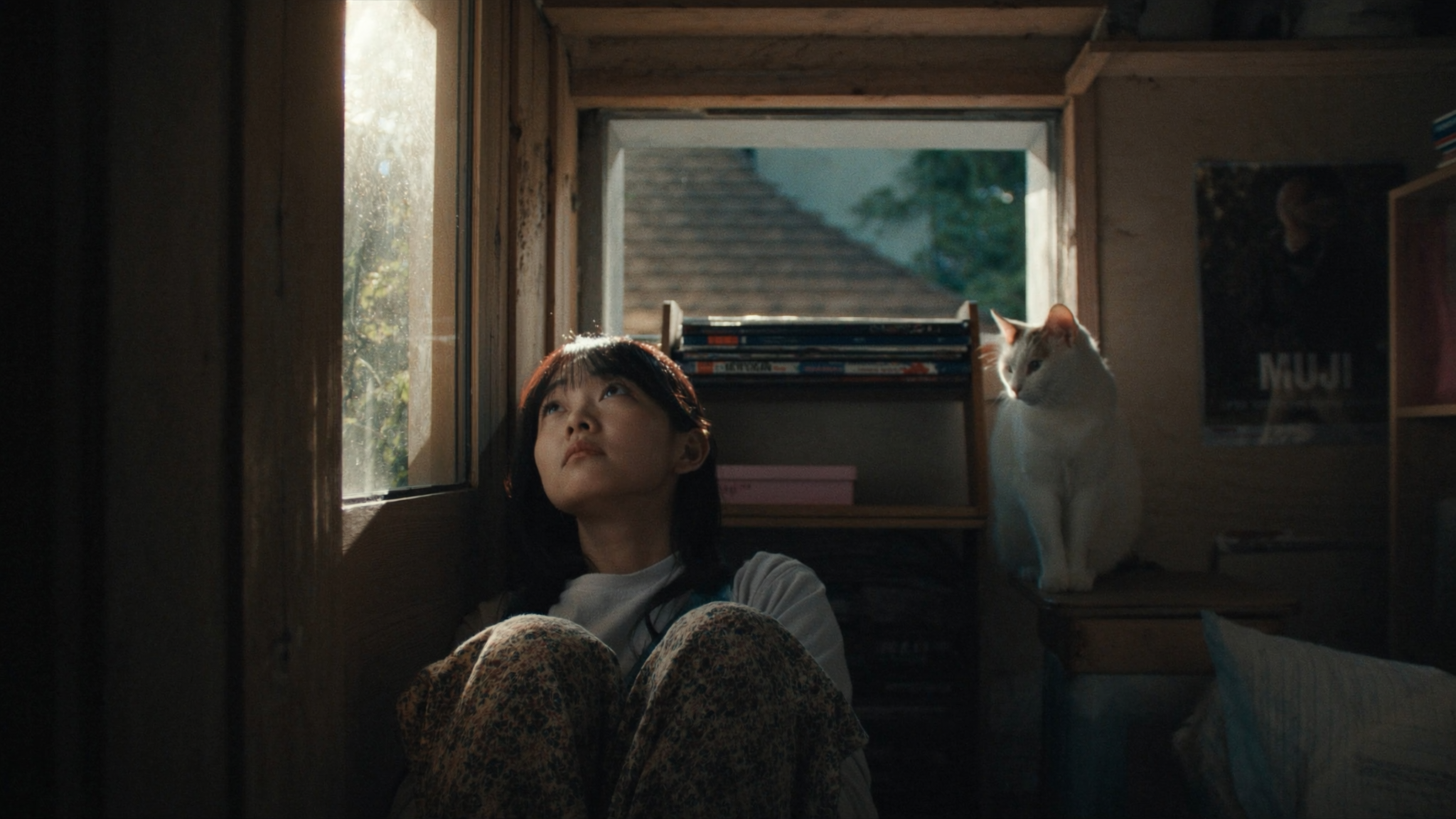

A continuous cut is the quietest trick in cinema: two shots, one invisible seam, and the audience never notices the edit — only the momentum. In generative video the same idea becomes an engineering problem. Models do not share state between clips, so every join is a place where style, motion, lighting, and physics can drift apart. This guide explains what a continuous cut actually is, why it matters more as short-form viewing keeps rewarding narrative polish, and how to automate most of the matching work without losing directorial control.
What a Continuous Cut Means in AI Video
In traditional editing, a continuous cut is a transition that hides itself. A character raises a hand in one shot; the next shot picks up the gesture mid-motion. A doorframe, a shadow, or a matching color block covers the splice. The viewer's eye follows the movement, not the edit, and the sequence reads as one uninterrupted flow.
Generative pipelines break that illusion by default, because each clip is produced independently. A model asked for "the same character walking through the same street" on two separate runs will happily produce two different streets, two different coat colors, and two different walking rhythms. The join is technically a cut, but it is not continuous — it is two clips placed next to each other and hoping nobody looks closely.
A true AI continuous cut therefore has three requirements:
- Spatial continuity: the set, wardrobe, props, and light direction must be recognizably the same before and after the splice.
- Temporal continuity: motion that begins in the outgoing clip must resolve plausibly in the incoming clip.
- Perceptual continuity: grain, depth of field, lens character, and color temperature must match closely enough that the eye accepts the frame as one world.
When all three hold, a cut disappears. When one fails, the audience feels a jolt they cannot name — and in short-form video, that jolt is often enough to trigger a scroll.
Why Seamless Cutting Drives Retention and Story
Editing rhythm is one of the strongest retention levers available to a video creator. Long, unbroken takes build tension because the viewer senses there is no escape. Fast, invisible cuts build momentum because each new angle arrives before attention dips. Both effects depend on the join being clean. A visible mismatch resets the viewer's patience and turns a narrative beat into a technical distraction.
The pressure has increased as more content is produced at storytelling length rather than as single visual gags. Once a sequence needs to carry a character through multiple beats — approach, confrontation, reaction — it needs continuity across shots. Generative tools are now good enough that audiences expect that level of finish, even from small teams.
There is also a practical argument. Sequences that cut well are cheaper to revise. If your shots share consistent lighting, wardrobe, and camera language, fixing one beat does not force you to regenerate the entire scene. Continuity is not just an aesthetic choice; it is production insurance.
Anatomy of a Cut Point: What the System Must Read
A cut point is any frame boundary where the sequence moves from one rendered clip to the next. Automating the join means teaching software to recognize four kinds of anchor.
Motion anchors
The most reliable hidden cut follows movement that is already in progress. If a hand is sweeping left as the clip ends, the next clip should open with a matching sweep at a similar velocity. Automated tools detect the dominant motion vector near the last frames of the outgoing clip and search the incoming clip for a frame with a compatible vector.
Compositional anchors
Framing is a second anchor. A cut that keeps the subject in roughly the same screen position, at a similar scale, reads as continuous even if the background changes slightly. Big jumps in subject size or screen direction are what make cuts feel like errors.
Color and exposure anchors
Histograms and white-balance readings drift between generations. Matching the average luminance, highlight roll-off, and shadow tint of adjacent clips does most of the visible repair work, often more than expensive re-rendering.
Audio anchors
Even in visual-first workflows, audio decides where a cut is felt. A footstep, a breath, or a musical downbeat gives the splice a reason to exist. Cut on a rhythmic event and the eye forgives a small visual mismatch; cut against the rhythm and even a perfect frame match can feel wrong.
Build a Continuity Bible Before Generating
The single biggest cause of broken joins is starting to generate before deciding what must stay constant. A continuity bible is a short document, not a feature film dossier. It should contain:
- Character sheet: face description, hair, wardrobe with exact colors, distinguishing marks, and posture habits.
- Environment sheet: location layout, time of day, weather, dominant light source, and a rough map of where the camera may stand.
- Lens plan: focal length, aperture feel, and camera height for each scene. Jumping from a wide 24mm look to a compressed 85mm look mid-action reads as a different film.
- Palette: three to five hex values for the scene, plus one accent color reserved for story-critical objects.
- Motion language: how the camera moves (handheld drift, slow push, static tripod) and how fast the subject moves.
Once these are written down, they become reusable prompt fragments and reference images. That consistency is what makes automated stitching possible later, because the matcher has less drift to correct.
Practical Workflow: From Shot List to Seamless Sequence
The workflow below assumes you are generating clips individually and assembling them into a continuous sequence. It works with any capable text-to-video or image-to-video model.
Step 1 — Write the sequence in beats, not shots
List what changes emotionally, not just visually. "She notices the letter" is a beat. "Close-up of hands, then close-up of eyes" is how you will cover it. Beats keep you from generating coverage you cannot join, because you know which shots must share a moment in time.
Step 2 — Generate matched keyframes first
Before animating anything, produce still frames for the opening and closing composition of each beat. Approve them side by side. If two frames do not look like they belong to the same scene, no amount of animation will fix the join.
Step 3 — Animate with overlapping handles
Generate each clip slightly longer than you need — a second at the head and tail. Overlap gives the editor and the matcher material to find the best splice frame instead of being locked to whatever frame the model happened to stop on.
Step 4 — Extract the motion tail
Identify the final frames with the cleanest, most readable motion. Export them as a reference image and, where the tool supports it, as a motion reference for the next clip. Conditioning the next generation on the previous clip's last frame is the most reliable continuity trick available.
Step 5 — Stitch with a matcher pass
Run the clips through an assembly pass that aligns color, exposure, and grain before the splice. Even a simple histogram match plus a subtle grain overlay removes most of the perceived jump.
Step 6 — Cut on sound
Trim the join so it lands on a rhythmic event. In practice, moving a cut by four to six frames to sit on a footstep is often more effective than another round of visual repair.
Step 7 — Watch at speed, then at half speed
Play the sequence once at normal speed to judge flow, then once slowly to catch frame-level mismatches. Most audiences will only ever see the first pass, but the second pass is where you find the errors that surface on large screens.
Matching Techniques: Camera, Color, Motion, and Grain
Four repair layers handle almost every join.
Camera match. Compare the apparent focal length and camera height. If one clip looks like a wide lens at chest height and the next like a long lens at eye level, reframe or re-render one of them. Crop and scale can rescue small differences, but they cost resolution.
Color match. Match shadows first, midtones second, highlights last. Shadow tint is where mismatches are most visible to the eye. A slight lift or crush on the black point often does more than a full grade.
Motion match. If the subject is moving left at the end of one clip, the next clip should not start with a rightward motion. Reverse the clip, mirror it, or choose a different splice frame. Screen-direction errors feel like continuity mistakes even to viewers who know nothing about film grammar.
Grain and texture match. Generative clips often differ in micro-texture. Layering a single, consistent grain plate across the entire sequence unifies clips that came from different generations and hides small resolution differences.
Automation: What to Hand Off and What to Keep
Automation is most valuable where decisions are mechanical. Hand off:
- Splice-frame search. Finding the frame pair with the closest motion vector and histogram match is a search problem, and software is faster than you are.
- Color and exposure matching. Deterministic corrections applied across a whole sequence save hours.
- Audio sync. Detecting transients and snapping cuts to them is reliable and tireless.
- Repeatable assembly. Once a sequence template works, applying it to new footage is a script, not a craft decision.
Keep human:
- Where a cut should happen dramatically. Software does not know that a reaction shot must land after the line, not before it.
- When to break continuity on purpose. Sometimes a jump is the point — a disorienting cut can express panic better than a smooth one.
- Final taste. A sequence can pass every technical check and still feel lifeless. That judgment stays with the editor.
A useful rule: automate the physics, direct the psychology.
Common Failure Modes and How to Fix Them
The drift problem. Characters slowly change face or wardrobe across five shots. Fix: lock identity with reference images and reuse the same seed and character description in every generation. If drift persists, shorten the number of shots per scene and cover more with camera movement inside a single clip.
The lighting flip. Sunlight switches sides between clips. Fix: state light direction explicitly in every prompt, and match shadow tint before anything else.
The stutter join. Motion repeats or freezes at the splice. Fix: trim more aggressively into the outgoing clip so the incoming clip's motion continues rather than restarts.
The speed mismatch. One clip moves at a natural pace, the next feels sped up. Fix: retime with optical flow rather than a straight speed change, and check that frame rates match before assembly.
The resolution cliff. One clip looks softer than its neighbors. Fix: upscale the weakest clip before the grade, then apply the sequence-wide grain plate so texture differences are uniform.
The audio seam. Room tone changes abruptly. Fix: crossfade ambience across the join for two to four frames and keep a single music bed underneath.
A Practical Checklist for Seamless AI Sequences
Before exporting, run through this list:
- Do adjacent clips share lens character and camera height?
- Is screen direction consistent?
- Are shadow tint and black levels matched?
- Does the splice land on a sound event?
- Is there a single grain plate over the sequence?
- Does motion carry through the join rather than restart?
- Does the sequence still make sense with the audio muted?
- Would a viewer notice the cut if they were not looking for it?
If the answer to the last question is no, the sequence is ready.
FAQ
What is the difference between a continuous cut and a match cut?
A match cut links two shots through a shared visual or conceptual element — a shape, a movement, a sound. A continuous cut is broader: it is any join designed to preserve the feeling of an unbroken flow, whether or not a specific matching element is present.
Can AI fully automate seamless editing?
It can automate the mechanical layer — frame matching, color alignment, audio transient detection — reliably. Dramatic decisions, pacing, and deliberate rule-breaking still need a person. In practice, the best results come from automated assembly followed by a short manual polish pass.
How many frames of overlap should I generate?
One second at your working frame rate is a good default. That gives roughly twenty-four frames of material at either end to search for the cleanest splice without wasting generation time.
Why do my clips look consistent individually but wrong together?
Because consistency is judged in isolation on subject and style, while continuity is judged across time on light direction, screen direction, and motion state. Check those three first; they cause most sequence-level mismatches.
Does a continuous cut require the same camera angle?
No. You can change angle, distance, or height and still cut continuously, as long as the movement, light, and screen direction remain coherent. Variety in framing with consistency in physics is exactly what cinematic coverage looks like.
What is the fastest improvement for a beginner?
Cut on sound and match shadow tint. Those two habits fix the majority of visibly broken joins and cost almost nothing in time.
Should I retime clips or regenerate them?
Retime when the mismatch is small and the motion is simple. Regenerate when the mismatch involves identity, wardrobe, or light direction, because retiming cannot repair content that is fundamentally different.
How do I keep long sequences from feeling monotonous?
Alternate scale and duration deliberately. A wide shot held twice as long as the surrounding cuts creates emphasis; three fast close-ups in a row create urgency. Continuous cutting is about hiding the seams, not about removing the rhythm.
The craft of the continuous cut has not changed — only the tools have. Decide what must stay constant, generate with overlap, match the physics, and let automation handle the tedium. What remains is the part that always mattered: knowing where the story wants to cut.
