

Why Short Vertical Video Rewards Systems, Not One-Off Ideas
Every creator eventually has one video that outperforms everything else on their channel. The temptation is to treat that video as proof of talent and then spend months trying to recreate lightning in a bottle. The creators who actually build durable audiences do something less glamorous: they build a system that produces a watchable video in under an hour, every week, without depending on inspiration.
That distinction matters more now than it ever has, because AI generation tools have collapsed the cost of producing footage. Getting a clip is no longer the bottleneck. The bottleneck has moved to taste, structure, and repetition — the parts of the job that a generator cannot decide for you.
A useful mental model is to split production into four layers:
- Strategy layer — what the channel is about, who it speaks to, and what promise each video makes.
- Structure layer — the hook, the beat sheet, the loop.
- Production layer — generating or shooting footage, recording voice, sourcing music.
- Finishing layer — cutting rhythm, captions, color, sound balance, and publishing checks.
AI tools are extremely strong in the production layer, decent in the structure layer, and weak in the strategy layer. If you spend all your effort on generation prompts and none on the beat sheet, you will produce beautiful footage that nobody watches past second three. If you spend effort on structure and treat generation as a commodity, you will outperform creators with far better visuals.
This guide walks through the whole pipeline as a workflow rather than a list of tips. The goal is not a single viral post. The goal is a repeatable process that produces ten competent videos, one of which has a real chance of breaking out.
Start With the Hook: The First Two Seconds Decide Everything
Short-form feeds are recommendation engines optimized for one signal above all others: does the viewer stay past the first few seconds? Everything downstream — completion rate, shares, comments — is gated by that first moment. If the opening frame is a slow pan of a desk with no text and no motion, the algorithm reads the drop-off and stops distributing.
Three hook patterns that survive the scroll
The contradiction hook. Open with a statement that conflicts with what the audience believes. "Your phone camera is not why your videos look bad." The viewer's brain registers a gap and wants it closed. The payoff is the explanation.
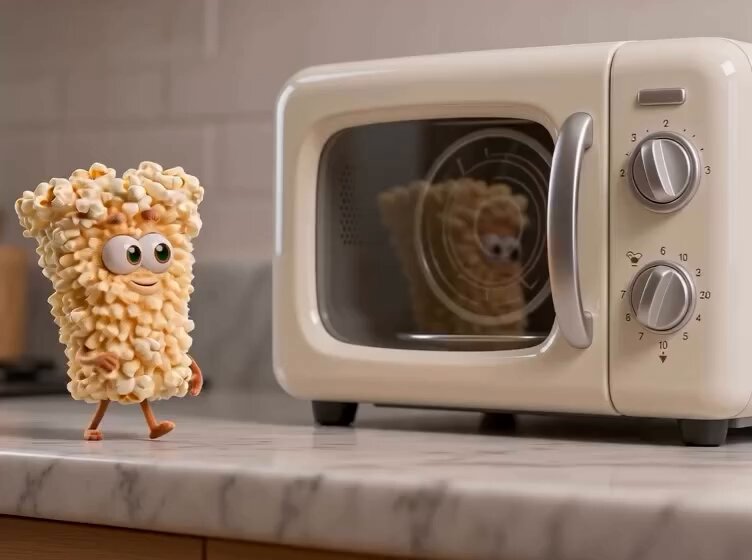
The unfinished-action hook. Show something mid-motion that obviously has a conclusion you have not yet seen. A hand reaching for a dial, a glass tipping, a cursor hovering over a button. This works especially well for AI-generated footage because motion in the first frame is easy to specify and reads as "something is about to happen."
The visual anomaly hook. Put something in frame that does not belong. A snow-covered cactus. A kitchen in zero gravity. A familiar street with an impossible skyline. Anomaly hooks are the strongest fit for generated imagery, because you can render a scene that would be expensive or impossible to shoot.
Writing hook lines with a language model
A language model is a fast, cheap way to generate twenty hook variants in a minute. Give it constraints instead of asking for "good hooks":
- Platform and format (vertical, under 30 seconds)
- Audience and their existing belief
- The single fact or twist the video delivers
- Tone (dry, energetic, deadpan, warm)
- Length limit (under nine words on screen)
- Instruction to avoid questions, since question hooks have become predictable
Then read the twenty out loud. The one that makes you want to keep reading is usually the one that works. Words that look clever in a list often die when spoken, and on-screen text that runs past nine words gets skimmed rather than read.
Hook hygiene
Whatever hook you choose, the first frame must satisfy three conditions: readable text at thumbnail size, a subject that is recognizable in a fraction of a second, and motion or implied motion. If any of those is missing, regenerate the frame rather than hoping the second frame saves you.
Plan a Beat Sheet Before You Generate Anything
A beat sheet is a one-page table that maps timecode to intent. It is the single highest-leverage document in short-form production, because it prevents the most expensive mistake: generating footage for a video whose structure does not exist yet.
A workable template for a 25-to-35-second vertical video:
| Time | Beat | Job of the beat |
|---|---|---|
| 0.0–2.0s | Hook | Create an open loop |
| 2.0–5.0s | Premise | State the stakes in one line |
| 5.0–13.0s | Escalation 1 | Deliver the first concrete step or reveal |
| 13.0–21.0s | Escalation 2 | Raise difficulty or add the twist |
| 21.0–28.0s | Payoff | Close the loop that the hook opened |
| 28.0–32.0s | Loop or next-step | Return to the opening image or line |
The final beat deserves special attention. If the last frame visually rhymes with the first frame, the video loops almost seamlessly, and viewers who rewatch push completion metrics above 100 percent. That single detail is worth more than an extra beauty pass on the render.
Write the beat sheet in plain text, one row per beat, with a note about what the viewer should be feeling. Emotion labels are not decoration; they are instructions for how long to hold a shot and how loud the music should be.
Choosing a Generation Approach for Each Shot
Not every shot should come from the same tool. Mixing approaches is how you keep a video interesting without blowing your time budget on a single hero shot.
Text-to-video, image-to-video, and hybrid pipelines
Text-to-video is best for establishing shots, abstract transitions, and anything where the exact composition does not matter as long as the mood is right. It is fast and forgiving, but it struggles with precise action and readable text.
Image-to-video is best when composition matters. Generate or source a still frame you love, then animate it. You keep control of framing, which is where most amateur AI video goes wrong — subjects placed dead center with no headroom and no negative space for captions.
Hybrid pipelines combine generated plates with real footage or screen recordings. A generated background with a real hand in the foreground often looks more credible than an entirely synthetic frame, and it lets you insert product shots or app recordings without a visible quality jump.
A quick decision rule
Ask two questions about each shot: does the composition need to be exact, and does the action need to be readable? If both answers are no, use text-to-video. If composition matters, use image-to-video. If action must read precisely, shoot it or screen-record it and use AI only for the environment.
Resolution, aspect ratio, and safe zones
Generate at the highest resolution you can afford in time, but always frame for 9:16. Keep the subject between the top and bottom interface elements — roughly the middle 70 percent of the screen — because captions, profile handles, and buttons eat the outer bands. Export at a bitrate high enough that fast motion does not smear; short-form platforms re-encode aggressively, and low-bitrate sources degrade twice.
Keeping Characters and Visual Style Consistent Across a Series
Nothing signals "amateur" faster than a character whose face changes every video. Consistency is what turns a series of clips into a channel with a recognizable identity.
Build a reference kit
Create a small folder containing: three to five reference images of each recurring character from different angles, a written character description of forty to sixty words, a lighting reference, a color palette, and a wardrobe sheet. Update it whenever a new element becomes part of the visual language. This kit is the asset that keeps quality stable even when you swap generation tools.
Lock your descriptions
Write your character and location descriptions once, then paste them verbatim into every prompt. Vague paraphrase is the main cause of drift. If a prompt needs "a woman in a red coat" every single time, do not let it become "a person in warm clothing" in the next shot.
Separate identity from performance
Keep identity constant and vary everything else: camera angle, lens feel, time of day, energy level. Audiences read consistency in the subject and novelty in the presentation. Reverse those and the series feels random.
Naming conventions that save you later
Use project-based file names with a fixed structure: project, episode number, shot number, version. When you have forty clips across three episodes, ep02_sh05_v3 will save you more time than any generation upgrade.
Editing: Pacing, Captions, and Sound
Generation gets the attention; editing decides whether people watch. Most disappointing AI videos are not badly generated, they are badly cut.
Cut rhythm
Aim for an average shot length of 1.5 to 2.5 seconds in the first ten seconds, then allow longer holds as the viewer commits. Cut on motion rather than on dialogue beats — mid-gesture cuts feel energetic, while cuts on a static frame feel like slideshows. Use jump cuts freely; they are a native language of vertical video, and the perceived roughness reads as authenticity.
Captions and on-screen text
Assume most viewers watch muted. Burn in captions in three-to-five-word chunks, positioned in the upper-middle or lower-middle depending on where your subject sits. Keep one font and two sizes across the channel. Proofread captions by reading them at speed, not by scanning; auto-transcription mangles product names, technical terms, and proper nouns constantly.
Use on-screen text for two purposes only: carrying the hook and labeling a step. Any other text competes with the captions and slows comprehension.
Sound design
Layer three elements: a music bed, a voice track, and one or two accent sounds. Trending audio helps distribution, but if your voice is the point, keep music at least 12 to 18 dB below the vocal. Add a subtle whoosh or click on key cuts and a riser before the payoff. Silence for half a second before a reveal is one of the most underused tools in short-form editing.
Normalize the final mix so peaks do not clip and the perceived loudness sits near platform norms. A quiet video gets scrolled past just as fast as a boring one.
A Batch Production Workflow You Can Run Weekly
Batching beats bingeing. Instead of producing one video every day and burning out in two weeks, produce five videos in one focused session and publish them across the week.
Session 1 — Research and structure (60 minutes). Review comments and saved posts. Pick five topics. Write five beat sheets and five hooks. Do not open any generation tool yet.
Session 2 — Voice and scratch audio (45 minutes). Record narration for all five videos back to back. You will be warmed up by video two, so record one extra take of the first video last.
Session 3 — Generation (90 minutes). Work shot by shot, but group similar shots across episodes to reuse your reference kit efficiently. Save every usable variant, not just the ones you use today.
Session 4 — Assembly and captions (90 minutes). Assemble five timelines, add captions, and apply one consistent look. Do not color-grade until captions are locked; text placement changes the composition.
Session 5 — Sound and export (45 minutes). Add music, sound accents, and normalize. Export, then schedule.
Two people can run this in half the time by splitting generation and editing. A solo creator should protect the research session above all else; skipping it is what produces five videos nobody wants to watch.
Quality Control Before You Publish
Run the same checklist every time. Consistency here is what separates a channel from a hobby.
- Does the first frame work as a static image with sound off?
- Is the hook text fully inside the safe zone on a small phone?
- Does any element promise something the video does not deliver?
- Are there visible generation artifacts — extra fingers, warped edges, melting text, unstable backgrounds?
- Do captions match the audio word for word?
- Does the audio peak without clipping, and is the vocal intelligible on a phone speaker?
- Does the final frame loop back to the first?
- If the video contains synthetic media, is it labeled according to platform rules?
- Is any factual claim accurate, sourced, or clearly framed as opinion?
Treat synthetic-media disclosure as part of the craft, not a chore. Clear labeling protects the channel and, in practice, does not measurably hurt performance when the content itself is good.
Common Mistakes and How to Fix Them
Starting with the tool instead of the idea. Fix: write the beat sheet first, always. Generation should be the third thing you do, after structure and audio planning.
Overloading the first second. Fix: one idea, one image, one line of text. If you cannot summarize the hook in six words, the hook is not finished.
Letting the character drift. Fix: reuse locked descriptions and a reference kit, and never paraphrase your own character sheets.
Generating shots that are too long. Fix: generate eight-second clips and cut them into two or three pieces. You will get more usable material per generation and better rhythm.
Center-framing everything. Fix: leave space for captions, and vary composition between wide, medium, and insert shots.
Ignoring sound until the end. Fix: lay in scratch audio before you generate, so shot lengths are dictated by speech rather than by guesswork.
Publishing without a loop. Fix: make the last two seconds visually echo the first two. It costs almost nothing and lifts completion rates.
Chasing trends outside your niche. Fix: participate in a trend only when it can be bent to your channel's subject. Audiences follow consistency, not relevance to whatever is trending.
Publishing, Testing, and Iterating
Publish at consistent times for two weeks, then adjust based on your own data rather than generic advice. Vary one element per video — the hook style, the caption position, the music genre — so you can attribute changes in performance to something specific.
Watch three numbers above all others: retention in the first three seconds, average watch time as a percentage of length, and shares per thousand views. Low early retention means your hook or first frame is failing. High early retention with a steep mid-video drop means the middle beats sag. High watch time with low shares means the video is pleasant but not useful or surprising enough to send to someone.
Read the comments for language your audience uses, then feed that phrasing back into the next batch of hooks. Your viewers will write better hooks than you will if you let them.
Finally, keep a running log: date, hook type, topic, format, and the three metrics. After twenty entries you will have a personal playbook that no generic guide can match — because it describes your audience, not an average one.
Frequently Asked Questions
Do I need AI at all to make short vertical videos?
No. Many successful channels use a phone, natural light, and a free editor. AI is most valuable when you need scenes that are expensive, dangerous, or impossible to shoot, or when you need to produce volume faster than a solo creator otherwise could.
How long should a TikTok video be?
Match length to the idea. Anything from 15 to 45 seconds works, provided the beat sheet justifies it. Padding a 20-second idea into a minute is the fastest way to lose an audience.
Can AI-generated footage perform as well as real footage?
Yes, when the content is useful, funny, or surprising. Audiences respond to value, not provenance. Where generated footage struggles is in authenticity-driven categories such as personal vlogs and talking-head expertise, where a real face and voice carry trust that a render cannot.
How many videos should I post per week?
Three to five consistently beats ten inconsistently. A sustainable batch workflow that produces four good videos weekly will outperform a daily grind that collapses after ten days.
What is the biggest technical mistake beginners make?
Ignoring audio. Viewers forgive imperfect visuals far more readily than muddy voice tracks, clipping, or a music bed that drowns the narration.
How do I keep a series from getting repetitive?
Keep identity constant and vary presentation: new camera angles, new locations, new pacing, new formats. Rotate between at least three recurring formats so the channel has variety without losing recognition.
Should I disclose that a video uses generated footage?
Yes. Follow platform labeling requirements and mention it in the description when a reasonable viewer might be misled. Transparency rarely costs performance and protects the channel long term.
What should I build first if I am starting from zero?
Build the beat sheet template and a caption style preset. Those two assets raise the quality floor of everything you publish, and they cost nothing but an afternoon.
