

Why custom video models change the economics of content
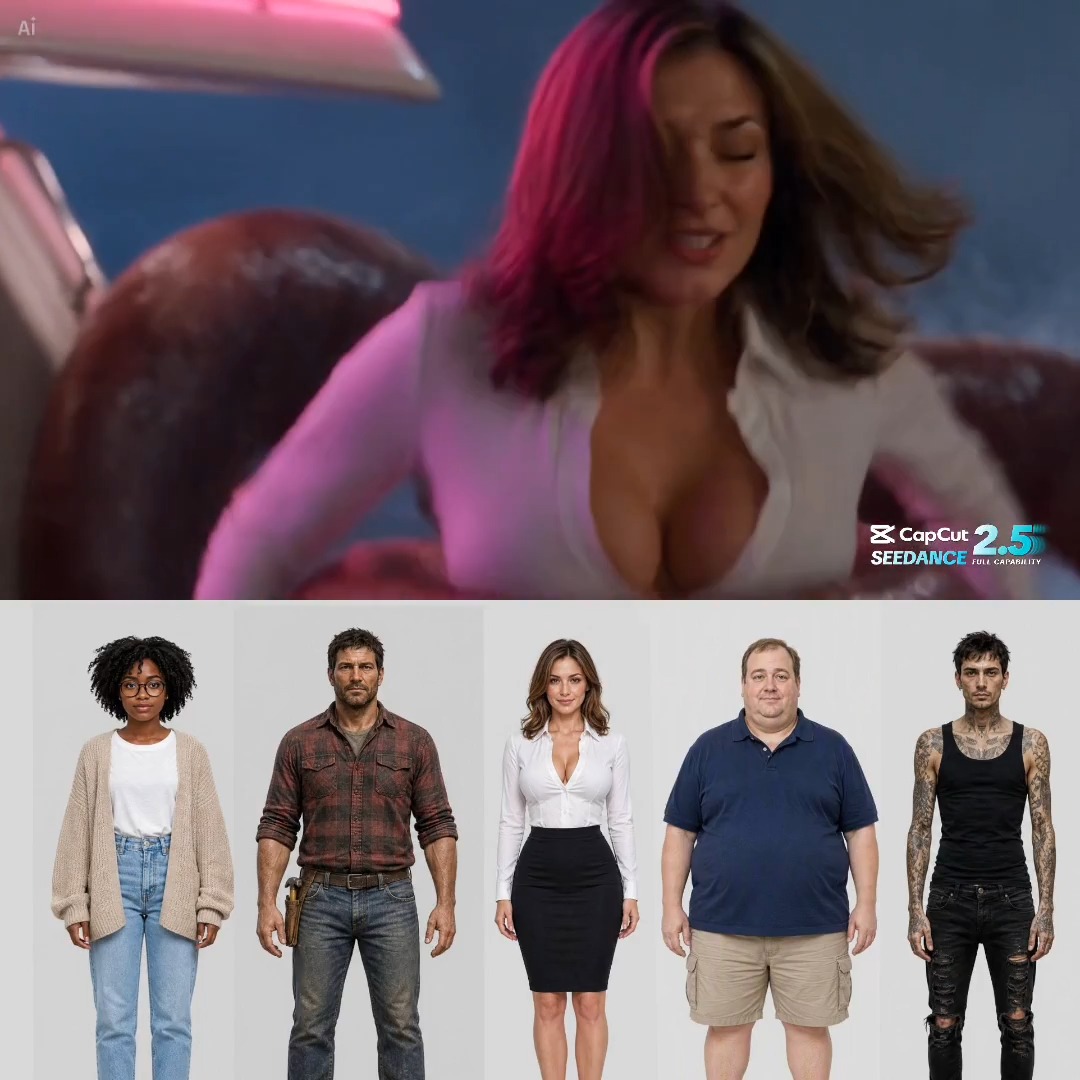
Generic text-to-video tools are remarkably good at producing plausible footage quickly. The trouble starts when you need forty clips that look like they were shot by the same crew, in the same place, with the same person, in the same visual language. Prompt wording drifts, lighting shifts, faces morph, and the wardrobe resets itself between shots. Every new generation becomes a small lottery, and the editing room becomes a repair shop.
A custom model solves a different problem than a general one. Instead of asking a broad system to guess at your style, you teach a narrower system what your style actually looks like: your framing habits, your color palette, your recurring character, your product geometry, your motion rhythm. The output stops being "a video that could be anything" and becomes "a video that is recognizably ours."
That shift has real operational consequences. Rework drops, because fewer shots need regeneration. Consistency improves, because the model has seen the same reference hundreds of times. Review cycles shrink, because reviewers stop arguing about whether a shot fits the brand and start evaluating whether it tells the story.
This guide walks through the whole path: dataset construction, training approach selection, infrastructure choices, evaluation, deployment, and the mistakes that waste the most time. It is written for small teams and solo creators who want repeatable output rather than one-off novelty.
What training a custom video model actually means
The phrase "train your own model" hides several very different activities. Knowing which one you are doing determines your budget, your timeline, and your hardware needs.
Full training, fine-tuning, and adapters
Full training means starting from a randomly initialized network and teaching it everything. For video, this is almost never the right starting point outside of research labs. The compute bill is enormous, the dataset requirement is measured in millions of clips, and the resulting model usually underperforms a well-tuned public base model for months.
Fine-tuning starts from a pretrained base and continues training on your data. You keep the base model's understanding of physics, lighting, and motion, then nudge its weights toward your aesthetic. This is the standard approach for teams with a few thousand high-quality clips and a serious GPU budget.
Adapters (LoRA-style low-rank layers, textual inversions, and similar techniques) freeze the base model and train a small set of additional parameters. Training takes hours instead of weeks, files are small enough to swap between projects, and you can keep several adapters for different looks. If you are new to this, start here. You will learn the same dataset lessons at a fraction of the cost.
Separating look from motion
Video models learn two intertwined things: how a frame should look, and how pixels should move between frames. These are separable concerns in practice. A style adapter trained on still frames can lock down color, grain, and rendering character, while the base model handles temporal coherence. Motion quality, on the other hand, is usually better improved through dataset curation than through more training steps — clips that are stable, well-lit, and free of cuts teach smoother movement than clips that are shaky or heavily edited.
A realistic first project
Pick one narrow target: a single character, a single product, or a single visual style that repeats across an entire campaign. Ten to thirty minutes of curated footage is often enough for a first adapter. Resist the urge to teach the model everything at once; broad, shallow training produces broad, shallow results.
Building a dataset that will not betray you
The dataset is where most projects are won or lost. Model quality follows data quality far more closely than it follows architecture choices.
Sourcing footage
Good sources include original camera footage shot for the project, archived renders from previous work, licensed stock that matches your target look, and synthetic frames generated by a stronger model and then manually filtered. What matters is that the clips share the properties you want to reproduce and exclude the properties you do not.
Build a rejection list before you build an accept list. Common rejections: watermarks, on-screen text, subtitles burned into the frame, heavy compression artifacts, abrupt scene cuts, extreme motion blur, duplicated frames, and any clip where a face is partially occluded across most of its duration.
Captioning and metadata
Captions do more than describe. They define the axes along which the model can be controlled later. If you caption every clip with the same three words, you will get a model that responds to nothing. If you caption richly — subject, action, camera angle, lens feel, lighting direction, palette — you create control handles.
A practical caption schema:
- Subject and wardrobe ("woman in olive field jacket")
- Action and speed ("walking slowly, quarter speed")
- Camera ("handheld medium shot, slight drift left")
- Light ("soft overcast, cool shadows")
- Grade ("muted teal shadows, warm skin tones")
- Duration and frame rate notes
Keep phrasing consistent. Variation in wording teaches variation in output; consistency teaches reliability.
Splitting, balancing, and hygiene
Hold out 10–15% of your data as a validation set and never train on it. Balance categories so no single clip type dominates: if 80% of your footage is close-ups, your model will produce close-ups when you ask for a wide shot.
Deduplicate aggressively. Near-identical frames inflate your dataset size and bias the model toward whatever moment you happened to capture most. And keep a written record of every inclusion and exclusion decision — three weeks later you will not remember why a clip was dropped, and that memory is the only way to debug a bad result.
Choosing your training approach and stack
Base model selection
Match the base model to your motion needs. Models tuned for cinematic realism behave differently from models tuned for stylized animation, and adapters trained on one rarely transfer cleanly to the other. Test candidates on a handful of representative prompts before committing, and prefer a base model you can run locally or on rented GPUs you control.
Compute realities
Adapter training on a few thousand short clips typically runs in a few hours on a single modern data-center GPU. Full fine-tuning can run into days and multiple GPUs, plus significant storage for checkpoints. Plan for checkpoint storage early: a single training run can produce dozens of intermediate states, and you will want to compare them rather than assume the final one is best.
Orchestration, queues, and pipelines
Once you train more than occasionally, the work becomes a pipeline problem. Long-running training jobs should not block short inference jobs. A queue-based architecture handles this well: training tasks go into a low-priority lane, inference and preview tasks into a high-priority lane, and a worker pool processes each independently.
A minimal job record should capture: dataset version, base model version, hyperparameters, random seed, compute target, status, artifact location, and evaluation results. Without that record, reproducibility is impossible and every experiment becomes folklore.
Storage and data integrity
Keep datasets and checkpoints in object storage with immutable versioning. Track a hash of each dataset snapshot so you can prove which data produced which model. Store metadata in a relational database rather than in filenames or spreadsheet columns, and back up the registry separately from the artifacts. Disk failures are cheap to recover from; a lost mapping between dataset and model is not.
Evaluating whether the model is actually good
Subjective impressions are useful for direction and useless for decisions. Build an evaluation loop with both automated and human components.
Automated signals
Frame-level similarity scores against a reference set tell you whether the model is reproducing your look. Temporal consistency metrics catch flicker, warping, and identity drift. Prompt-adherence scoring checks whether the model honors control tokens. Track all of these across training steps and plot them; the curve usually reveals a point where additional training starts degrading generalization even as training loss keeps falling.
A human review rubric
Automated metrics miss the things audiences notice. Grade a fixed sample of generations on a small, stable rubric:
- Identity consistency across the clip
- Motion plausibility (no rubber limbs, no melting edges)
- Lighting and palette match
- Artifact count
- Prompt adherence
- First-three-seconds impact
Use the same prompts, the same evaluators, and the same scale for every checkpoint. Randomizing the sample between checkpoints makes comparison meaningless.
Known failure modes
Watch for overfitting to a specific background, memorized faces from the training set, collapse toward a single camera angle, and the "waxy" texture that appears when a model is trained too long on too little data. Each has a specific fix: more diversity, more caption detail, angle-balanced data, or fewer steps with a lower learning rate.
From checkpoint to production workflow
Inference pipeline
Production inference needs three things the training notebook does not: batching, caching, and graceful degradation. Batch similar requests to make better use of GPU memory. Cache embeddings for repeated prompts and reference images. And define what happens when a job fails — retry once, fall back to the base model, and log the failure with enough context to diagnose it later.
Versioning and rollback
Treat models like software releases. Every adapter gets a semantic version, a changelog entry, and a documented dataset lineage. Keep the previous two versions available in production so you can roll back within minutes when a new checkpoint introduces a regression nobody caught in review.
Guardrails and review gates
Automated checks should catch the obvious problems: content policy violations, resolution mismatches, audio sync errors, watermark residue, and frame count anomalies. Human review should then focus on narrative fit and brand alignment — the judgments that resist automation.
Practical workflows by use case
Recurring character or spokesperson
Train on footage of one person across varied angles, lighting conditions, and expressions. Oversample neutral expressions and medium shots, since these are what most scripted scenes require. Hold back a validation set that includes at least one lighting setup never used in training to test generalization. Expect to iterate three to five times before identity holds through a full thirty-second clip.
Product and pack shots
Here geometry matters more than style. Shoot or source footage on a turntable-style rig with consistent focal length, then caption orientations explicitly. Reject any clip where the label is unreadable or the silhouette is ambiguous. A product model that hallucinates a logo is worse than no model at all, so test logo fidelity early and often.
Stylized shorts for social
Short-form work rewards punchy motion and strong grading. Build a style adapter from still frames to lock the look, then rely on the base model for motion. Keep clips to four to six seconds; temporal drift compounds quickly and short clips stay inside the model's reliable zone. Generate more candidates than you need and cut ruthlessly.
B-roll and atmosphere
Atmospheric footage is the easiest win. Train on landscape, texture, and weather clips with loose captions, and use the model to fill gaps in an edit where a specific mood is needed but no specific subject. This is often the first place a custom model pays for itself in saved shoot days.
Mistakes that cost the most time
- Training before curating. Ten hours of cleaning saves fifty hours of retraining.
- Captioning vaguely. "Nice shot" teaches the model nothing you can steer.
- Skipping the validation split. Without it, you are measuring memorization, not skill.
- Chasing loss curves. Lower training loss frequently means worse generalization.
- Ignoring the base model's limits. An adapter cannot fix a base model that cannot render hands.
- Forgetting documentation. Undocumented runs cannot be reproduced or improved.
- No rollback plan. A regression in production with no previous version is an outage.
- Evaluating alone. One person's taste is not an evaluation protocol.
Decision criteria before you commit
Ask five questions before starting a training project:
- Do you have at least a few hours of consistent, rights-cleared footage? If not, fix that first.
- Is the target narrow enough? One character, one product, or one style beats "everything we make."
- Can you iterate weekly? Slow iteration loops kill momentum.
- Do you have somewhere to deploy it? A checkpoint with no pipeline is a hobby.
- Is a simpler alternative good enough? Sometimes reference images plus prompt discipline gets you 80% of the way for 5% of the effort.
If three or more answers are weak, run a small adapter experiment on a low-stakes project before committing serious time.
FAQ
How much footage do I need?
For an adapter, a few hundred to a few thousand short clips is a workable range, provided they are diverse and clean. For fine-tuning, multiply that by an order of magnitude. Quality and consistency matter more than raw hours.
Can I train on a single GPU?
Yes, for adapters. Expect training runs measured in hours. Full fine-tuning generally needs multiple GPUs and considerably more storage for checkpoints.
How do I stop the model from copying training footage exactly?
Increase data diversity, add caption variation, lower the learning rate, and stop training earlier. Memorization is a symptom of too much repetition applied for too long.
Do I need to retrain when the base model updates?
Usually yes, or at least re-validate. Adapters are tied to the base architecture they were trained against, and a major base update can shift behavior enough that your adapter needs a refresh.
What is the biggest quality lever?
Caption specificity. It is free, it is fast, and it determines how much control you have at inference time.
How do I keep quality stable across a long project?
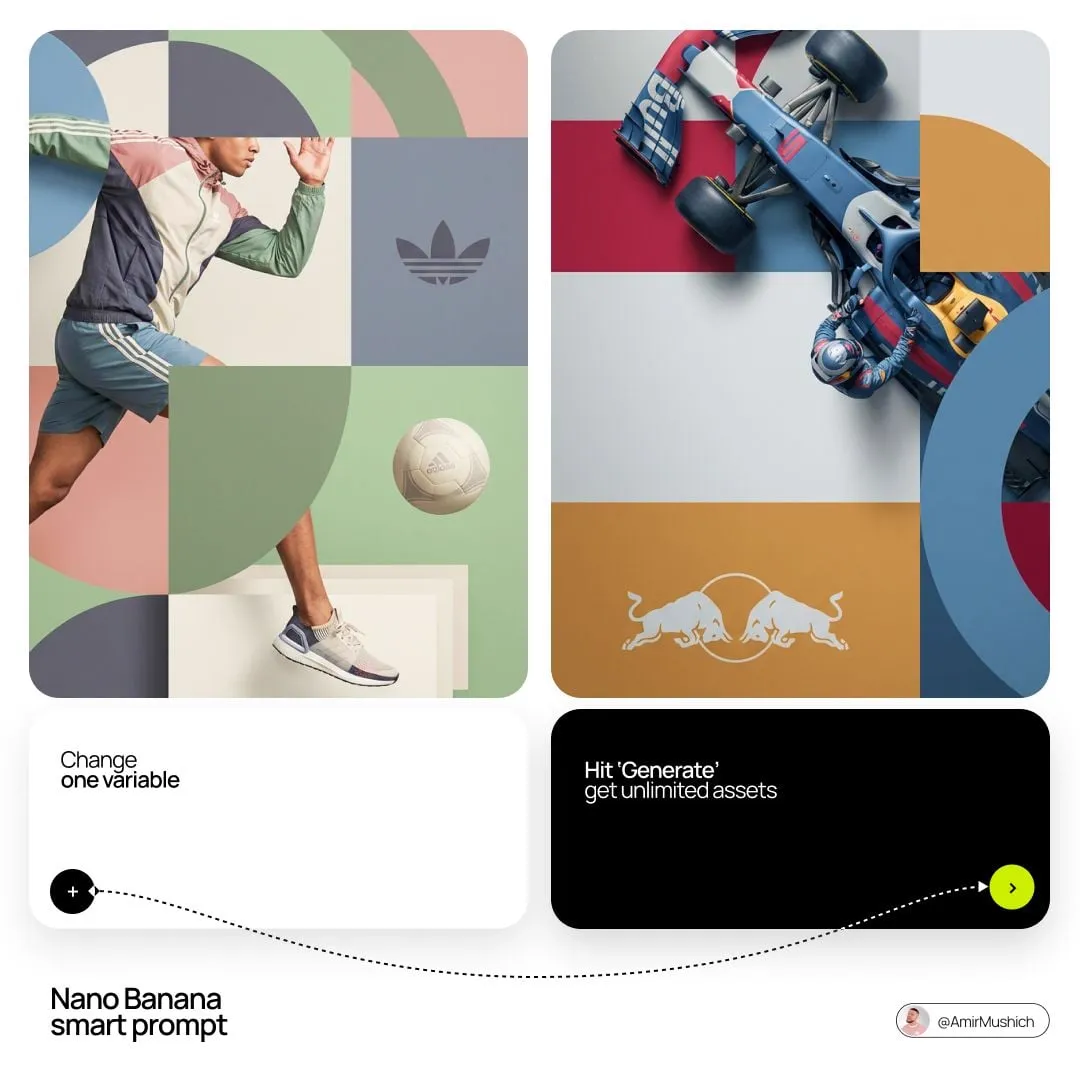
Freeze your dataset snapshot, freeze your model version, and never swap either mid-campaign. Change one variable at a time, and only between milestones.
A short operational checklist
Before training: footage curated, rights confirmed, rejection list applied, captions written to schema, validation split held out, dataset hashed and versioned.
During training: hyperparameters logged, checkpoints saved at intervals, metrics plotted against steps, sample generations produced at fixed prompts for comparison.
After training: human rubric scored against previous versions, failure modes catalogued, best checkpoint promoted, lineage recorded, rollback version kept live, pipeline tested end to end with a real brief.
The teams that get the most from custom video models are rarely the ones with the biggest compute budgets. They are the ones with disciplined datasets, honest evaluation, and a production pipeline that turns a good checkpoint into repeated, reliable output. Start narrow, document everything, and treat every training run as an experiment you intend to learn from — not a magic trick you hope will work.
