
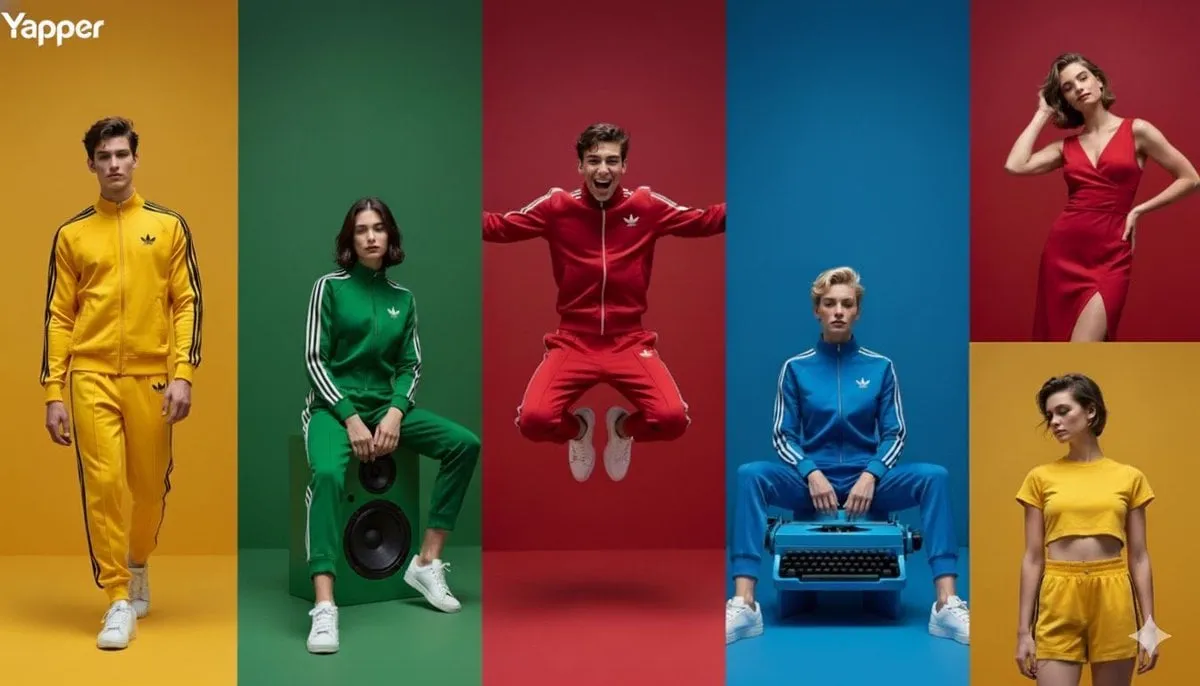

Custom video models have quietly become the most valuable asset in an AI video workflow. A few years of prompt-only experimentation taught creators an uncomfortable lesson: a generic model can produce a beautiful single shot, but it struggles to produce a coherent sequence that looks like it came from one director, one lens, and one grade. The teams that solved that problem did not solve it with longer prompts. They solved it with small, purpose-built models trained on tightly controlled reference material.
This guide is a neutral, tool-agnostic walkthrough of that workflow. It covers what training a video model actually involves, how to curate a dataset that will not waste your compute, how to evaluate results with something more rigorous than vibes, and how to hand a working model to an editor or client so it is genuinely useful. If you already use generative video tools, think of this as the layer above the prompt box.
Why Custom Video Models Became a Workflow Skill
Prompt engineering solved discoverability, not reproducibility. It made it easy to find out what a model could do, but it never gave a reliable answer to a simpler question: can this model produce the same character, wardrobe, palette, and camera language across twelve different shots? For short social clips, the answer rarely mattered. For branded series, product films, episodic content, and anything with a recurring cast, it mattered enormously.
Custom models close that gap. Instead of describing your visual identity in every prompt and hoping the model interprets it consistently, you encode that identity into weights or adapters. The prompt then becomes short and functional — camera move, action, timing — while the model handles the look. This is the same division of labor that exists in traditional production, where the art department and the colorist hold continuity so the director can focus on performance.
The practical benefit shows up in revision cycles. When a client says "the character's jacket changed color in shot seven," a well-trained model usually gives you a one-line fix. A prompt-only pipeline gives you a re-roll lottery. That difference compounds across a project: fewer regenerations, less manual compositing, more time for the work that actually differentiates a video.
What "Training a Video Model" Actually Means
The phrase covers several distinct techniques, and conflating them is the single most common source of wasted effort.
Fine-Tuning, Adapters, and Reference Conditioning
Full fine-tuning updates a large portion of a base model's parameters. It is the most powerful option and the most expensive, and it makes sense mainly when you are teaching a genuinely new domain — a specific animation style, a proprietary product behavior, an unusual camera rig.
Adapter-based training, often implemented as low-rank adapters, freezes the base model and trains a small set of additional weights. This is the workhorse of most creator workflows. It is fast, cheap, portable, and easy to version. You can train one adapter for a character, another for a color grade, and combine them at inference.
Reference conditioning sits at the other end of the spectrum. No weights change at all; you supply example images or clips at generation time and let the model condition on them. It requires the least setup and gives the least consistency, but it is ideal for one-off shots, mood exploration, and rapid prototyping before you commit to a training run.
Where Custom Models Sit in a Production Chain
A trained model is not the whole pipeline. It sits between pre-production decisions and post-production finishing. Upstream, you still need a locked look, a character sheet, and a shot list. Downstream, you still need editing, sound design, grading, and delivery specs. Treating a model as a replacement for those stages is how projects end up with impressive clips and an unwatchable cut.
The cleanest mental model is that the model replaces the shoot, not the production. Everything you would normally decide before pointing a camera — blocking, wardrobe, lens choice, lighting logic — still has to be decided. The model just executes those decisions faster.
Building a Dataset That Earns Its Keep
Dataset quality determines output quality far more than training duration does. A hundred well-chosen frames will outperform a thousand scraped ones.
Framing, Lighting, and Continuity Rules
Start by defining the visual grammar you want the model to learn. If your character appears in wide shots, medium shots, and close-ups, your dataset needs that spread. If your product is always lit with a soft key from camera left, do not include frames lit from the right unless you want the model to improvise.
Include variation where you want flexibility and consistency where you want control. A dataset of forty near-identical frames will produce a model that can only render one pose. A dataset of forty wildly different frames will produce a model that has learned nothing coherent. The sweet spot is usually a stable core — same subject, same palette, same lighting logic — with deliberate variation in angle, distance, and action.
Captioning and Metadata
Captions are how you talk to the model after training. Write them the way you would write prompts: specific, ordered, and free of filler. Name the subject, the framing, the light, the mood, the motion. If a detail is constant across every frame, decide whether it belongs in the caption. Constant details that appear in every caption tend to get baked in regardless, which is useful for a character's face and unhelpful for a background you wanted to change per shot.
Keep a controlled vocabulary. If half your captions say "golden hour" and half say "warm sunset light," you have created two concepts where you wanted one. Consistency in wording is a feature, not a stylistic choice.
Rights, Consent, and Guardrails
Before you train, confirm you have the right to use every asset. That means licensed footage, consent from anyone identifiable, and clear terms for any third-party material. Keep a provenance log that maps each training asset to its source and license. This is not bureaucracy; it is what lets you ship commercially without a legal cloud over the project.
Also decide what the model should refuse to do. Models trained on a single performer can drift into uncanny or inappropriate territory when prompted aggressively. A short internal policy on acceptable prompts is cheaper than a takedown.
A Repeatable Training Workflow, Step by Step
Step 1 — Define the Output Contract
Write down what the model must produce before you touch a dataset. Example: "A 24 fps clip, 16:9, consistent character, soft daylight look, camera moves limited to slow push and static." This contract drives every later decision, including how you will evaluate the result.
Step 2 — Curate, Deduplicate, and Split
Remove near-duplicates, blurry frames, watermarks, and anything with text you do not want reproduced. Hold back a validation set — usually 10 to 20 percent — that the model never trains on. That set is the only honest measure of whether you have learned a general style or memorized your samples.
Step 3 — Train With Checkpoints
Train in stages and save intermediate checkpoints. Early checkpoints tend to underfit and look generic; late checkpoints tend to overfit and reproduce training frames too literally. The best version is often two-thirds of the way through, not the final one. Log your settings so a run is reproducible next month.
Step 4 — Evaluate Against a Rubric
Generate the same set of test prompts at each checkpoint. Score them on identity, palette, motion coherence, and prompt adherence. Resist the temptation to judge from a single lucky clip. Consistency across a batch is the only signal that matters.
Step 5 — Package and Hand Off
Document the base model version, adapter weights, trigger words, recommended settings, and known failure modes. A model without documentation is a personal experiment; a model with documentation is a production asset that a teammate can pick up on a Monday morning.
Style Consistency and Multi-Image Fusion Without Drift
Multi-image fusion — combining several reference images into one coherent generation — is where most consistency problems appear. The failure mode is drift: the face holds, but the jacket shifts tone, or the background style leaks into the character.
The fix is hierarchy. Decide which reference governs which attribute and enforce that in your inputs. One image for identity, one for wardrobe, one for environment, and a text prompt that describes only the action. When two references conflict, the model will average them, and averages look like nothing.
At inference time, keep the variable surface small. Lock resolution, aspect ratio, frame rate, and seed policy. Change one thing per test. Creators who change five settings between generations learn nothing from the comparison, even when the output looks good.
A Practical Evaluation Scorecard
Grading generated video by feel produces arguments. Grading it against fixed criteria produces decisions. A simple scorecard with four dimensions, scored one to five, is enough for most teams.
| Dimension | What to Check | Common Failure |
|---|---|---|
| Identity | Face, silhouette, proportions hold across shots | Character ages or shifts mid-sequence |
| Palette and light | Grade matches the reference look | Warm frames turn cool across a cut |
| Motion | Movement is physically plausible and smooth | Limbs warp, background swims |
| Prompt adherence | Requested action actually happens | Camera move ignored or exaggerated |
Run the scorecard on a fixed batch, not on cherry-picked outputs. Ten prompts covering close-up, medium, wide, and action will expose weaknesses that a single hero shot hides.
Cost, Time, and Hardware Decisions
Training budgets vary wildly, so decide what you are optimizing before you start. If your priority is speed to first draft, adapter-based training on a small curated set is almost always the right call. If your priority is a durable house style used across many projects, a larger fine-tune may pay for itself.
Three questions keep this decision honest. How many projects will use this model? How much does a bad generation cost you in editing time? And how often will the look change? A model that saves thirty minutes per video across forty videos is a different investment than one used twice.
Hardware-wise, the practical constraints are memory for the base model and time for the run. Rental compute is usually cheaper than a dedicated machine unless you train continuously. What matters more than raw capacity is a stable environment: pinned library versions, a fixed base model, and a stored configuration. Reproducibility beats peak performance.
Common Mistakes and How to Fix Them
Training on too little data. Under ten varied samples rarely yields a usable model. Fix: expand to a few dozen well-curated frames before tuning hyperparameters.
Training on a single framing. The model learns one composition. Fix: balance wide, medium, and close coverage in proportion to how you will shoot.
Overfitting to training frames. Outputs look like copies, not new shots. Fix: evaluate earlier checkpoints and add variation to the dataset.
Vague trigger words. Inconsistent results across sessions. Fix: define a short, unique trigger phrase and use it identically every time.
No validation split. You cannot tell learning from memorization. Fix: hold back data from the start, not after the run.
Undocumented settings. The model works today and is a mystery next quarter. Fix: log base version, weights, settings, and sample outputs in one place.
Skipping post-production. Generated clips ship raw with mismatched sound and grade. Fix: treat generation as photography and finish the film properly.
Wiring Models Into Editing, Sound, and Delivery
A trained model produces shots, not stories. The most common reason a technically strong generation pipeline still yields weak videos is that the finishing stage was treated as an afterthought.
Start by conforming everything to a single timeline format and frame rate before you edit. Mixed frame rates create judder that no grade can fix. Keep a consistent naming convention for shots so the editor can match your shot list without a phone call.
Sound design does more for perceived quality than any single generation setting. Room tone, footsteps, and a consistent score make cuts feel intentional. Grade last and grade globally: apply one look across the sequence, then make per-shot corrections rather than grading each clip in isolation.
For delivery, render a master and a platform-specific set from the same timeline. Keep the project file and model documentation together so a re-edit in six months does not require rebuilding the pipeline from scratch.
FAQ
Do I need a powerful GPU to train a model? Not necessarily. Adapter-based training runs comfortably on rented mid-tier hardware. Full fine-tuning demands more memory and time, but it is rarely the first step you should take.
How many images or clips do I need? For a focused character or style, a few dozen carefully chosen samples usually outperform hundreds of loosely related ones. Quality and consistency beat volume.
How do I know when to stop training? When your validation scorecard stops improving. Watch for outputs that start copying training frames — that is overfitting, and an earlier checkpoint is usually better.
Can I combine two trained models? Often, yes, if the training method supports composition. Test combinations on a fixed prompt batch, because two models can amplify each other's artifacts.
What about changing the look later? Keep your datasets and configuration files. Retraining a variant takes hours; reconstructing a dataset you deleted takes weeks.
Is prompt engineering still useful? Absolutely. Trained models reduce the prompt's burden, but clear, ordered prompts still control action, timing, and camera behavior.
How do I keep a client's project confidential? Use licensed or owned training assets, keep a provenance log, and store weights in controlled environments. Confidentiality is a data-handling problem, not a model problem.
What is the fastest way to start? Pick one narrow output contract, curate thirty strong references, train an adapter, and evaluate ten fixed test prompts. You will learn more from that cycle than from a month of reading.
The workflow that separates good AI video from forgettable AI video is not a secret model or a hidden setting. It is discipline: a locked visual contract, a curated dataset, an honest evaluation rubric, and a documented handoff. Train one small model well, and the rest of the pipeline gets easier to reason about — which is exactly what a production workflow should feel like.
