

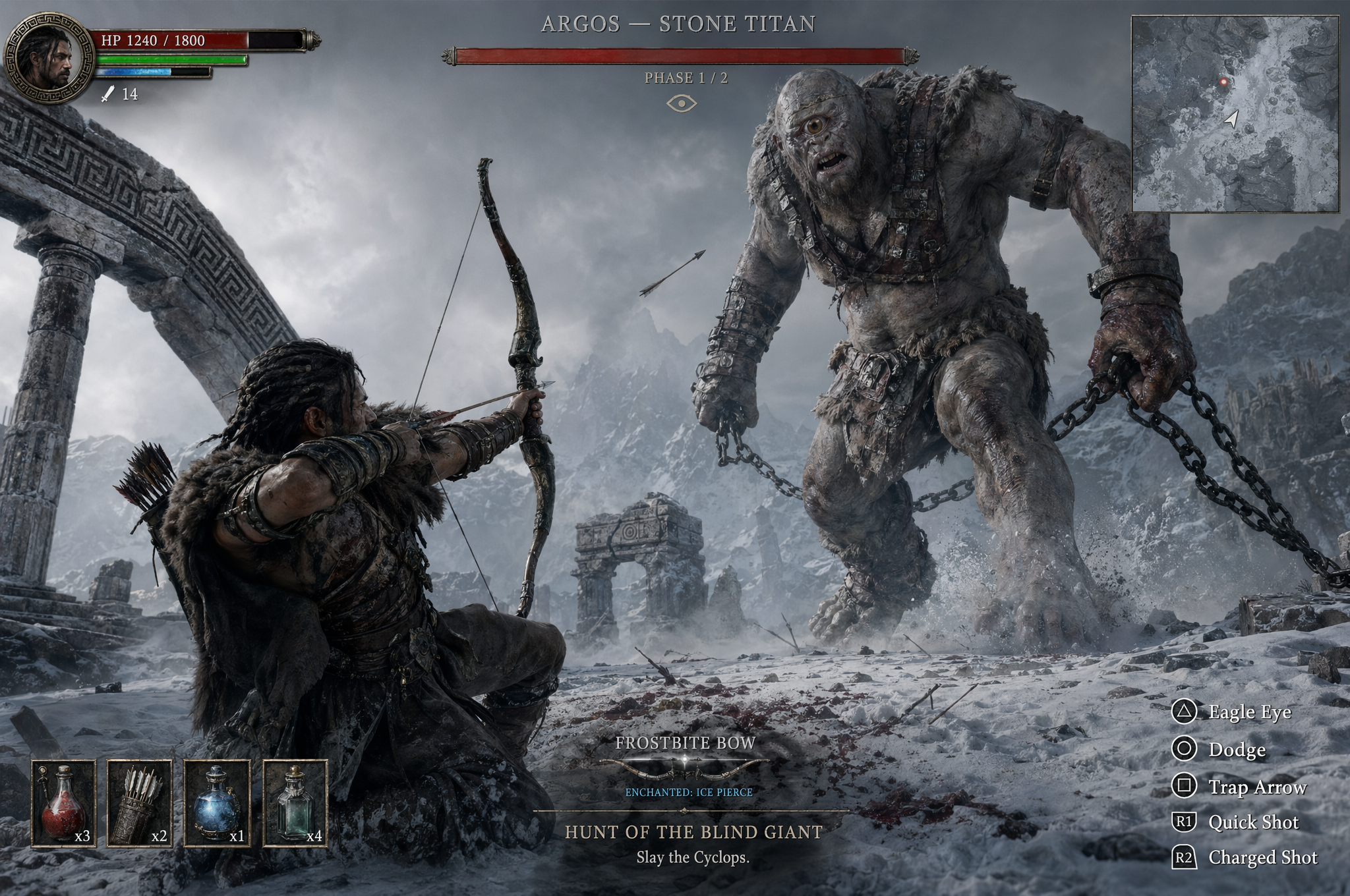
Why Deep Learning Rewired the Grammar of Cinematography
For most of film history, the camera was the most expensive and least forgiving tool on set. A dolly move through a crowded street required permits, rehearsals, a crane crew, and dozens of people hitting marks at exactly the right moment. Directors like Alfonso Cuarón turned that constraint into an art form: the ambush sequence in Children of Men, the opening drift of Gravity, the layered street life of Roma. Those long takes feel effortless because they were engineered with obsessive precision.
Deep learning changes where the precision comes from. Instead of solving every variable physically, generative models learn the statistical structure of light, depth, motion, and composition from existing footage, then let you request a shot in language rather than in logistics. The result is not a replacement for cinematographers. It is a new previsualization and production layer that lets a director test twenty camera paths before anyone books a location.
Three shifts matter in day-to-day practice:
- Camera moves become parameters. Trajectory, focal length, and parallax can be expressed as control signals instead of physical rigs.
- Continuity becomes a model problem. Character identity, wardrobe, and lighting across shots can be held in a latent representation rather than a continuity notebook.
- Iteration becomes nearly free. Regenerating a shot a hundred times is cheap compared to reshooting it once.
That last point is the real disruption. Cuarón's team rehearsed for weeks because a single mistake cost a reset. When iteration is cheap, the creative process inverts: you explore broadly first and commit late, rather than committing early and protecting the decision.
Long-Take Anatomy: What a Model Actually Has to Learn
A continuous shot is not one idea. It is a stack of synchronized decisions, and a model only looks convincing when it gets most of them right simultaneously. Breaking the stack apart is the fastest way to diagnose why a generated clip feels wrong.
Blocking and subject motion
Actors move with intention: a walk that changes tempo, a glance that lands three beats before it should, a hand that reaches slightly too late. Video models learn these patterns as temporal structure. When you prompt for motion, you are really sampling from a distribution of plausible human movement. Vague prompts like "person walks" pull the average. Specific prompts — "a tired nurse walks away from camera, pauses at the doorway, glances left" — pull something with rhythm.
Camera path and parallax
The difference between a drone push and a Steadicam follow is parallax. Models that predict depth implicitly can fake it convincingly; models that do not will produce a sliding-wallpaper effect where foreground and background drift together as one flat plane. If your shot looks like a zoom on a painting, the issue is almost always depth handling, not prompt wording.
Lens language
Wide anamorphic framing with heavy barrel distortion reads as epic. A 50mm at a wide aperture reads as intimate. You can steer a generative model toward a lens character by describing framing devices: "low angle, wide lens, slight edge distortion, subject centered with headroom." Avoid camera brand names — models respond to geometry and framing language, not manufacturer labels.
Lighting continuity
Here is the practical test. If a character walks from a doorway into a room, does the key light stay on the same side of their face? If not, the shot reads as broken even to viewers who cannot name the problem. Lighting continuity is the single most common failure in AI-generated sequences, and it is also the easiest to fix with reference plates.
Set extension and frame density
Long takes need busy frames. Filling the background with extras, signage, traffic, weather, and reflected light is where period films burn their budget. Generative set extension and crowd synthesis handle the repetitive parts so the shoot day focuses on performance.
The Control Layers That Make AI Shots Directable
Prompting alone is improvisation. Control layers are direction. The difference between a lucky clip and a repeatable shot is how much structure you feed the model before it starts generating.
Keyframe control
Keyframes are the connective tissue between storyboards and moving images. You supply a first frame and a last frame; the model interpolates the space between. The stronger your keyframes, the more you are directing and the less you are gambling. A useful habit: build keyframes as actual frames from your previs, not as loosely related stills.
Multi-image fusion and identity locks
Character consistency collapses when the model has no anchor. Fusion workflows let you blend a face reference, a wardrobe reference, and a palette reference into one conditioning bundle. Keep reference images at the same lighting angle as your target shot. Mixing a three-quarter-lit reference with a flat frontal shot confuses the solver and produces the uncanny "same person, slightly wrong" result.
Camera trajectory prompting
Camera language has a vocabulary worth memorizing: slow push in, lateral truck left, crane up and tilt down, handheld drift, orbit right, whip pan, rack focus from foreground to background. Naming two moves maximum per clip keeps the result clean. Three or more moves in a short clip reads as noise.
Temporal coherence and chunking
Most video models generate in short segments. Treat them like film mags: shoot five to ten second pieces with overlapping frames, then stitch in the edit. Overlap of half a second to a full second gives the editor handles to hide seams and match motion.
Depth, optical flow, and repair passes
Post-generation tooling matters as much as generation. Depth estimators can rebuild parallax on a flat clip. Optical flow tools smooth frame-to-frame jitter. Inpainting models fix a prop that morphs between frames. Plan for a repair pass; it is not a sign of failure, it is standard finishing.
A Practical Shot-Building Workflow
This is a repeatable pipeline that works for a thirty-second sequence or a three-minute short. It assumes you want something that looks intentional rather than generated.
Step 1 — Write the shot as a cinematographic brief
Skip the poetic paragraph. Write a structured brief: subject, action, camera move, lens character, lighting direction and quality, palette, and the emotional beat. Example: "Widowed clockmaker enters workshop at dawn; camera trucks right at walking pace; 35mm equivalent, shallow focus; single warm practical light from the left; dust in the air; beat is quiet dread." This brief becomes your prompt skeleton and your quality checklist.
Step 2 — Block the move before generating
Block the camera path with simple geometry first: cubes, spheres, or a rough 3D scene. Verify parallax and reveal timing at this stage. It is far cheaper to fix a camera move in a blockout than to re-prompt twenty times and hope.
Step 3 — Lock the look with a reference plate
Generate or paint one hero frame that represents the exact look of the scene: lighting direction, color temperature, contrast, grain. Every subsequent clip in that scene inherits this plate as a style reference. One plate per scene, not one per shot.
Step 4 — Generate in passes, not in one take
Generate the performance first with a neutral camera. Then generate the camera move against that approved performance as a motion reference. Then generate the environment density. Layering passes keeps variables isolated, which makes debugging possible.
Step 5 — Repair continuity in the edit
Open the sequence in your editor and scrub at two-times speed. Continuity problems jump out immediately: a jacket color that shifts, a shadow that rotates, a background extra that duplicates. Mark each fix with a timecode note and return to the model or use inpainting for local repairs.
Step 6 — Grade, texture, and finish
Generated footage is often too clean. A finishing chain of slight contrast expansion, halation, subtle lens distortion, and grain unifies shots from different generations. Sound design matters equally: continuous ambience and footsteps that match the blocking hide more temporal artifacts than any visual trick.
Choosing Tools: Decision Criteria That Actually Matter
Tool comparisons age quickly, so judge platforms against stable criteria instead of feature lists.
- Temporal coherence. Does motion stay stable past four seconds without warping faces or melting hands?
- Controllability. Can you supply keyframes, depth, motion references, and camera instructions, or are you limited to text?
- Identity consistency. Can the same character appear across ten clips without drifting in age, bone structure, or wardrobe?
- Resolution and finishing headroom. Native resolution matters less than how gracefully the output upscales and grades.
- Iteration speed. Latency changes creative behavior. A ten-second turnaround invites experimentation; a ten-minute turnaround invites caution.
- Editorial integration. Export formats, alpha channels, and frame-rate control determine whether the tool fits an existing pipeline.
- Licensing and commercial terms. Read the terms for the specific use case, especially for likeness, brand marks, and broadcast distribution.
- Local versus cloud. Local generation offers privacy and predictable throughput; cloud generation offers scale and newer models.
A sensible stack is deliberately boring: one strong video model, one image model for keyframes and reference plates, one depth or optical flow utility, and one finishing tool. Adding a fifth generator rarely improves output; improving your briefs and reference plates almost always does.
Mistakes That Make AI Footage Look Synthetic
Most failures are predictable. Here are the ones worth defending against.
- Overloading a single clip with too many camera moves. Two moves maximum. A push combined with a crane combined with an orbit is three shots pretending to be one.
- Vague lighting. "Cinematic lighting" is meaningless to a model. Say the direction, quality, and color of the source: "soft warm key from camera left, cool ambient fill, no rim."
- Inconsistent reference plates. Using a different style image per shot destroys scene unity faster than any technical flaw.
- Ignoring physics cues. Hair, cloth, smoke, and liquid are the tells. If smoke rises in straight lines, viewers notice.
- Perfect motion. Real cameras breathe. A tiny amount of handheld drift and imperfection makes generated footage feel photographed.
- No foreground. Frames with depth layers — foreground blur, mid-ground subject, background activity — read as professional instantly.
- Silent generation. Building picture without sound hides mistakes. Rough ambience while generating exposes continuity errors early.
- Chasing resolution before motion. A soft clip with believable movement beats a sharp clip with melting geometry every time.
- Skipping the repair pass. Assume twenty percent of your clips need inpainting or re-timing.
- Forgetting the cut. Even long takes are edited. If a generated shot cannot survive the cut around it, it is not finished.
Ethics, Authorship, and the Human Crew
The long-take tradition is fundamentally about craft labor: operators, focus pullers, gaffers, grips, and rehearsed performers. AI does not erase that labor, but it does relocate it, and pretending otherwise creates avoidable conflict.
Three practical principles hold up well in production.
Consent for likeness. Any generated face resembling a real person requires documented permission, and the safest route is designing original characters with composite references rather than deriving from a single real individual.
Transparency about process. Disclosing which shots were generated is increasingly an editorial requirement and always a reputational safeguard. Audiences forgive synthetic shots; they do not forgive being misled.
Authorship is a chain, not a click. The person who writes the brief, blocks the camera, builds the reference plate, and makes the final edit is doing the directing. Teams that document their decision chain protect both their creative standing and their professional recognition.
For anyone worried that generative tools flatten filmmaking into prompt typing, the opposite is closer to the truth: a weak brief produces a weak shot, and a strong brief requires a stronger understanding of picture craft than most prompt tutorials admit.
Where Cinematic AI Is Heading
The trajectory points toward tighter integration with production rather than replacement of it. Expect more precise camera control through volumetric and depth-aware conditioning, more reliable identity locking across long sequences, and better scene-level tools that maintain a world state instead of a shot state. The most interesting frontier is not realism — it is rehearsal. Directors already use previs to argue their case; generative previs lets them argue with moving, graded, audience-ready footage.
The practical stance for a working filmmaker is unglamorous: learn the cinematographic fundamentals that models sample from. Understanding why a key light sits at forty-five degrees, why a cut needs an eyeline change, and why parallax sells motion will improve generative output far more than any new model release.
FAQ
Do I need a 3D background to get good camera moves?
No, but blockouts help dramatically. Even a rough geometric scene lets you validate parallax and reveal timing before spending generation time. If you skip blockouts, use explicit camera language and keep moves simple.
Why does my character change faces between clips?
Identity drift usually comes from inconsistent references. Use one approved turnaround or hero frame per character, keep lighting angles consistent across references, and avoid mixing references with different lenses or focal lengths.
How long should a generated clip be for a long take?
Five to ten seconds per piece is a reliable range. Generate overlapping segments and stitch in the edit. Trying to force one continuous thirty-second generation usually trades control for coherence.
How do I make generated footage look less clean?
Add imperfection deliberately: slight handheld drift, subtle lens distortion, halation on highlights, and film grain matched across the sequence. Sound design does half the work, so build continuous ambience before you finalize picture.
Is text-to-video enough, or do I need image-to-video?
Text-to-video is best for exploration. Image-to-video is best for execution. Once a scene's look is locked, generate from approved keyframes and style plates so every clip inherits the same visual DNA.
How much of a sequence can realistically be generated?
It depends on how much continuity matters. Effects-heavy inserts, set extensions, establishing shots, and inserts are easy wins. Long dialogue scenes with precise eyelines still benefit enormously from real performance capture.
What should I learn first to get better results?
Lighting direction and camera language. Those two skill sets translate directly into control signals, and they are the difference between a clip that looks generated and a clip that looks shot.
The Checklist to Take on Set
Before you call a generated sequence finished, run this list: one reference plate per scene, two camera moves maximum per clip, matched lighting direction throughout, consistent character references, depth layers in every frame, sound built alongside picture, a repair pass booked, and an edit that survives being cut around. Do that consistently and deep learning stops being a novelty in your pipeline. It becomes a second unit that never sleeps, never complains about the weather, and lets you rehearse the shot until it is genuinely right.
