
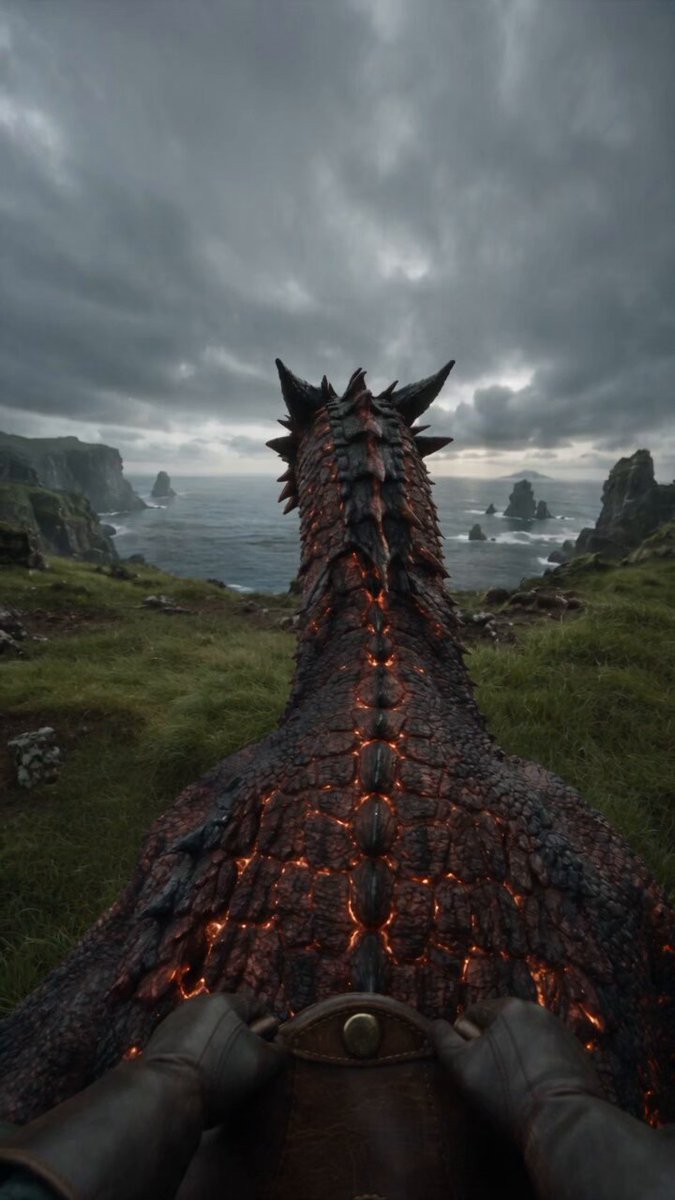
Why Shot Design Is the Real Bottleneck in AI Video
Most people who start making AI video hit the same wall. The first few clips look impressive — a slow dolly through a neon alley, a portrait with shallow depth of field, a drone move over a coastline. Then they try to build an actual sequence and everything falls apart. Characters drift between shots. Screen direction flips. Light changes from golden hour to harsh noon between two cuts that should be seconds apart. The footage looks expensive but the story looks amateur.
The problem is rarely the model. It is almost always shot design. Generation tools are extremely good at producing a single attractive image in motion. They are much weaker at holding the intent of a scene across eight or twelve separate clips, because nothing in the tool knows what the scene is supposed to feel like. That job belongs to you.
This guide walks through a workflow for designing cinematic shots with AI video tools, whether you are working solo on a short film, producing branded content for a client, or building a channel that publishes short narrative pieces. It covers the grammar of shots, pre-production planning, prompt construction, continuity control, camera movement, editing, and the mistakes that waste the most time.
The Cinematic Grammar You Need Before You Prompt
You cannot direct in language what you cannot name in the language of film. Before writing a single prompt, get comfortable with four variables. Every shot you design is a combination of them.
Shot size and its emotional weight
Shot size is the distance between camera and subject, and it does more storytelling work than almost any other choice.
- Extreme wide establishes geography and makes people small. Use it to open a sequence or to signal isolation.
- Wide places a character in a world while keeping them readable. Good for entrances.
- Medium is conversational and neutral. This is your workhorse coverage.
- Close-up narrows attention to a face and creates intimacy or pressure.
- Extreme close-up isolates a detail — an eye, a hand, a match being struck — and is almost always a punctuation mark, not a sentence.
A common failure in AI-generated sequences is using medium shots for everything. The result feels flat even when each frame is beautiful. Vary size deliberately: wide to orient, medium to develop, close to land the emotional beat.
Lens, depth, and perspective
Lens choice controls how space feels. Wide lenses exaggerate distance and make movement through frame dramatic. Longer lenses compress space, flatten backgrounds, and isolate subjects from their surroundings. In prompts, this usually translates to phrases like wide-angle distortion, long lens compression, shallow depth of field, deep focus, or anamorphic flare.
Depth matters because it separates foreground, midground, and background. A shot with a clear foreground element — a doorway frame, a passing shoulder, a fence post — reads as more cinematic than a shot where everything sits on the same plane.
Lighting direction and contrast
Direction is the single most under-specified lighting variable in AI prompts. "Cinematic lighting" means almost nothing to a generation model. "Hard key light from camera left, deep shadow on the right side of the face, practical lamp visible in background" gives the model something to build.
Think in terms of three decisions: where the key light sits, how much fill softens the shadow side, and whether there is a motivated source in frame (a window, a streetlamp, a screen). Motivated light is what separates a shot that feels designed from one that feels generated.
Camera movement vocabulary
Learn the names, because they map cleanly to prompt language:
- Static / locked-off — no movement. Underrated, and the fastest way to make a sequence feel controlled.
- Pan and tilt — rotation on a fixed axis.
- Dolly / push in — camera physically moves toward or away from the subject. Push in builds tension; pull out releases it.
- Truck / tracking — lateral movement alongside a subject.
- Crane / boom — vertical movement, often revealing scale.
- Handheld — organic instability that signals immediacy or unease.
- Orbit — circular movement around a subject, common in product and hero shots.
A sequence built entirely from orbiting hero shots will feel like a showreel, not a film. Use movement to serve a beat, not to decorate it.
Pre-Production: Build a Shot List Before You Generate
AI video makes it tempting to skip planning because iteration is cheap. In practice, iteration without a plan is the most expensive habit you can develop, because you end up generating dozens of clips that do not cut together.
Turning a script beat into three shots
Take a single story beat — "Mara realizes the door is already unlocked" — and expand it into coverage:
- Wide: Mara at the end of the hallway, door at frame right. Static, slightly low angle. Establishes space and her hesitation.
- Close: her hand hovering over the handle. Shallow depth, hard side light. Duration two seconds.
- Medium, push in: her face as the handle turns without resistance. Slow dolly forward, tightening the frame.
Three shots, maybe nine seconds of screen time, and the beat now has shape. That is the level of planning that makes AI generation productive. Write the shot list in a simple table with columns for shot number, size, movement, subject action, lighting, and duration. It does not need to be formal — a plain text file works.
Coverage planning for AI-generated sequences
Because generation is non-deterministic, plan for alternates. For every shot in your list, decide in advance which variable you will change if the first output fails: the prompt wording, the reference image, the seed, or the shot size itself. Having a fallback decision ready keeps you from spiraling into random re-rolls.
A useful rule: never generate more than three variants of the same shot before stepping back and re-reading the shot list. If three attempts fail, the problem is usually the concept, not the prompt.
Writing Prompts That Behave Like Direction
A prompt is a shot order. Treat it like one.
The five-part prompt frame
Structure every prompt around five elements, in this order:
- Subject and action — who or what, doing what, in present tense.
- Shot size and lens — close-up, wide, 35mm, long lens compression.
- Camera movement — static, slow push in, handheld tracking.
- Lighting — direction, quality, color temperature, motivated sources.
- Environment and atmosphere — location, weather, haze, texture, palette.
Example: A woman in a wool coat steps through a doorway, pauses. Medium close-up, 50mm, shallow depth of field. Slow dolly forward. Hard key light from camera left, warm practical lamp behind her, cool blue spill from a window at frame right. Narrow apartment hallway, dust in the air, muted teal and amber palette.
That prompt is not poetry. It is a set of constraints, and constraints are what make output predictable.
Weak prompt vs. directional prompt
Weak: Cinematic shot of a man walking in the rain, moody, film look.
The model will produce something, but it decides everything: shot size, movement, light direction, palette. You will get a different film every time.
Directional: Wide shot, 28mm, man in a soaked trench coat walks toward camera along a wet street. Handheld, slight sway. Single practical streetlamp behind him creating a rim light, deep shadows on his face, rain visible in the beam. Night, sodium-orange and cold blue palette, reflections on asphalt.
Now the model is filling in texture rather than inventing the shot. That is the shift that turns generation into direction.
Choosing the Right Generation Path
Different shots call for different starting points. Most strong sequences mix all three.
Text-to-video
Best for establishing shots, landscapes, abstract transitions, and anything where the specific faces do not matter. Fast to explore, hardest to control.
Image-to-video
Best for character work and anything that needs to match a look you have already approved. Generate or select a still, then animate it. Because the first frame is fixed, continuity improves dramatically — you are animating a decision rather than making one.
Keyframe and first-frame/last-frame workflows
Best for movement that must arrive somewhere specific: a hand reaching a door, a car entering frame, a dissolve between two states. Defining both ends of the motion constrains the model and eliminates the drift that plagues open-ended prompts.
A practical rule of thumb: establish with text-to-video, lock characters with image-to-video, and use keyframes whenever a shot has a defined endpoint.
Continuity: Making Separate Clips Feel Like One Film
This is where most AI sequences collapse. Continuity in AI video has four fronts.
Character and wardrobe consistency
Keep a reference sheet: one front-facing image, one three-quarter, one profile, plus written notes on hair, wardrobe, and any distinguishing feature. Reuse the same reference image across every shot in a scene. Describe wardrobe in identical words every time — "charcoal wool coat with a missing second button" beats "dark coat."
Color and light continuity
Decide a scene palette before generating and repeat it verbatim in every prompt: muted teal shadows, warm amber practicals, low contrast in the midtones. If a shot comes back with a different palette, regenerate rather than trying to fix it in post. Grading can nudge, but it cannot reconcile footage lit by two different suns.
Screen direction and the 180-degree rule
If a character moves left-to-right in one shot, they should keep moving left-to-right in the next, unless you deliberately cross the line to disorient. AI tools have no idea which direction anyone was going. Track it yourself in your shot list with a simple arrow per shot.
Scale and geography
Keep a mental map of the space. If the wide shot puts a window on the left wall, the close-up should not put it on the right. Audiences notice spatial contradictions even when they cannot articulate them, and the result reads as cheap.
Camera Motion and Pacing That Feel Intentional
Movement is rhythm. A sequence with constant motion has no rhythm at all — it just feels like noise.
The most reliable pattern is tension and release: hold static, then move. A locked-off wide followed by a slow push in feels deliberate. Two consecutive pushes feel like a habit.
Match movement to emotional state:
- Stillness for observation, dread, or grief.
- Slow push in for growing pressure or realization.
- Slow pull out for release, defeat, or scale.
- Handheld for urgency and instability.
- Fast lateral tracking for momentum, chase, or energy.
Also plan duration. AI clips often default to a few seconds, so decide in advance whether a shot is a two-second punctuation or a six-second hold. Punctuation shots should be short — a close-up that lingers past three seconds starts to feel like an error.
Assembling the Edit: Rhythm, Sound, and Finishing
A sequence becomes a film in the edit, not in the generator.
Cut on motion. When a subject is moving, cutting mid-movement hides the seam between two clips that were never really continuous. Cut on the beat of an action — a door closing, a head turning, a step landing.
Use sound to bind. Room tone, footsteps, cloth movement, and a consistent ambient bed do more for continuity than any visual trick. If two clips feel disconnected, lay a continuous ambience under both and the disconnect usually disappears.
Grade as a unit. Apply a single look across the whole sequence — a shared LUT, matched black levels, consistent contrast — rather than tweaking shot by shot. Unified grading is what tells the audience these images belong to the same world.
Finally, kill your best-looking shot if it does not serve the scene. AI generation produces a lot of beautiful moments that exist only to be beautiful. A gorgeous orbit around a character who is doing nothing is a distraction, not a scene.
Common Mistakes and How to Fix Them
Generating before planning. Fix: write the shot list first, even if it is five lines.
Using "cinematic" as a prompt. Fix: replace it with concrete lighting and lens language.
Changing five variables at once when a shot fails. Fix: change one variable per attempt, and keep a note of what you changed.
Chasing a perfect single clip. Fix: accept 80% and let the edit, sound, and grading carry the rest. Sequences made of slightly imperfect shots feel more like films than sequences of showreel clips.
Ignoring screen direction. Fix: track it in your shot list and check it before generating.
Letting the model choose the shot size. Fix: always specify. If you do not specify, you are not directing.
Overusing movement. Fix: add a static shot. Most sequences need more locked-off frames than creators expect.
FAQ
Do I need to know cinematography to design AI shots?
You need vocabulary more than experience. Knowing the names of shot sizes, movement types, and lighting directions lets you convert intent into constraints. That is the whole skill.
How many shots should I plan per minute of finished video?
Roughly eight to fifteen for narrative work, depending on pacing. Faster cuts suit action and montage; slower cuts suit drama. Plan more than you need and discard in the edit.
How do I keep a character consistent across many clips?
Use a reference sheet, repeat wardrobe and feature descriptions word for word, prefer image-to-video over text-to-video for face shots, and keep lighting consistent so the face renders similarly.
Should I generate in a different aspect ratio than I deliver?
Generate in your delivery ratio. Cropping in post changes framing and can cut off composition you carefully specified.
What is the fastest way to improve my sequences?
Add a static wide shot and a close-up to every scene. That single habit fixes most flat, monotonous AI sequences.
Can AI handle complex camera moves like crane shots?
Sometimes, but reliability drops as moves get complex. Break a crane move into two simpler shots — a tilt up and a wide — and cut between them. The audience will read it as one continuous gesture.
How much should I rely on post-production fixes?
Less than you want to. Stabilization, upscaling, and grading can polish shots; they cannot repair wrong direction, wrong light, or wrong palette. Fix those at the prompt stage.
The overall workflow is unglamorous: plan the shot, define the constraints, generate in the most controlled path available, check continuity, cut on motion, and bind with sound. Do that consistently and AI-generated footage stops looking like a collection of clips and starts looking like a film.
