



Why Video Decides Whether a Product Page Converts
Every product page is an argument. The copy makes claims, the photos illustrate them, and the price asks for a decision. The problem is that shoppers have heard the claims before and been disappointed. Video is the one format that can cut through that skepticism, because motion is much harder to fake convincingly than a still image. A hand turning a jacket reveals how the fabric falls. A slow pan around a ceramic mug shows whether the glaze is even. Fifteen seconds of someone actually using a blender tells a buyer more about motor noise, jar stability, and cleanup than three paragraphs of bullet points ever will.
That is the practical reason video has moved from nice-to-have to load-bearing across ecommerce. It compresses the questions a shopper would ask in a physical store into a short, repeatable clip. It also works at every stage of the funnel: a discovery clip on a social feed, a demo on the product page, a reassurance clip in the cart, a setup video after purchase. Stores that treat video as a single campaign asset miss most of its value. Stores that treat it as an operating system for product storytelling keep finding new places to use it.
This guide is about the second approach. It covers what makes an ecommerce video believable, which video types every catalog needs, how to produce them efficiently with and without AI tools, where to place them, how to measure them, and the mistakes that quietly destroy trust even when the production quality looks expensive.
The Trust Equation: Authenticity Beats Polish
Shoppers are not fooled by high production value alone. In fact, over-polished footage can work against you when it makes a product look unreachable or a result look staged. Trust comes from three things: verifiability, consistency, and specificity. Video can deliver all three, but only if you resist the urge to make everything look like a television commercial.
Show Reality, Not an Idealized Version
If your product is a skincare serum, show the texture on skin, the absorption time, and the dropper in normal bathroom light. If it is a power tool, show it cutting the material a buyer actually plans to cut, at the speed they will actually run it. The rule is simple: every claim in your copy should be visible somewhere in the video. If the copy says the bag fits a 16-inch laptop, the video should show a 16-inch laptop sliding in and the zipper closing.
Keep Visual Consistency Across Clips
Nothing erodes trust faster than a product that looks like three different products across three videos. Lock down a small visual system: one color temperature, one background family, one camera height for hero angles, one consistent way of showing scale. Consistency is especially important when you generate footage with AI, because generative models can subtly drift in color, texture, and geometry between shots. A fixed lookbook reference, a stable seed, and a defined shot list keep everything converging instead of wandering.
Let Real People Be Real
Customer footage does not need to be cinematic. It needs to be honest. A slightly shaky clip of a real buyer explaining why they repurchased is often more persuasive than a studio shoot, because it carries information a studio cannot: this is what the product is like after weeks of normal use. The trick is to pair authenticity with editing discipline. Cut the first two seconds of throat-clearing, add captions, fix the audio level, and keep the clip under thirty seconds.
The Five Video Types Every Store Needs
Most catalogs can cover their entire funnel with five recurring formats. Build these once as templates and you will never start from a blank page again.
1. The Hero Demo
This lives on the product page, usually above the fold or immediately below the buy box. Its job is to answer the three questions that block a purchase: what is it, what does it do, and what does it look like in real life? Keep it between twenty and forty-five seconds. Open on the product in use, not on a logo animation.
2. The Problem-Solution Short
Vertical, under twenty seconds, built for feeds and ads. Name the friction in the first line, then show the product removing it. These clips are disposable by design, so produce them in batches and expect the best-performing one to do most of the work.
3. The UGC-Style Testimonial
A real or realistic customer talking through their experience, filmed at home. If you cannot source genuine customer footage at scale, you can generate a scripted version, but keep the setting mundane, the lighting natural, and the language conversational. Viewers forgive imperfect framing; they do not forgive a script that sounds like marketing copy.
4. The Comparison and Specs Explainer
A side-by-side against the alternative your buyer is considering, or a walkthrough of sizes, materials, and compatibility. These reduce returns dramatically because they set accurate expectations before checkout.
5. The Unboxing and Setup Clip
Post-purchase video lowers support tickets and primes repeat buying. Show what arrives, how to assemble or activate it, and the first thing a customer should do. Many brands hide this behind a help center; putting it in the confirmation email is far more effective.
A Production Workflow You Can Repeat Weekly
Ad hoc video production collapses under its own weight. A lightweight pipeline keeps output steady.
Step 1: Write the Script From Objections, Not Features
Open your support inbox and your review section. Every recurring question and complaint is a shot in your next video. If people keep asking whether the fabric is see-through, that is your opening beat. Scripting from objections guarantees relevance and gives you a natural hook.
Step 2: Build a Shot List and Storyboard
A shot list is the difference between a two-hour shoot and a two-day reshoot. Write each shot as a single action: hand lifts lid, steam rises, spoon scoops, texture close-up. Note the angle and duration next to each. Six to ten shots is usually enough for a hero demo.
Step 3: Capture or Generate the Footage
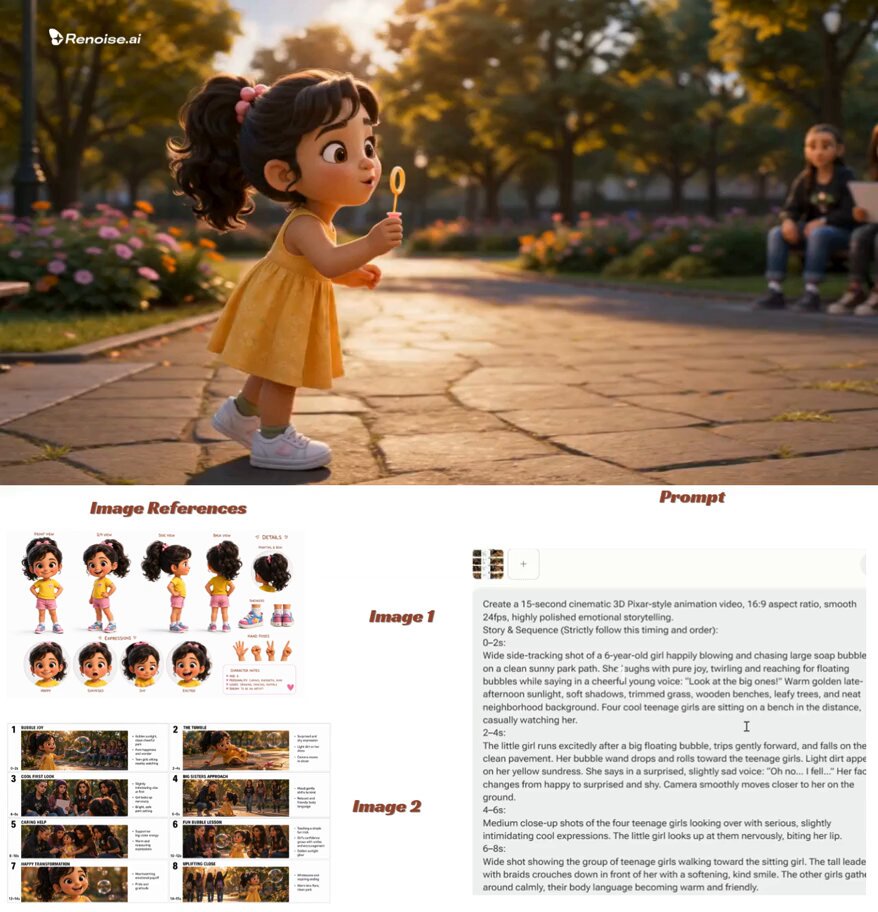
For physical products, a phone on a tripod with a window and a bounce card beats a rented studio for most ecommerce needs. For conceptual, scale, or impossible shots, generate them. Tools like Runway and Sora are useful for atmospheric B-roll, product-in-context scenes, and lifestyle moments you cannot schedule. Image models such as Flux help you lock a consistent visual reference before you animate anything.
Step 4: Edit for the Hook
The first two seconds decide whether the rest is watched. Cut everything before the most interesting moment, then rebuild context. Keep total runtime as short as the idea allows, and never let an intro card delay the product.
Step 5: Captions, Audio, and Thumbnails
Most feed video plays muted, so burn in captions. Use a music bed that does not fight the voiceover, and normalize levels so mobile speakers stay intelligible. Set a thumbnail that shows the product in a state of use rather than a logo frame.
Where AI Actually Helps in Ecommerce Video
AI is best understood as a production multiplier, not a replacement for product truth. It is excellent at four jobs.
First, scale. Generating ten product-in-context scenes for a catalog of forty SKUs is otherwise impossible on a small team. Second, variation. Testing five hooks against the same body footage is trivial when you can regenerate openings cheaply. Third, localization. Dubbing and lip-sync tools let one demo serve multiple markets without reshooting. Fourth, repair. Removing a stray cable, cleaning a background, or extending a shot by two seconds are all routine AI edits now.
Where AI falls short is authenticity by default. Generated humans can drift into uncanny territory, generated hands still fail on fine manipulation, and generative scenes can quietly contradict your actual product specs. The discipline that fixes this is verification: every generated clip that shows the product must be checked against the real item for color, proportion, material, and labeled parts. Anything that misrepresents the product should be cut, no matter how good it looks.
A workable rule of thumb is to use AI for environment and motion, and real footage for anything a buyer would use to judge quality. Texture, weight, stitching, sound, and fit are trust-critical. A sunrise beach behind a backpack is not.
One Video, Every Channel: Adaptation Without Reshooting
Shooting separately for each platform is expensive and unnecessary. Start with a master edit at the highest resolution and widest framing you can support, then derive everything else from it.
For short-form vertical, crop to the action rather than the center of frame, and rebuild the first three seconds with a text hook. For paid social, export a version with no voiceover so it works muted, plus a version with a hard call to action in the last two seconds. For email, export a silent six-second loop that autoplays without sound. For marketplaces and retail partner feeds, keep a clean version with no on-screen text, since some platforms reject burned-in captions. For the product page, keep the full demo with captions and a clear end card.
Maintain a naming convention early. A simple structure like sku-format-channel-version saves hours when you are managing hundreds of exports and testing variants simultaneously.
Placement, Testing, and the Metrics That Matter
Where a video sits changes what it should do. On a product page, the goal is confidence: watch-through rate and add-to-cart rate after viewing are your signals. In paid social, the goal is cheap attention: three-second hold rate and cost per qualified click. In email, the goal is re-engagement: click-through on the video block. In post-purchase flows, the goal is reduced friction: fewer setup-related support tickets.
Test one variable at a time. Common high-leverage variables include the opening frame, the order of demonstrations, whether the presenter appears on camera, the presence of price or offer text, and the length of the demo. Run tests long enough to gather meaningful data, and resist the temptation to declare a winner after a single day of spend.
Two metrics are easy to over-read. Raw views are close to meaningless in isolation. And a high click-through rate from an ad that attracts the wrong shopper will show up later as returns and refunds. Track the downstream quality of traffic, not just the top of the funnel.
Mistakes That Quietly Kill Trust
Mismatch between video and reality. If the video shows a color that does not match the shipped product, you have bought a return. Verify color under neutral light before publishing.
Hiding the flaws. Skipping over the small awkward details makes viewers suspicious. Showing one honest limitation and the reason for it usually increases credibility.
Too much polish on UGC. Fake-casual content that is clearly scripted by a brand team reads as an ad and gets skipped.
No captions. Silent autoplay is the default almost everywhere. Uncaptioned video is invisible video.
One video doing every job. A forty-second hero demo performs poorly in a three-second scroll environment. Build format-specific cuts.
Ignoring sound design. Audio quality influences perceived production quality more than camera quality does. Bad audio makes a well-shot video feel cheap.
Never refreshing. Creative fatigues. Keep a rotating queue of new hooks and refresh your top performers before their metrics slide.
Frequently Asked Questions
How long should an ecommerce product video be?
It depends on the job. Product page demos typically work best between twenty and forty-five seconds. Feed and ad clips should be under twenty seconds, with the hook inside the first three. Setup and tutorial videos can run longer because the viewer has already bought and is actively looking for help.
Do I need a professional camera?
No. Modern phones in good light are sufficient for most product footage. The money is better spent on lighting, a stable tripod, a decent microphone, and editing time. Conceptual or impossible shots are where AI generation adds the most leverage.
Can AI-generated video build trust?
It can, if it is used for context rather than for quality claims. AI is safe for environments, lifestyle scenes, and B-roll. It becomes risky when it depicts texture, fit, scale, or performance that the real product cannot match, because that sets expectations the shipment will not satisfy.
How many videos does a product page need?
One strong demo covers most pages. Add a comparison or sizing explainer for categories with high return rates, and consider a UGC-style clip if social proof is a deciding factor for your audience. More is not automatically better; relevance is.
Is user-generated content worth the effort?
Usually yes, when you have it, because it answers the question buyers care about most: what is this like after real use? If you lack a steady supply, a structured outreach or incentive program is a reasonable investment, and a carefully directed UGC-style production can fill gaps as long as it stays honest.
How often should I refresh video creative?
For paid channels, plan on a rolling refresh cadence and retire anything whose performance has clearly flattened. For evergreen product page demos, update whenever the product, packaging, or pricing changes, and otherwise review them periodically against your current claims.
A Practical Checklist Before You Publish
Before any ecommerce video goes live, run it through the same short list. Does the first frame show the product doing something interesting? Does the video demonstrate every claim that appears in the copy? Is the color, scale, and material accurate to the shipped item? Are captions present and legible on a small screen? Is the audio normalized? Does the ending tell the viewer what to do next? Is there a matching export for each channel you actually use?
If the answer to any of those is no, fix it before you spend on distribution. Trust in ecommerce is cumulative and fragile. Each honest, specific, well-edited video adds a small amount of credibility to your store. A single misleading one can undo a great deal of it. The brands that win with video are rarely the ones with the biggest budgets; they are the ones with a repeatable process, a clear sense of what each clip is for, and the discipline to show the product as it really is.
