
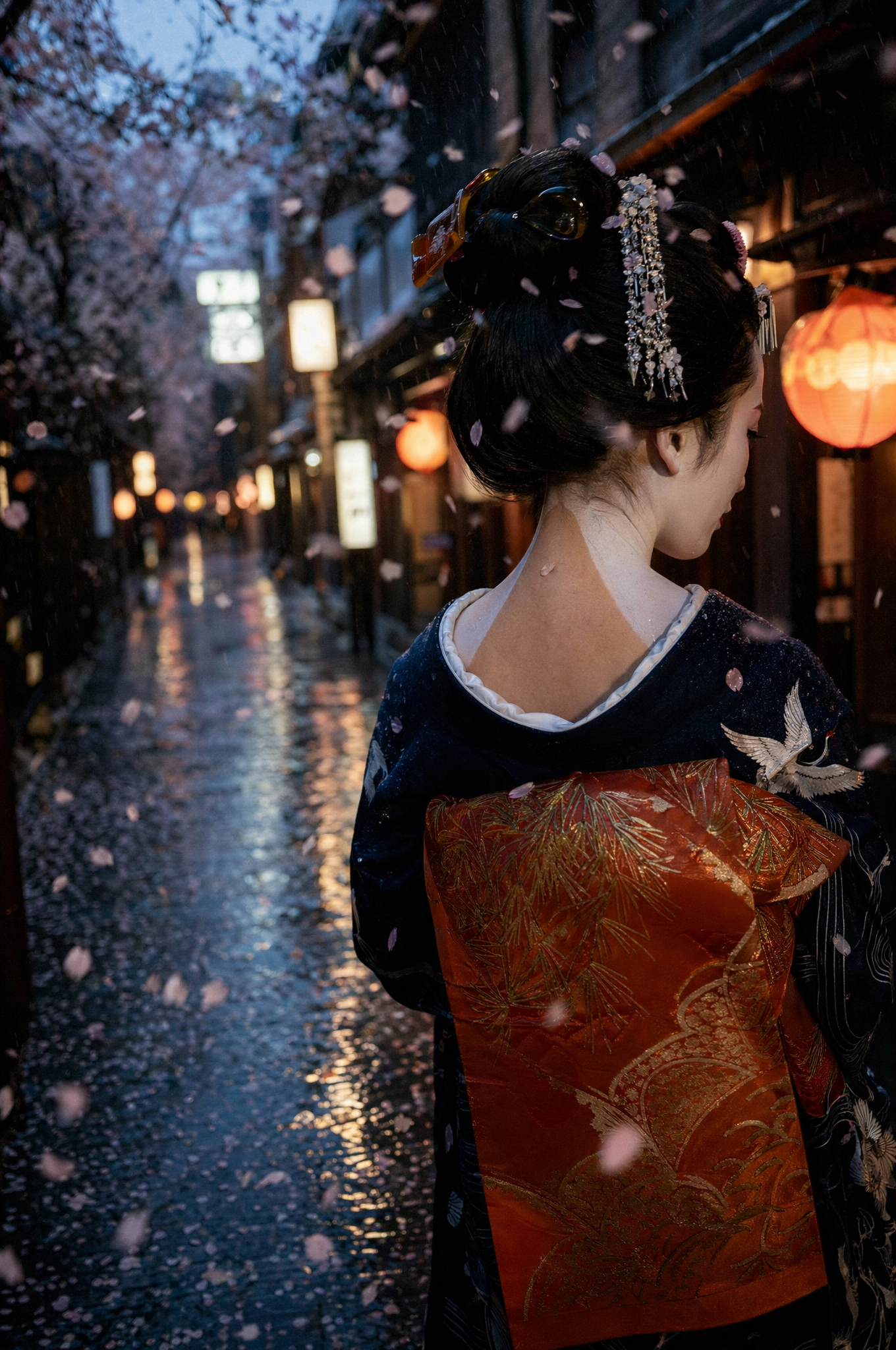
Why AI Video Generation Reshaped the Production Pipeline
Traditional video production has always been governed by a simple constraint: every change costs money and time. Move a light, reshoot a reaction, change a wardrobe decision — each adjustment pulls in crew, equipment, and scheduling. That constraint shaped how scripts were written, how shots were planned, and how cautious directors were about experimentation.
Generative video breaks that constraint. The expensive part of production is no longer the first version — it is knowing which version to keep. Once a team can produce twenty variations of a shot before lunch, the bottleneck shifts from capture to judgment: deciding what looks right, what fits the edit, and what holds up at full resolution on a large screen.
That shift is why image models and video models are usually discussed together. A photorealistic still frame generated with strong prompt adherence gives a video model a much better starting point than a vague text prompt alone. The still becomes the anchor; the motion model becomes the animator. Teams that treat these as two separate steps, rather than one continuous pipeline, consistently get better results with fewer wasted attempts.
This guide covers how to structure that pipeline end to end: choosing models per shot type, generating and refining keyframes, prompting motion, checking quality, planning throughput, and handling the legal and brand questions that arrive the moment generated footage enters a real deliverable.
What an Image Model Like Flux Brings to a Video Workflow
Flux refers to a family of text-to-image models that earned attention for three things: strong prompt adherence, unusually good rendering of text inside images, and fine-grained photorealism. None of those are video features on their own — but all three matter enormously in a video pipeline.
Visual fidelity and prompt adherence
Prompt adherence determines how much of your intent survives the generation step. A model that ignores half your description forces you to iterate blindly. A model that follows composition, lighting, and subject detail closely lets you direct the frame the way you would direct a still photographer. In practice, this means you can specify a 50mm lens, a low-angle view, and overcast diffusion and actually get that result, rather than a vague approximation you then have to crop and grade around.
Text and graphic rendering
Almost every commercial video contains text: signage, packaging, interfaces, lower-thirds backgrounds, screen inserts. Rendering legible text inside a generated frame used to be a coin flip. Better text rendering means fewer manual replacements in post and fewer awkward moments where a logo dissolves into gibberish two seconds into a clip.
Style consistency through fine-tuning
Fine-tuning a still model on a small set of approved frames is one of the most effective ways to keep a brand look stable across dozens of shots. Train or adapt on twenty to fifty strong reference images — consistent palette, lens character, lighting direction — and every keyframe you generate afterwards starts closer to the target. This is far more efficient than writing increasingly elaborate prompts and hoping the model converges.
Where the still model stops
A still model cannot decide how a subject moves, how fabric settles, or how a camera drifts. That is the motion model's job. The clean division of labor is: still model defines the look, motion model defines the physics and timing. Confusing those roles leads to teams rewriting image prompts to fix motion problems, which almost never works.
The Broader Model Landscape and What Each Family Does Well
No single model wins every shot. Treat the toolset as a roster, and match strengths to shot requirements.
Cinematographic control
Runway's Gen-family models are known for shot-level camera controls — pans, dollies, speed ramps, and structured motion direction. When a shot needs a specific camera move that reads as intentional rather than accidental, these are often the first stop.
Physics and long-take coherence
OpenAI's Sora drew attention for coherent physics, longer continuous takes, and believable interactions between objects. It suits scenes where continuity of motion matters more than precise art direction.
Motion quality and stylization
Kling AI has a reputation for smooth, natural motion and appealing stylized output, which makes it useful for character-driven shots and fashion-adjacent material where fluidity sells the frame.
Accessibility and niche strengths
PixVerse, MiniMax, and Luma's Ray models occupy different niches: fast iteration, stylized transitions, experimental camera behavior, and lightweight generation for social formats. They are valuable precisely because they are inexpensive to try — you can test six ideas in the time a premium model takes to render two.
A practical rule of thumb
Use the strongest still model you have available for keyframes. Use the motion model whose known weakness least affects the current shot. If the shot is a locked-off product beauty pass, motion fidelity matters less than texture fidelity. If the shot is a running figure with camera tracking, motion fidelity dominates everything else.
A Repeatable Workflow From Script to Final Cut
Ad-hoc generation produces impressive clips and unusable projects. A defined pipeline produces boring predictability, which is exactly what deliverables need.
Stage one: script and shot list
Write the script first, then break it into shots with explicit camera language. "Wide, slow push-in, subject enters frame left" is a usable instruction. "Cool shot of the city" is not. Attach a duration target to every shot — three seconds, five seconds — because motion models behave differently at different lengths.
Stage two: keyframe generation
Generate two to four candidate frames per shot. Review at full size, not in a grid of thumbnails; compression and scale hide the flaws that matter later. Select one, then refine it: fix hands, clean up background clutter, adjust framing with inpainting, extend the canvas if the edit needs more room.
Stage three: motion generation
Feed the approved frame into the motion model with a prompt that describes movement, not appearance. The appearance is already in the image. Describe camera motion, subject motion, environmental motion, and pacing. If the shot should be static and subtle, say so explicitly — ambiguity invites the model to invent a dramatic camera swing.
Stage four: selection and review
Watch every clip at least twice: once at normal speed for feel, once frame by frame for artifacts. Check the first and last frames especially, since those are where morphing and drift usually appear. Keep a documented reason for rejections — after fifty clips, memory becomes unreliable and teams repeat the same failed approach.
Stage five: finishing
Upscale approved clips, interpolate frame rate if needed, stabilize, grade for consistency, and assemble. Generated footage from different models will not match out of the box: color temperature, contrast, grain, and sharpness all vary. A grade node or two plus light grain application usually brings everything into the same world.
Stage six: sound
Sound design does more for perceived realism than another generation pass. Room tone, cloth movement, footsteps, and a subtle music bed sell motion that would otherwise read as synthetic. Budget as much attention for audio as for the visuals.
Quality Control: The Failure Modes You Will Actually See
Most problems repeat across models, which means they can be checked systematically.
Identity drift
A character's face, hair, or clothing slowly changes across shots. Fix by reusing the same approved keyframe as the starting image for every shot in that scene, and keep wardrobe descriptions identical in every prompt. Where the model supports reference conditioning, use it.
Temporal shimmer
Textures crawl or vibrate between frames. This often comes from over-sharpened source frames or overly aggressive interpolation. Fix by softening the keyframe slightly before motion generation and reducing frame interpolation strength.
Hand and limb morphing
Hands remain the hardest subject. Fix by framing them out where possible, keeping them partially occluded, or generating at higher resolution with more motion consistency emphasis. A close-up of hands doing detailed work is still a shot worth producing practically.
Camera whip and unintended motion
Models sometimes interpret static descriptions as permission to move the camera dramatically. Fix with explicit negative instructions and shorter clip durations, then extend by chaining two approved clips.
Garbled text and logos
Even strong text rendering fails at small sizes and in motion. Fix by generating clean plates and compositing real graphics on top. Never ship critical brand text as generated pixels.
Inconsistent lighting direction
A scene cut between two shots with light coming from opposite sides reads as a mistake. Fix by locking a lighting description and reusing it verbatim across the scene's prompts.
Prompt Patterns That Survive a Model Swap
Prompts written for one model rarely transfer directly, but structure does. Use a consistent block order:
- Subject: who or what, with specific attributes.
- Action: what is happening in this exact clip.
- Environment: location, time of day, weather, background activity.
- Camera: framing, lens, height, and movement.
- Lighting: direction, quality, and color temperature.
- Style: realism level, grain, palette, reference era.
- Exclusions: what must not appear or happen.
Two habits make this structure pay off. First, keep a shared prompt library so the whole team reads the same phrasing — small variations in wording produce noticeably different results. Second, version your prompts alongside the shot list, noting which version generated the approved frame. When a client asks for a variation three weeks later, you can reproduce the original conditions instead of guessing.
Matching Models to Shot Types
| Shot type | Priority | Practical approach |
|---|---|---|
| Product beauty pass | Texture and highlight fidelity | Strong still model for keyframe, gentle motion only, minimal camera move |
| Character dialogue | Facial stability | Reference-conditioned keyframe, short clips, stitch approved takes |
| Establishing landscape | Scale and atmosphere | Wide keyframe, slow push or drift, longer duration acceptable |
| Action sequence | Motion coherence | Motion-focused model, shorter clips, cut faster in the edit |
| Stylized transition | Visual novelty | Faster lightweight models, generate many, keep few |
| Graphic or UI insert | Legibility | Generate clean plate, composite real graphics in post |
This table is a starting point, not a rule. The value comes from writing down your own version after two or three projects, based on what actually worked for your content.
Planning Time, Compute, and Throughput
The most common planning error is estimating output per generation attempt rather than per accepted shot. If roughly one in four attempts is usable, a ten-shot sequence needs about forty attempts, plus review time, plus revisits.
Practical habits that keep schedules realistic:
- Batch by shot type. Group all character shots together so you review with one consistent standard.
- Queue overnight. Long renders belong outside the working day.
- Review in fixed sessions. Two or three review blocks per day beats constant partial attention.
- Track acceptance rate. It is the single most useful number for forecasting.
- Keep an emergency practical plan. Some shots are simply faster to film or shoot with a camera than to generate.
Rights, Disclosure, and Brand Safety
Generated footage brings questions that do not appear with conventional shooting.
- Likeness. Never generate a recognizable person without explicit permission. This includes celebrities, public figures, and colleagues.
- Style mimicry. Prompting a living artist's name creates reputational and legal risk. Describe the visual characteristics instead.
- Disclosure. Many platforms and jurisdictions expect viewers to know when content is synthetic. Label it, or apply platform-native synthetic media tags.
- Metadata. Preserve generation metadata internally for provenance, even if it is stripped on delivery.
- Review gates. Route anything with faces, claims, or brand assets through a human approval step before publishing.
FAQ
Do I need a still image model at all, or can I generate video directly from text?
You can generate video from text alone, but controlling composition and detail is much harder. Generating an approved keyframe first gives you a fixed target, which makes motion results more predictable and review faster.
Which model should I start with?
Start with the one your team can iterate fastest in. Early projects benefit more from volume and rapid feedback than from maximum fidelity. Once your workflow is stable, add the premium options for hero shots.
How long should generated clips be?
Shorter is safer. Three to five seconds gives the model less opportunity to drift, and short clips cut together naturally in an edit. Extend sequences by chaining approved clips rather than asking for one long take.
Why do my clips look great alone but wrong in the sequence?
Because each clip was judged in isolation. Review the assembled sequence, not individual files. Consistent lighting direction, palette, and lens character across a scene matter more than any single clip's quality.
How do I keep a character consistent across many shots?
Lock one approved keyframe as the visual reference, reuse identical wardrobe and lighting descriptions, and keep camera distance similar. Consistency is a documentation problem as much as a technical one.
Can generated footage pass broadcast or client technical review?
Often, after upscaling, stabilization, and grading. The frequent blockers are frame-rate mismatch, banding in gradients, and inconsistent grain between shots. Check those before delivery.
Getting Started Without Overbuilding
Begin with one sequence of five to eight shots and a written workflow that covers keyframe approval, motion prompting, review criteria, and finishing steps. Record what fails. Within two projects you will know your acceptance rate, your strongest model pairing, and the shot types that are cheaper to film than to generate.
The teams that get the most from generative video are not the ones with the longest list of models. They are the ones with the most disciplined review loop — the people who can tell you in one sentence which tool they trust for a walking shot and why.
