
Why the Free vs Paid Debate Never Really Ends
Every few months a new browser-based AI video editor appears, offering text-to-video generation, auto-captions, and a handful of style presets at no cost. At the same time, established creative platforms keep adding subscription tiers with more models, longer renders, and finer controls. The result is a recurring question for anyone who publishes video regularly: do I actually need to pay, or can free tools carry the workload?
The honest answer is that both sides are right — but only for specific kinds of work. Free AI editors are genuinely capable for short-form content, social clips, internal explainers, and rapid experimentation. Paid platforms earn their cost when a project demands visual continuity across shots, deterministic control over a look, or a workflow that several people have to share. The problem is that most comparisons flatten these differences into a simple feature list, which is why so many creators bounce between tools and never settle.
This guide takes a different approach. Instead of declaring one category the winner, it walks through what free tiers can and cannot do, where paid systems justify their price, and how to combine both into a pipeline that actually ships finished videos on a schedule.
What "Free" Actually Means in AI Video Editing
"Free" is not one thing. The label covers at least three very different situations, and they behave nothing alike once you start producing.
Ad-supported web editors
These tools make money from advertising, upsells, or selling templates and stock assets. Generation is usually capped at a few seconds per clip, watermarks appear on export, and the model behind the scenes is often a smaller or older one. For a quick social post, that is a fair trade. For anything that has to match a brand look, the watermark and the short clip length become hard limits fast.
Open models you run yourself
A growing number of video generation models can be downloaded and run locally if you have a capable GPU. The software costs nothing, but the real expense is hardware, electricity, setup time, and the hours you spend troubleshooting dependencies. This route appeals to tinkerers and to teams with strict data policies. It is rarely the fastest path to a finished edit, and quality depends heavily on how well you tune prompts and parameters.
Freemium ceilings
Many commercial editors offer a free tier with a monthly allowance of renders, resolution caps, or limited access to premium models. This is the most common situation creators encounter. The free tier is not a demo — it is a real product — but it is deliberately sized so that heavier users eventually need to upgrade. Understanding exactly where that ceiling sits for your typical project is the single most useful piece of research you can do before committing.
Where Free Tools Genuinely Win
It would be a mistake to treat free editors as a stepping stone that serious creators outgrow. In several scenarios they are simply the better choice.
Speed to first draft. When you need a rough visual to validate a concept in a meeting, a free editor with a text box and a generate button beats a full production pipeline every time. The friction is nearly zero.
Volume experiments. If you are testing ten opening hooks for a short-form video, you want cheap, disposable renders. Paying premium rates for clips you will delete is poor economics.
Simple formats. Talking-head videos with auto-captions, slideshow-style montages, and repurposed vertical cuts rarely need cinematic continuity. Free tools handle these well.
Learning the craft. Prompt structure, camera language, pacing, and shot composition are transferable skills. You can build them on free tools and carry them into any paid platform later.
Low-stakes deliverables. Internal training clips, community updates, and one-off announcements do not justify a production budget.
If your work is mostly fast, short, and disposable, a free editor plus a competent traditional editor for trimming and sound is a completely legitimate stack.
The Real Costs of Free: Consistency, Iteration, and Rework
The trouble starts when a project needs to look intentional rather than generated. Three problems appear again and again.
Character consistency across shots
Ask a general-purpose model to show the same person in five different shots and you will usually get five different people. Faces drift, hair changes length, clothing colors shift, and age wobbles between frames. Free editors rarely expose the reference-image or identity-locking features that solve this, because those features are computationally expensive. The workaround — generating dozens of candidates and hoping two of them match — burns time that you were supposedly saving.
Environment and lighting continuity
A scene is not just a subject. It is a location with a specific window light, wall texture, and color temperature. When each shot is generated independently, the background reinvents itself between cuts. Viewers may not articulate why a sequence feels off, but they notice. Fixing continuity after the fact means color grading, background replacement, or regenerating shots — all of which eat the time free tools were meant to save.
Revision churn
Client notes like "make the camera slower" or "keep the same face but change the jacket" are trivial in a system with explicit controls, and nearly impossible in one driven by a single text prompt. Each revision round means a fresh roll of the dice, and dice rolls do not converge. This is the point where free tools stop being cheap: the cost shifts from money to hours.
A useful test before committing to any tool is to ask: if a stakeholder asks for the same shot with one detail changed, can I deliver that in under ten minutes? If the answer is no, the tool will struggle on professional work regardless of its price.
What Paid Tiers Add: Model Depth and Directorial Control
Paid platforms are not simply free tools with the watermark removed. The meaningful differences fall into three categories.
A deeper and more varied model library
Serious platforms route your request to different models depending on the task: one that excels at photoreal humans, another at stylized animation, another at camera movement, another at image-to-video conversion. Variety matters because no single model is best at everything. A generalist model produces acceptable results across the board; a curated library lets you pick the right instrument for each shot.
Reference-driven consistency
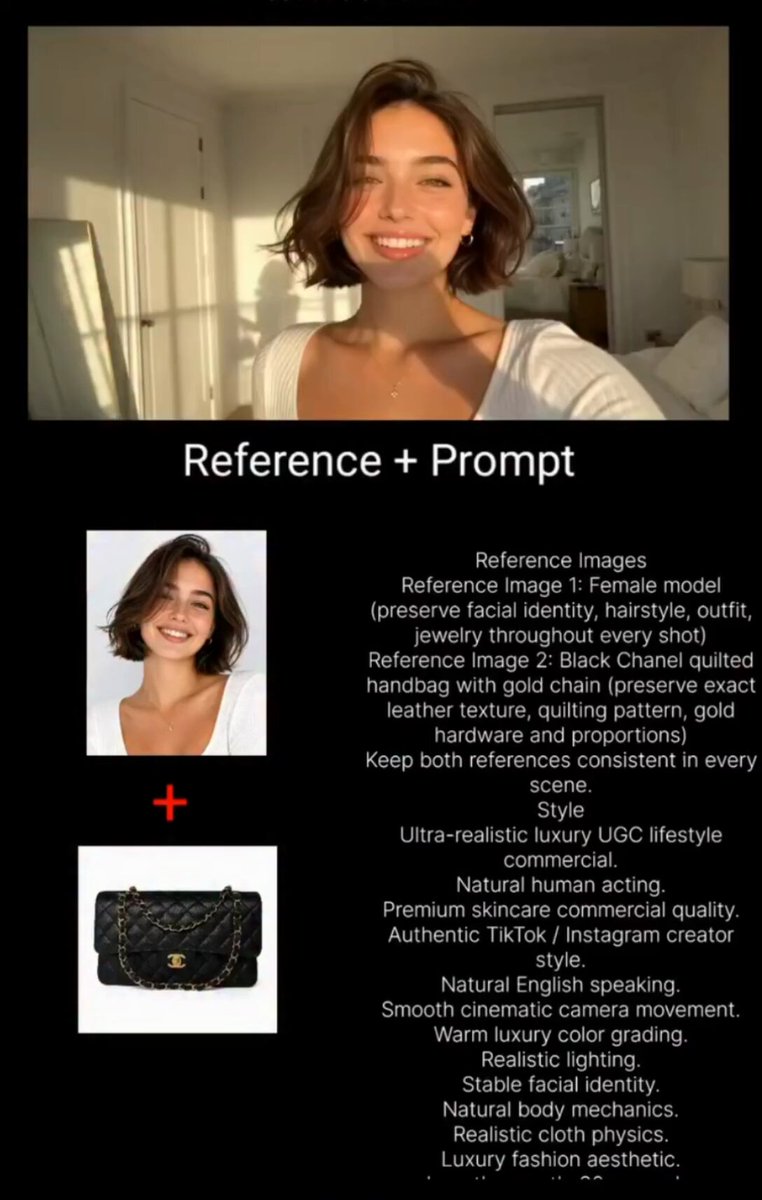
This is the feature that changes what is possible. Uploading a reference image, locking a character sheet, or using a style reference lets you hold a look steady across an entire sequence. For narrative work, brand videos, and episodic content, this is the difference between a collection of clips and a coherent piece.
Explicit control over camera and motion
Prompt-only generation treats camera language as a suggestion. Direct control over camera moves, motion strength, shot duration, and frame rate turns guesswork into intention. When a director says the shot should push in slowly and hold, you want a slider, not a lottery.
Collaboration and asset management
Shared project spaces, version history, and review links matter as soon as more than one person touches a video. Free tools are typically built for a single user on a single device, and that assumption breaks quickly on team projects.
A Hybrid Workflow That Ships Reliably
The most practical setup for most creators is not "free" or "paid" — it is a hybrid pipeline where each stage uses the cheapest tool that can do the job well. Here is a sequence that works.
Step 1: Script and shot list first
Write the script before opening any generator. Break it into a numbered shot list with one line per shot describing subject, action, framing, and duration. This single document prevents the most expensive mistake in AI video: generating beautiful clips that do not cut together because nobody planned the sequence.
Step 2: Look development on the cheapest tool available
Generate three to five style tests at low resolution using a free or low-cost editor. The goal is not a finished asset — it is a decision about palette, lens feel, and pacing. Iterate here, where failures are cheap.
Step 3: Generate hero shots on the stronger platform
Once the look is locked, produce the shots that carry the story — the opening, the emotional beat, the product close-up — using a platform with reference locking and motion control. Secondary and transitional shots can often be generated more cheaply, because a two-second cutaway has far less continuity pressure.
Step 4: Assemble in a real editor
Move everything into a conventional non-linear editor. AI generation produces raw material, not a finished film. Trimming, pacing, music, sound design, and captions still decide whether the result feels professional. Free and low-cost editors handle this stage perfectly well.
Step 5: QC pass with a checklist
Before export, review: identity consistency across cuts, background continuity, lighting direction, caption accuracy, audio levels, safe areas for vertical crops, and brand assets. A fifteen-item checklist catches the errors that viewers notice immediately.
Step 6: Archive prompts and settings
Save the prompt, model, seed, and reference images for every shot you keep. When a revision arrives three weeks later, this archive is what lets you regenerate a matching shot instead of rebuilding the sequence.
Decision Framework: Matching the Tool to the Project
| Project type | Consistency needs | Best starting point |
|---|---|---|
| Social clips, trend posts | Low | Free web editor |
| Talking-head explainers | Low | Free editor with auto-captions |
| Product demos with repeated model | Medium | Paid tier with reference images |
| Brand campaign with a fixed character | High | Paid tier with identity locking |
| Short narrative film | Very high | Paid platform plus traditional post |
| Internal training, low stakes | Low | Free or self-hosted models |
| High-volume ad testing | Medium | Hybrid: free for variants, paid for winners |
The pattern is straightforward: consistency requirements drive tool choice, and budget sensitivity drives how much of the pipeline stays free.
Mistakes That Cost the Most Time
Chasing a perfect clip instead of a usable one. Every minute spent rerolling a shot that is 90 percent right is a minute not spent on the edit, where most of the perceived quality actually lives.
Generating before scripting. Without a shot list, you end up with a folder of attractive clips that share no logic.
Ignoring audio until the end. Music and sound design change pacing decisions. Leaving them for last often forces a re-edit.
Assuming resolution equals quality. A well-composed 1080p shot with good lighting outperforms a mushy 4K one every time.
Mixing too many models in one sequence. Different models have different color science and motion characteristics. Switching too often creates an unintentional patchwork.
Forgetting rights and disclosure. Check the licensing terms of every asset you generate, and label synthetic footage where your platform or client requires it.
FAQ
Can I produce a professional video entirely with free AI tools?
Yes, if the project is short, does not require a recurring character, and tolerates some visual drift. Many successful social accounts run this way. The limits show up in longer narratives and brand work.
Is a paid AI video platform worth it for a solo creator?
Only if you publish consistently enough that saved revision time outweighs the subscription. If you post weekly, the math usually works. If you post monthly, a hybrid approach is better.
How do I keep a character consistent without paying for identity locking?
Generate a single high-quality reference image first, then use image-to-video rather than text-to-video for every shot. Keep the same seed, prompt structure, and lighting description. It is imperfect but noticeably better than pure text prompts.
Do free tools watermark exports?
Many do, some do not. Verify before you build a workflow around one.
What is the biggest quality jump I can get for the least money?
Better source material: reference images, a clear shot list, and a locked color palette. These cost nothing and improve output more than most paid upgrades.
Should I learn a traditional editor if AI does the generation?
Absolutely. Editing, sound, and pacing determine whether generated footage feels intentional. Most AI video that looks amateur is badly assembled, not badly generated.
The Practical Rule of Thumb
Start free, stay free as long as the project tolerates drift. Move to a paid tier the moment you need a character, a location, or a look to survive more than two shots — or the moment a revision request would force you to regenerate an entire sequence. Keep assembly, sound, and captions in a conventional editor regardless of where the footage came from, and archive your prompts so future revisions are cheap.
That approach keeps costs proportional to the work, protects you from subscription sprawl, and produces videos that hold up when someone watches them closely — which is the only standard that ultimately matters.
