


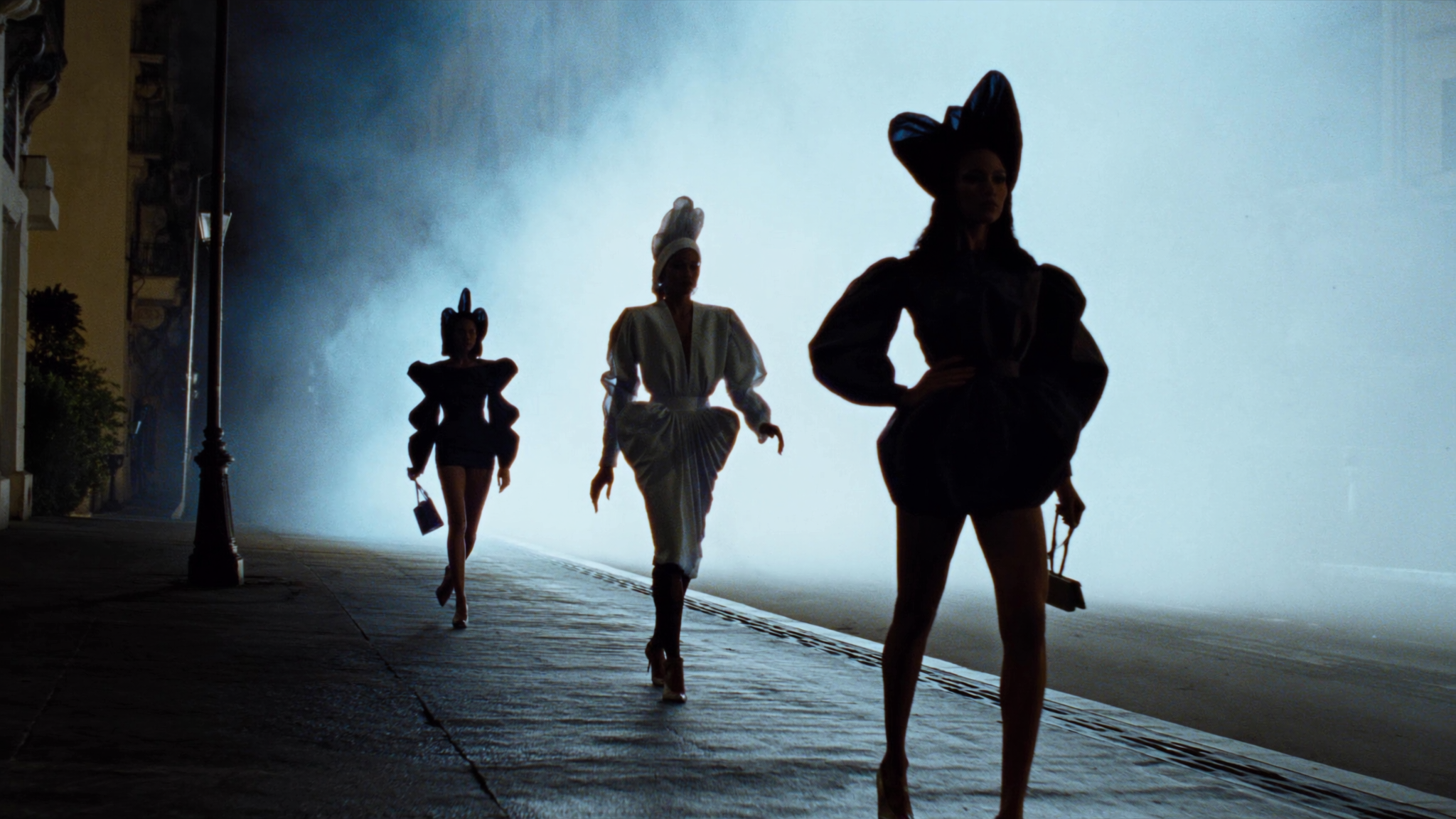
Why the Moving Image Keeps Changing Shape
The history of film is usually told as a history of art movements, but it is just as much a history of bottlenecks. Cameras were heavy, so shots stayed static. Film stock was expensive, so takes were rehearsed until they were safe. Editing was physical, so every cut had to be justified before it was made. When a bottleneck disappears, the grammar of cinema reorganizes itself around whatever has become cheap — and what has become cheap lately is motion itself.
Generative video systems have removed one of the oldest constraints in the medium: the requirement that a camera, a crew, and a physical subject occupy the same place at the same time. That does not mean films are suddenly easy to make. It means the scarce resource has moved. Access to equipment is no longer the gate. Clarity of intent is. A model can produce a hundred variations of a shot, but it cannot tell you which one serves the story.
This guide traces how moving images evolved from chemistry and mechanics to sampling and prompts, then turns that history into a working process you can use today. The goal is neither nostalgia nor hype. It is to understand which skills carried over, which ones are genuinely new, and how to build a repeatable pipeline for AI-assisted video that survives contact with a real deadline.
From Chemistry to Code: Three Eras of Filmmaking
The analog era: constraints as craft
Analog production was tactile and slow. A single roll of film held only a few minutes of footage, so a scene had to be planned around the length of a magazine rather than the length of a performance. Lighting teams worked in units of kilowatts because the stock was insensitive. Color was chemistry, not a slider. Editing meant physically cutting and splicing, which made every omission permanent and expensive.
The upside of those constraints was discipline. Directors learned to think in coverage: a master shot to establish geography, mediums to carry dialogue, close-ups to land emotion, and inserts to fix continuity. That vocabulary was not invented by theorists. It was invented by people working around technical limits.
The digital transition: editing becomes non-linear
Digital capture broke the link between time and cost. Once storage replaced stock, the ratio of shot footage to used footage exploded. Non-linear editing made revision cheap, and color grading became a room full of knobs rather than a lab full of chemicals. Visual effects moved from optical printers to render farms, and compositing became something a small team could plausibly attempt.
What did not change was the shape of production. You still needed a camera, a subject, and a day of shooting. Digital tools accelerated the back half of the pipeline — assembly, effects, finishing — while the front half stayed stubbornly physical.
The generative era: footage as output, not input
Generative models invert the pipeline. Instead of capturing photons and then transforming them, you describe an image and a model synthesizes pixels that never existed in front of a lens. The input is language, reference frames, or both. The output is footage that can be re-rolled, extended, restyled, or re-angled without a reshoot.
This is the part of the shift that unsettles people, and understandably so. It changes what a camera operator does, what a location scout does, and what a production budget looks like. But it also restores an older mode of working: the pre-visualization sketch. Storyboards, animatics, and concept art have always been ways of describing a shot before committing to it. Generative video simply lets the sketch move.
Reading the Modern AI Video Landscape Without Chasing Hype
Tool names rotate quickly, so it helps to sort the field by capability rather than by brand. Almost every system you will encounter falls into one of a few functional categories.
Text-to-video and image-to-video
Text-to-video is best for exploration: you describe a moment and the model proposes a take. Image-to-video is best for control: you supply a frame with the exact composition, lighting, and character design you want, and the model animates it. In practice, serious work leans on image-to-video far more often, because composition is the hardest thing to describe in words and the easiest thing to draw.
Consistency and continuity
Character drift — a face that slowly changes across shots — is the classic failure mode. Models that support reference images, identity embeddings, or multi-shot conditioning reduce drift, but they never eliminate it. The reliable fix is procedural: build a small library of approved reference frames per character and location, and reuse them as the anchor for every new shot.
Specialized models for niche shots and efficiency
Some systems excel at photoreal humans, others at stylized animation, fast camera moves, or long takes. A practical studio keeps two or three models in rotation rather than marrying one. Use the specialized model for the shot it handles best, then normalize the results in post so the audience never notices the seams.
The New Craft: Prompting as Direction
A prompt is not a magic phrase. It is a shot description written for a very literal, very fast crew member who has never read your script.
Shot language that models actually respond to
The most effective prompts read like a camera report: subject, action, framing, lens character, camera movement, lighting, palette, and mood. "A woman in a wool coat walks away from the camera down a wet alley; medium-wide, 35mm, slow dolly forward, sodium streetlights, cool shadows, restrained motion" gives a model far more to work with than a poetic sentence. Poetry produces beautiful accidents; specificity produces usable takes.
Continuity, blocking, and movement
Decide early whether your camera is static, handheld, or on a track. Mixing movement styles between shots is the fastest way to make AI footage feel assembled rather than directed. Also keep action verbs simple and sequential. A model that has to interpret three simultaneous actions will usually pick one and ignore the rest.
Working with references
When you have a keyframe you like, lock it and animate from it. When a generation goes wrong in an interesting way, keep it as a new reference rather than deleting it. Over a project, this habit builds a visual bible: a set of approved frames that define the look more precisely than any paragraph of text.
A Practical AI Video Workflow, Step by Step
The following pipeline works for a 30-second social spot, a music video, or the pre-visualization for a longer narrative piece.
Step 1: Concept and script
Write the script normally. Do not write it for AI. Write it for a viewer. A clear script tells you which shots must exist and which are decoration, and that distinction saves enormous time later.
Step 2: Storyboard and shot list
Break the script into shots with a numbered list: shot ID, description, duration, camera movement, and priority. Mark two or three shots as hero shots — the ones that carry the piece. If a model struggles, you will know which shots deserve extra attempts and which can be simplified.
Step 3: Keyframes first
Generate still frames before generating motion. Still image work is faster, cheaper, and easier to iterate. Get composition, lighting, and character design right in a single frame, approve it, and save it. Only then move to motion. Teams that skip this step spend hours re-rolling video to fix problems that a still would have revealed in seconds.
Step 4: Motion generation
Animate the approved keyframes with short durations — three to five seconds is the sweet spot for most systems. Generate multiple variations per shot and evaluate them against a fixed checklist: does the subject stay on model, does the motion match the shot list, does the frame hold composition, does the ending frame connect to the next shot. Discard anything that fails on identity or composition, even if the motion looks impressive.
Step 5: Assembly and rhythm
Cut the approved clips against temp music. Rhythm hides a great deal; a shot that looks weak in isolation often works when it lands on a beat. Trim aggressively. AI footage tends to include a fraction of a second of settling at the start and drift at the end, so cutting the first and last few frames is standard practice.
Step 6: Sound and finishing
Sound is where AI video projects are won or lost. Add ambience, foley, and music before you add more visual polish. A subtle grain pass, consistent color grade, and matched contrast across shots will do more to unify a piece than any single upgrade to your generation settings.
Choosing the Right Tool for the Job
Rather than memorizing product names, evaluate any system against five practical criteria.
- Controllability. Can you supply a starting frame, an ending frame, or a camera motion? Systems without conditioning inputs are fun for experiments and painful for production.
- Duration and extension. Can you generate a clean five seconds, and can you continue from the final frame? Extension matters more than raw clip length.
- Consistency behavior. How badly does a face drift over four consecutive generations from the same reference?
- Iteration speed. Fast, cheap drafts beat slow, beautiful ones during exploration. Save the high-quality renders for locked shots.
- Commercial terms and output format. Check licensing, resolution, watermarking, and whether the export fits your editing software without a transcoding detour.
A sensible workflow pairs a fast drafting model with a higher-fidelity finishing model, then uses the drafting model for exploration and the finishing model only for locked shots.
Common Mistakes and How to Avoid Them
The same problems appear in almost every AI video project. Knowing them in advance shortens the learning curve considerably.
Overloading a single prompt. If a generation fails, resist the urge to add more adjectives. Reduce the prompt to the two things that matter most and rebuild from there.
Skipping pre-visualization. Jumping straight to video generation feels faster for the first ten minutes and slower for the next ten hours.
Ignoring temporal artifacts. Flicker, melting hands, and warping backgrounds are easier to spot when you scrub frame by frame. Review clips at full speed once, then step through them.
Chasing photorealism when stylization fits better. Stylized worlds hide imperfections and often suit a concept more honestly than an attempt at realism that lands just short.
Neglecting continuity across cuts. Track screen direction, light direction, wardrobe, and time of day in a spreadsheet. Models will not remember for you.
Treating the first good result as final. The first acceptable clip is rarely the best one. Generate three more, then choose.
Ethics, Rights, and the Honest Limits of the Technology
Generative video raises questions that a tutorial cannot settle. Likeness rights, training data provenance, and disclosure requirements vary by jurisdiction and by platform, and they are evolving. Three habits reduce risk regardless of where the rules land.
First, use consent-based material. If a real person appears, get written permission. If you use a voice, get permission for that voice. Second, keep a provenance record for every asset: which model, which prompt, which reference frames. That record protects you in review and makes revisions possible months later. Third, disclose when disclosure is expected. Audiences forgive experimentation; they do not forgive deception.
The technical limits are equally worth stating plainly. Models do not reason about physics or story. They interpolate. Long, complex continuous action remains difficult, hands and fine text remain unreliable, and precise camera moves often need several attempts. Treat these as production constraints, not moral failures — the same way an earlier generation treated the length of a film magazine.
Where the Skill Shift Lands for Creators
The people who adapt fastest tend to be those who already think in shots. Editors, storyboard artists, animators, and commercial directors have an advantage because they understand rhythm, coverage, and continuity — the parts of filmmaking that models cannot yet do.
The new skills sit alongside the old ones: writing precise shot descriptions, building reference libraries, evaluating dozens of variations quickly, and knowing when a technically impressive clip is still the wrong clip. Cinematography knowledge does not become obsolete. It becomes the vocabulary you use to instruct a system that has never held a camera.
Practically, that means building a personal pipeline and documenting it. Keep your shot list template, your prompt patterns, and your review checklist in one place. Refine them weekly. The medium has changed three times in a century; the discipline of finishing work has not changed at all.
FAQ
Do I still need a camera?
Not necessarily, but hybrid approaches remain the strongest option for many projects. Real footage for people and places you control, generated footage for the impossible, expensive, or dangerous shots.
What is the single biggest quality factor?
Keyframes. A strong approved still frame improves output quality more than any parameter tweak.
How long should a generated clip be?
Three to five seconds is the practical unit. Build scenes from several short clips rather than one long take, and edit them together.
Can AI replace an editor?
No. Generated footage needs more editorial judgment than captured footage, because the raw material is inconsistent by default.
How do I keep characters consistent?
Create a reference set of approved frames per character, reuse them as anchors, keep wardrobe and lighting identical, and avoid extreme angle changes between consecutive shots.
What should I learn first?
Shot vocabulary. Framing, lens choice, camera movement, and lighting language translate directly into prompts and into better decisions at every stage of the pipeline.
