

Generative AI has moved from novelty to genuine production tooling in film and animation. Studios, indie creators, and advertising teams now use AI models for concepting, storyboarding, character design, background generation, and even motion. The shift is especially visible in compact production ecosystems like the Netherlands, where high costs, tight funding, and a dense creative talent pool make efficiency gains and creative leverage matter more than raw scale. This guide breaks down what generative AI actually changes, where it fits in a real pipeline, what decisions teams should make before adopting it, and which mistakes sink projects that could have succeeded.
What Generative AI Actually Changes in Production
The core change is not that AI replaces filmmakers. The core change is that the cost curve of producing visual material has bent downward for specific categories of work.
Traditionally, producing a shot required modeling, texturing, rigging, lighting, rendering, and compositing, or the live-action equivalent of location scouting, crewing, and shooting. Each of those stages is specialized, slow, and expensive. Generative models collapse several stages into a prompt-and-refine loop: a director describes a visual, receives variations in seconds, and iterates without waiting on a render farm.
That does not mean every shot should be AI-generated. It means the front end of production changes first:
- Concept art and mood boards that once took days can be produced in hours, letting directors and clients align on visual language early.
- Animatics and previz can be assembled from generated stills, testing pacing and composition before any expensive production stage begins.
- Background plates and environments for animation can be generated and then hand-polished, cutting the most time-consuming asset work.
- Character exploration becomes broader, since artists can generate dozens of design directions instead of committing early to one.
The practical consequence: pre-production gets richer and cheaper, while the definition of professional skill shifts from pure execution toward taste, direction, and curation.
Why Smaller Production Ecosystems Gain the Most
A country like the Netherlands illustrates the pattern well. The Dutch film and animation sector is known for strong craft traditions, acclaimed animation schools, and world-class commercial studios, but it operates with limited public funding compared to larger national industries. Every euro saved in production is a euro available for story, talent, or another project.
For such ecosystems, generative AI is a leverage mechanism:
- Niche projects become viable. Regional documentaries, dialect animation, cultural heritage pieces, and experimental shorts that would never recoup traditional costs can be produced by one or two people with AI-assisted pipelines.
- Pitching gets stronger. A team competing for limited subsidy money can arrive with a polished visual pitch instead of a text treatment, which materially changes how commissioners respond.
- Small studios can compete on ambition. A five-person studio can now deliver visual richness that previously required a much larger crew, at least for specific shot types.
The trade-off is increased competition: when everyone's baseline capability rises, differentiation comes from story, direction, and distinctive style rather than production volume alone.
The Capabilities That Matter Most
Not all AI features are equally useful in production. Experience so far points to a few capabilities that deliver real value.
Text-to-Image for Design and Previsualization
Text-to-image models remain the workhorse. Their strongest production use cases are environment design, prop exploration, lighting studies, and style tests. A colorist or production designer can generate a scene at golden hour, overcast, and neon night within minutes, then present the director with a consistent set of options.
Multi-Image Fusion for Character Consistency
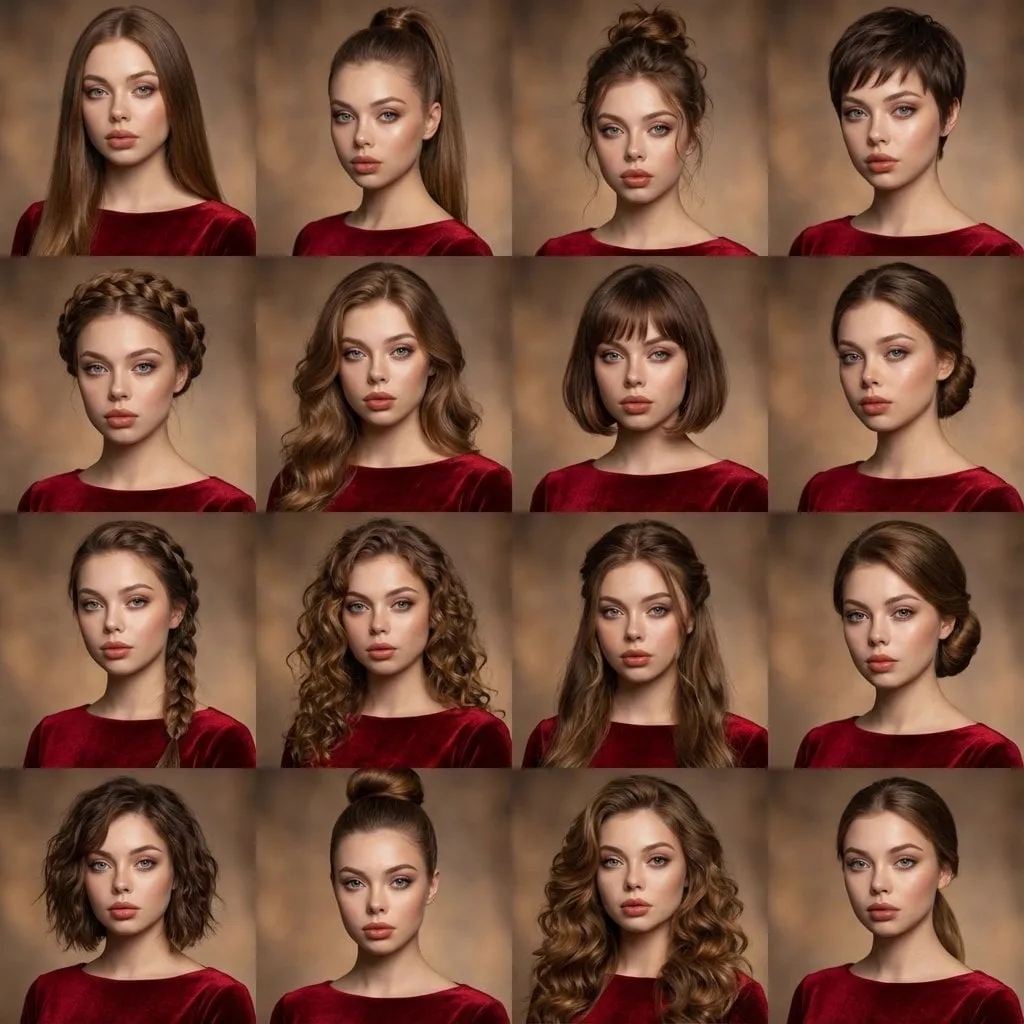
The hardest technical problem in AI video and animation has been keeping a character identical across shots. Multi-image fusion and reference-based generation address this by letting artists lock in a character's face, costume, and proportions, then generate new poses, angles, and scenes around that fixed identity.
For serialized animation or long-form storytelling, this capability is transformative. Without it, every generated frame risks slight drift: a different jawline, a changed outfit, altered eye color. With it, a character can survive a whole episode.
Image-to-Video and Motion Generation
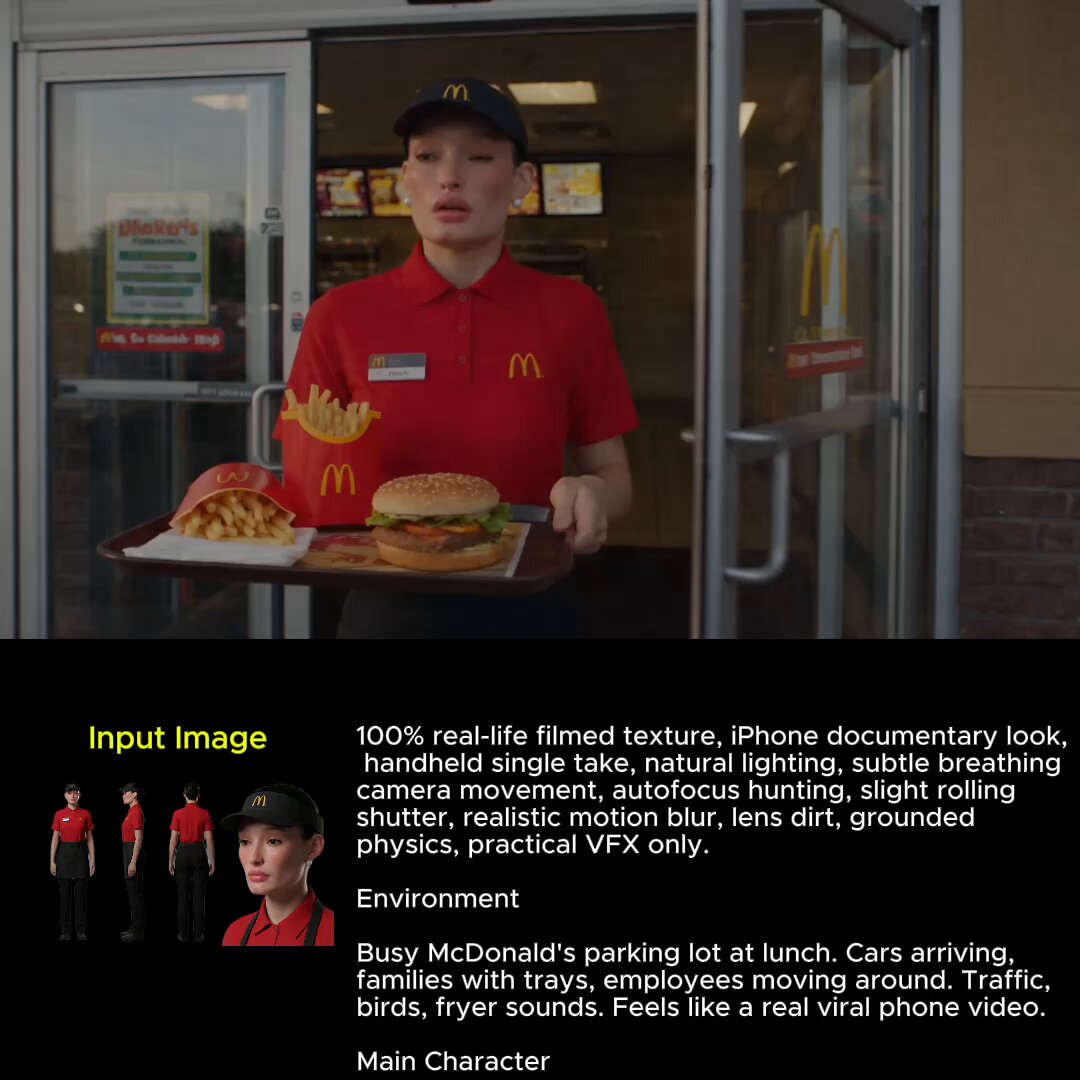
Image-to-video tools animate stills into moving shots, useful for previz, atmosphere shots, and stylized sequences. Motion quality is still uneven, and complex human acting remains unreliable, but establishing shots, weather, crowd ambience, and camera-move simulations are increasingly usable.
Style Transfer and Consistent World-Building
Style reference systems let teams train or select a consistent visual style, then apply it across every generated asset. This is how a project avoids the generic "AI look" and instead maintains a deliberate, recognizable aesthetic from title card to final frame.
Audio Synthesis: Music, Effects, and Voice
Generative audio has quietly become production-ready. Background scores, ambient soundscapes, foley-like effects, and multilingual voice synthesis all work today, with the caveat that expressive lead performances still benefit from human actors.
Character Consistency: The Make-or-Break Problem
Because consistency is central to narrative work, it deserves its own deep dive. Audiences forgive imperfect lighting; they do not forgive a protagonist whose face changes mid-scene.
Techniques That Work
- Character sheets. Generate a canonical set of views (front, three-quarter, profile) and reuse them as references for every subsequent generation.
- LoRA-style fine-tuning. Train a lightweight adapter on a character dataset so the model internalizes that specific identity. This is the most reliable route for long projects.
- Seeded generation. Fix the seed and reference images across a scene to reduce frame-to-frame drift.
- Manual repair passes. Plan for inpainting touch-ups on faces and hands. Budgeting time for this is a sign of a realistic pipeline, not a failing one.
A Practical Example
Consider a Dutch studio producing a six-episode animated series about a canal-side detective. The team designs the character once, builds a reference sheet, fine-tunes a small model adapter on those images, and locks the style palette. When episode four needs a night chase across rooftops in Utrecht, the generators produce the environment freely while the character adapter keeps the detective identical. Backgrounds ship in hours; a human animator spends one day polishing key frames. Total episode asset time drops from weeks to days.
From Storyboard to Screen: A Realistic AI-Assisted Workflow
Here is a workflow that indie teams and small studios can adopt without gutting their craft standards.
Phase 1: Script and visual bible (weeks 1-2). Write the script as usual. Build a compact visual bible: main characters, three key locations, lighting language, and color palette. Generate reference boards for each entry and lock final choices manually.
Phase 2: Previz and animatic (weeks 2-3). Generate stills for every major beat, assemble them into an animatic with a temp score, and screen it. This is where AI earns its keep: you find pacing problems and dead scenes while they are still cheap to fix.
Phase 3: Asset production (weeks 3-6). Generate environments and props using locked style references. Produce character shots through fine-tuned adapters. Tag and version every asset meticulously; disorganized asset libraries are the most common failure point in AI pipelines.
Phase 4: Motion and polish (weeks 6-9). Convert key stills into animated shots where appropriate. Hand-animate anything performance-critical. Composite in a standard tool like After Effects or DaVinci Resolve, grade the footage, and mix the soundtrack.
Phase 5: Review and delivery (week 10). Run a human review pass focused on continuity errors, uncanny artifacts, and legal review of training provenance for any models used.
The result is not "AI-made." It is a production where machine-generated material absorbs the bulk of asset labor while humans own direction, performance, and final judgment.
New Roles and Economic Realities
AI adoption reshapes crew composition rather than eliminating crews outright.
Roles That Are Growing
- AI art director: owns model selection, style locking, and prompt standards across the project.
- Prompt and pipeline engineer: builds repeatable generation workflows, manages reference assets, and automates variation batches.
- AI editor or curator: reviews hundreds of generated variants and selects the ones worth polishing.
- Consistency supervisor: watches for identity drift and continuity breaks shot by shot.
Roles That Are Transforming
Background artists become background directors, defining what the generator should produce and then refining it. Junior animators use AI to clear routine motion tasks and focus on expressive acting. Storyboard artists work faster and iterate more, which clients notice immediately.
Economic Impact
For production companies, the clearest wins are shorter iteration cycles and lower cost per concept explored. A pitch that once required a paid design sprint can now be developed in-house overnight. For freelancers, the market rewards those who can demonstrate hybrid competence: traditional craft plus fluent AI tooling. For commissioners and funders, evaluation criteria shift toward originality and execution quality rather than production volume.
Rights, Ethics, and Responsible Use
Any team adopting generative tools must build a position on rights and ethics before a crisis forces one.
- Training data provenance. Prefer tools and models that document their data sources. Understand the licensing terms of every generator you use, especially for commercial distribution.
- Disclosure. Broadcasters, festivals, and funders increasingly expect transparency about AI use. Decide your disclosure policy early and apply it consistently.
- Talent protection. Synthetic voice and likeness tools require explicit consent. Never clone a performer's voice or face without a signed agreement, regardless of what a tool technically allows.
- Labor agreements. Union and guild rules around AI are evolving. Productions working with unionized crew should check current agreements before replacing conventional work with generated work.
Teams that treat these questions as production requirements, rather than afterthoughts, avoid the reputational and legal problems that have derailed otherwise strong projects.
Common Mistakes and How to Avoid Them
Mistake 1: Letting AI define the style. Teams that generate first and think later end up with generic output. Fix: lock a written style bible and hand-picked references before any large-scale generation.
Mistake 2: Ignoring consistency until the edit. Drift discovered in the edit is expensive. Fix: establish character adapters and reference sheets in pre-production and enforce them in every prompt.
Mistake 3: No asset organization. Thousands of untagged generated images kill momentum. Fix: adopt naming conventions, store prompts alongside outputs, and archive rejected variants.
Mistake 4: Overusing AI where humans are stronger. Emotional close-ups, subtle acting, and signature comedic timing still come from human animators and directors. Fix: define shot categories up front, and route performance-critical work to people.
Mistake 5: Skipping rights review. A single licensing dispute can outweigh all savings. Fix: maintain a per-project log of tools, models, and consent documents.
Mistake 6: Presenting raw output to clients. Uncanny artifacts in client-facing material erode trust. Fix: institute a mandatory human polish pass before anything leaves the building.
Choosing the Right Tools: Decision Criteria
With new generators appearing constantly, use these criteria instead of chasing every release:
- Consistency features. Does it support reference images, fine-tuning adapters, or identity locking? For narrative work, this is non-negotiable.
- Style control. Can you apply one consistent aesthetic across all outputs?
- Resolution and duration limits. Do outputs meet delivery standards, or will heavy upscaling be required?
- Commercial licensing. Are outputs licensed for broadcast and streaming distribution in your markets?
- Interoperability. Does it export to standard formats and slot into your editing and compositing stack?
- Cost predictability. Subscription or per-generation pricing should map to your actual output volume.
- Data provenance and disclosure support. Documentation that helps you answer funder and broadcaster questions.
Score candidate tools against these criteria for your specific project type. A tool excellent for stylized music videos may be wrong for a dialogue-driven drama.
FAQ
Will generative AI replace animators and filmmakers?
No. It replaces certain tasks: routine asset production, first-pass backgrounds, temp music. Direction, storytelling, performance, and final judgment remain human territory. The professionals at risk are those who refuse to integrate the tools, not the craft itself.
Can AI maintain a character's appearance across an entire film?
Yes, with the right setup: canonical reference sheets, fine-tuned identity adapters, fixed seeds, and manual repair passes on faces and hands. It requires discipline, but serialized animation with consistent characters is achievable today.
What about the so-called AI look?
The generic look comes from default styles and lazy prompting. Locking a bespoke style reference, fine-tuning on your own design work, and hand-polishing key frames eliminate most of it.
Is AI-generated content safe for commercial distribution?
It depends on the tool's licensing terms, the models' training provenance, and your jurisdiction. Read commercial terms carefully, keep a provenance log per project, and prefer vendors with clear, documented licensing.
How much budget does AI actually save?
Savings concentrate in pre-production and asset creation, commonly reducing those phases by 40-70% for suitable shot types. Performance animation, VFX-heavy sequences, and live action still demand traditional budgets.
What should a small studio do first?
Run one contained pilot: produce an AI-assisted trailer or proof-of-concept for a real project. Measure time and cost against your conventional pipeline, document what worked, and build your standards from evidence rather than hype.
Do I need to learn to code?
Not necessarily. Most production-grade tools are prompt- and reference-driven. Coding helps for pipeline automation and batch processing, but direction, curation, and visual judgment matter more.
Final Thoughts
Generative AI is not a replacement for filmmaking craft; it is a redistribution of where effort and money go. In production communities where budgets are tight and talent density is high, the teams that thrive will be those that treat AI as a disciplined production layer: locked styles, managed consistency, organized assets, clear rights positions, and human judgment at every decision point. Start small, measure honestly, and let the results, not the headlines, determine how deeply AI enters your pipeline.
