
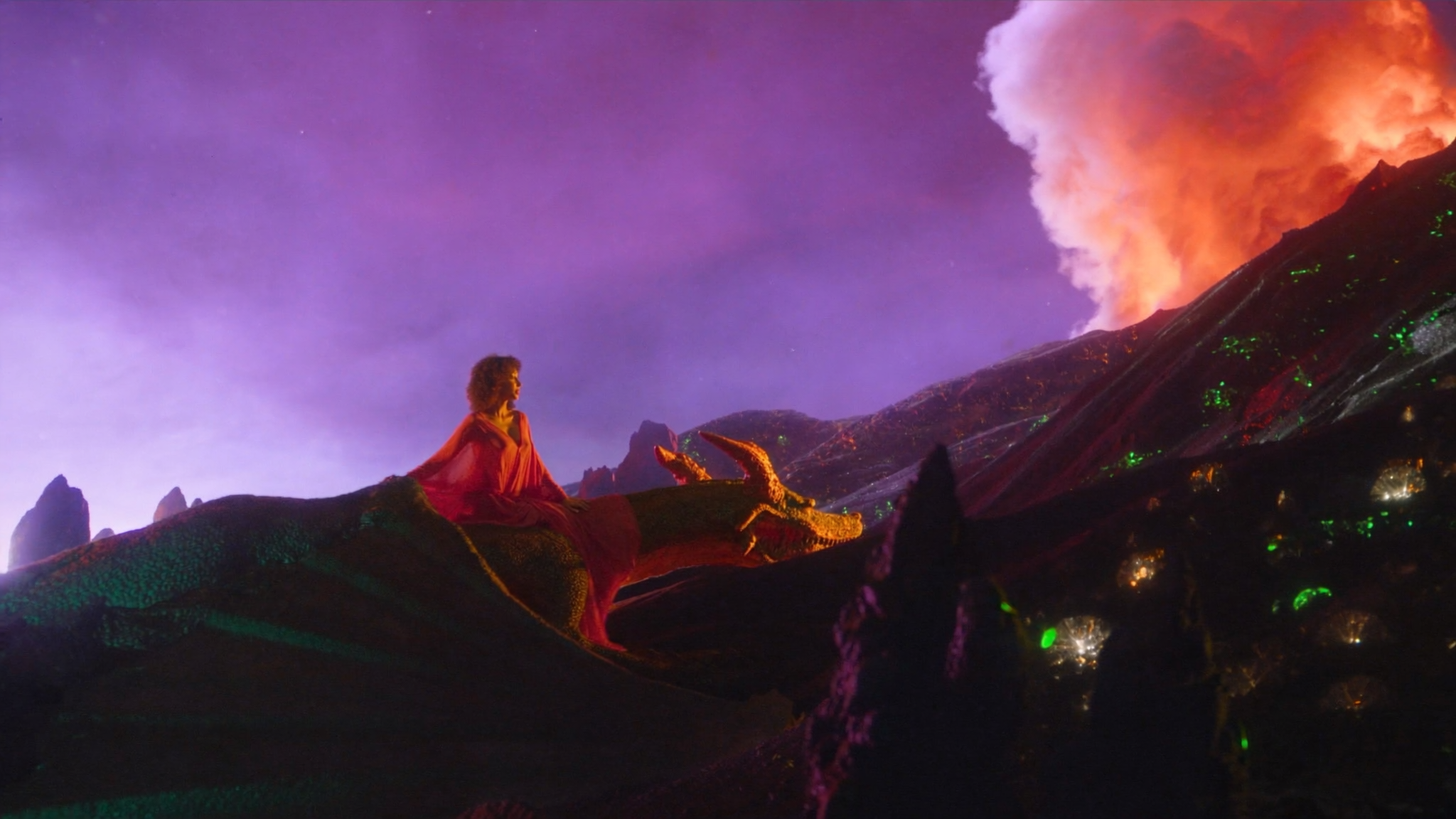
Why high-quality AI video is now a workflow problem
A few years ago, the interesting question about generative video was whether a model could turn a sentence into a recognizable moving image. That question is settled. The interesting question today is whether you can produce sixty seconds that survive a large screen: consistent characters, deliberate camera movement, believable physics, and a grade that does not drift between shots. The tools improved dramatically. The craft gap widened instead of closing.
That shift changes where your effort belongs. Early experimentation was about hunting for a lucky prompt. Professional-looking output comes from designing a system: a creative brief, a shot list, a prompt template, a review checklist, and a repeatable method for fixing a shot that almost works. Randomness is fine for exploration. It is fatal for delivery.
A useful mental model is to treat the model as a very fast, extremely literal cinematographer with no memory of your intent. Everything you do not specify, it invents. Everything you specify ambiguously, it resolves toward the most statistically ordinary interpretation available. That default is usually competent and almost always generic. Quality comes from narrowing the space of plausible outputs until only your intended shot remains likely.
This guide lays out a neutral, tool-agnostic workflow for high-quality AI video. It applies whether you are generating a social ad, a music video, a short film, or product footage. Where specific capabilities matter, they are described functionally, so you can map them onto whichever generation stack you use.
The four pillars of high-quality AI video
Before touching prompts, understand what actually breaks footage. Almost every failure falls into one of four categories, and each has different remedies.
Motion coherence
Motion coherence is what separates convincing footage from a slideshow of stills. Watch for limbs that change length mid-stride, fabric that ripples against the wind direction, water flowing uphill, hands that merge into objects, and crowds that teleport between frames. These artifacts are rarely fixed by adding adjectives. They are fixed structurally: shorten the shot, reduce the number of independently moving subjects, lock the camera when the action is complex, and feed in more reference frames so the model has less to guess.
A practical rule: the more subjects moving in different directions, the shorter the shot must be. A single person walking toward camera can hold for five seconds. Three people fighting can rarely hold for three without visible decay.
Photoreal texture and light behavior
Realism lives in small signals: skin pores and subsurface warmth, the weave of fabric, specular highlights sliding across brushed metal, dust suspended in a light beam, the slight desaturation of shadows. Choose one or two texture cues per shot rather than ten. More importantly, always specify a light source and its direction. "Low warm sun from camera left, hard shadows, slight haze" produces far more consistent output than "beautiful cinematic lighting," because it gives the model a physical constraint to honor.
Camera language
Camera language is grammar. A slow push-in signals realization or intimacy. A handheld follow signals urgency and immediacy. A static wide signals detachment and scale. An orbit signals that we are circling something significant. Decide the camera move before the action, because the move constrains how much the subject can do without leaving the frame or turning into a smear.
Beginners often ask for movement and action at once, then blame the model when neither reads clearly. Choose one idea per shot. If the story needs two ideas, use two shots.
Character and identity continuity
If your video contains a person, identity drift is your single largest risk. Consistency comes from references, not adjectives. A prompt describing "a woman in her thirties with dark hair" will produce a different woman every generation, and often a different woman within the same shot as the model reinterprets the description at different timesteps. A reference image plus a short, fixed descriptor list keeps a face stable and reusable across an entire sequence.
Pre-production: the brief that saves ten regenerations
The most expensive habit in AI video is generating before thinking. Twenty minutes of pre-production routinely saves an hour of iteration.
Write the single visual promise
Start with one sentence that states what the viewer should feel and remember. "A lone climber realizes the mountain is larger than the map she trusted." If you cannot write that sentence, you cannot direct the shots, because you have no criterion for accepting or rejecting a generation.
Build a shot list before writing prompts
Shots, not prompts, are the unit of planning. A workable shot list has six to ten lines, each containing: shot number, duration in seconds, subject and action, camera move, environment, and how it transitions to the next shot. When the shot list is finished, prompts become translation work rather than invention work.
Run look development first
Assemble a reference board of six to twelve images: two or three for palette, two for lighting, two for wardrobe or material, one or two for lens character, one composition reference. Then generate ten to fifteen test stills and pick the frame you would want to see on a poster. Everything downstream inherits from that choice, including your prompt vocabulary, your color decisions, and your edit rhythm.
Prompt architecture for cinematic shots
A prompt is a specification document, not a wish. The structure that performs most reliably across models follows a fixed order.
A repeatable structure
Use this sequence: subject and identity → action and intent → environment → camera position and movement → lighting and direction → texture and material detail → mood → technical constraints. Keep each element to a clause. For example: "A weathered dockworker in his fifties, grey stubble, canvas apron, lifts a rusted chain — medium wide shot, slow push in, camera at chest height — inside a fog-heavy harbor at dawn — cold blue ambient light from behind, warm sodium lamp from camera right — damp wool, oil-slick metal, wet concrete — quiet and heavy — no text, no lens flare, no extra people."
Notice the pattern: one identity anchor, one action, one camera instruction, one light setup, two texture cues, one mood word. That is a shot you can regenerate deterministically.
Specificity has a ceiling
Adding detail helps up to a point, then it starts to conflict. If you describe both a crowd and a close-up, both a sunrise and moonlight, both a handheld feel and a locked-off composition, the model will satisfy whichever clause it weights most heavily and you will get an unstable result. When a shot is inconsistent, the fix is usually deletion, not addition.
Negative constraints matter
List what must not appear: text overlays, watermarks, extra limbs, crowds, dramatic lens flares, camera shake, changes in wardrobe color. Negative instructions are cheap and they eliminate whole categories of failure before you review a single frame.
Keep a prompt library
Save every prompt that produced a good frame, along with the seed and settings when available. Over a few projects you will accumulate reusable fragments — lighting phrases, camera phrases, texture phrases — that compress your next brief dramatically.
Camera control and motion design in practice
A working move vocabulary
Restrict yourself to a small set of moves and use them consistently: static, slow push in, slow pull out, lateral tracking, orbit or arc, crane or rise, handheld follow, overhead descent. Each has a semantic meaning, and repetition of a move within a sequence creates rhythm. Constraint reads as style; variety reads as chaos.
Match motion to the emotional beat
Ask what the viewer should feel at this second. If the answer is tension, a slow, almost imperceptible push works better than a fast move, because the audience cannot quite identify why they are leaning forward. If the answer is release, a pull out or rise gives air. If the answer is disorientation, a handheld follow that lags behind the subject does more than any amount of grain.
Motion blur and shutter feel
Generative footage often looks slightly too crisp, like a video game. Requesting natural motion blur, a shallow depth of field, or a filmic shutter feel softens that digital sharpness. For stylized work, the opposite choice — high clarity, deep focus, saturated color — can be just as deliberate.
Watch the frame edges
Camera moves reveal what you forgot to specify. A push in can expose background detail; an orbit can expose the side of a set that was never built. Either constrain movement or describe the full environment, but do not let the model improvise a background it has never seen while the camera swings toward it.
Consistency across shots: characters, props, and palette
Build a character sheet
For each recurring character, lock a small set: one front-facing reference, one three-quarter reference, a fixed wardrobe description, two facial descriptors, and a body-type descriptor. Store that block of text verbatim and paste it into every prompt where the character appears. Never paraphrase it between shots, because paraphrasing reintroduces drift.
Use frame anchoring where available
Image-to-video, first-frame and last-frame conditioning, and subject references are the most reliable consistency tools in any modern stack. They convert a text description into a visual constraint, which is far more stable. If a model supports reference images, use them for every recurring element: faces, vehicles, logos, props, and locations.
Lock the palette in post, not in prompts
Color drift across shots is normal. Rather than fighting it in generation, generate slightly desaturated, then apply a single grade across the whole sequence in your editor. A shared color decision unifies shots that were never meant to match perfectly.
Track continuity like a script supervisor
Keep a simple continuity table: what the character wears, which hand holds which object, time of day, weather, and where the light is coming from. Most "AI artifacts" that viewers notice are actually continuity errors, and they are prevented with a spreadsheet rather than better prompting.
The iteration loop: review, repair, regenerate
Use a fixed review checklist
Review every take against the same criteria: Does the motion read as physically plausible? Is the subject the same person or object? Does the camera move match the plan? Is the light direction consistent with the previous shot? Are there extra fingers, warped text, or floating objects? Is the first frame and last frame usable for a cut? Score each item pass or fail. This turns taste into a decision procedure and speeds up approval.
Repair the smallest possible thing
When a shot is 80 percent right, do not regenerate the whole thing and hope. Change one variable: a single prompt clause, a seed, a reference frame, or the duration. If you change three things at once and the result improves, you have learned nothing about why.
Know when to abandon a shot
If a shot fails after six to eight targeted attempts, the concept is usually the problem, not the settings. Rework it: change the camera angle, split it into two shorter shots, or replace the action with something the model handles reliably. Persistence has diminishing returns in generative work; reconception does not.
Use extension and cleanup tools deliberately
The strongest pipeline pattern is generate short, then extend, then clean up. Produce three to five seconds with strong motion, extend the clip forward or backward if the tool supports it, then use localized editing to remove an artifact rather than regenerating the entire take. Cleanup is cheaper than creation.
Audio, pacing, and the edit
The edit is where generated clips become a video. Three layers do most of the work.
Sound design layers
Build ambience first — room tone, wind, traffic, crowd murmur — so no shot is ever silent. Add foley for actions: footsteps, cloth, metal, water. Then add music last, chosen to support the tempo rather than to lead it. Dialogue and voiceover sit on top with a gentle compression pass so they remain intelligible under the music bed.
Cut on motion
Cuts feel invisible when they land on movement. If a subject raises an arm, cut at the apex of the gesture. If the camera pushes in, cut when the move reaches its intent. Cutting on motion hides continuity mismatches and gives the sequence energy without faster pacing.
Match cuts and sound bridges
Two reliable techniques: match a shape or movement between consecutive shots so the eye connects them, and carry a sound from the previous scene two or three frames into the next. Both create the impression of a single continuous world even when every shot was generated separately.
Keep shots short
Generative footage degrades over time. Shots of two to four seconds cut tightly will look better than eight-second shots that drift. If you need a long take, build it from several closely matched clips.
Delivery, specs, and quality control
Master before you export
Export a high-bitrate master at your maximum target resolution, then create platform variants from that master rather than from a compressed file. Keep the master in a lossless or near-lossless codec so future re-cuts do not inherit compression artifacts.
Plan aspect ratios early
If you need vertical, square, and widescreen versions, design shots with a center-safe composition and shoot slightly wider than the final crop. Reframing after the fact is much easier than regenerating.
Check the small screen and the big screen
Watch once on a phone at arm's length and once on the largest display you have. Artifacts that vanish on mobile become obvious on a television, and pacing that feels slow on desktop often feels correct on a phone.
Captions and accessibility
Add accurate captions, keep text out of the safe areas that platform interfaces cover, and check contrast on any on-screen type. Accessibility work also improves retention, because most viewers watch muted at least part of the time.
Common mistakes and FAQ
Frequent mistakes worth avoiding
Writing prompts before writing a shot list. Changing five variables between attempts. Using adjective stacks instead of physical light descriptions. Assuming a model will remember a character introduced three shots ago. Neglecting reference frames even when the tool supports them. Ignoring audio until the edit is locked. Judging quality on a laptop screen only, and delivering a compressed version of a compressed version.
How long should a generated shot be?
Two to four seconds for most shots with human motion, up to six for simple camera moves over static or slow subjects. Longer is possible but the failure rate rises quickly, and a sequence of short, tightly cut shots usually reads as more cinematic than one long take.
Do I need reference images for a single-character video?
Yes if the character appears in more than one shot. Even two appearances benefit from a locked reference, because text-only descriptions rarely survive a regeneration with the same face.
What is the fastest way to fix one bad artifact?
Try localized editing or inpainting first, then extend or trim the clip so the artifact falls outside the cut, then regenerate with a seed change. Full regeneration is the last option, not the first.
How do I keep style consistent across a whole project?
Fix three things and never vary them: a lighting phrase, a lens or framing phrase, and a color grade applied in post. Style is repetition, not novelty.
Should I generate at the highest resolution available?
Generate at a resolution your hardware and time budget can sustain, then upscale at the end of the pipeline if needed. Consistency and shot count matter more to perceived quality than raw pixel count, and upscaling a coherent sequence looks far better than a high-resolution sequence that never cuts together.
When should I stop iterating?
Set a rule before you start: six attempts per shot, then reconceive. Deadlines and sanity depend on honoring it.
