
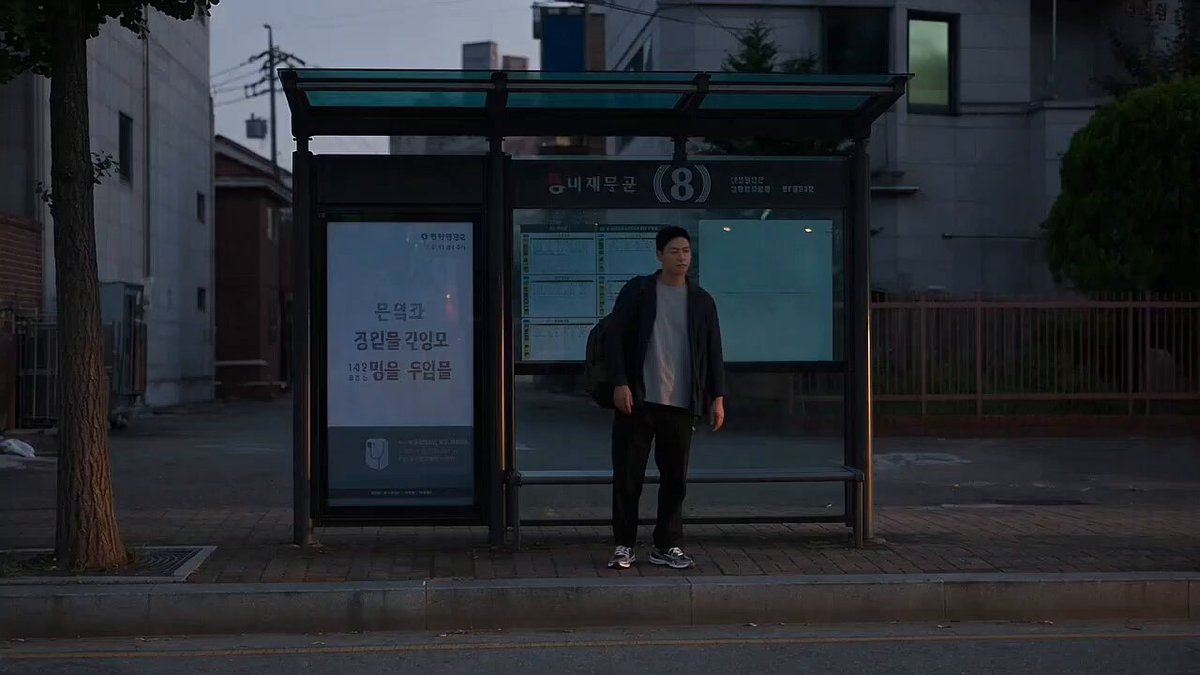
Image-to-video generation has quietly become the backbone of serious AI filmmaking. A text prompt gives you a surprise; a still image gives you a decision. When you start from a frame you have already art-directed — composition, wardrobe, lighting, color — the model's job shifts from inventing a world to animating one. That single change is what separates chaotic prompt roulette from repeatable production.
This guide walks through the practical craft of turning stills into motion: how the models interpret your image, how to pick the right engine for a given shot, how to prepare frames that animate cleanly, how to prompt for movement instead of description, and how to keep characters and locations consistent across an entire sequence. No tool worship, no hype — just the workflow decisions that show up in real projects.
Why Stills Became the Control Layer for AI Video
Text-to-video is impressive and unreliable in equal measure. You describe a shot, you get something beautiful, and then you try to reproduce it with a slightly different camera angle and the whole world changes. Characters age three years between shots. The jacket changes color. The lighting flips from sunset to noon. For a one-off clip, that is fine. For anything that resembles a sequence, it is fatal.
Image-to-video solves the reproducibility problem by moving the random decisions upstream. You generate or photograph a still, iterate on it until it is exactly right, and then hand it to the video model as the first frame. The model no longer decides who your character is, what they are wearing, or where the light is coming from. It only decides how things move.
That separation is the core insight. Stills are cheap to iterate, fast to review, and easy to share with a client or collaborator. Video is expensive to iterate, slow to review, and hard to annotate. Every decision you lock in at the still stage is a decision you never have to re-litigate at the video stage.
The practical consequence: the still becomes the storyboard, the art department, and the continuity department at once. A director working with AI today spends far more time on frame design than on prompt poetry. That is not a limitation — it is the workflow maturing.
How Image-to-Video Generation Actually Works
Understanding the mechanics makes you faster, because it tells you which control to reach for when a shot goes wrong.
The stages of a single generation
Most image-to-video pipelines run through roughly the same internal sequence:
- Encoding. The model converts your still into latent features, capturing composition, color, texture, and — depending on the architecture — a rough sense of depth and subject boundaries.
- Motion synthesis. Given your prompt and settings, it predicts how those latents should change over time. This is where camera movement, subject motion, and environmental animation get decided.
- Temporal refinement. The model smooths the sequence so frames stay coherent, which is where most flicker and morphing artifacts are either fixed or introduced.
- Decoding. Latents become pixels, and you get a short clip.
What the model actually reads from your image
Different engines weight different signals, but broadly speaking a video model extracts:
- Composition and camera framing, which it usually preserves because altering it would break the first frame.
- Subject identity and texture, which it tries to maintain — and often fails to maintain when the subject is small, occluded, or low-contrast.
- Lighting direction and color palette, which it will often preserve but may drift if your motion prompt implies a change.
- Implicit depth, inferred rather than measured, which is why flat, evenly lit images tend to produce flat, lifeless motion.
This last point is worth repeating: depth cues in the still strongly influence how three-dimensional the resulting motion feels. A frame with foreground, midground, and background separation gives the model something to parallax against. A frame shot against a plain wall gives it almost nothing.
Choosing the Right Model for the Shot You Need
There is no single best video model. There is a best model for the shot in front of you. Think in categories rather than brand loyalty.
Realism and cinematic footage
If your still is photographic — a portrait, a landscape, a product shot — you want an engine tuned for photoreal texture and believable skin, fabric, and metal. These models handle subtle motion well: a slight head turn, drifting hair, steam rising, rain falling. They tend to struggle with large, fast, physically complex action, where limbs can smear or duplicate. Look for strong temporal stability at short durations rather than spectacular long takes.
Stylized, illustrated, and animated looks
Anime, painterly, and 3D-render styles often behave better in specialized engines. The reason is that stylized images have defined edges and flat regions, which are easier to track frame to frame. If your still came out of an illustration model, animate it with a model that was trained on similar aesthetics — mismatched pipelines are a common source of unwanted style drift, where a hand-drawn character slowly turns photoreal mid-clip.
Motion physics and camera control
Some engines are dramatically better at particular physical behaviors: fluid simulation, cloth, smoke, crowds, vehicle motion, or camera moves like dolly, crane, and orbit. Keep a short personal list of which engine you trust for which behavior. That list is more valuable than any leaderboard.
Length, resolution, and shot economy
Most useful generations are short — a few seconds. Rather than fighting for longer single clips, design your sequence as a series of short shots and cut between them. Short shots hide continuity imperfections, give you editing rhythm, and let you regenerate one problematic beat without rebuilding an entire minute. If a model offers extension or continuation features, treat them as a bonus, not a plan.
Preparing Source Images That Animate Well
This is where most quality is won or lost. The video model can only animate what the still implies.
Resolution and aspect ratio
Match your still's aspect ratio to your intended output. Cropping a square image into a widescreen clip forces the model to invent the edges, and invented edges tend to wobble. Generate or shoot at the target ratio, and keep the still reasonably high resolution — enough that fine detail survives, but not so enormous that the model downsamples unpredictably.
Framing and negative space
Leave room for motion. If a character is walking, they need somewhere to walk to. If a camera is pushing in, leave headroom and side space that the crop can use. Tightly framed stills with subjects touching all four edges look claustrophobic the moment anything moves, because there is no visual buffer.
Depth and separation
Foreground elements that partially occlude your subject are enormously useful. They give the model something to slide past, which instantly reads as camera movement. A doorway, a railing, a plant in the foreground, a blurred shoulder — all of these create the parallax that sells three-dimensional motion.
What reliably breaks motion
- Ambiguous anatomy. Hands overlapping, hair merging into shadow, limbs cropped at the frame edge.
- Extreme detail in motion regions. Intricate jewelry, dense text, and lattice patterns tend to shimmer.
- Flat, frontal lighting with no shadows to indicate form.
- Watermarks, logos, and UI elements, which models sometimes try to animate as if they were objects.
- Multiple faces at small scale, which invites identity swapping between frames.
Fixing these at the still stage is far cheaper than fixing them in the edit or in a retake.
Writing Motion Prompts, Not Descriptions
When you start from a still, the image has already handled description. Your prompt's job is motion, camera, and atmosphere over time. Rewriting a scene description wastes tokens and often confuses the model into reinterpreting the frame.
The motion-first prompt formula
A reliable structure:
Subject motion + camera behavior + environmental motion + pacing/atmosphere.
For example: "She turns her head slowly toward the window, subtle handheld drift left, dust motes floating in the light beam, curtains breathing gently, calm and contemplative pace."
Notice what is missing: no mention of her appearance, clothing, or the room. Those are already in the frame. If the model changes them, that is a consistency problem to solve with references, not with more adjectives.
Camera language that models understand
Keep camera terms simple and physical: slow push in, pull back, pan left, tilt up, orbit around subject, handheld drift, static locked-off shot, crane down. Vague terms like "cinematic dynamic camera" usually produce unmotivated wobble. If you want a locked-off shot — often the safest choice for dialogue and subtle performance — say so explicitly.
Intensity words matter more than you think
"Slowly," "gently," "subtly," and "barely" are powerful constraints. Most disappointing generations are over-animated: the model tries too hard, everything moves, and the result looks like a screensaver. Under-animating and then adding motion in post is a legitimate strategy for realism work.
Consistency Across Shots: The Hardest Problem
A single beautiful clip is a demo. A sequence of clips that look like the same film is a product. Consistency is the real skill.
Reference chaining
Generate your establishing still first, then build subsequent stills from that same reference, adjusting pose, angle, and framing while preserving identity. Only after the whole sequence of stills is approved do you animate them. Doing it in this order means continuity errors are visible as a grid of images — immediately obvious — rather than buried in minutes of footage.
The continuity bible
Keep a simple document for any project longer than a few shots. Record:
- Character descriptions, reference images, and wardrobe per scene.
- Location references and the time of day for each scene.
- Lighting direction and color temperature notes.
- Aspect ratio, resolution, and frame rate standards.
- Which generation engine and which settings produced each approved shot.
That last item saves hours. When a shot needs a pickup, you want to reproduce the conditions of the original exactly.
Multi-image fusion and hybrid approaches
Some workflows let you supply two or more reference images — for example, a character reference plus a location reference — and synthesize a new frame that respects both. This is extremely useful for placing a consistent character into consistent environments without manually rebuilding each composition. The trade-off is reduced control over exact framing, so treat fused frames as starting points and refine them before animating.
Know when to abandon a shot
If a shot has failed to become consistent after three or four serious attempts, redesign it. Change the angle, put the subject further from camera, cut away to a reaction or a detail insert. Editing solutions beat generation stubbornness almost every time.
A Repeatable Shot-by-Shot Workflow
Here is a cycle that scales from a thirty-second social clip to a multi-minute narrative piece.
- Script and beat sheet. Write the sequence in shots, not paragraphs. One idea per shot.
- Thumbnail pass. Rough sketches or quick low-effort stills, purely for composition and coverage.
- Still production. Generate or shoot each keyframe. Iterate until approved. Get sign-off here, not later.
- Continuity check. Lay the approved stills in a timeline and watch them as a slideshow with music. If the sequence does not read, no amount of motion will save it.
- Motion pass. Animate shots in order of narrative importance, not shot number. Spend your best effort where the audience is looking.
- Review at speed. Watch generated clips in context in the timeline, not isolated in a preview window. Artifacts that look terrible full-screen often vanish at cut speed — and vice versa.
- Pickups. Regenerate only the shots that fail. Vary one variable at a time: prompt, motion strength, or seed.
- Edit, sound, grade. Treat generated clips like camera footage. Cut them, sweeten them, and unify them.
Troubleshooting: Common Failures and Fixes
Subjects morph or change identity. Your subject is too small, too occluded, or too detailed. Reframe closer in the still, simplify the costume, or add a character reference. Prompting identity harder rarely works.
Everything moves too much. Reduce motion strength, add "subtle" and "slow" to the prompt, or pick a locked-off camera. Consider animating only the background.
The clip looks like a still with a filter. Your frame lacks depth cues. Add foreground occlusion, stronger directional light, or a subject that rotates or crosses the frame.
Flicker and shimmer in fine detail. Simplify high-frequency texture in the still, or add a slight depth-of-field blur to move detail out of the sharpest plane. Reduce resolution expectations if necessary.
Style drift toward photorealism. Use an engine trained on your aesthetic, and keep prompts free of photographic terms like "realistic" or "8K" when you do not want them.
Edges warp near frame boundaries. Objects touching the frame edge have no context. Recompose with margins.
Hands and faces break. Keep hands out of frame or in shadow; keep faces large enough to be legible; favor angles that avoid extreme profiles and heavy occlusion.
Finishing: Editing, Sound, and Delivery
Generated clips are raw material. The finishing stage is where most perceived quality is manufactured.
- Cut on motion. Cut during movement rather than after it settles. Motion masks imperfections at the transition point.
- Vary shot length. Uniform clip lengths read as machine output. Two seconds, then three, then one.
- Sound carries realism. Room tone, footsteps, cloth movement, and music do more for believability than extra resolution.
- Unify color. Apply a single grade across the sequence. Slight differences between engines disappear under consistent color.
- Add texture. Subtle grain, halation, and gate weave can unify footage that came from different models.
- Check on multiple screens. Phone speakers and laptop screens reveal problems your studio monitor hides.
FAQ: Practical Questions About Image-to-Video
Should I always start from a still?
No. Text-to-video is excellent for exploring ideas, generating backgrounds, and producing abstract or landscape inserts where continuity does not matter. Switch to image-to-video the moment a shot needs to match something else.
How many seconds should a generated clip be?
Plan for two to five seconds per shot. That is enough to read a beat, short enough to hide artifacts, and small enough to regenerate cheaply.
Do I need to write separate prompts for the still and the video?
Yes, and they should be different in kind. The still prompt describes appearance, composition, and light. The motion prompt describes only change over time: movement, camera, and atmosphere.
Why does my character's outfit change between shots?
Because each generation is independently sampled. Fix it with reference images, simpler costume design, and a continuity document. Complex patterns and layered accessories are the usual culprits.
Can I use photographs instead of generated stills?
Absolutely, and often you should. Photographs have real depth, real lighting, and real texture, which gives the model better material to animate. Just make sure you have the rights to use them.
What is the single biggest quality upgrade?
Better source frames. Spend more time on the still, approve it carefully, and the motion pass becomes dramatically easier. Most people do the opposite: they rush the frame and then try to rescue the clip with prompts.
How do I keep a project consistent across sessions?
Save your references, prompt text, seeds, and settings alongside the project files. Six weeks later, memory will not be enough, and reproducibility depends entirely on your notes.
The Takeaway
Image-to-video is less about clever prompting and more about disciplined pre-production. Lock your frames, leave room for motion, describe movement rather than appearance, and treat consistency as a design problem solved with references and shot planning. Do that, and the technology stops feeling like a slot machine and starts feeling like a camera — one that happens to be unusually patient, unusually cheap to re-shoot with, and unusually good at turning a single well-made still into a moving image that belongs in a real edit.
