

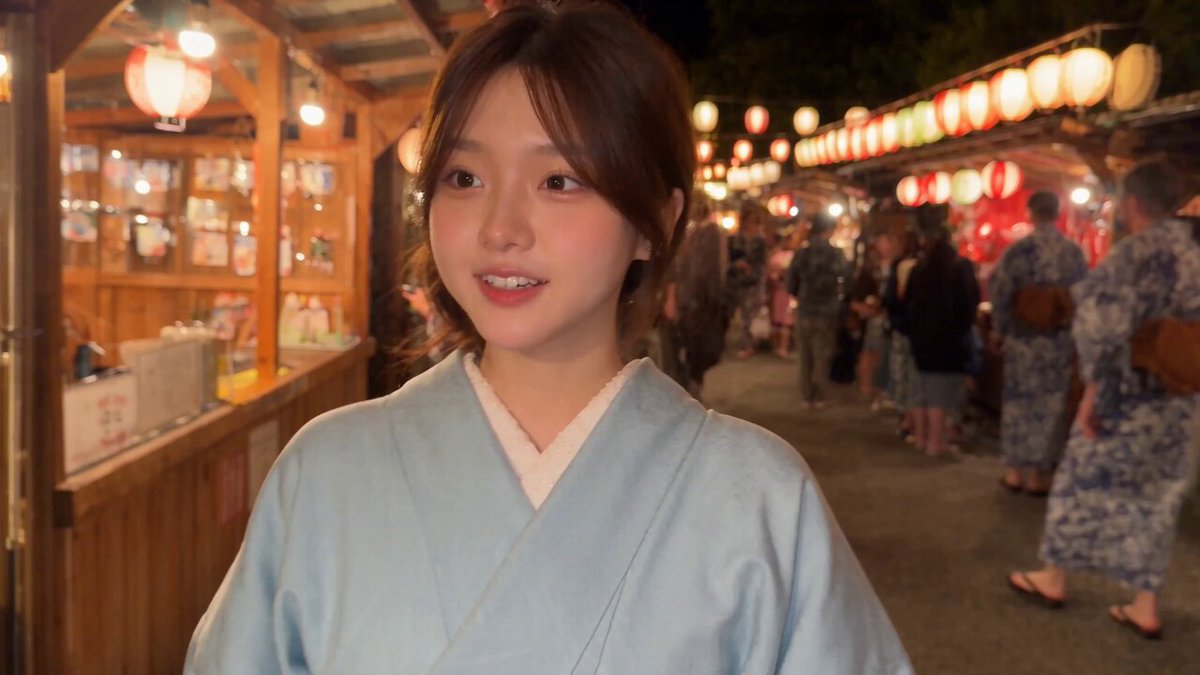
Why Comparing AI Video Models Is No Longer Optional
Not long ago, choosing an AI video generator came down to a single question: does it produce something that looks like video at all? That era is finished. Modern foundation video models can hold a character's face steady across shots, respect camera language like "slow dolly in" or "handheld tracking," and render physically plausible motion for water, fabric, and hair. The differences between the strongest tools are now measured in details — and those details decide whether a project ships or collapses in post-production.
Kling sits near the center of that conversation, especially for teams that need literal instruction following. But it is not the only serious option, and treating any single model as the default is a recipe for mediocre output. Rival systems built by large research labs and independent studios each have distinct personalities: some excel at cinematic realism, others at stylized animation, others at speed and iteration volume.
This guide breaks down how the leading generators actually differ, where Kling tends to win, where competitors pull ahead, and how to assemble a workflow that uses more than one model without doubling your workload. The goal is not to crown a winner. It is to give you a decision framework you can reuse every time a new model appears — which, at the current pace, will be roughly every few months.
The Evaluation Framework: Six Dimensions That Decide Real Projects
Before comparing tools, define what "better" means for your output. Professional teams tend to converge on six dimensions, and every one of them maps directly to time spent in editing software.
Instruction following
How literally does the model translate a written shot description into pixels? This includes handling of negation ("no one is wearing a hat"), spatial relationships ("the bottle is behind the lamp"), wardrobe specifics, and timing ("the door opens at second three").
Temporal consistency
Does the character, prop, or environment remain stable as the camera moves and the scene progresses? Identity drift — a face that gradually morphs, a jacket that changes color — is the most common failure and the hardest to repair in post.
Motion realism
Physical plausibility of movement: weight, momentum, contact between objects, and how cloth or hair responds. A model that renders beautiful stills but makes a hand pass through a wall is not production-ready.
Camera control
Whether the model understands cinematic vocabulary — focal-length cues, dolly, crane, parallax, rack focus — or only vague "zoom in" requests.
Controllability and inputs
Reference images, style transfers, start and end frames, motion brushes, depth maps, pose conditioning. The more levers you have, the less you rely on luck.
Cost per usable second
Not the headline rate, but the total including failed attempts. A cheaper model that needs four retries is more expensive than a pricier model that lands on the first or second pass. If you track only one metric, track this one. Everything else feeds into it.
Prompt Adherence: Where Kling Earns Its Reputation
Prompt adherence is the clearest differentiator among current models, and it is also the hardest to demonstrate in a demo reel. Marketing clips usually show a single gorgeous shot with a simple prompt. Real production prompts look like this:
Medium shot, a bicycle courier in a yellow rain jacket stops at a crosswalk, rain visibly bouncing off the asphalt, neon signage reading a short three-word slogan behind her, camera slowly pushes in from waist height, shallow depth of field, overcast late-evening light.
That prompt contains at least nine independently checkable requirements. Weak models drop four or five of them silently. Strong models, Kling among them, satisfy most of the list and fail in predictable ways you can correct with a second prompt.
What makes instruction following so valuable is that it changes your iteration loop. When a model obeys eight of nine details, your revision is a small edit. When it obeys four of nine, your revision is a rewrite, and rewriting a prompt often breaks the details that were already correct. Teams underestimate this cost constantly.
There is a practical test you can run in an afternoon. Write five prompts, each with six to eight verifiable requirements, covering different categories: wardrobe, signage text, spatial arrangement, weather, camera movement, and a specific action beat. Generate two clips per prompt on each model you are considering. Score each clip on how many requirements survived. You will usually find a two-to-one gap between the best and worst model on your shortlist, and that gap translates almost linearly into editing hours.
A note on text rendering: models still struggle with multi-word signage and subtitles baked into the frame. If your project depends on legible on-screen text, plan to add it in post rather than betting on the generator.
Visual Consistency Across Shots
Single-shot quality is table stakes. Multi-shot consistency is where budgets are actually won and lost, because a sequence with drifting characters cannot be rescued easily.
Three techniques separate the models that hold together from the ones that do not.
Reference conditioning. The strongest tools accept one or more reference images — a character sheet, a costume photo, a location still — and attempt to carry that identity into new frames. Effectiveness varies enormously. Some models treat a reference as a loose mood board; others lock onto facial structure and clothing in a way that survives camera moves and lighting changes.
Frame-to-frame chaining. Generating shot B using the last frame of shot A as its starting point is the oldest trick in the book, and it still works. The catch is error accumulation: each chain link slightly degrades fidelity, so a five-shot chain can visibly drift by the end. Good practice is to chain at most two or three links and then re-anchor from the original reference.
Storyboard-first discipline. Locking your shots as still images first — using an image generator or even photography — gives you a controlled input at every step. Instead of hoping the video model invents a consistent world, you hand it one shot at a time and let it animate. This single habit reduces reshoots more than any prompt-writing trick.
Where does Kling stand? It handles short chains and moderate identity shifts well, particularly with human subjects and realistic lighting. Competitors with stronger image-model integration can be easier to steer when your project depends on exact costume continuity, because their reference pipeline is more tightly coupled to a still-image editor. If your sequence involves the same character appearing in twelve shots, the pipeline matters more than the model's raw fidelity.
Motion, Physics, and Camera Language
Motion realism
Ask any animator: believable motion is about weight, not speed. Watch AI clips closely and you will notice that a thrown ball hangs in the air a beat too long, or a door swings shut without any deceleration. The best current models have internalized enough physical intuition to fix most of this by default.
For character work, the fail patterns are consistent:
- Foot sliding. Characters glide rather than walk, especially in wide shots.
- Hand-object contact. Fingers merge into mugs, pens, and door handles.
- Secondary motion lag. Hair and loose clothing follow the head or body too late or not at all.
If your shot depends on a specific interaction — pouring liquid, shuffling cards, opening a laptop — generate that beat three times and pick the cleanest take. This is cheaper than trying to repair it in compositing.
Camera vocabulary
Camera control has quietly become a competitive category. Basic systems recognize "zoom in" and "pan left." Advanced ones respond to dolly, truck, pedestal, crane, whip pan, orbiting shots, and rough focal length indications. They also respect subject-relative phrasing: "camera orbits the subject clockwise" is far more reliable than "rotate the view."
Two habits improve results regardless of model:
- Describe one camera move per shot. Stacking three moves into a five-second clip produces mush.
- Anchor the camera to something. "Camera pushes in slowly toward the character's hands" gives the model a target. Unanchored movement tends to over-travel.
Kling performs well with single, clearly described moves and slow pushes. Models tuned for fast action handle quick whips and handheld energy more gracefully. Match the tool to the tempo of your sequence rather than forcing one model to do everything.
Reference Images, Style Transfer, and Stylized Work
Realistic footage is only half the market. Animation, anime, and highly stylized illustration remain enormous categories, and the models differ sharply here.
A model built primarily on live-action training data will produce uncanny results when asked for cel-shaded characters: faces trend toward realism mid-clip, line weights wobble, and backgrounds lose their painted quality. Models with strong stylization or dedicated animation modes hold a consistent look across cuts, which is exactly what episodic content requires.
Style transfer capabilities matter too. Being able to feed a reference frame from an existing production — a color script, a concept painting, a previous episode — and ask for a new shot in the same visual language is enormously valuable for series work. Test this deliberately: take one frame from a finished piece, generate ten new shots in that style, and see whether they would cut together without color correction.
Multi-reference workflows deserve a specific test. Give the model a character reference and a style reference simultaneously. Weaker systems blend them into a compromise; stronger ones keep the identity from the first input and the rendering language from the second. This is the single most useful capability for anyone producing recurring character content.
Budget Planning Without Guesswork
Conversations about AI video tools often stall on price. The useful move is to stop comparing published rates and start modeling your own cost per usable second.
Here is a simple worksheet:
- Define a shot. Pick a representative 8-second shot from your project.
- Generate five attempts. Count how many are usable without repair.
- Record the spend for all five attempts, including failures.
- Divide by usable seconds. That is your true unit cost.
- Add finishing time. Twenty minutes of cleanup per shot at your hourly rate often exceeds the generation spend.
Do this for two or three models on the same shot. The results can be counterintuitive: a model that appears more expensive per second frequently wins because it needs half the attempts. Conversely, a cheaper model can be the right answer for B-roll and background plates where a percentage of failures does not matter.
Two more planning factors are easy to overlook. First, queue times: a model that takes ten minutes per clip changes how you work, because you cannot iterate in a tight loop. Batch generation becomes mandatory. Second, output resolution ceilings. If your deliverable is broadcast or large-format, verify that the model's native resolution survives your delivery standard without aggressive upscaling, which introduces its own artifacts.
Build a spreadsheet with three columns — shot type, chosen model, attempts needed — and update it after every project. Within two projects you will have a genuinely predictive budgeting tool instead of a guess.
Assembling a Hybrid Workflow That Uses Multiple Models
The professional consensus is boring but correct: no single generator is best at everything, so build a pipeline with roles.
Stage 1: Previsualization
Generate stills, then animatics. Speed and low cost matter more than fidelity here. Use whichever model iterates fastest and accept rough quality.
Stage 2: Hero shots
Route your key emotional beats — the close-up, the reveal, the product beauty shot — to the model with the strongest instruction following and identity stability. This is where Kling-class models earn their place.
Stage 3: Inserts and B-roll
Background plates, establishing shots, and texture inserts can go to cheaper, faster models. Nobody scrutinizes a two-second cutaway the way they scrutinize a hero shot.
Stage 4: Finishing
Stabilization, frame interpolation for slow motion, upscaling, color matching, and audio. This stage is model-agnostic and often determines whether the final result looks professional.
Stage 5: Continuity pass
Watch the assembled sequence, not the individual clips. Shots that look perfect in isolation can break the flow when cut together. Note drift, lighting jumps, and tempo mismatches, then regenerate only the offending shots.
The one rule that keeps hybrid pipelines from becoming chaos: keep a shot list with a single owner per shot. Multiple people generating the same beat with different models produces inconsistent looks and duplicated spend.
Mistakes That Wreck AI Video Projects
Most failures are not model failures. They are process failures, and they repeat.
Writing novel-length prompts. Beyond roughly 60 to 100 words, models start dropping requirements. Prioritize the two or three details that matter most and let the rest go.
Ignoring the start frame. A carefully chosen first frame eliminates a huge share of ambiguity. If a clip keeps failing, fix the input image before rewriting the text.
Generating final-quality clips too early. Lock your edit rhythm with cheap previews, then upgrade the shots that survive the cut. Generating polished footage for scenes you eventually delete is the most common budget leak.
Trusting a demo reel. Demo reels are curated from hundreds of attempts. Always run your own test with your own prompts before committing a project to a tool.
Skipping audio planning. Dialogue, foley, and music shape pacing. Planning picture without sound leads to shots that cannot be cut to a rhythm.
Assuming one retry is enough. Budget for iteration from the start, both in time and in spend. Three attempts per shot is a realistic baseline for hero work.
Neglecting aspect ratio and safe areas. Vertical, square, and widescreen versions of the same shot may need separate generations if the model composes poorly when cropped.
FAQ
Is Kling the best AI video generator overall?
It is one of the strongest for literal instruction following and realistic human subjects. Whether it is best for you depends on your shot types. Projects heavy in stylized animation, fast action, or tight image-model integration may find better fits elsewhere.
How many attempts should I budget per shot?
Plan for three for hero shots, one or two for B-roll. If a shot consistently needs more than five, the problem is usually the prompt or the input frame, not the model.
Can I mix multiple models in one project?
Yes, and most professionals do. Keep a written shot list assigning each shot to a model, and standardize your finishing pipeline so the outputs blend together.
Do I need reference images to get consistency?
They help enormously. Text-only continuity across many shots is unreliable on every current model. A character sheet or a locked first frame solves more problems than any prompt technique.
How long should an AI-generated clip be?
Most models behave best in the 5 to 10 second range. Longer generations tend to drift in identity and physics. Build sequences from short, well-controlled shots rather than long continuous takes.
What is the biggest hidden cost?
Post-production time. Stabilization, color matching, and cleanup frequently exceed generation spend, so choose models that reduce repair work, not just sticker price.
How often should I re-evaluate my tool choices?
Every few months for a quick benchmark, and after every project for a deeper review. Model capabilities move quickly, and yesterday's limitation is often today's solved problem.
