

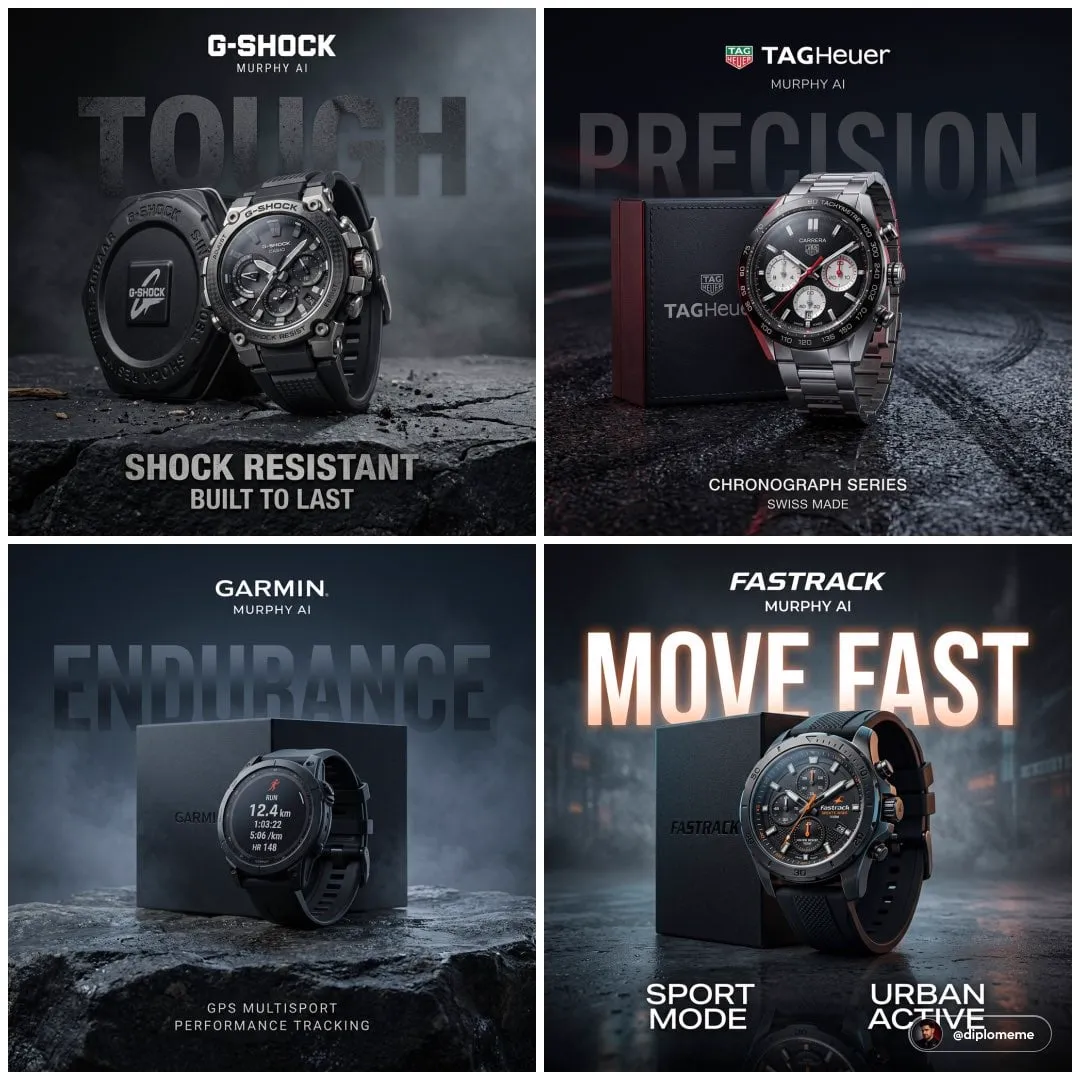
Marketers keep hearing that video moves the needle, yet bridging video into an orchestration platform like Marketo still feels awkward. Emails carry static images, landing pages rely on hero shots, and nurture streams rarely evolve beyond text. The shift happening now is that AI-generated video has finally reached a maturity where a marketing team can produce personalized, on-message clips quickly enough to use inside automated campaigns, not just as a one-off asset for a homepage.
This guide walks through the practical side of that shift. It is not about chasing novelty. It is about mapping video to specific stages of your funnel, making sure the tooling actually connects to Marketo in a way data teams can live with, and putting guardrails in place so a scaled video operation does not quietly erode your brand. Each section is designed to be useful whether you operate a team of two or two hundred.
Why this matters now is simple arithmetic. Video commands attention that static media cannot match, and that attention gap only widens as feeds get more crowded. The accounts that win are usually the ones who can serve the right visual at the right moment to the right person. Marketo already holds the data about who those persons are and what stage they sit in. The remaining work is connecting that intent data to a video engine that can respond to it in minutes instead of weeks.
Understanding the Funnel You Are Optimizing For
Before any integration, get explicit about the shape of your funnel. Most teams intuitively divide their audience into three broad bands: people who do not know you yet, people who are evaluating you, and people who are close to deciding. Marketo models this cleanly through programs, smart campaigns, and status fields, but the video strategy should follow the same logic so that every clip is built for a specific job.
Top of funnel is about earning attention and basic relevance. The clip should be short, visually strong, and focused on a problem or a provocative idea rather than a product demo. Think of it as the visual equivalent of a great subject line.
Middle of funnel is where evaluation happens. The content needs to be more considered: how the product works, how it compares, what an implementation looks like, and why this approach is sound. Videos here should reduce friction in the buyer journey by answering the exact objections or questions that appear during evaluation.
Bottom of funnel is about proving the decision is safe and smart. Case-study style proof points, walkthroughs of the specific setup the prospect cares about, and messages that reference where the prospect came from all belong here. The video is no longer about generating curiosity; it is about giving confidence and a reason to act.
Keep this three-tier framing visible as you read the rest of the guide, because every technical decision below should map back to a funnel stage.
Turning Video into a Lead Qualification Signal Up Top
Top-of-funnel video works hardest when it is doing double duty: it captures attention, and it quietly tells you something about the person who watches it. A short, high-energy clip that introduces a compelling insight can be gated by a simple interaction such as watching past a threshold or clicking a button that leads to a preference page.
When you embed video in a Marketo landing page or email, you can record engagement events. A viewer who completes a thirty-second watch is demonstrably more interested than a passive scroll. Feeding that engagement back into the lead record as an interesting moment gives your sales team a warmer entry point and gives the next campaign something to act on.
The mechanics are straightforward. Serve the video, capture the completion event, and write it back to the lead via an invisible form submission or a webhook. From there, Marketo can move the lead into a nurture track, adjust a score, or notify the assigned owner. The video stops being a decoration and becomes part of your qualification logic.
Personalizing the Middle of the Funnel Without the Headache
The middle of the funnel is where personalization pays off most, but it is also where naive approaches collapse under operational weight. No team has time to render hundreds of bespoke videos by hand. The practical answer is to build video from structured data by creating a small set of templates that accept variables such as the prospect's company name, industry, product area of interest, or the stage of a related deal.
Here is one concrete pattern. Your Marketo program gathers a handful of fields about the lead: role, industry, and the primary problem they registered interest in. That payload is passed to a video generation service, which produces a clip whose opening script references those exact fields, so the first ten seconds feel tailored to a real human rather than a generic broadcast. Because the script stays within a governed set of templates, the process remains scalable and predictable.
The constraint that makes this work is variable hygiene. Only use fields you trust to be populated and accurate, and always define a sensible default for blank values. A video that awkwardly reads an empty field is worse than a clean generic one. Treat mid-funnel personalization as template-driven assembly, not as free-form creativity, and you preserve both quality and throughput.
Driving Conversion at the Bottom of the Funnel
At the bottom of the funnel, the goal shifts from engagement to confidence. Prospects here are close enough that their remaining doubts are specific: how long does implementation take, what happens after purchase, do real customers in an industry like mine see results. Video can answer these persuasively, but only if it is delivered in context.
A strong pattern is the dynamic proof point. When a lead represents a deal nearing its close, trigger a short video that walks through a customer story in a comparable vertical or that demonstrates a quick, realistic outcome path. The key is to make the proof feel relevant to the person you are addressing, while keeping the effort bounded by using assembly logic rather than a bespoke shoot.
Delivery timing matters as much as content. Serve these clips at the moments a buyer most needs reassurance, such as right after a discovery call, before a pricing review, or when an opportunity moves to the proposal stage. Tying the video trigger to program membership and opportunity stage through smart campaigns keeps the experience coordinated without requesting hand-run messages from a busy team.
Wiring the Data Bridge Between Marketo and the Video Layer
Now we get to the integration mechanics. The goal is a reliable pipeline where Marketo events and fields reach the video service, and the resulting video metadata and engagement return to Marketo. You do not need a heavyweight middleware layer to start; you can build a clean bridge with a webhook and a couple of synchronous calls.
The cleanest approach is to make Marketo the system of record for the trigger and the video service the system of record for asset delivery. When a campaign fires, Marketo composes a JSON payload describing the lead token input and places it on the video service. The service resolves the variables, queues the generation job, and returns a metadata record that Marketo can later reference for engagement reporting.
Keep the payload contract small and documented. The fewer fields you pass, the fewer failure modes you touch. Include only the identifiers that matter, such as a lead id and an email token, plus the three or four personalization fields you validated earlier. Store the mapping in a config object rather than scattering magic values across campaigns, and add a retry with exponential backoff for transient delivery failures.
Keeping Characters and Visuals Consistent Across a Run
The most common reason scaled video fails the quality bar is inconsistency. Face A in one clip does not look like Face A in the next, colors drift, and the brand feel wobbles between pieces. These problems compound when you produce dozens of clips from templates, because each regeneration can drift further from the source reference.
The fix is reference-driven generation. Before you start, lock down a visual identity: a set of approved reference images for the spokesperson or character, a documented style descriptor, and a palette that maps to your brand system. Pass those references into the generation engine on every job so that new footage is synthesized against the same anchor. Consistency then becomes a property of the pipeline rather than something you hope each renderermirrors on its own.
Treat the reference set as a living artifact. When the brand updates its look, refresh the references and regenerate future inventory. Do not try to retrofit old assets; mark them as legacy and let the new set become the source of truth going forward. A small governance step now prevents expensive rework later.
Sequencing Generation Jobs at Scale with a Task Queue
Once you move past a handful of clips, ad hoc request handling breaks down. The practical answer is a queue. When a campaign submits many video jobs at once, each job enters a queue and is processed in order of priority, with lower-priority work yielding to time-sensitive conversion clips.
A queue also protects you from cost surprises. Video generation consumes significant compute, so running jobs one at a time with concurrency limits gives you a hard cap on spend in a given window. You can batch overnight for creative work while keeping on-demand slots reserved for bottom-funnel messages.
Think about retries explicitly. Generation can fail for reasons outside your control, so design the queue to retry a failed job a defined number of times, log the reason, and surface a human alert when retries are exhausted. Visibility beats silence; a clearly logged failure is recoverable, while an invisible one is a guarantee of eventual embarrassment.
Reviewing for Brand Safety and Quality Before Anything Ships
Automation is a great authoring assistant and a poor substitute for governance. Before a scaled video operation reaches your audience, define what "on brand" means in invariant terms that anyone can check: no prohibited language, no misleading claims, no off-brand spokespeople, and no layouts that contradict the reference set.
Build a light review gate into the pipeline. Because fully manual review does not scale to thousands of clips, route a meaningful sample through human eyes while relying on automated checks for the mechanical invariants: token hygiene, image safety, legal phrases, and consistency with the brand descriptor. Establish a fallback so that any clip that fails an automated gate either is regenerated or is blocked from public delivery.
Lastly, log every decision. Store which variant was sent, which reference set produced it, and which reviewer or rule approved it. This audit trail is what lets you defend the operation and improve it over time, because you can finally see where quality breaks down at scale.
Wiring It All Into a Working System
None of this requires you to replace Marketo. It requires you to extend it well. Start narrow: pick one funnel stage, choose a single template, stand up the data bridge for that program, and measure a defined outcome such as email click-through, landing page completion, or deal progression. Prove the loop works before expanding to other stages.
The architecture that emerges is modest but effective. Marketo holds audience intent and triggers campaigns. A small orchestration layer resolves variables and queues generation. The video engine synthesizes assets from governed references. Engagement metadata flows back to Marketo to close the measurement loop. Each piece is replaceable, which keeps you flexible as tools evolve.
Common Pitfalls and How to Avoid Them
Teams new to this frequently trip on a few recurring issues. One is solving personalization with bespoke production instead of templates, which does not scale beyond the first handful of clips. Another is passing sensitive or blank fields into scripts, which produces broken and sometimes embarrassing outputs. A third is letting visual consistency slide because the reference set was never actually locked down.
There is also the tendency to measure the wrong thing. Completion rate is a great engagement signal but does not tell you whether the video influenced revenue. Tie your measurement to a pipeline outcome where you can, or at least to a converted event, so the video program can justify its compute spend and earn an expanding budget. Finally, resist the urge to over-automate the creative direction itself; automation should amplify a clear strategy, not replace the judgment that shapes it.
Measuring What the Video Program Actually Moves
Too many video programs are judged on vanity metrics: how many videos were produced, how many views an asset earned, or how many emails carried a clip. Those numbers describe activity, not value. The discipline that earns your video operation a growing budget is tying production to a defined outcome that leadership already cares about.
Start by naming the one metric you will defend. If the program serves the top of the funnel, that might be qualified leads or engagement events that move a deal forward. In the middle of the funnel it could be progression along a nurture path, and at the bottom it might be proposal conversion or deal velocity. Whatever you choose, make it the same number you report, so the whole team talks about the video program in the same currency.
Because video sits inside Marketo, you already have the data to measure it. Link each video send to a program, track the engagement event, and attribute downstream movement to that interaction. A lead who watches a personalized mid-funnel clip and then schedules a conversation is a concrete, defensible outcome. When you can hold that line of reasoning, the compute spend stops being a cost to justify and starts being an investment with a visible return.
Frequently Asked Questions
Which Marketo object should anchor the video workflow? Build around programs and smart campaigns, using them both to trigger generation and to segment leads by funnel stage. The lead record is your personalization source, and the opportunity record carries bottom-funnel context.
Do I need a full middleware stack to integrate? No. A modest integration, using webhooks and a documented payload contract, gets most teams to production. Add middleware only when you need richer error handling or cross-tool orchestration.
How do I keep generation costs predictable? Use a task queue with concurrency limits and priority tiers, reserve on-demand slots for time-sensitive messages, and schedule heavy creative batch work for off-peak windows.
Is template-driven video personal enough? Yes, provided you respect variable hygiene and cover blank fields with smart defaults. Prospects respond to relevance, not to the fact that a template was used.
What is the single most important quality gate? Visual consistency grounded in an approved reference set. Everything else is easier to fix than drifting brand identity.
How soon should I scale beyond one funnel stage? Prove the end-to-end loop on a single stage and a single measurable outcome first. Expand only after you can see the pipeline turning cost into a visible result.
