
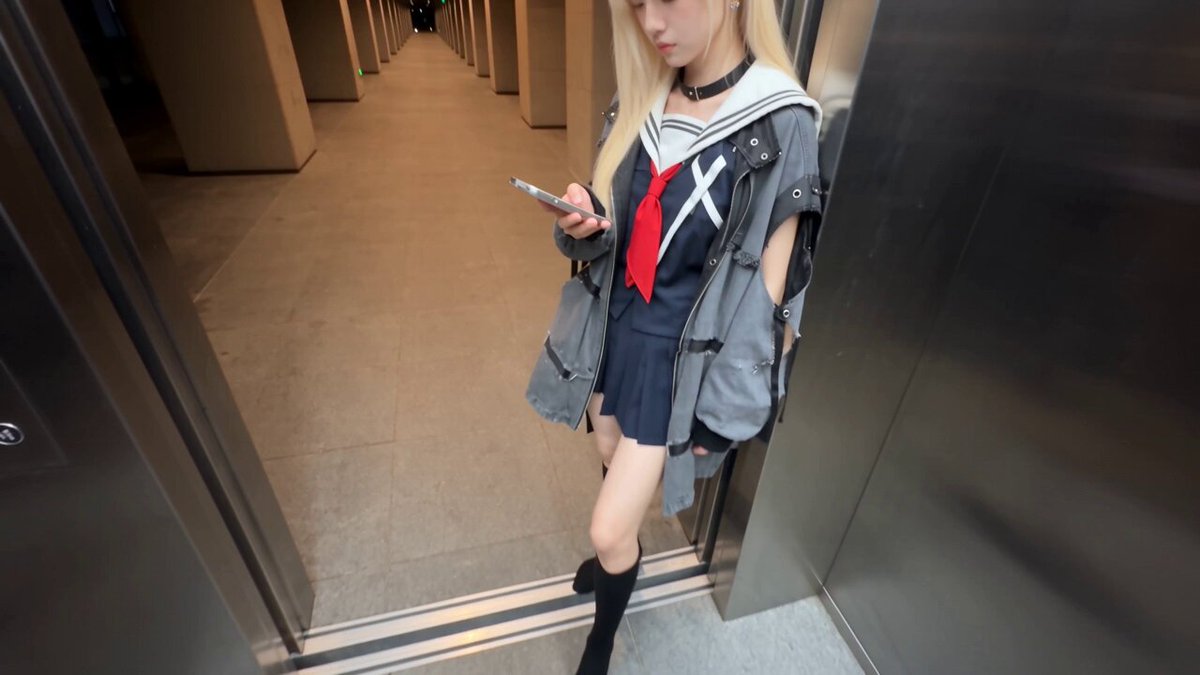

Short-form video rewards repetition and punishes inconsistency. When a recurring character arrives in episode one with round cheeks and a slightly crooked smile, then reappears in episode four with a longer jaw and different eyes, viewers do not consciously analyse the change. They simply stop believing the character, and retention collapses with the illusion. That is why character consistency has become the central production problem in AI video, and why multi-image fusion has moved from a research curiosity into a standard part of the short-form creator's toolkit.
This guide covers the mechanism behind multi-image fusion, how to build reference sets that actually hold identity, how to prompt alongside references instead of against them, and how to run the whole thing as a repeatable shot-by-shot pipeline.
Why Characters Drift Off-Model
Text-to-video and image-to-video models do not store a character. They sample. Every render is a fresh draw from a probability distribution shaped by your prompt, your seed, and the model's training data. The face is one of the highest-variance regions of that distribution because human brains are hypersensitive to facial geometry. A two-millimetre shift in eye spacing is invisible in a landscape shot and glaring in a close-up.
Three forces push renders apart:
Independent sampling. Shot 1 and shot 12 have no shared memory unless you give them one. Seeds help, but a seed only fixes the starting noise, not the semantic interpretation of your prompt.
Prompt compression. Words like "a friendly young woman with dark hair" describe millions of people. The model picks one at random each time, and each pick is slightly different.
Scene contamination. Lighting, camera angle, wardrobe and background all influence how the model renders a face. Move a character from golden-hour sunlight into blue night lighting and the model may subtly rebuild the face to fit the new context.
The practical symptom is a character who looks like a cousin rather than the same person. Not wrong enough to look broken, but wrong enough to feel like synthetic content.
How Multi-Image Fusion Works
Multi-image fusion means conditioning a generation on several reference images of the same subject at once, so the model builds a stable internal representation of that subject rather than inferring it from text alone.
References become identity embeddings
Each reference image is encoded into a feature vector capturing identity-defining traits: face shape, eye spacing, nose structure, skin tone, hairline, habitual expression. When multiple images are fused, the shared features reinforce each other and the noisy, image-specific details average out. The result is a compact identity signal the generator can reuse across shots, angles and lighting conditions it has never seen.
What fusion adds beyond a fixed seed
A fixed seed reproduces the same composition. It does not transfer a face into a new pose. Prompt-only generation describes an archetype. Fusion supplies an actual individual. The comparison below is a useful decision aid when you are choosing an approach for a new series.
| Approach | Consistency level | Setup effort | Best for |
|---|---|---|---|
| Prompt only | Low | Minutes | One-off clips, abstract subjects |
| Fixed seed + prompt | Medium | Minutes | Same framing, same lighting, same wardrobe |
| Multi-image fusion | High | An hour or two | Recurring characters across episodes |
| Trained custom model | Very high | Days plus data | Large franchises with heavy volume |
For most short-form series, fusion hits the sweet spot: strong identity retention without the dataset collection and training time of a bespoke model.
Building a Character Reference Sheet
The reference set is the single biggest lever on consistency. A weak set produces a weak identity signal, no matter how good the model is.
Aim for eight to twenty images
Fewer than six references and the identity signal is thin. More than twenty-five and you start importing contradictions — different hairstyles, different weights, different ages — that average into a generic face nobody recognises.
Cover the angles you plan to shoot
- Straight-on frontal, neutral expression
- Three-quarter left and three-quarter right
- Full profile, both sides
- A slight low angle and a slight high angle
- At least one full-body or waist-up shot for wardrobe and proportions
If your series is entirely talking-head close-ups, you can trim the full-body coverage — but keep the profiles. Profile references are what stop the model from flattening a face into a mask when the character turns.
Vary lighting, not identity
Include one soft indoor shot, one harsh daylight shot, one low-light shot. This teaches the model that identity survives illumination changes, which is exactly the transfer you need later. What you must not vary is hair length, facial hair, apparent age, body weight, or permanent features like glasses.
Protect the face from stylistic noise
Avoid references with heavy beauty filters, strong motion blur, extreme makeup that reshapes the face, or sunglasses that hide the eyes. Eyes in particular carry an enormous amount of identity weight; hiding them forces the model to guess.
Prompting That Cooperates With References
References define who. Prompts define what happens. Confusing the two is the most common cause of drift.
Build an identity block you reuse verbatim
Write one short paragraph describing only permanent traits, then paste it unchanged into every prompt in the series. For example: "Nadia, early thirties, oval face, warm olive skin, dark brown eyes with a slight upward tilt, straight black hair parted in the centre and falling just past the collarbone, thin brows, small mole below the left eye."
The power is in the repetition. Changing even one clause between shots tells the model to change the person.
Let the scene block carry the variation
Everything that changes — location, action, camera angle, time of day, mood, wardrobe — goes in a separate block. Keeping the two blocks physically separate in your prompt text makes accidental edits far less likely.
Describe invariants, not incidents
"She is smiling" is an incident and will be interpreted loosely. "Her resting expression is calm and slightly amused" is an invariant and survives across shots.
Use negative prompts to guard identity
Standard negatives worth keeping on every render: distorted face, asymmetric eyes, changed hairstyle, altered age, different person, plastic skin, warped hands. Add series-specific negatives as problems appear rather than pre-loading a wall of text the model may over-apply.
Locking Expression and Emotion Across Shots
Emotion changes geometry. A genuine laugh lifts the cheeks, narrows the eyes and shortens the visible forehead — and a model chasing that expression can drift the underlying face while it works.
A reliable approach is an expression ladder. Render a test grid of six to ten emotional states for your character: neutral, mild smile, full laugh, sadness, anger, surprise, concentration, exhaustion. Review them as a set rather than individually, checking that the bone structure and eye spacing stay constant while the muscles move.
If a particular emotion breaks identity, reduce its intensity and let acting carry the rest. A character who is 60 percent angry but unmistakably herself is worth more than one who is fully furious and unrecognisable.
Two practical rules help:
- Keep the strongest identity references active even in extreme expression shots, rather than switching to an expression-matched reference that may not share the same face.
- Generate close-ups and wide shots of the same emotional beat in one session. Comparing adjacent variations is far easier than comparing renders made hours apart.
Carrying Identity Across Styles and Themes
Series often shift visual treatment — a documentary look for the opening, a stylised colour grade for a dream sequence, anime-inspired inserts for a joke. The risk is that style changes drag identity with them.
Separate the two explicitly in your workflow. Apply style at the level of colour grading, background treatment, grain and contrast, and keep the character render as photorealistic as your reference set allows. When you genuinely need a stylised character — anime, 3D cartoon, painted illustration — build a second reference set in that style from scratch. A photoreal reference fused into a stylised render gives you a face that is neither one thing nor the other.
Theme changes are easier. If your character moves from a kitchen series to a travel series, wardrobe and background shift, but the identity block stays untouched. Treat wardrobe as a scene-level variable with a small personal signature — the same jacket, the same earrings — so viewers get a visual anchor even when the setting is new.
A Shot-by-Shot Workflow for a Short-Form Series
This is the production loop that keeps a ten-episode run coherent without turning into a full-time job.
1. Lock the character bible. One page: identity block, reference set, wardrobe variants, expression ladder, do-not-change list.
2. Generate reference set. Fifteen images, curated to eight finalists. Reject anything with blur, occlusion or inconsistent features.
3. Build the series style guide. Aspect ratio, colour grade, lens feel, pacing. Write it down so every episode matches.
4. Storyboard in text. One line per shot: shot number, framing, action, emotion, duration. Text storyboards are faster to edit than images and survive model changes.
5. Test-render three hero shots. Pick the most demanding shots — extreme close-up, full-body motion, and a strong emotion. If identity holds there, the rest of the episode is safe.
6. Batch the episode. Render all shots of one scene together with identical settings so any drift is at least consistent drift.
7. Review as a contact sheet. View all frames of a scene as a grid. Drift that is invisible frame-by-frame becomes obvious in a grid.
8. Re-render selectively. Fix only the failing shots. Changing global settings to fix one frame usually breaks five others.
9. Assemble and grade. Cut in your editor, apply one consistent grade across the episode, and add sound. Audio continuity does more for perceived character continuity than most people expect.
10. Archive the working setup. Save prompts, seeds, reference set and settings per episode. Future episodes should start from a known-good configuration, not from memory.
Quality Control and Troubleshooting
Run this checklist before you commit to a final render pass.
- Face shape and jawline identical to the reference sheet
- Eye spacing, eye colour and eyebrow shape unchanged
- Hairline, hair length and parting direction consistent
- Skin tone stable across lighting conditions
- Apparent age within a narrow band
- Wardrobe and accessories match the episode plan
- Hands and teeth free of obvious artefacts
Common failures and their usual causes:
Gradual aging across a series. The reference set contains images from different periods, or the identity block mentions age loosely. Fix the reference set first.
Face morphs at the halfway point of a clip. The motion prompt is doing too much work. Shorten the clip, simplify the motion, or increase reference influence.
Wardrobe flickers between shots. Wardrobe details are inside the identity block instead of the scene block. Move them.
Everything looks slightly plastic. Over-strong reference weighting or low-detail sources. Drop the weight and add one or two sharper reference images.
Identity holds but the character feels flat. You have consistency without performance. Add micro-expressions, blink timing and small head movement to the scene block.
Tooling and Pipeline Choices
When you evaluate an AI video tool for recurring-character work, test it against your own needs rather than a feature list.
Reference capacity. How many images can you supply at once, and can you weight them individually? Two usable references is a hard ceiling for series work.
Shot length and resolution. Long single takes are convenient, but shorter clips are easier to hold consistent and cheaper to re-render selectively.
Seed and parameter control. Can you lock seeds per scene, or does every render randomise? Determinism makes debugging possible.
Batch and queue handling. Series work is volume work. A tool that renders one clip at a time with manual restarts will bottleneck you long before quality does.
Versioning and asset management. Can you find the reference set and settings used for episode three six weeks later? If not, you will rebuild it from scratch.
Iteration cost at low resolution. Draft fast and cheap, then finish at full quality. Any pipeline that forces you to pay full render time for a framing test is the wrong pipeline for volume.
As a series grows, formalise three things: a naming convention that ties every file to a character and episode, a shared asset library for reference sets, and a render queue that groups shots by scene so settings stay constant within each batch.
FAQ
How many reference images do I actually need?
Eight to twelve is the practical sweet spot for a photoreal character. Six is the floor for a simple talking-head series. Above twenty-five you invite contradictions rather than clarity.
Can I use one really good reference image instead of many?
You can start there, but a single image locks you to one angle and one lighting condition. The model has no information about the character from the side, in shadow, or mid-expression, so it invents those details — and invents them differently every time.
Do I still need a fixed seed if I am using multi-image fusion?
Seeds and fusion solve different problems. Fusion defines who the character is; the seed stabilises composition and noise. Use both: fusion for identity, seeds for reproducibility within a scene.
Why does my character look right in stills but wrong in motion?
Motion prompts compete with identity conditioning. Simplify the action, shorten the clip, or split one complex move into two simpler shots that cut together cleanly.
Is a trained custom character model better than fusion?
For very high volume or a distinctive stylised look, yes. For a weekly short-form series, fusion gets you most of the way with a fraction of the setup time and no dataset collection.
How do I fix a character that looks slightly too old or too young?
Check the reference set for age outliers first. If the set is clean, add an explicit age descriptor to the identity block and keep it identical across every prompt. Small negative prompts such as wrinkled skin or adolescent features can nudge the result without destabilising it.
Can I reuse one reference set for two different characters?
No. Reference sets are identity-specific. Two characters need two distinct sets, and if they appear in the same shot, describe them in separate, clearly separated prompt blocks so the model does not blend their features.
What is the fastest way to validate a new character before committing to a series?
Render five test shots: frontal neutral, three-quarter smiling, profile, low-light close-up, and a full-body walking frame. If the face holds across all five, the character is production-ready. If it fails one, fix the reference set before you generate anything else.
Bringing It Together
Character consistency is not a single setting you switch on. It is a pipeline: a disciplined reference set, a frozen identity block, scene-level variation, expression tests, and batch rendering with a grid review. Multi-image fusion is the technical core of that pipeline, but the surrounding habits are what make a series feel like it stars the same person every week.
Start small. Pick one character, build twelve references, render the five validation shots, and only then commit to an episode. Once the loop is routine, scaling from three episodes to thirty becomes an operations problem rather than a creative one — and that is exactly the point at which an AI video series starts to look less like a demo and more like a show.
