
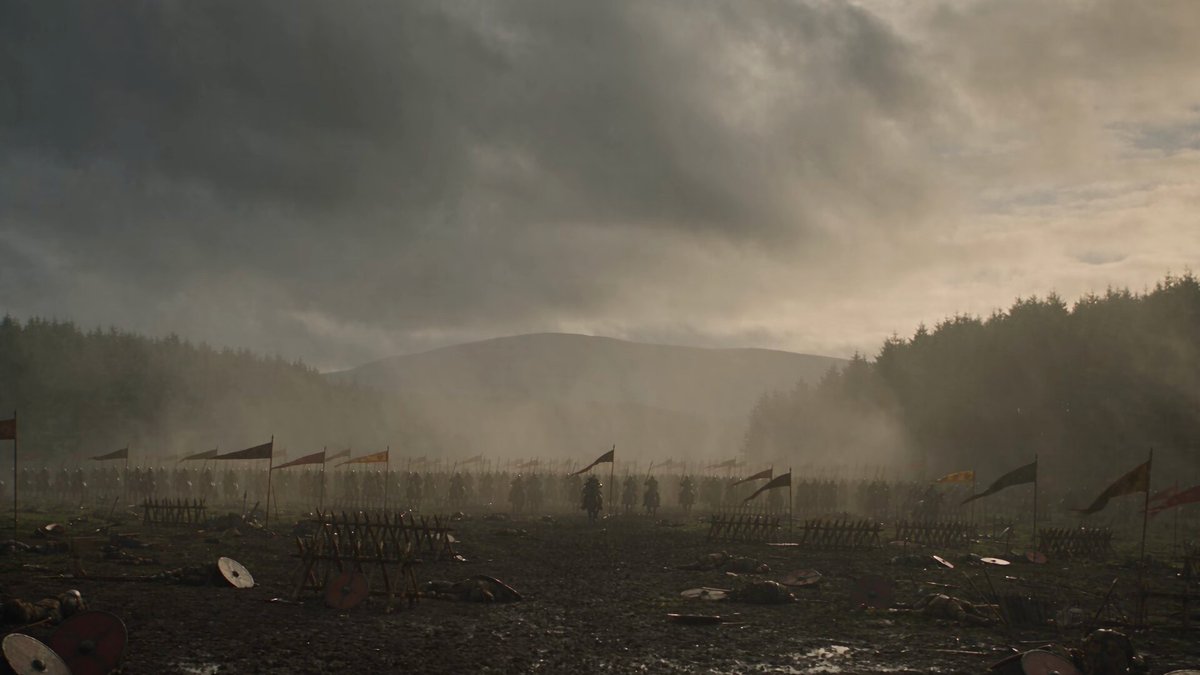

Multi-image fusion is the quiet engine behind the most convincing AI video work published today. Instead of asking a model to invent a character, a location, and a lighting setup from a paragraph of text, you hand it several reference images and let it carry that visual DNA across shots. The result feels shot rather than sampled: the same face, the same jacket, the same window light from the first frame to the last.
This guide covers how multi-image fusion works in practice, how to build reference sets a model can actually use, a repeatable workflow from story beats to final cut, the criteria that separate production-ready tools from demos, and the failure modes that quietly eat entire afternoons.
Why Consistency Is the Hardest Problem in AI Video
Text-to-video models are remarkable at a single shot and fragile across a sequence. Ask for "a woman in a green raincoat walking through a night market" and the first generation is often gorgeous. Ask for the same shot again with a slight camera change and you get a different woman, a different coat, and a market that relocated to another continent.
That gap between one good shot and a coherent sequence is where most AI video projects die. Viewers forgive a slightly soft face. They do not forgive a protagonist whose jawline changes every four seconds, or a kitchen that rearranges itself between cuts. Continuity is the invisible contract that makes an audience trust what they are watching.
Three forces create the problem:
- Sampling variance. Diffusion models start from noise, and small differences in that starting noise produce large differences in identity.
- Prompt compression. Language is a lossy channel for visual information. "Short dark hair" covers thousands of faces.
- Scene drift. Each new shot re-interprets the environment, so props, wardrobe, and geography slowly wander.
Multi-image fusion attacks all three by replacing words with pixels. An image is a far higher-bandwidth instruction than a sentence, and it pins down exactly the details language blurs.
What Multi-Image Fusion Actually Does
Multi-image fusion is the practice of conditioning one generated shot on multiple visual references at once — typically a character sheet, a location plate, a style frame, and sometimes a prop or costume detail. The model blends these signals so the new frame inherits attributes from each.
Reference images are instructions, not suggestions
A common mistake is treating references as mood board material. In a fusion-capable model, each reference contributes concrete attributes: facial geometry, hair length, garment cut, color palette, lens character. If you include a reference you do not want echoed, expect it to be echoed.
Identity, environment, and style are separate channels
Think of fusion as three parallel constraints. Identity references lock the who. Environment references lock the where. Style references lock the how it looks. When a generation goes wrong, diagnosing which channel leaked is faster than rewriting the whole prompt.
The model still needs a scene description
Fusion does not remove the need for language. It narrows it. Your prompt should describe action, camera, and timing — what is happening, from where, for how long — while the images handle appearance and mood.
Building a Reference Set That Survives a Full Sequence
Reference quality determines ceiling quality. Ten careful images beat a hundred random ones.
Treat reference stills like a photo shoot
Generate or capture your character in a consistent lighting setup before you animate anything. Front, three-quarter, and profile views under the same key light. Neutral expression plus two or three emotional states. Full body for wardrobe and proportion. If you cannot produce a coherent character sheet, the video model will not fix it for you.
Separate the sheets by function
Keep your folders ruthlessly organized:
- Character sheet — six to ten images, consistent light, multiple angles.
- Wardrobe sheet — the exact outfit per scene, including shoes and accessories.
- Location plate — wide, medium, and detail shots of each set.
- Style frames — three to five images that define palette, contrast, grain, and lens feel.
- Prop references — anything the audience will recognize again later.
Keep resolution high and backgrounds clean
Crop out clutter. A character reference with a busy background teaches the model that clutter belongs with the character. Keep faces sharp and well exposed; blur and noise get baked into the output as artifacts rather than disappearing.
Mistakes that ruin a reference set
- Mixing lighting conditions in one character sheet.
- Using heavily stylized filters on references meant for realism.
- Including two characters in one reference image, then wondering why features blend.
- Reusing a style frame that contradicts the location plate.
- Assuming a low-resolution screenshot will hold up when upscaled to a wide shot.
A Repeatable Multi-Image Fusion Workflow
The workflow below is model-agnostic. It assumes you have a fusion-capable image-to-video tool, an image generator, and a non-linear editor.
Step 1: Write the beat list before any prompt
List every shot in plain language: who, where, what changes, how long. A 60-second piece usually needs twelve to twenty shots. Naming shots (kitchen_reveal, street_follow) makes file management and re-generation far easier than clip_07_final_v3.
Step 2: Generate and curate stills first
Lock the look in stills before animating. Generate your keyframe for each shot, review the whole sequence as a contact sheet, and fix problems here. Iterating on images costs a fraction of iterating on video, and a bad still guarantees a bad clip.
Step 3: Assemble the fusion payload per shot
For each shot, choose two to four references: the character sheet slice most relevant to the angle, the matching location plate, the style frame. More is not better — extra references compete, and the model may average incompatible inputs into a mushy result.
Step 4: Write action-only prompts
Keep prompts about motion and camera: "slow push in, she turns toward the window, coat settles, natural handheld drift." Do not re-describe her appearance; the references already said it.
Step 5: Generate in short takes
Three to five seconds per generation gives you more usable material than one eight-second attempt. Short takes also make editing rhythm easier, because you can trim to the exact beat.
Step 6: Audit before assembling
Review clips in order on a timeline, not individually. Continuity errors are almost invisible in isolation and glaring in sequence. Flag any clip where lighting direction, wardrobe, or hair length breaks.
Step 7: Re-fuse the failures, do not patch them
If a clip drifts, regenerate with a corrected reference set or a tighter shot. Stitching mismatched clips with transitions rarely hides the problem, and the audience reads it as a mistake.
Choosing a Tool: Criteria That Actually Matter
Demo reels show best-case output. Production work needs different questions answered.
Image conditioning depth
How many reference images can the model accept, and how strongly does each influence the result? Some tools accept a single image; others blend several with adjustable weight. Multi-reference control is the whole point.
Identity preservation across shots
Test with the same character in three different scenes and compare facial geometry. This is the single most reliable benchmark, and you can run it in an afternoon.
Motion quality and temporal stability
Look for warping, flicker in fine textures, and hands. Slow camera moves with a stable subject reveal more about a model than fast action.
Control over camera and duration
Can you specify a push in, a pan, a locked-off shot? Can you generate three-second and five-second takes? Editorial control comes from granularity.
Output resolution and aspect ratios
Vertical for social, 16:9 for presentations, widescreen for cinematic framing. Generating in the target ratio beats cropping later.
###Iteration speed and predictability
Fast, repeatable iterations change how you work. If a single take is slow or awkward to produce, you will under-explore and settle for the first acceptable result.
Multiple Characters, Scene Changes, and Style Shifts
Multi-character dialogue scenes are the hardest fusion problem. Models blend faces when two identities share a frame.
Practical tactics:
- Generate each character alone first, then introduce the second with clearly separated blocking (one foreground, one background).
- Use distinct silhouettes, hair shapes, and palettes. Two people in similar dark coats will merge.
- Consider over-the-shoulder framing so each cut isolates one identity.
- For crowd scenes, keep the hero character in a consistent light and let background figures blur.
For deliberate style shifts between acts, keep the character sheet constant and swap only the style frame. That isolates the change to palette and texture instead of identity, which is what audiences read as intentional.
Lighting, Color, and Continuity Discipline
Continuity is mostly light. A shot that flips key light direction from left to right reads as wrong even when the viewer cannot say why.
Keep a continuity sheet per scene: key light direction and quality, time of day, color temperature, lens, and wardrobe state. Check every generated clip against it. Match contrast and saturation across shots in the grade rather than accepting whatever each model returns. If one clip comes back warmer, correct it in post instead of regenerating endlessly.
Reflections, shadows, and practical lights are the details that sell a scene. If a lamp appears in a wide shot, its glow should be traceable in the close-up.
Sound, Editing, and the Post Layer
AI video gets you picture. Sound is what makes it feel finished.
- Ambience first. Room tone, street noise, wind, and hum create the sense of a real space.
- Foley for action. Footsteps, fabric, doors, and cup placement.
- Music as a continuity tool. A consistent score masks small visual discontinuities and carries the audience across cuts.
- Pacing. Cut on motion. Let shots breathe slightly longer than instinct suggests, then trim.
- Grade last. Unify contrast, saturation, and grain across the whole sequence at once.
Troubleshooting Common Fusion Failures
Face drift mid-clip. Shorten the take, increase identity reference weight, or reduce motion amplitude. Fast head turns are the usual culprit.
Wardrobe changes. Add a wardrobe reference and remove any conflicting character images. Also check the prompt is not describing clothing.
Background morphing. Add a location plate and lock the camera move. Long, complex moves give the model more room to drift.
Style bleeding. You likely included a style frame that contradicts the location. Remove one or narrow its influence.
Limbs and hands breaking. Frame tighter, slow the action, and avoid gestures near the camera. Regenerate rather than trying to fix in post.
Muddy detail in wide shots. References were too low resolution. Upscale the source stills before conditioning.
Contrast jumps between shots. Grade in post; do not chase model consistency beyond a reasonable point.
Two characters merging. Re-block the scene, separate them in depth, and generate the shot with a single dominant identity reference.
Flicker in fine textures. Reduce motion, shorten the clip, or generate a cleaner still and re-animate.
Everything looks generic. Your reference set is too broad. Narrow to a specific lens, palette, and wardrobe.
Frequently Asked Questions
How many reference images should I use per shot?
Two to four well-chosen references. One identity, one environment, one style, plus a prop if the story needs it.
Can I get perfect consistency without references?
No. Text alone cannot hold identity across shots with current models. References are the mechanism.
Do references replace prompt writing?
They replace appearance description. You still need prompts for action, camera, and timing.
Should I animate stills or generate directly from text?
Animate from stills for anything narrative. You control composition and look before spending time on motion.
How long should each clip be?
Three to five seconds is the practical sweet spot for control and editing flexibility.
What if my character looks different in every clip?
Rebuild the character sheet under one lighting setup and test three scenes in isolation before returning to the full sequence.
Is fusion useful for product and corporate work?
Yes — especially for products, where shape and label accuracy matter and text prompts alone cannot guarantee fidelity.
Where should beginners start?
Build one character sheet, create a three-shot sequence, and compare results. That single exercise teaches more than any tutorial.
Start small, keep your references honest, and judge every generation against the sequence rather than the clip. Multi-image fusion rewards preparation more than prompting cleverness, and that is good news: preparation is the part you fully control.
