

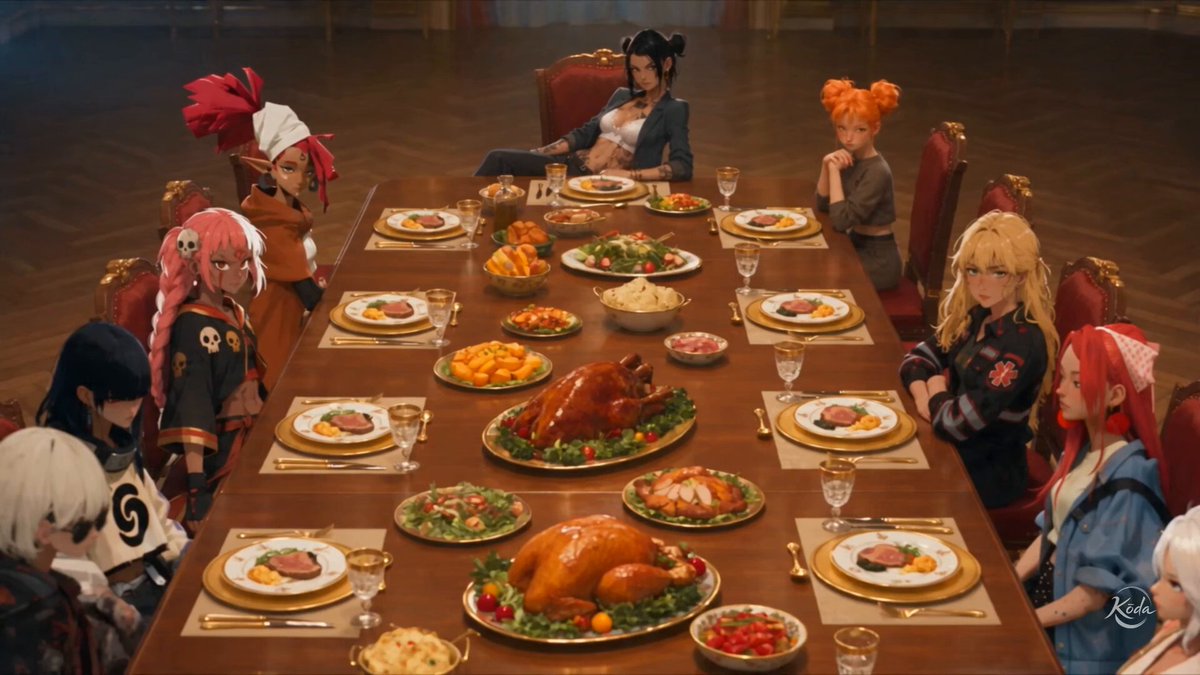
Character consistency is the hardest unsolved problem in everyday AI video production. A single shot can look stunning, and the next shot of the same person can look like a distant cousin: different jawline, different hairline, different apparent age. Multi-image fusion exists to close that gap by letting you feed several references of the same subject into one generation instead of relying on a single photo or a text description alone.
This guide walks through how multi-image fusion works, how to prepare references that actually help, how to prompt around a fused identity, and how to run quality control so a character survives an entire series rather than a single clip.
Why Character Consistency Breaks Down
Text-to-video models do not store your character. They store statistical relationships between pixels and language. Every time you press generate, the model samples from a probability distribution, and small differences compound: a slightly different nose, slightly different eye spacing, a shirt that shifts from navy to royal blue between shots.
The usual failure points:
- Single reference overreach. One photo only shows one angle under one lighting condition. Ask the model to turn the head forty-five degrees and it invents the side of the face.
- Prompt drift. Rewriting the prompt for each scene changes the phrasing. Change "silver-streaked hair" to "graying hair" and the apparent age of the character moves with it.
- Style collisions. A cinematic prompt pushes toward film grain and shallow depth of field; a clean studio prompt pushes toward flat lighting. The character's skin tone shifts with the grade.
- Scene pressure. Action beats, crowds, rain, and camera movement consume model capacity. Identity is often the first thing sacrificed when the scene gets busy.
The pattern: consistency is not a single feature you switch on. It is the sum of reference quality, prompt stability, and shot discipline, and it degrades quietly rather than loudly.
What Multi-Image Fusion Actually Does
Multi-image fusion takes two or more reference images and distills the identity information they share — bone structure, hair color and texture, skin tone, wardrobe, signature accessories — then injects that distilled identity into a new generation alongside your text prompt.
How the blend works in practice
Different pipelines implement this differently, but the broad mechanics are similar:
- Each reference image is encoded into a representation of the subject rather than the whole frame.
- Overlapping features across references are treated as high-confidence identity signals.
- Features that appear in only one reference are treated as conditional — they may or may not survive, depending on the prompt.
- The fused identity is combined with your scene description at generation time.
This is why two references usually beat one, and why four to six well-chosen references often beat twenty. The model is looking for agreement. Redundant images teach it nothing new, while contradictory images (a beard in one reference, clean-shaven in another) create ambiguity that shows up as flicker between shots.
What fusion cannot fix
Multi-image fusion is not a lock. It will not preserve a character through:
- Extreme stylization that overwrites facial structure, such as heavy expressionist painting styles or aggressively stylized 3D rendering.
- Full occlusion, where the face is hidden or turned away for most of a clip.
- References that are themselves inconsistent — warped AI-generated portraits teach the model warped anatomy.
- Cross-model migration. If you switch engines mid-project, the fused identity does not travel with you. You rebuild it.
Set expectations accordingly: fusion dramatically reduces drift, but it does not eliminate review time. Budget for both.
Preparing a Reference Set That Actually Works
Reference quality is the largest single lever you control. Treat reference prep as a pre-production step, not an afterthought.
Angles, expressions, and lighting
Aim for coverage:
- One straight-on, neutral expression shot.
- One three-quarter turn to the left, one to the right.
- One profile if the character will ever be seen in profile.
- One slightly low or high angle only if your story needs it.
- Two or three micro-expressions — a half-smile, a focused look, a surprised look.
Keep lighting direction and color temperature roughly consistent across the set. Mixing a warm golden-hour portrait with a cool fluorescent office shot makes skin tone ambiguous, and the model will average them into something slightly off in every scene.
Background and cropping rules
- Prefer clean, uncluttered backgrounds. A busy background competes with the subject and can leak into the generated scene.
- Crop from mid-chest up for head-focused consistency, or full body if wardrobe matters as much as the face.
- Keep the head in roughly the same relative position in the frame across references; models pick up framing as a signal.
- Remove watermarks, text, and heavy filters. They act as scene noise.
Build a character sheet
Write down, in plain language, the identity constants you will never vary:
- Age range and apparent heritage.
- Face shape, jawline, nose form, brow.
- Hair color, length, texture, parting, and styling.
- Eye color and shape.
- Skin tone and any distinctive marks such as a scar, freckles, or a mole.
- Wardrobe defaults: silhouette, fabrics, palette, footwear.
- Accessories that always appear.
This document becomes the source of truth for every prompt and every quality check. Without it, you will unconsciously rewrite the character across shots, and no amount of fusion will save a script that keeps changing its own mind.
Writing Prompts That Protect Identity
The prompt's job is to describe the scene without re-describing the face. Every adjective you add to the character is a chance to overwrite the fused identity.
Separate identity from scene
Use a two-part structure:
- Identity block (reused verbatim): a fixed phrase describing the subject, kept identical word for word across shots.
- Scene block (varies freely): location, action, camera, lighting, mood.
For example, identity block: "a woman in her early thirties with warm brown skin, curly shoulder-length dark hair, round wire-frame glasses, and a rust-colored linen jacket." Scene block: "standing on a rain-slicked subway platform at night, medium shot, slow push-in, cool streetlight mixed with warm signage."
Because the identity block never changes, the statistical context around the character stays stable. Only the world around them moves.
Reference ordering and weighting
Most tools let you order or weight references. Practical patterns:
- Put the cleanest, most neutral reference first.
- Put the reference that matches the current scene's angle second.
- Down-weight references whose lighting contradicts your scene rather than deleting them, if the tool allows it.
- Never include a reference you would be unhappy to see copied exactly.
Drift triggers to avoid
Certain prompt habits reliably destabilize a fused identity:
- Changing hair or wardrobe descriptors mid-project.
- Adding strong style words late ("anime", "claymation", "oil painting") after establishing a photoreal character.
- Stacking multiple conflicting camera specifications in one prompt.
- Describing emotions through appearance rather than performance ("face twisted in agony" instead of "expression tight with grief").
A Repeatable Multi-Image Fusion Workflow
Here is a sequence that scales from a single short film to a hundred-episode series.
Step 1 — Generate an anchor shot
Pick one reference and generate a single, simple, well-lit portrait with no distracting action. Iterate until you have a shot you would be happy to see in the final edit. This becomes the anchor: the visual definition of the character.
Step 2 — Lock the character bible
Write the identity block, the reference set list, and the settings that produced the anchor. Save the exact prompt text and the seed if your tool exposes one. Consistency is a documentation problem as much as a technical one.
Step 3 — Expand with fusion
Add the anchor plus two or three angle references to the fusion input. Generate the same scene at a different angle to test. If identity holds, move to new scenes. If it wobbles, add a reference that covers the failing angle rather than rewriting the prompt.
Step 4 — Extend shot by shot
For each new scene, keep the identity block fixed, change only the scene block, and generate two or three variants rather than one. Choose by identity score, not by how pretty the frame is. A slightly bland shot with perfect identity is more useful than a spectacular shot with a stranger's face. This is counterintuitive at first and becomes second nature after a few sequences.
Step 5 — Repair rather than regenerate
When one shot drifts, do not reroll the whole sequence. Options, cheapest first:
- Regenerate just that shot with an additional angle reference.
- Shorten the clip; drift usually grows with duration.
- Cut to a reaction shot, insert, or different angle that hides the problematic frames.
- Inpaint or composite the face region from a good frame.
Step 6 — Assemble and re-check
Watch the whole sequence at speed, then at normal speed. Drift is often invisible frame by frame but obvious in motion. Fix the two or three worst moments rather than chasing perfection everywhere.
Common Failure Modes and Fixes
Face morphing between shots
Usually caused by too few angles or contradictory references. Add a side-angle reference and remove any image whose apparent age or build reads differently from the rest.
Wardrobe and color shifts
Wardrobe is often treated as scene detail, so it drifts with the grade. Promote key garments into the identity block and, if the tool supports it, use a full-body reference alongside head shots.
Style clashes with the environment
A strong environment style (neon noir, desert haze, archival footage) can pull the character's rendering with it. Generate a neutral-scene variant to confirm the character still reads correctly before layering style on top.
Hair, hands, and accessories
These high-frequency details are the first to degrade. Keep hair description short and stable. Frame hands out when they are not needed. Reduce accessories to two or three signature items rather than listing everything the character owns.
Applying Fusion Across Formats
- Narrative series: One character bible per lead, with fusion references reused across every episode. Consistency matters more than individual frame quality.
- Brand and product stories: Keep the presenter consistent and product geometry stable; add a product reference into the fusion set.
- Social shorts: Short clips hide drift better. Keep reference sets small and prompts terse.
- Training and explainer content: Motion is minimal, so identity errors are extremely visible. Use more references and simpler staging.
- Music and stylized pieces: Style dominates and identity is looser. Lock silhouette, palette, and wardrobe instead of fine facial detail.
Choosing Tools Without Getting Locked In
When evaluating any multi-image fusion pipeline, test the same four things:
- How many references can it meaningfully use before extra images stop helping?
- Does it accept per-reference weighting or ordering?
- How does identity hold at five, ten, and twenty seconds?
- Can you reproduce a generation later with the same settings?
Prefer tools that let you export the character definition in a portable form: prompt text, reference files, weights, seeds. Portability matters more than any single feature, because models change faster than projects finish. Keep your raw reference images and your character bible in a folder you control, and note which engine and version produced each approved shot. When a model update changes the look of your character, that log tells you exactly which shots need regenerating and which ones are safe.
A Quality Control Checklist
Run this before approving any shot:
- Is the face shape stable compared to the anchor?
- Does hair length, color, and parting match?
- Is the wardrobe silhouette and palette correct?
- Are two or more signature accessories present?
- Does skin tone hold across the lighting change?
- Is the apparent age consistent?
- Are hands and teeth acceptable at viewing size?
- Does the shot look right in motion, not just as a still?
- Would a viewer recognize this person instantly from the previous shot?
FAQ
How many reference images do I need?
Three to six for most characters: one neutral front, one or two three-quarter angles, and one full-body or wardrobe reference. Add more only to solve a specific recurring problem.
Does multi-image fusion replace consistent prompting?
No. Fusion and prompt discipline solve different halves of the problem. Fusion supplies identity; the prompt supplies context and prevents accidental overwrites.
Why does my character look slightly different in every clip?
Usually because the identity block is being rewritten scene to scene, or because one reference contradicts the others. Compare your prompt text across shots first, then audit the reference set.
Should I use AI-generated references?
Only if they are anatomically clean. Warped AI portraits are a common hidden cause of unstable characters. Real photographs or carefully retouched images generally work better.
Can I reuse one reference set for multiple characters?
Keep separate sets. Sharing references encourages feature bleed, especially in group shots where the model has to keep several identities apart at once.
How long should a fusion-based shot be?
Start at three to five seconds. Extend only after identity holds. Drift tends to accumulate with duration, so longer clips need more review, not less.
What if my tool has no fusion feature?
Approximate it with a strong image-to-video pass from one reference, a fixed identity block, a stable seed, and short clips. You will spend more time on repair, but the workflow still holds.
Does fusion help with voice or personality consistency?
Not directly. Visual fusion is separate from voice cloning and performance style, so treat those as their own pipelines and document them the same way.
The Takeaway
Multi-image fusion turns character consistency from luck into process. Curate a small, consistent reference set. Write an identity block you never edit. Change only the scene around your character. Review in motion, repair the worst frames instead of chasing perfection, and document everything so the next episode starts where the last one ended. Do that, and your characters stop looking like strangers who happen to share a costume.
