


Why consistency breaks first in AI video
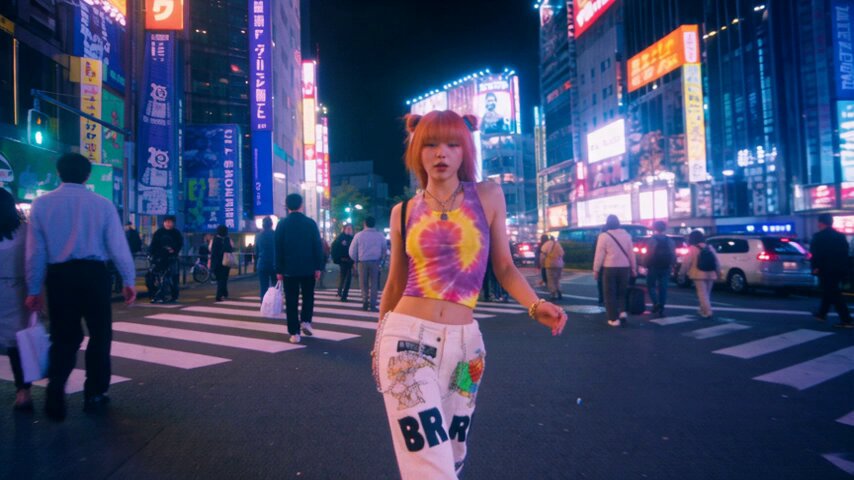
Every AI video project starts the same way: one stunning hero frame of a character, rendered in exactly the light and mood you imagined. Then you generate shot two, and the jaw is slightly wider. Shot four and the eyes have changed color. By shot nine you have a stranger wearing your protagonist's coat, and the whole sequence collapses under a continuity error that no amount of color grading can hide.
The frustrating part is that the individual frames are often beautiful. The failure isn't image quality, it's pipeline design. Most creators treat character identity as something the model will infer from a text prompt. Text prompts describe categories, not people. Words like "a woman in her thirties with sharp cheekbones" produce a different woman every time, because the model is sampling from a distribution, not remembering an individual.
Multi-image fusion flips that relationship. Instead of hoping a prompt reproduces a face, you feed the model several images of the same character and let it treat identity as a constraint. The result is not perfect, but it is controllable, and controllable is what a multi-shot sequence actually needs. This guide walks through the whole workflow: preparing references, structuring prompts, generating shot by shot, and catching drift before it compounds into a reshoot.
What multi-image fusion actually does under the hood
When people say "multi-image fusion," they usually mean one of three technical approaches. Knowing which one you're using determines what you can fix and what you have to work around.
Reference-conditioned generation
The model receives two or more images as conditioning input alongside your prompt. Identity encoders such as IP-Adapter-style adapters, face-specific encoders, or native multi-reference support in newer image models convert those images into embeddings that bias the sampling process. You are not inserting the actual face; you are steering the latent space toward it. This produces natural results with convincing lighting integration and is the preferred approach for stylized or painterly characters where a literal face paste would look wrong.
The trade-off: identity strength is a dial, not a switch. Too low and the character drifts; too high and every frame becomes a stiff copy of the reference, killing pose variety and expression.
Post-hoc identity transfer
Here you generate the frame first with whatever composition you want, then swap or refine the face using a dedicated identity model or a manual composite. This is extremely reliable for close-ups and dialogue shots because you control the final pass directly. It struggles with extreme angles, heavy occlusion, and very stylized art styles, where the swap often reads as a sticker.
Hybrid pipelines
Most professional workflows combine both: fused references for the base generation so the body, hair, and silhouette stay consistent, then a light identity pass on shots where the face is the focal point. Add structural conditioning such as depth or pose guidance, and you get a pipeline where composition, identity, and style are controlled independently. That separation is the real goal. When one control handles everything, fixing a face breaks the pose.
Build a reference kit before you generate anything
This step is where most consistency problems are actually solved, usually before a single video frame exists.
The minimum viable reference set
Five images is a workable floor for a recognizable character:
- A front-facing neutral portrait at high resolution
- A three-quarter view, slightly turned, neutral expression
- A profile view
- A medium shot showing build, posture, and typical wardrobe
- A shot in different lighting than the others
The last one matters more than people expect. A reference set captured under one lighting condition teaches the model that your character only exists in that light. Adding variety forces the encoder to separate identity from illumination.
Angles, expression, and expression range
If your character appears in more than two scenes, add expression references: a smile, a scowl, a look of concentration. Without them, identity strength high enough to hold the face steady also tends to freeze it. Expression references give the model a legitimate direction to move in without breaking likeness.
Hands deserve their own reference images if your character gestures a lot. Hand anatomy is where fused generations degrade fastest, and a couple of clear reference shots of the character's hands at rest can be included in a structural pass.
Cleaning references before they reach a model
Before anything else, normalize your references:
- Crop consistently around the head and shoulders, leaving reasonable headroom.
- Remove busy backgrounds or replace them with neutral gray. Background clutter leaks into generations as unwanted set dressing.
- Match resolution and aspect ratio across the set so no single image dominates conditioning weight through sheer pixel count.
- Remove watermarks, text, and any temporary props that would confuse the identity signal.
- Check for conflicting cues: if one reference has a beard and four do not, the model will average a faint shadow of stubble across every frame.
Keep the cleaned set in a dedicated folder, versioned. When you improve a character's design halfway through a project, you want to be able to say precisely which generation used which reference set.
Prompt architecture for fused identity
Once references are solid, prompt structure decides whether fusion holds across fifty shots or only five.
The identity block
Write one paragraph describing your character's fixed traits and reuse it verbatim in every prompt. Do not improvise a new description per shot. Fixed wording produces fixed embeddings; paraphrasing slightly every time reintroduces sampling noise.
Example identity block: "Mira Valdez, 34, mixed-heritage, oval face, high cheekbones, dark brown eyes, straight black hair tied back, small scar above left eyebrow, lean build, wears a charcoal utility jacket with rolled sleeves."
The scar is deliberate. A distinctive, unusual detail gives the model a low-effort anchor and gives you a fast visual check: if the scar is missing or on the wrong side, fusion has failed and you should not spend time animating that shot.
Scene, camera, and action blocks
Keep these separate from identity. Identity describes who, scene describes where, camera describes framing and lens, action describes what is happening. When you blend them into one long sentence, the model trades one against the other and identity loses more often than composition does.
Camera language that pairs well with fusion: 35mm lens, medium close-up, eye level, shallow depth of field, natural window light from camera left. Consistent lens choices also keep faces from subtly warping between shots, since extreme focal lengths stretch features.
Negative constraints and style locking
Negative prompts should target drift, not aesthetics. Useful entries include: different person, changing eye color, inconsistent hair length, mismatched facial structure, extra fingers, warped jawline. Also lock your style in the positive prompt with specific terms: painterly semi-realistic, soft film grain, muted palette. Style drift reads as identity drift to an audience, even when the face is technically correct.
A repeatable shot-by-shot workflow
1. Lock the character bible
Write down identity block, wardrobe variants, palette, lens set, and aspect ratio in a single document. Every shot decision refers back to it. Improvised detail is the enemy of continuity.
2. Generate keyframes, never clips, first
Generate still keyframes for all shots in a sequence before animating anything. This catches drift cheaply. A face that looks wrong in a still will look worse in motion, and you have spent seconds rather than minutes discovering it.
3. Animate from approved keyframes
Use image-to-video with your approved keyframe as the first frame. Whenever the tool supports it, also supply the character reference images during generation, or supply an end frame that keeps the face anchored. Avoid starting from a text prompt inside a video model and then trying to fix identity afterward; you will fight the motion the entire time.
4. Re-inject identity in the edit
In fast action shots, motion blur and occlusion legitimately obscure the face. Do not over-correct these. Save your strong identity passes for shots where the face is the subject. Audiences accept that a character running through rain looks less defined; they do not accept that the eyes changed color.
5. Keep shot length modest
Short shots hide drift, and they are easier to regenerate. Three to five seconds per shot is a sweet spot for fused character work. Longer shots accumulate identity decay frame by frame, and by the end of an eight-second clip the face may no longer match the beginning.
Handling the hard cases
Profile turns and shots from behind
Full profile and back-of-head shots are where fusion engines have the least information. Two fixes: include profile and back references in your set if you plan these shots, and lean on silhouette cues such as hair volume, ear shape, and shoulder line. If a shot can be re-staged at three-quarter view, do it. Directors have been solving this problem with blocking for a century.
Two characters in the same frame
Multi-character scenes need reference routing, so the model applies the right identity to the right figure. Spatial description helps: "Mira on the left, Idris on the right." If your tool cannot route references per figure, generate the characters separately and composite. Compositing two clean plates is faster than repairing a fused image where the faces blended into one another.
Wardrobe, aging, and injury continuity
Track wardrobe per scene, not per shot. If your character changes jackets between scenes, add the jacket reference to the set for those scenes only, then revert. Aging and injury are gradient problems: change one attribute per sequence and keep everything else frozen, or the model will change several at once and you lose the thread of what reads as deliberate.
Quality control: catching drift early
Set up a contact sheet. Lay out every keyframe of a sequence side by side at thumbnail size. Drift that is invisible when you examine one image at full resolution becomes obvious in a grid. Check three things in this order:
- Face geometry: jaw width, eye spacing, nose length, hairline.
- Color anchors: eye color, scar, hair tone, skin tone shifts across lighting.
- Wardrobe and props: jacket, bag, watch, anything a viewer could track.
When a frame fails, do not patch it with a face swap unless the composition is otherwise perfect. Regenerate from the references with the same seed if possible. Patched frames tend to drift differently than generated ones, and the mismatch shows up when the sequence plays.
Choosing tooling without overspending
You do not need a large stack. You need coverage in four slots: a reference-capable image generator, a video model with image-to-video, a lightweight compositor, and an upscaler. Tools like Stable Diffusion with adapters, ComfyUI graphs, Flux-based models, Midjourney character references, and mainstream video models such as Kling, Runway, Luma, or Veo all occupy slightly different points on the reliability scale.
Decide based on three criteria: how many reference images the model accepts at once, whether identity strength is adjustable, and how reproducible a result is from a fixed seed. Reproducibility matters more than peak quality for episodic work, because you will regenerate frames many times and need the rest of the pipeline to stay stable.
Mistakes that quietly destroy consistency
- Writing a new character description for each shot instead of pasting the identity block.
- Using references with inconsistent backgrounds, which leak into scenes.
- Cranking identity strength to maximum, producing stiff mannequin expressions.
- Animating before keyframes are approved, multiplying rework across every clip.
- Mixing aspect ratios and focal lengths, which subtly reshapes faces between shots.
- Ignoring the contact sheet until the edit, then discovering drift across a whole sequence.
- Keeping only the final images rather than the reference set that produced them, making future fixes guesswork.
FAQ
How many reference images do I really need?
Four to six well-chosen, consistent images outperform twenty inconsistent ones. Quality of coverage, not count, is the variable that matters.
Can I use a single reference and skip the rest?
Yes for one or two shots. For a sequence with varied angles and lighting, a single reference usually causes the model to reproduce that exact pose and lighting repeatedly.
Why does my character look correct but lifeless?
Identity strength is too high and you have no expression references. Lower the identity weight slightly and add two or three images showing different emotions.
Do stylized or anime characters work?
Yes, often better than photoreal characters, because stylization compresses facial detail into fewer, more stable features. Keep line weight and palette locked in the prompt.
What causes eye color to shift between shots?
Usually conflicting lighting references combined with low identity weight. Add one neutral-light reference and keep eye color in the identity block.
A short closing checklist
Before you animate, confirm: a cleaned five-image reference set, a fixed identity block pasted verbatim, separate scene and camera blocks, approved keyframes for every shot, and a contact sheet reviewed for geometry and color anchors. Then generate in short clips, re-inject identity on close-ups, and keep the reference set versioned next to each output.
Consistency in AI video is not a talent, it is bookkeeping. The creators who ship coherent sequences are rarely the ones with the most spectacular single frames. They are the ones who decided, early and deliberately, what their character looks like and refused to renegotiate that decision one prompt at a time.
