
What Actually Changed in Next-Generation Video Models
For years, text-to-video was judged on novelty. A clip of a cat surfing looked impressive even when the paws dissolved halfway through the wave. That bar has moved. Video models are now assessed on the things a director cares about: does the subject keep its identity, does the camera obey instructions, does the lighting stay consistent across cuts, and does the physics survive a fast pan?
Three compounding changes drove that shift. Temporal modeling improved, so a model reasons about motion across a sequence of frames instead of treating each frame as an unrelated image. Conditioning got richer, so a text prompt is no longer the only input — reference images, pose skeletons, depth passes, and audio can all steer a generation. And serving infrastructure matured, so heavier models can be split across machines and still return results in a reasonable time.
The practical consequence is that the bottleneck moved. Generation used to be the hard part. Now pre-production and review are. A team that arrives with a shot list, a reference kit, and a clear review rubric will outproduce a team with a bigger budget and no plan.
The Two Forces Shaping Every Model: Scale and Consistency
Every generation system is a negotiation between two forces. Scale is about capacity: how large the model is, how much context it can hold, how much resolution it can output, and how many jobs it can run at once. Consistency is about stability: whether the same character, look, and physics survive from the first frame to the last, and from one shot to the next.
Scale in practice
Scale shows up as longer clips, higher resolutions, faster turnaround, and the ability to run a long sequence as parallel jobs rather than one slow queue. When scale is healthy, iteration feels cheap. You can test five variations of a shot before lunch instead of committing to the first result because a second attempt takes an hour.
Consistency in practice
Consistency is the harder problem and the one audiences notice. Identity drift is the classic symptom: a character's face slowly becomes someone else across eight seconds. Style drift changes the grade mid-shot. Physics drift lets gravity, cloth, or water behave differently in the same take. None of these can be patched with a better prompt alone; they require the right model, the right references, and shot design that respects what the model can hold.
Where the two forces collide
Scaling up typically costs stability. A bigger model with more parameters can render richer detail, but pushing resolution and clip length also multiplies the number of frames where something can wander. Experienced users resolve this by shortening shots rather than fighting the model: three stable four-second shots cut together almost always beat one unstable twelve-second shot.
Temporal Coherence: The Only Quality Test That Really Matters
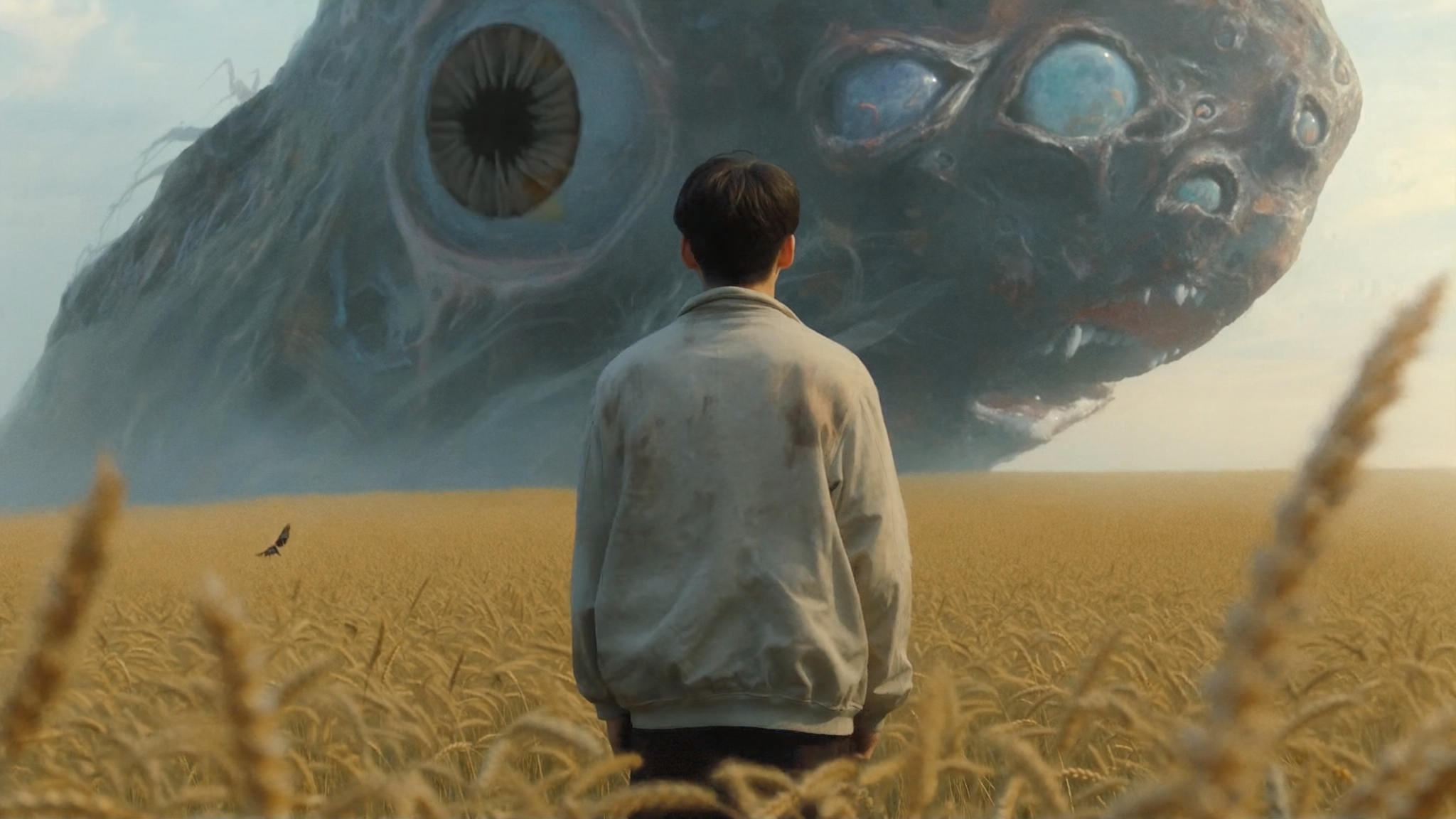
Temporal coherence is the degree to which a clip behaves like continuous reality rather than a sequence of plausible stills. It is the first thing to inspect and the last thing most beginners check.
What to inspect in a five-second window
Watch four things on the first pass. Edges: do outlines of the subject stay crisp or shimmer? Contact points: do feet, hands, and objects stay anchored to surfaces? Background parallax: does the background move at a rate consistent with the camera, or does it slide independently? Shadow direction: does the light source stay put, or do shadows flip when the subject turns?
Failure signatures and what they mean
- Texture crawl on skin, fabric, or foliage usually means the model is re-synthesizing detail every frame rather than tracking it. Reduce detail density in the prompt or add a reference image.
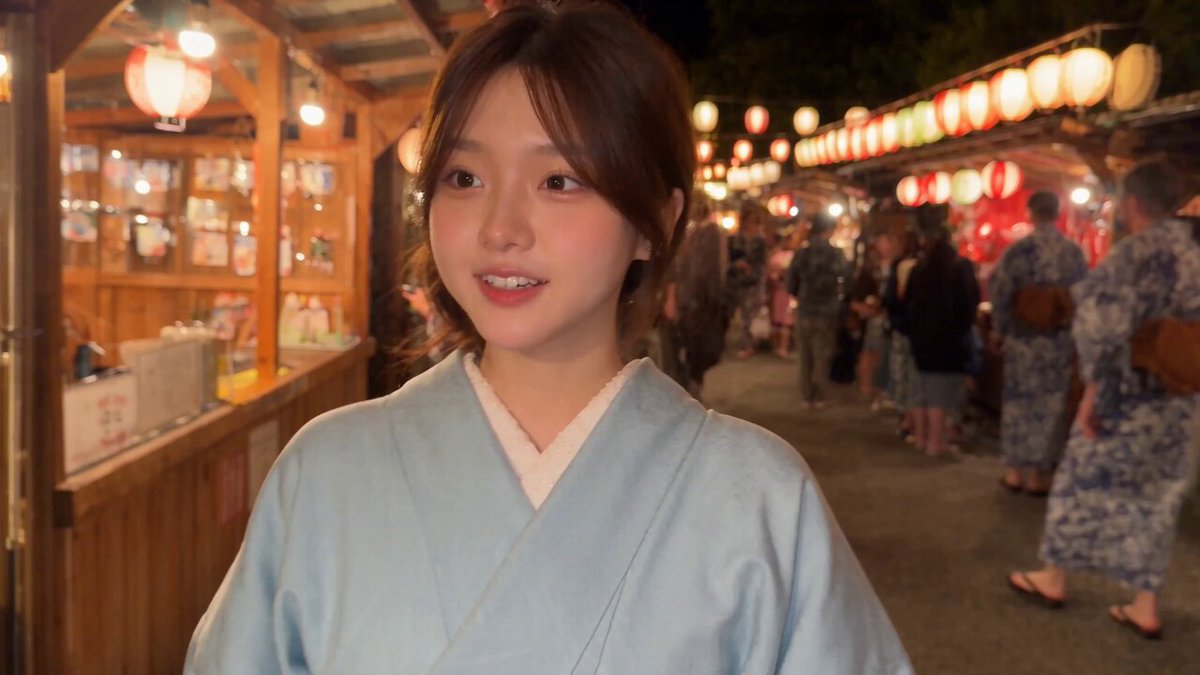
- Identity drift in faces appears when the subject occupies too little of the frame. Move the camera closer or use a tighter starting frame.
- Background morphing is common with busy environments. Simplify the set, or lock the camera so the background never has to be reconstructed from a new angle.
- Limb hallucination happens with fast, overlapping motion. Slow the action down or split it into two shots.
- Speed ramping artifacts look like the clip briefly running at a different frame rate. Shorten the clip and avoid contradictory motion words such as "slow" and "sprint" in the same prompt.
How to improve coherence without starting over
The cheapest fixes are structural. Shorten the shot. Reduce the number of simultaneous motions — one subject, one action. Lock the camera and let the subject move. Extend from a still frame instead of a blank prompt. Supply a start frame and an end frame so the model interpolates between two known-good states rather than inventing both endpoints. None of these require a different model, and together they solve most coherence complaints.
Camera Control and Cinematic Grammar
Camera control separates a clip that looks generated from a clip that looks directed. Modern models understand a surprising amount of film vocabulary, but only if you use it in a disciplined order.
Writing shot instructions that hold up
State the move, the subject, the framing, and the lens, roughly in that order. "Slow dolly in, waist-up framing, 35mm, subject seated and still, soft window light" gives the model four independent constraints it can satisfy. "Epic cinematic camera flying around a hero" gives it one vague mood and no constraints at all.
Avoid stacking contradictory motion. A prompt that asks for a handheld feel, a locked-off tripod shot, and a whip pan in the same sentence forces the model to average them into mush.
Lenses, movement, and pacing
Lens language is a shortcut for a whole visual style. Wide lenses exaggerate space and speed; longer lenses compress and calm a frame. Slow, deliberate moves read as prestige drama; fast moves read as action or social video. Pick a lane per project and stay in it, because mixing pacing inside one sequence is the fastest way to make AI footage feel stitched together.
Blocking beats camera moves
Beginners reach for camera movement to add energy. Professionals add blocking instead: a subject crossing from one side of a room to the other, sitting down, turning toward a window. Blocking gives the model legible motion to solve, and it gives your editor real coverage to cut with.
Multimodal References: Steering Output with More Than Words
Text is a lossy way to describe an image. This is why reference conditioning matters so much in current-generation models.
Image references and look locking
A single well-chosen still can lock a costume, palette, and lighting direction better than three paragraphs of description. Effective reference sets are small and consistent: one character sheet, one environment plate, and one style frame. If your references contradict each other — a warm key light in one, cool in another — the output will inherit the conflict.
Depth, pose, and motion signals
Depth maps and pose data let you drive composition and performance separately from appearance. This is how you keep a walk cycle readable while changing the wardrobe, or hold a camera move steady while changing the subject. Think of these passes as rigging: they constrain the output so the model has fewer ways to go wrong.
Audio and rhythm
Audio conditioning is quietly one of the biggest workflow upgrades. Cut your edit to music first, then generate shots to the beat. Even if the model does not ingest the waveform directly, matching shot length to musical phrasing makes generated footage feel intentional rather than arbitrary.
A Repeatable Workflow from Shot List to Final Cut
A model is an ingredient, not a process. Here is a workflow that survives contact with real deadlines.
Step 1: Write the shot list before you open any tool
List every shot with four columns: duration, subject, action, camera. Cap most shots at three to five seconds. If a shot cannot be described in one sentence, it is two shots. This single habit prevents most downstream frustration.
Step 2: Build a reference kit
Collect one look frame per scene, one character sheet per recurring person, and one environment plate per location. Keep them consistent in light direction and color temperature. Store the exact prompts that produced your best results alongside the images.
Step 3: Generate in cheap passes, then commit
Do not chase perfection on a single clip. Run three to five low-resolution variations per shot with different seeds, review them side by side, and pick the one with the best motion — not the best still frame. Motion quality is expensive to fix; color and contrast are not. Then rerun the winner at full quality with the same seed and references.
Step 4: Assemble, repair, and finish
Edit to a rough cut as early as possible. Gaps and pacing problems are visible in a timeline and invisible in a folder of clips. Repair weak shots with inserts, reaction cuts, or a tighter crop rather than regenerating. Finish with a consistent grade, subtle grain, and sound design; a unified audio bed does more for perceived quality than another generation pass ever will.
Choosing a Model: A Practical Decision Framework
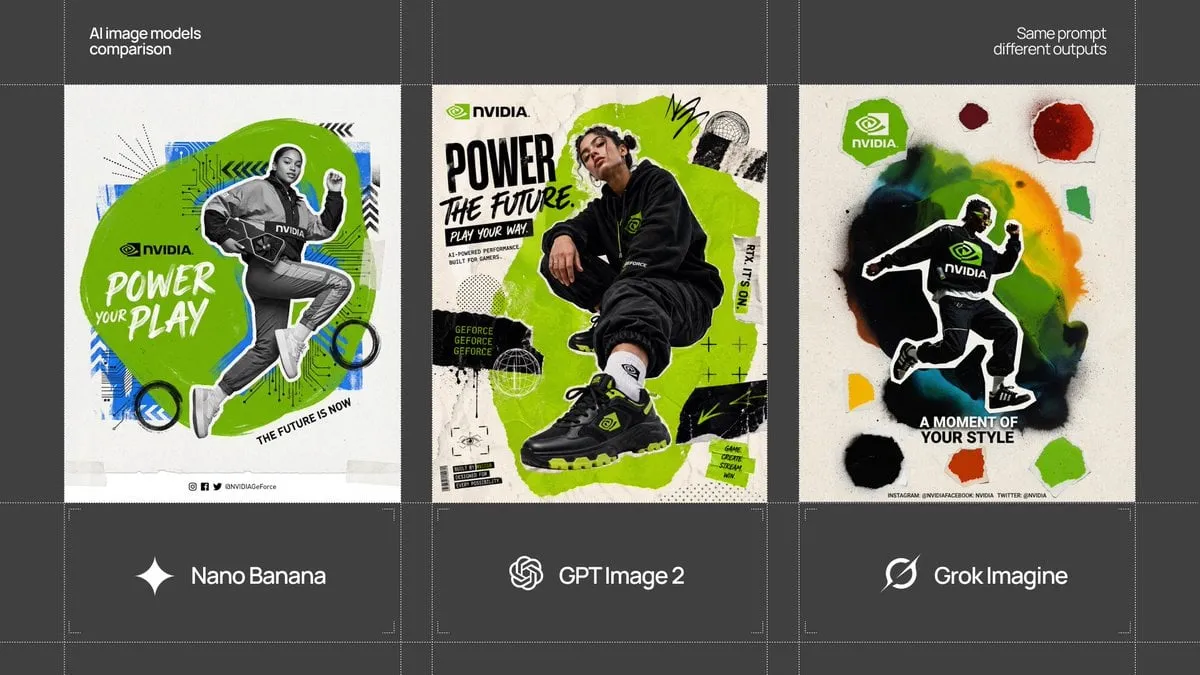
Model families such as the WAN line, Luma's Dream Machine, Sora, Kling, Runway, Pika, and Veo all overlap, but they do not behave identically. Instead of chasing the newest release, score candidates against your actual project.
Six criteria do most of the work. Motion realism: does the model handle the kind of movement your story needs, whether that is a slow push or a sprint? Prompt adherence: does it honor constraints, or does it improvise? Camera control: can you request a specific move and get it? Reference handling: does it accept images, pose, or depth without degrading? Shot length and resolution: can it produce enough frames for your edit? Ecosystem fit: does the output drop cleanly into your editor, upscaler, and color pipeline?
Test each candidate on the same three shots: a dialogue-adjacent close-up, a mid-shot with a camera move, and a wide establishing shot with environment motion. Whichever model handles your worst shot best is your primary; use others as specialists for the shots they win.
Common Mistakes, Budget Planning, and Throughput
The most common mistake is treating generation as the whole job. Other frequent errors: writing prompts that contradict themselves; using references with mismatched lighting; generating at maximum resolution on the first attempt; never reusing a seed that worked; and evaluating clips in a folder instead of in a timeline.
Budget planning is easier when you measure cost per finished second rather than cost per clip. A cheap model that needs six attempts to be usable is more expensive than a stronger model that lands in two. Track three numbers for every project: attempts per usable shot, minutes of review per finished minute, and the share of shots that needed repair in the edit.
Throughput is usually limited by human review, not compute. If three people are generating and one person is reviewing, your real bottleneck is the reviewer. Batch review sessions, use a shared rubric, and keep a running "winner list" of shots so nobody regenerates something that already worked.
FAQ
How long should an AI-generated shot be?
Three to five seconds is the sweet spot for most projects. Longer shots accumulate coherence errors, and cutting between shorter stable shots gives you more editorial control anyway.
Do I need a reference image for every shot?
No. Use references where identity, wardrobe, or environment continuity matters. For abstract inserts and transitions, a strong text prompt is usually enough.
Why does my character's face change between clips?
This is identity drift, and it is usually caused by inconsistent framing, weak references, or different seeds. Start each clip from a consistent close-up reference and reduce how much of the face must be reconstructed.
Should I generate at the highest resolution first?
Almost never. Draft at lower resolution, choose by motion quality, then rerun the winner at full quality with the same seed and references.
What is the fastest way to make AI footage look professional?
Consistent color grading, matched lighting direction across shots, deliberate pacing, and good sound design. These polish steps matter more than the specific model you used.
Can I mix models in one project?
Yes, and most experienced creators do. Pick a primary model for consistency and bring in specialists for close-ups, wide shots, or stylized sequences where another model performs better.
Getting Started This Week
Pick one thirty-second scene and run it end to end with the workflow above: a four-line shot list, a three-image reference kit, low-resolution variations, a chosen winner per shot, and a rough cut with music. Do not evaluate individual clips in isolation — watch the assembled scene and note where attention drops. That exercise teaches more about next-generation video models than any feature comparison, because it forces you to judge what the audience actually sees rather than what the model can technically produce.
