

Why text-to-video stopped being a novelty
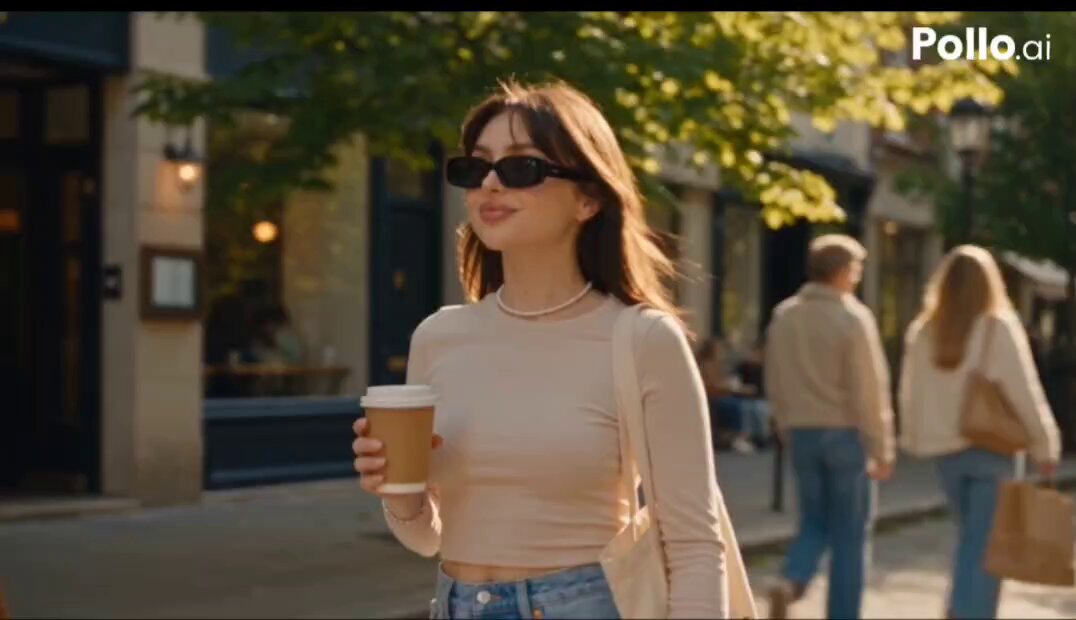
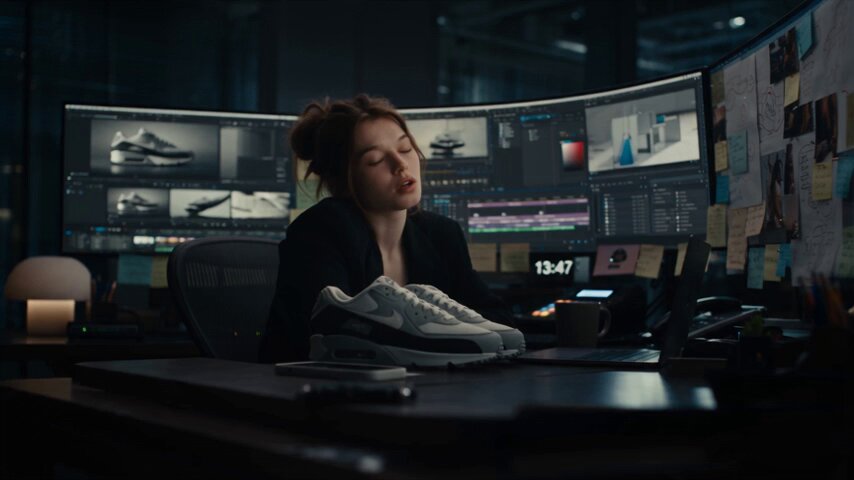
A few seasons ago, generating a video from a written prompt meant tolerating melted faces, rubbery motion, and clips so short they barely qualified as a shot. That era is effectively over. Modern text-to-video systems can hold a character's likeness across multiple angles, follow a described camera move, and deliver footage that survives a 4K television without falling apart.
The practical consequence is simple: writing has become a directing tool. A script, a treatment, or even a paragraph of scene description can now be converted into usable footage in minutes rather than weeks. For solo creators, small marketing teams, and independent studios, that shift removes the single biggest bottleneck in video production — the cost and logistics of shooting.
But capability is not the same as results. The gap between people who get gorgeous output and people who get mush is almost never the model. It is the workflow around the model: how the prompt is structured, how the shot is broken down, which system is chosen for which kind of image, and how the raw generations are finished afterward.
This guide covers that entire pipeline. You will learn how these systems work internally at a conceptual level, how to match models to shot types, and how to build a repeatable process that produces consistent, broadcast-adjacent video from plain text.
How text-to-video synthesis actually works
You do not need to read research papers to get good results, but a mental model of the machinery helps you diagnose failures. Nearly every modern system follows the same broad shape.
Prompt understanding and latent space
The prompt is first encoded into a numerical representation. This encoding captures not just objects ("a lighthouse") but relationships, attributes, style cues, and implied motion. That representation then guides a generative process that operates in a compressed latent space rather than raw pixels — which is why these systems can produce seconds of coherent video in a reasonable amount of time.
A diffusion-style process starts from noise and progressively refines it, with the prompt acting as a constant steering signal. Temporal layers are interleaved so that frame 40 knows what frame 39 looked like and what frame 41 should look like. Without that temporal attention, you get flicker; with it, you get motion.
Temporal consistency and identity locking
Consistency is the hardest problem in AI video. A model may render a perfect face in the first second and a different person in the fourth. Systems solve this in several ways:
- Reference conditioning. You supply one or more still images of a character, and the model treats them as an anchor for identity, wardrobe, and proportions.
- Multi-image fusion. Several references from different angles are blended so the model understands the character in three dimensions rather than as a flat template.
- Motion priors. Learned patterns of how humans walk, how fabric folds, and how liquids pour keep physics plausible even when the prompt does not describe them.
When consistency breaks, the fix is usually more or better reference material, not a longer prompt.
Multi-model orchestration
No single model wins on every axis. One excels at cinematic lighting, another at narrative comprehension, another at speed and cost. Mature workflows treat models as interchangeable lenses on the same camera body: the same script can route a wide establishing shot to a photorealistic engine and a stylized montage to a faster, more illustrative one.
This orchestration layer is where most of the practical value now lives. The interesting question is no longer "which model is best" but "which model is best for shot 12, in this scene, at this budget."
Matching models to shot types: a decision framework
Instead of memorizing brand comparisons, evaluate candidates on five axes and let your project's needs decide.
1. Photoreal cinematic quality
Some engines specialize in film-like imagery: shallow depth of field, motivated lighting, believable skin texture, and controlled lens behavior. Choose these for hero shots, product beauty shots, and anything that will be viewed full-screen. If your prompt includes camera language like "slow dolly in, 35mm, shallow focus," these systems will respond most literally.
2. Narrative comprehension
Other systems are better at understanding multi-beat prompts. Ask for "a woman opens a letter, reads it, then looks up in shock" and a narrative-strong model will sequence those beats; a weaker one will blend them into an ambiguous blur. Use these for dialogue-adjacent scenes, story-driven shorts, and explainer sequences where cause and effect must read clearly.
3. Motion realism and physics
Watch for water, fabric, hair, hands, and crowd movement. These are the classic failure points. Some models produce remarkably stable cloth simulation and fluid behavior; others still warp. Test every candidate on the same three clips: a person walking through wind, liquid being poured, and a hand interacting with an object.
4. Speed and iteration economics
If you need fifty variations to find one good take, throughput matters more than peak fidelity. Fast, accessible engines let you explore composition and blocking cheaply, then hand the winning frame to a slower, higher-end model for the final pass. Treat cheap generation as a storyboard tool, not a compromise.
5. Control and repeatability
Some platforms expose camera presets, lens choices, motion strength, and seed control. Others hide everything behind a single prompt box. If you are delivering client work, control beats convenience — reproducibility lets you regenerate a shot with a small change instead of starting over.
A practical end-to-end workflow
The following pipeline works for a 30-second ad, a YouTube documentary segment, or a narrative short. It is deliberately model-agnostic.
Step 1: Write a shot list, not a prompt
Beginners write one long paragraph and hope. Professionals write a shot list in a spreadsheet with one row per shot:
| Field | Example |
|---|---|
| Shot ID | S04 |
| Duration | 5s |
| Framing | Medium close-up |
| Camera | Slow push in |
| Action | Character reads a letter, looks up |
| Lighting | Warm interior, practical lamp |
| Continuity | Same wardrobe as S02 |
| Model | Photoreal engine A |
This document is your production plan. It also becomes your QA checklist at the end.
Step 2: Build a reusable prompt scaffold
A prompt that consistently works has a predictable anatomy:
- Subject and wardrobe — "a 40-year-old woman in a charcoal wool coat"
- Action beat — "lifts a folded letter from the table"
- Setting and time — "a dim apartment at dusk"
- Camera and lens — "medium shot, 50mm, slow push in"
- Lighting and mood — "warm lamp key, cool window fill, quiet tension"
- Style and finish — "photorealistic, subtle film grain, muted palette"
Keep the scaffold identical across shots and change only the variables. Consistency in prompt structure produces consistency in output far more reliably than consistency in adjectives.
Step 3: Generate coverage, not a single take
Filmmakers shoot coverage. Do the same. For each shot, generate four to eight variations with small perturbations: a slightly different camera height, a different moment in the action, a different lens. Then select.
Useful perturbation levers:
- Change one word in the camera phrase ("slow push in" → "slow arc right").
- Change the seed while keeping the prompt identical.
- Swap the reference image for a different angle of the same character.
- Adjust motion strength if the platform exposes it.
Never try to fix a bad shot by adding three more clauses to the prompt. Change the seed or the reference instead.
Step 4: Finish the raw generation
AI output is a camera negative, not a finished shot. The finishing pass typically includes:
- Upscaling to delivery resolution with a video-aware upscaler that respects motion.
- Frame interpolation if you need smoother motion, used sparingly to avoid a soap-opera look.
- Stabilization for handheld-style shots where the jitter overshoots.
- Deflicker for any residual luminance shimmer.
- Selective retiming to fit a precise cut length.
Budget roughly as much time for finishing as for generation. Skipping it is the most common reason AI video looks like AI video.
Step 5: Assemble, sound, and color
Import everything into your editor and cut for rhythm, not for shot length. Three principles help:
- Cut on motion. Match each transition to an action already happening in frame; it hides imperfections and feels intentional.
- Build sound first. Ambience, footsteps, and room tone sell synthetic footage more than any visual upgrade. If a shot feels fake, it often just lacks sound.
- Grade as a whole. A unified color treatment across generated and practical footage erases the seams between sources.
Prompt patterns that survive model swaps
When platforms update, prompts that rely on specific stylistic keywords break. Prompts built on structural clarity keep working. Patterns worth keeping in your library:
- Beat separation. "First X, then Y, finally Z." Many engines now handle ordered beats explicitly.
- Negative constraints. Stating what must not appear ("no text overlays, no extra characters in frame") reduces cleanup work.
- Physical anchors. Reference real materials and real light sources rather than vague adjectives. "Overcast daylight through a north-facing window" outperforms "soft lighting" almost every time.
- Aspect and format upfront. Declaring vertical, square, or widescreen before the description avoids reframing later.
- Reference-first phrasing. When identity matters, lead with the reference description so the model weights it strongly.
Keep a running file of prompts that produced good results, annotated with the seed and settings. Over a few months, that file becomes more valuable than any tutorial.
Common mistakes and how to avoid them
Overloading a single prompt. Five subjects, three actions, and two camera moves in one generation yields mush. One shot, one idea.
Ignoring shot-to-shot continuity. Wardrobe, hair, time of day, and prop placement must match across generations. This is why the shot list matters.
Chasing resolution over motion. A 4K clip with warped hands is worse than a 1080p clip that moves convincingly. Solve motion first, then upscale.
Using no reference images for recurring characters. Text descriptions alone drift. Lock identity with references from multiple angles.
Skipping sound design. Silent synthetic footage reads as synthetic. Ambience and foley are not optional polish.
Generating without a delivery spec. Decide frame rate, aspect ratio, duration limits, and caption safe areas before you generate anything, or you will re-render the entire project.
Treating cheap models as inferior. Fast engines are excellent drafting tools. Use them to explore blocking, then finish on a higher-fidelity system.
A quality control checklist before delivery
Run every sequence through the same list before export:
- Does the character's identity hold across every shot in the scene?
- Are hands, teeth, and eyes free of obvious artifacts?
- Does motion look physically plausible at full speed and when paused?
- Is the lighting direction consistent within a scene?
- Does the cut rhythm match the music or narration?
- Are captions legible over every background?
- Is there a visible disclosure that the footage is synthetic, where required?
- Does the export match the platform's aspect, duration, and bitrate requirements?
A ten-minute pass with this list prevents the re-edits that eat entire days.
Ethics, rights, and disclosure in synthetic video
Capability comes with obligations. A few rules keep you out of trouble:
- Do not clone real people without permission. Voice, face, and likeness are protected in most jurisdictions.
- Disclose synthetic footage where platforms or regulators require it, and where audiences would reasonably be misled without it.
- Respect training and output terms. Know whether your footage may be used commercially and whether your reference images are licensed for generation.
- Keep provenance records. Save prompts, seeds, references, and generation dates alongside your project files. If a question arises later, you will have an answer.
These habits also help clients trust the process, which matters more than any single technical win.
Where the workflow is heading
Three developments are reshaping how teams work with text-to-video:
Agent-style direction. Instead of one prompt producing one shot, orchestration layers now break a script into shots, assign models, generate coverage, and hand back a rough assembly. The human role shifts toward taste: choosing takes, adjusting pacing, and directing performance intent.
Better controllability. Camera presets, lens libraries, motion strength controls, and pose or depth conditioning are converging into interfaces that feel closer to a virtual camera than a text box. The more control a system exposes, the more it rewards a shot-list-first approach.
Longer coherent sequences. As temporal consistency improves, the practical unit of work moves from the five-second clip toward the multi-shot scene. This changes editing: fewer seams to hide, more emphasis on rhythm and performance.
None of this eliminates craft. It relocates it. The people who thrive will be those who can write clearly, plan shots precisely, and judge a take quickly.
FAQ
How long should a generated clip be?
Shorter is almost always safer. Three to six seconds per generation gives the model less time to drift and gives you more editorial flexibility. Stitch short clips rather than forcing one long take.
Do I need a different model for each scene?
Not necessarily, but do not assume one model must do everything. Route shots by need: photorealism, narrative sequencing, or speed. Mixed-model projects are normal in professional workflows.
Why does my character change appearance between shots?
Because identity was described in words rather than anchored in pixels. Supply two or three reference images from different angles and reuse them for every shot in the scene.
What is the fastest way to improve output quality?
Improve the shot list. Most quality problems are planning problems: vague action, wrong framing, missing lighting direction, or inconsistent wardrobe.
Should I upscale everything?
Only shots that pass review. Upscaling a flawed generation preserves the flaw at higher resolution. Fix motion and identity first, then finish.
Can I edit AI footage like normal video?
Yes. Treat it as camera original: cut it, grade it, stabilize it, add sound, and reframe it. The footage is synthetic; the post-production craft is unchanged.
How do I keep a consistent look across a whole video?
Standardize three things: your prompt scaffold, your reference set, and your color grade. When those stay fixed, models can change without the finished piece looking inconsistent.
What should I learn first if I am new?
Shot planning and prompt structure. Both are tool-agnostic, both transfer to any platform, and both determine more of your final quality than model selection ever will.
Getting started this week
Pick one short scene — thirty seconds, four or five shots. Write the shot list, build the prompt scaffold, generate coverage with two different models, then finish and cut it with sound. The goal is not perfection; it is to complete the loop from text to an exported, watchable file.
Once that loop is familiar, everything else is refinement: better references, better routing decisions, better takes. The technology will keep improving on its own. What compounds is your process.
