
Why RPG Character Art Decides Whether Your Short Video Gets Watched
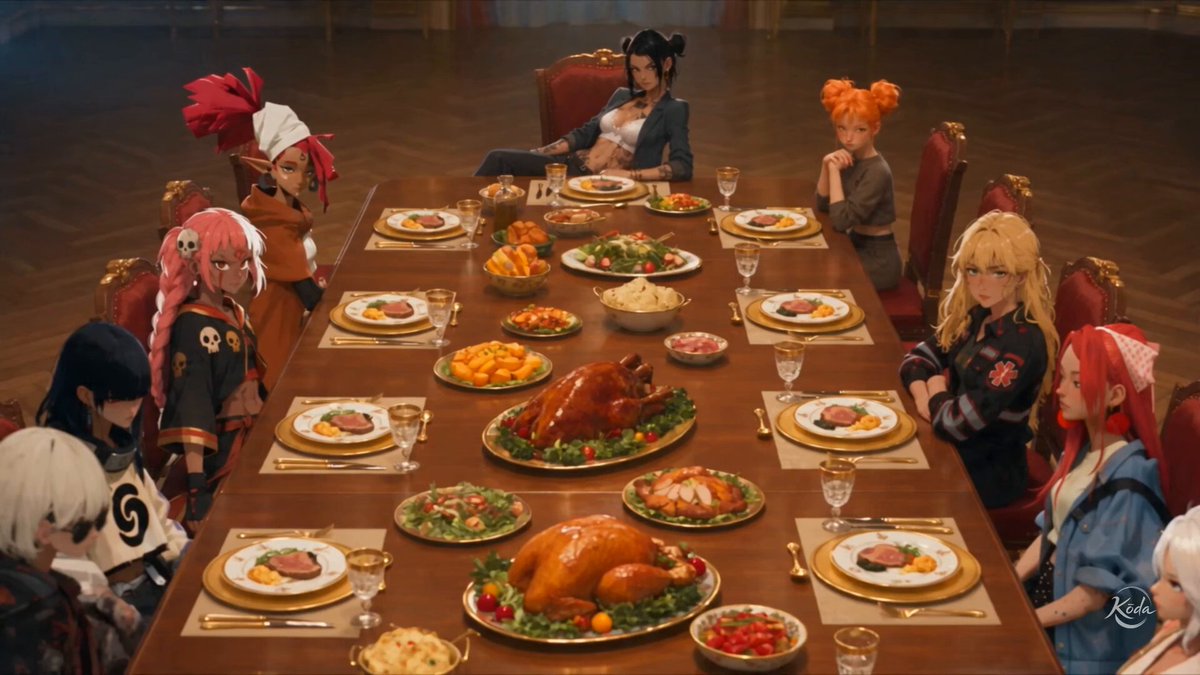
A role-playing game is not really about mechanics. It is about faces. Players remember the scarred paladin who refused to take off her helmet, the necromancer with ink-stained fingers, the bard whose lute has a cracked rosette. When you build short-form video around those characters, the same rule applies: viewers decide in under two seconds whether the person on screen looks like someone worth following. Generic fantasy art loses that fight instantly.
Anime-tuned image models have made it dramatically easier to produce character art with real personality. Niji Journey V6 in particular behaves less like a random image generator and more like a collaborator that understands anime conventions, costume logic, and dramatic lighting. But the model only rewards you if your prompt carries actual information. Vague prompts produce vague people.
This guide walks through a practical workflow: how the model reads a prompt, how to structure one for RPG archetypes, how to keep a character looking the same across twenty scenes, and how to carry those stills into an edited video with motion, sound, and pacing. Everything here is tool-agnostic in spirit. Swap the model name and the method still holds.
How Modern Anime-Tuned Image Models Read Your Prompt
Before you write a single line of prompt text, it helps to understand what the model is actually doing. It is not "drawing a mage." It is resolving a set of competing signals into a single coherent image. Your job is to make those signals agree with each other.
The five layers of a strong prompt
Most good character prompts contain five layers, roughly in this order:
- Subject and role — who the person is: "young storm mage," "veteran mercenary captain."
- Silhouette and pose — how the body reads at a glance: "wide shoulders, low stance, one hand raised."
- Costume and lore objects — concrete items that imply backstory: "battered pauldron, salt-crusted cloak, rune-etched gauntlet."
- Presentation and camera — framing and light: "three-quarter view, waist-up, rim light from the left."
- Style and finish — rendering language: "clean anime linework, soft cel shading, painterly background blur."
When one layer is missing, the model improvises, and its improvisation is usually bland. When two layers contradict each other ("grim battle-scarred knight" plus "pastel sparkle aesthetic"), you get visual mush.
What anime-tuned versions do better than general models
The anime-tuned lineage excels at three things that matter enormously for RPG work. First, it handles stylized anatomy correctly — large eyes, sharp chins, exaggerated hands — without drifting into uncanny realism. Second, it understands costume vocabulary: it knows what a tabard is, what a quiver looks like when slung across a back, how a cloak should fold at the shoulder. Third, it responds well to dramatic lighting described in physical terms rather than mood words.
That last point is worth dwelling on. "Epic" and "atmospheric" are nearly meaningless to an image model. "Single hard light from upper right, deep shadows on the left cheek, cold blue ambient fill" gives it something to compute.
The Core Prompt Formula for RPG Characters
A repeatable formula beats inspiration every time. Here is the structure that works consistently for character key art.
[role + age + build], [distinctive physical feature],
[wearing detailed costume elements], [holding or carrying a lore object],
[pose and gesture], [camera framing], [lighting setup],
[art style and rendering notes]
A filled-in example:
Elven duskblade, late twenties, tall and lean, one silver eye,
layered leather armor with bronze rivets and a torn teal sash,
carrying a curved blade wrapped in cloth, mid-turn looking back over shoulder,
full-body shot, slightly low angle, hard rim light from behind, warm lantern fill,
clean anime linework, muted jewel palette, subtle film grain
Notice that nothing here says "beautiful" or "stunning." Those words consume prompt space without adding information.
Class signals that change everything
Each RPG class carries a visual contract. Break it deliberately or honor it precisely — but know what you are doing.
- Warrior: heavy mass, low center of gravity, worn metal, asymmetry from damage.
- Mage: verticality, layered robes, glowing focus objects, hands emphasized.
- Rogue: compact silhouette, tight layers, concealed edges, shadow-heavy staging.
- Healer: soft light sources, pale palette, open posture, ritual objects.
- Bard: motion implied, asymmetrical accessories, an instrument treated as a weapon of sorts.
- Ranger: weather exposure, functional straps, animal companion or tracking detail.
If you prompt "warrior" alone, you will get generic plate armor. If you prompt "warrior, six years in a siege line, dented left pauldron, broken nose, carrying a shield she no longer trusts," you get a character with a story.
Lore through objects, not adjectives
Backstory does not survive as an adjective. It survives as an object. A cracked holy symbol means more than "devout." A ring of keys on a thief's belt means more than "cunning." A medical kit with bloodstained wrappings means more than "battle-hardened."
Build a short prop list for each character before you prompt. Three to five objects is plenty. Reuse them in every prompt for that character, and viewers will start reading them as continuity.
Technical parameters for cinematic finish
Once the subject is right, technical language tightens the result:
- Framing: waist-up, cowboy shot, full-body, extreme close-up.
- Lens language: wide-angle distortion, telephoto compression, shallow depth of field.
- Lighting: three-point setup, practical light sources, colored bounce.
- Palette: limited palette, complementary accents, desaturated midtones.
- Texture: cel shading, painterly rendering, subtle grain, clean vector edges.
Keep the technical block to four or five items. Stacking fifteen rendering keywords creates noisy, overworked images that look impressive in thumbnails and fall apart on a full screen.
Keeping a Character Consistent Across an Entire Series
This is where most creators fail. Scene one looks great. Scene eight has a different nose, different armor, and a hair color that drifted two shades lighter. The fix is process, not luck.
Use reference images and multi-image fusion
Generate one definitive character sheet first: front view, three-quarter view, and profile, all with the same costume. Treat it as canon. Then feed that reference into every subsequent generation alongside your new scene prompt. Most modern pipelines support multiple reference images, which lets you blend a canonical character with a new environment or pose.
When blending, weight the references deliberately. The character reference should dominate facial structure and costume; the scene reference should dominate background, lighting direction, and atmosphere. If the environment starts overwriting the face, reduce its influence.
Version your prompts like code
Save every prompt that produced an acceptable result, along with the seed if your tool exposes one. Name them systematically:
kael_duskblade_v01_keyart
kael_duskblade_v02_rain_scene
kael_duskblade_v03_rooftop_action
When a later scene drifts, you can diff the prompts and find the change that caused it. Nine times out of ten it is a small word: "messy hair" inserted casually in one prompt and not the others.
Diagnose drift before you rewrite
Character drift usually comes from one of four sources:
| Symptom | Likely cause | Fix |
|---|---|---|
| Face changes shape | Pose words contradict reference | Reduce pose description, keep the reference weight high |
| Costume simplifies | Too many scene details competing | Move environment description later in the prompt |
| Colors shift | New lighting term changed the palette | Lock palette words into every prompt |
| Age fluctuates | Missing age or build descriptor | Repeat the base physical descriptor every time |
Small corrections beat full rewrites. Change one variable, regenerate, compare. If you change five things at once and the result improves, you have learned nothing about why.
Prompt Recipes for Five Common Archetypes
Concrete starting points are more useful than theory. Adapt these rather than copying them wholesale.
The storm mage
Storm mage, early thirties, wiry build, silver streak in dark hair,
charcoal robes with copper embroidery and one singed sleeve,
floating iron focus ring above open palm, hair lifted by static,
three-quarter view from slightly below, side light plus cool underglow,
clean anime linework, limited slate-and-copper palette, painterly sky
The siege veteran
Siege veteran, forties, heavy build, broken nose and shaved head,
mismatched plate over chainmail, dented left pauldron, faded unit banner tied to belt,
shield resting point-down in the dirt, weight on back foot,
full-body shot, eye level, overcast daylight with hard back rim,
muted earth palette, scratched metal texture, slight grain
The quiet thief
City thief, mid twenties, small frame, sharp jaw, hair tied tight,
layered dark wool with leather straps, chalk marks on one cuff, lockpick roll at hip,
crouched on a ledge, looking down and away from camera,
cowboy shot, high angle, single warm window light from below,
tight palette of ink blue and amber, crisp cel shading
The battlefield healer
Field healer, late twenties, medium build, freckles, hair pulled back hastily,
cream linen apron over mail, bloodstained bandage roll, hanging lantern at belt,
kneeling with hands steady, eyes forward,
waist-up, eye level, soft lantern key with cool moonlight fill,
soft rendering, limited cream-and-slate palette
The reluctant bard
Reluctant bard, early thirties, lanky, crooked smile, one earring,
velvet coat worn at the elbows, sheet music tucked in belt, lute with cracked rosette,
mid-stride turning to look back, free hand out of frame,
full-body, low angle, warm tavern light with cool doorway spill,
loose brushwork, warm amber and deep green palette
Run each of these several times, keep the outcomes that feel alive, and then lock the best one in as the canonical reference.
From Stills to Motion: A Practical Video Workflow
Generated stills are raw material. The editing stage is where they become a piece of short-form video people finish.
Build a shot list before you build a timeline
Write down eight to twelve beats. Each beat needs one image, one camera intention, and one sound idea. A typical structure for a thirty-second character piece:
- Establishing environment, no character visible.
- Character silhouette in the distance.
- Close-up on a lore object.
- Face reveal.
- Action beat.
- Reaction beat.
- Wide shot showing scale.
- Final pose, title card.
This is not a formula to obey forever, but it prevents the common failure of a video that is eleven consecutive close-ups with no spatial logic.
Generate the right shot, not the prettiest shot
A gorgeous waist-up portrait is useless if the scene needs a wide shot with room for text. Generate with the edit in mind: leave negative space where titles go, keep eyelines consistent across cuts, and match light direction between adjacent shots so transitions feel intentional.
Animate with restraint
When you bring stills into motion, subtlety wins. Slow push-ins, gentle parallax between foreground and background layers, and small drifting particle elements read as premium. Aggressive zooms and shaky camera moves read as cheap. A three to five percent scale change over two seconds is often enough to make a still feel alive.
Design sound around the character
Sound sells a character faster than any visual filter. A single distinctive sound — a metallic scrape, a page turning, a low hum — attached to a specific character becomes an audio signature. Pair it with a music bed that changes intensity rather than tempo, and your cuts will land harder.
Deliver for the platform, not for your monitor
Check the output on a phone at arm's length. Faces must remain readable at small sizes, so favor tighter framing than you would for desktop. Keep important detail inside the central safe area, and remember that auto-captions will cover the bottom of the frame.
Common Mistakes and How to Fix Them
Overloading the prompt. More words do not mean more control. If a prompt exceeds roughly sixty tokens of description, cut the least specific items first — usually mood adjectives.
Ignoring silhouette. Test every character design as a solid black shape. If you cannot tell the mage from the rogue in silhouette, the design is not finished.
Mixing incompatible aesthetics. Pick one rendering language per project. Anime linework plus photoreal skin plus oil-painting backgrounds produces a character that belongs nowhere.
Neglecting hands and props. Hands hold story information. Specify their position and what they hold; otherwise you will get the default neutral pose in every image.
Skipping the reference step. Generating each scene from text alone guarantees drift. Always anchor to a canonical image.
Editing before selecting. Do not build a timeline around images you have not compared side by side. Lay all candidates on a single contact sheet first and eliminate ruthlessly.
Forgetting the character's voice. A design that looks good but suggests no personality will not carry a series. If you cannot describe how the character speaks in one sentence, the design is incomplete.
Testing, Iteration, and Quality Control
Treat character generation as a small production pipeline with checkpoints.
Checkpoint one: silhouette test. Convert the best candidate to pure black. Does the archetype read instantly?
Checkpoint two: thumbnail test. Shrink the image to 120 pixels wide. Can you still identify the character's class and mood?
Checkpoint three: consistency test. Place five images of the same character in a row. Do the face, palette, and costume hold?
Checkpoint four: motion test. Apply your intended camera move. Does the composition still work when the frame shifts, or does a key element slide out of view?
Checkpoint five: context test. Put the image in the actual video with captions and music. Do viewers look at the character or at the text?
If a character passes all five, stop iterating. Perfectionism at this stage produces diminishing returns and burns the time you need for the next scene.
Frequently Asked Questions
How many words should a character prompt be?
Between forty and eighty words of dense description. Below forty, the model improvises too much. Above eighty, competing signals start cancelling each other out.
Can I keep one character consistent across dozens of images?
Yes, if you generate a canonical reference sheet first and reuse it in every subsequent prompt. Text alone will drift; reference anchoring will not.
Should I describe the background or keep it plain?
It depends on the shot. For character sheets, use a plain or softly blurred background so nothing competes. For cinematic frames, describe the environment but place it after the character description in your prompt.
What if the model keeps adding details I did not ask for?
That usually means your prompt left a slot empty. Explicitly state the costume layers, the pose, and the lighting. The model fills gaps with conventions, and conventions look generic.
Do I need different prompts for stills and for video frames?
Not different, but adjusted. Video frames benefit from slightly looser framing to allow camera movement, and from simpler lighting so compression does not muddy the shadows.
How do I decide which generated image to keep?
Judge against the deliverable, not in isolation. The right image is the one that survives the thumbnail test and supports the edit, even if a rejected alternative is prettier as a standalone picture.
Building a Reusable Character System
The real payoff comes when you stop generating one-off images and start building a library. Store your canonical references, prompt templates, palette definitions, and sound signatures in one place. Document what worked and, more importantly, what consistently failed.
Over a few projects, you will notice patterns: certain lighting descriptions always produce drama, certain costume words always read well at small sizes, certain pose phrases always fight your reference image. That accumulated knowledge is what separates creators who produce a striking character once from creators who build a recognizable cast across an entire channel.
Start small. Pick one archetype, build the reference sheet, produce eight scenes, cut them into a thirty-second piece, and watch it on a phone. Then refine the formula and run it again with a second character. Within a handful of cycles you will have both a workflow and a visual identity — and those two things are what actually make RPG-driven short-form video worth watching.
