

Why Premium Brand Video Still Wins in a Saturated Feed
Every brand now has access to the same generative tools, which sounds like it should flatten quality. It does the opposite. When everyone can produce a polished fifteen-second clip, polish stops being a differentiator and execution becomes one. Premium brand video is no longer defined by whether a single frame looks expensive. It is defined by whether the entire piece holds together: the same face across six shots, lighting that matches between cuts, a voice that fits the market, pacing that breathes, and sound design that supports the story instead of distracting from it.
Teams that win premium brand work have quietly rebuilt their pipeline around three decisions. First, they plan at the shot level before generating anything. Second, they use a small set of tools deeply instead of a dozen tools shallowly. Third, they treat generated footage as raw material for post-production rather than as a finished product. Everything else, including model selection and prompt style, sits downstream of those three choices.
This guide walks through how a modern creative team can produce agency-grade brand video with generative tooling while keeping the narrative discipline that makes brand work effective. The focus is on workflow, decision criteria, and the failure modes that make AI-assisted video read as cheap.
Start With the Brief, Not the Tool
The most common reason AI-assisted brand video feels hollow is that production started before anyone agreed on what the video is supposed to do. A brief for premium brand work needs to answer five questions before a single prompt is written.
What is the single message? One sentence, not a paragraph. If the brief needs three sentences to describe the message, the edit will need three acts, and the budget will need a longer runtime.
Who is the audience and where will they see it? A six-second vertical pre-roll, a ninety-second website hero film, and a five-minute trade-show loop are different products. Aspect ratio, hook timing, text legibility, and silence tolerance all change with placement.
What is the visual world? Reference stills matter more than adjectives. Collect eight to twelve images that establish palette, lighting direction, lens character, wardrobe, and set texture. These references become the anchor set for every generation later.
What must never appear? Brand rules, competitor adjacency, cultural sensitivities, and legal restrictions belong in the brief, not in a review comment three days before delivery.
How will success be judged? Decide in advance whether the campaign is judged on watch-through rate, brand-lift survey results, landing page conversion, or internal stakeholder approval. Different goals push the edit in different directions.
A one-page brief with these five answers is worth more than a fifty-page deck. It is also the document you return to when a client asks for a change at draft three.
Choosing the Right Model for Each Shot Type
No single generative model is best at everything. The practical approach is to classify every shot in the storyboard and route it to the tool that handles that class best.
Presenter and talking-head shots
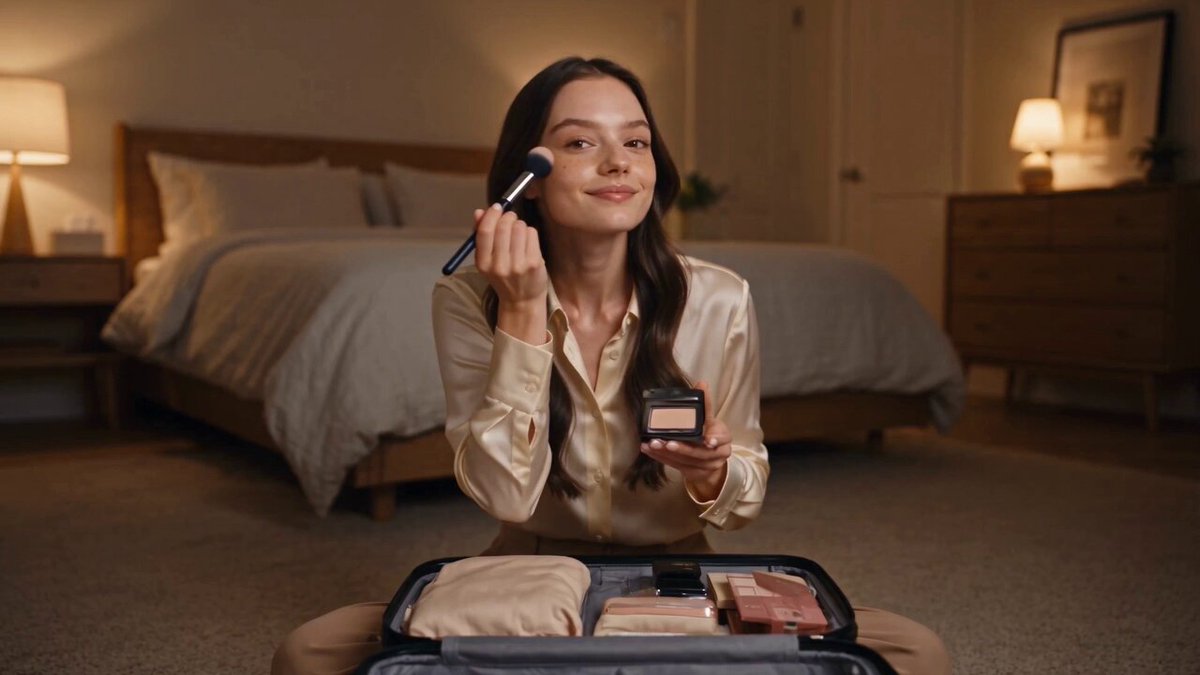
These shots carry the brand voice, so continuity matters most. Look for tools with strong identity preservation, stable facial geometry across frames, and natural mouth shapes. Test with the actual talent or the actual character design, not a generic placeholder, because results vary significantly with face structure and skin tone. Generate longer takes than you need and cut to the best two seconds.
Product and macro beauty shots
Product work rewards tools with strong material rendering, controlled reflections, and precise camera moves. Slow dolly-ins, rotating tabletop shots, and light sweeps read as premium because they mimic commercial production grammar. Avoid fast camera motion here; it exposes artifacts immediately. If a generative tool struggles with a specific label or logo, composite the real asset in post instead of fighting the model.
Environment, lifestyle, and establishing footage
Wide shots, cityscapes, interiors, and atmospheric footage are where generative video is strongest. Use these shots to build the world around the presenter and the product. Because they carry less scrutiny per pixel, they are also the safest place to experiment with ambitious camera language, unusual weather, or stylized color.
Graphics, titles, and lower thirds
Do not generate typography. Build it in a design tool or an editor and composite it over clean plates. Generated text almost always contains subtle letterform errors that viewers notice even when they cannot name them. Keep a title style guide with one typeface family, two weights, and a fixed spacing system.
A finished premium film typically blends three or four sources: generated environment plates, one or two presenters, real product footage or renders, and designed graphics. That mix is a feature, not a compromise.
Keeping Characters and Brand Assets Consistent
Character drift is the fastest way to make a campaign feel amateur. The following habits keep a cast recognizable across dozens of shots.
Build a reference sheet per character
Create a single sheet containing a neutral front view, a three-quarter view, a profile, and two or three expression variations. Add wardrobe details, hair styling, and any accessories. Treat this sheet as canon. Every new generation should reference it, and every approved shot should be checked against it.
Lock lighting, palette, and lens language
Write down the rules: key light from camera left, warm practicals in the background, 35mm equivalent lens for interiors, 85mm for close-ups, no wide-angle distortion on faces. When a shot breaks a rule, break it intentionally for a story reason and note it in the edit notes.
Run a continuity pass before editing
Before you start cutting, lay every selected shot on a timeline in story order and watch it once without sound. You are looking for continuity problems: hair length changes, jacket color shifts, skin tone jumps, background geometry that does not match between adjacent angles. Fixing these at the generation stage is easier than trying to grade around them.
Keep a brand asset library
Store approved character sheets, logo files, color values, typeface files, music beds, and sound effects in one shared location with naming conventions. A campaign that reuses approved assets is faster and more consistent than one that regenerates them.
A Practical End-to-End Workflow
The following sequence works for a thirty- to ninety-second brand film and scales up or down with modest adjustments.
Step one: script and shot list
Write the voiceover or on-screen copy first, then break it into beats. Each beat becomes one to three shots. A shot list should include shot number, description, camera move, duration, and the tool you intend to use. This single document is what prevents aimless generation sessions.
Step two: storyboards and previz
Sketching is still the fastest way to find a story. Rough frames drawn in a note app are enough. Where motion is hard to imagine, generate a short low-resolution previz clip and cut it against temporary music. You are testing rhythm, not quality.
Step three: generation passes
Generate in passes rather than shot by shot. Pass one covers all environment plates. Pass two covers presenters. Pass three covers product. Grouping by shot class keeps prompt language and settings consistent within a pass, which noticeably improves visual cohesion.
For each shot, generate more variations than feels reasonable. A three-to-one ratio of rejects to selects is normal for simple shots; complicated presenter shots may run ten to one. Save your selects in a folder with the shot number, and delete the rest aggressively so the edit stays manageable.
Step four: edit, sound, and color
Assemble a rough cut with temporary music, then spend real time on sound design. Footsteps, cloth movement, room tone, and subtle whooshes make generated footage feel grounded because they supply physical continuity that the images alone may lack.
On color, a light unified grade across all sources is usually enough: matching white balance, lifting or lowering contrast to a common curve, and applying one look-up table is often the difference between footage that looks like one film and footage that looks like a folder of clips. Do not over-grade in an attempt to hide artifacts; it rarely works, and it often makes the piece look flatter.
Step five: delivery and versioning
Export a master, then produce placements: vertical cutdowns, square versions for feed placement, a silent-optimized version with burned captions, and a six-second hook edit. Keep captions within the safe area for each platform. Name files with the campaign, placement, ratio, and version number so nobody has to guess which file is current.
Audio, Voice, and Music: The Half Most Teams Rush
Viewers forgive imperfect images far more readily than imperfect sound. A brand film with mediocre visuals and excellent audio reads as intentional. A film with excellent visuals and careless audio reads as amateur.
Start with voice. Decide whether you are using a human voice actor or synthesized speech. For premium brand work, a human performer recorded in a treated room still outperforms most synthetic options on emotional range, and the cost is usually small relative to the rest of the production. If you do use synthesized narration, record reference takes yourself and match pacing, emphasis, and breath placement deliberately.
Next, treat music as a structural element rather than a bed. Choose a track before the final edit, not after, and cut picture to its phrasing. Where a track lacks a natural ending, design a sound effect or a pause to create one.
Finally, build a small library of recurring sounds tied to the brand: a signature transition, a product activation sound, a subtle low-frequency cue at the logo reveal. Repetition across campaigns builds recognition faster than any single visual device.
Review Loops and Asset Management at Scale
Premium work involves stakeholders, and stakeholders create revisions. Structure the process so feedback improves the piece rather than eroding it.
Share a single review link with timecoded comments. Ask reviewers for notes at the shot level, not the timeline level, and require that each note identify a problem and a proposed direction. "Shot four feels slow" is useful. "I do not like it" is not.
Consolidate feedback into one change list per round and respond in writing to anything you are declining, with a reason. This sounds bureaucratic, but it prevents the slow drift where a film is edited by committee across seven rounds and ends up with no point of view.
On asset management, adopt a naming convention early: campaign, deliverable, date, version. Keep an archive of approved character sheets and generated selects, because campaigns almost always come back for sequels and revised cutdowns. The team that can rebuild last quarter's look in an hour has a real advantage over the team that has to rediscover it.
Common Mistakes That Make AI Video Look Cheap
A handful of issues account for most of the gap between generated footage and premium brand video.
Over-animation. Every shot has motion because motion feels impressive to the maker. Restraint reads as confidence. Sometimes the most premium choice is a locked-off wide shot that holds for three seconds.
Inconsistent skin tones. Faces shift between shots because lighting prompts changed. Standardize lighting language in your prompts and grade for skin first before anything else.
Unmotivated camera moves. A push-in should mean something. If every shot drifts, the audience stops feeling the ones that matter.
Generated typography. Covered earlier, but worth repeating: design text, never generate it.
Too many shots. Premium film tends to use fewer, longer shots than social-first content. Cutting every 1.2 seconds signals scroll-stopping, not premium.
Ignoring the first two seconds. Most attention decisions happen immediately. Front-load the strongest image and the clearest promise of value rather than a lengthy logo animation.
Uneven loudness. Deliver at a consistent integrated loudness across placements. Nothing undermines a polished edit faster than a spot that is noticeably quieter than the content around it.
How to Tell Whether the Work Is Actually Working
Instrument the campaign before launch, not after. At minimum, track completion rate, rewatch rate, click-through on the end card, and conversion on the landing page. Where budget allows, run a short brand-lift study with a control group; recall and message association are the metrics that premium brand video is ultimately bought for.
Read the data with the placement in mind. A vertical cutdown that performs well on rewatch but poorly on click-through is doing brand work, not direct response work, and judging it by the wrong metric leads to the wrong conclusion.
Keep a small internal scorecard of production efficiency too: hours from brief to first cut, number of generation passes per finished minute, percentage of generated shots that made the final edit. These numbers tell you which parts of your pipeline to invest in next.
FAQ
How many tools does a premium AI video workflow actually need?
Fewer than most teams think. A workable stack is one tool for environment and lifestyle footage, one for presenter or character work, one for product and macro shots where needed, a design tool for typography, and a finishing editor for sound and color. Adding a sixth generation tool rarely improves the finished film.
Can generative footage replace a live shoot entirely?
For environment, atmosphere, and stylized concept work, yes. For a founder speaking directly to camera, a hands-on product demonstration, or anything requiring real customer testimony, live capture is still the more credible and often the faster path. The strongest premium films mix both.
How do I stop characters from changing between shots?
Build a reference sheet, lock your lighting and lens rules in writing, and run a silent continuity pass over all selects before editing. Most drift problems are solved by consistency in the prompt setup rather than by better models.
What runtime should a brand film target?
Choose based on placement, not on ambition. Six to fifteen seconds for paid social hooks, thirty to sixty seconds for a website hero or explainer, ninety seconds or more only when the story genuinely earns the time. Then produce cutdowns rather than stretching one edit to fit every channel.
How much of the budget should go to sound?
More than most teams allocate. Sound design, voice recording, and music licensing often account for a meaningful share of the perceived quality in a finished brand film. If you must choose where to spend the last portion of a budget, spend it on audio.
Do I need to disclose that generative tools were used?
Follow the platform rules for the channels you publish on and the legal requirements of your market. Beyond compliance, audiences respond well to transparency when the craft is strong. The work should stand on its own regardless of how it was made.
