
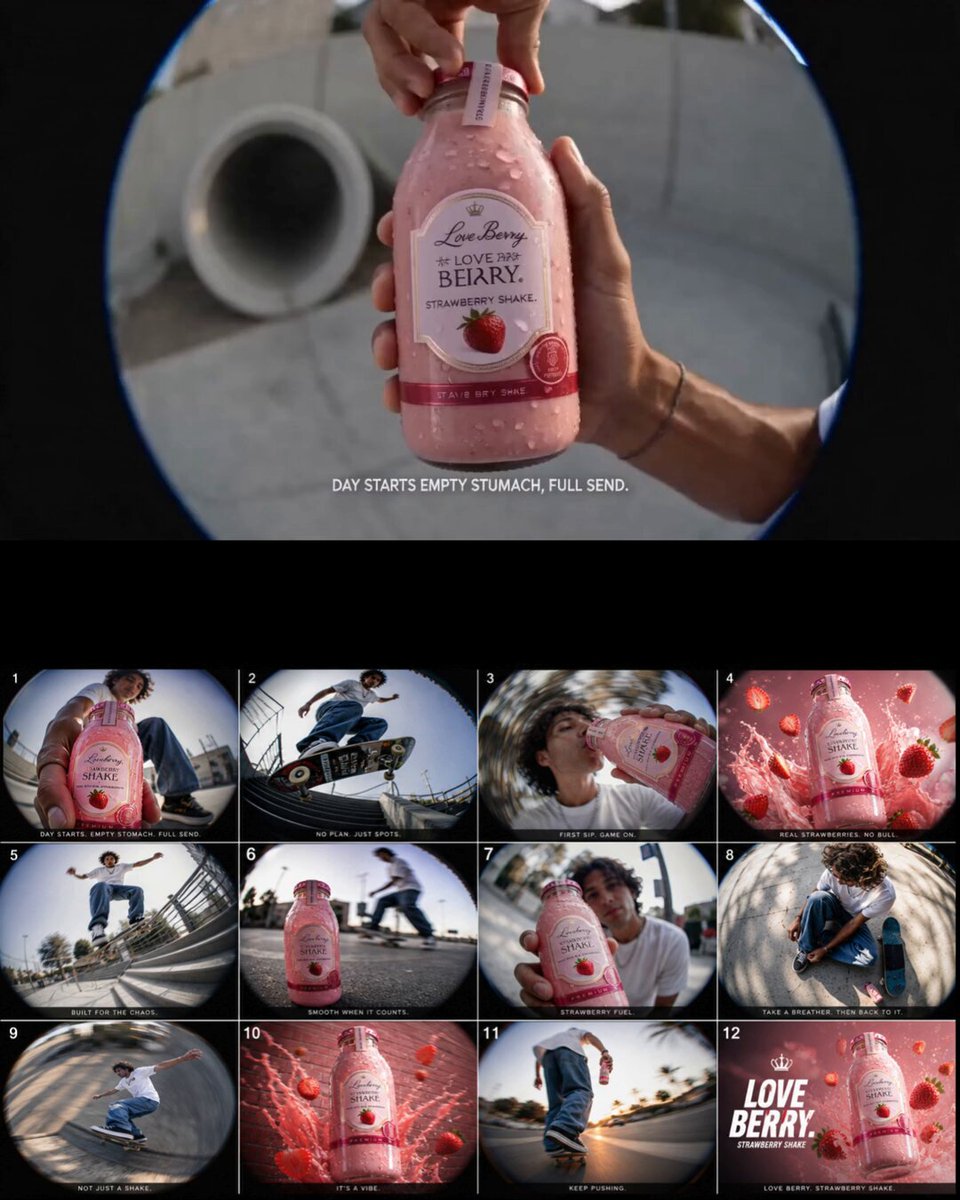
Why AI Video Became the Marketing Baseline
Video stopped being a special project a while ago. It is now the default unit of communication on nearly every channel a brand touches: vertical feeds, short-form recommendations, product pages, onboarding emails, sales decks, and paid placements. Platforms reward watch time and early retention, which means the first three seconds carry more weight than the final twenty. A single polished film released once a quarter simply cannot compete with a steady stream of sharp, well-targeted clips published every week.
Three things converged to make that pace achievable for ordinary marketing teams. First, generative video quality crossed the threshold where a two-to-five second clip can pass as real production footage at small sizes and in fast cuts. Second, editing tools became prompt-driven and template-aware, so assembling a timeline no longer requires knowing your way around nested sequences and keyframe curves. Third, distribution fragmented: the same idea now has to live as a 9:16 vertical, a 1:1 square, a 16:9 landscape, and often a six-second bumper version.
The practical result is that the bottleneck moved. It is no longer rendering power or editing skill. It is clarity of message, speed of iteration, and consistency of brand execution across dozens of small assets.
What "No Technical Skill" Actually Means for a Marketer
It is worth being precise here, because "no technical skill required" is often misunderstood in both directions. It does not mean the work is automatic. It does not mean anyone can produce a good marketing video without thinking. What it means is that the technical layer — model selection, sampling settings, frame interpolation, codec choice, render queues — has been abstracted away from the person making creative decisions.
Think about spreadsheets. You do not need to understand floating-point arithmetic to build a useful budget model. The maths is handled; your job is knowing which numbers matter. AI video works the same way. The system handles resolution, temporal consistency, encoding, and delivery formats. You handle:
- Audience clarity. Who is this for, and what do they already believe?
- Message architecture. One idea per video, not four.
- Taste. Recognising when a generated clip looks slightly wrong even if you cannot name why.
- Iteration discipline. Generating variants, comparing them fairly, and killing the weak ones quickly.
Everything below assumes you can do those four things. Nothing below requires you to write code, manage a render farm, or memorise a single technical parameter name.
The Five-Stage AI Video Workflow
The most reliable way to produce consistent output is to separate the work into five stages and finish each one before moving on. Skipping ahead — generating visuals before the message is settled — is the single most common cause of wasted hours.
Stage 1 — Brief and message architecture
Write one sentence that states the audience, the idea, and the action. For example: "For first-time buyers comparing starter kits, show that setup takes under two minutes, and drive them to the comparison page." If you cannot fit it in one sentence, the video will not be clear either.
Then decide the format constraint before anything else: a fifteen-second vertical ad, a forty-five-second explainer, or a looping product hero. Format drives script length, shot count, and pacing.
Stage 2 — Script and shot plan
A fifteen-second vertical video typically follows a five-beat structure: hook, problem, proof, offer, call to action. Write the voiceover first and read it aloud with a timer. Roughly two and a half words per second is a comfortable speaking pace, so fifteen seconds holds about thirty-five words.
Then convert the script into a shot list of four to eight shots. Each line should describe one visible thing: what the camera sees, what moves, and how long it lasts. This shot list becomes your generation queue and your edit skeleton simultaneously.
Stage 3 — Visual generation
Generate still images before you generate motion. Stills are faster, cheaper, and easier to compare side by side. Approve the composition, lighting, and framing of each shot as a still, then animate the approved frames. This two-step approach dramatically reduces the number of failed video generations, because most failures are actually composition failures.
For each shot, produce three or four variants and keep the best. Delete the rest immediately. A folder of forty near-identical clips is not a library; it is a decision you are avoiding.
Stage 4 — Voice, music, and sound design
Audio does more for perceived production value than resolution. If your voiceover is human, record it cleanly with a decent microphone in a soft-furnished room. If it is synthetic, choose a voice, then adjust pacing and emphasis per sentence rather than accepting the default read.
For music, use clearly licensed tracks or generated music you have rights to. Layer three sound elements under every video: music bed, voiceover or on-screen text, and at least a few transition or UI sound effects. Silence between cuts reads as amateur more often than any visual flaw.
Stage 5 — Assembly, captions, and delivery
Assemble in whatever editor you already know — a prompt-assisted editor, a template-based tool, or a traditional timeline. Keep the cut rhythm aligned to the music. Add burned-in captions for vertical formats; most viewers watch muted. Finally, export every required aspect ratio from the same master timeline and name files consistently: campaign_asset_variant_ratio_version.
Matching the Generation Method to the Job
Not every shot should be generated the same way. Choosing the right method per shot is where experienced AI video editors separate themselves from beginners.
Text-to-video
Best for establishing shots, abstract concepts, atmosphere, and anything where the exact product does not need to appear. Use it for backgrounds, transitions, and emotional framing.
Image-to-video and first-frame control
Best when composition matters. Generate or photograph a precise first frame, then animate it. This is the workhorse method for product-adjacent shots, because you control framing exactly before motion is added.
Avatar and voice-led explainers
Best for talking-head formats, testimonials, and instructional content where a consistent presenter builds trust. Keep avatars for scripted, well-lit, medium-shot framings; they struggle with complex hand gestures and fast camera moves.
Hybrid stock plus generated compositing
Best for real product footage that must be accurate. Shoot or license the product shot, then generate the environment around it. This produces the most defensible marketing assets because the product itself is genuine.
Motion graphics and data visuals
Best for pricing, comparisons, statistics, and process explanations. Generated footage rarely renders clean text, so build typographic and chart sequences in a design tool and cut them into the timeline.
A Prompting Framework for Marketing Footage
Prompting for video is not poetry. It is a structured brief for a very literal collaborator.
The six-slot prompt
Write every prompt with six slots: subject, action, environment, camera, lighting and lens, and mood or style. A retail example:
A woman in her thirties unboxes a matte black coffee grinder on a light oak kitchen counter, hands entering frame from the right, slow push-in on a 50mm lens, soft morning window light with gentle shadow falloff, clean minimal lifestyle aesthetic, muted warm colour palette.
Every slot answers a question the model would otherwise guess at.
Controlling motion
Motion is where AI video most often fails. Prefer slow, single-direction movement: a push-in, a slow pan, a subtle handheld drift. Avoid prompts that ask for multiple simultaneous actions, complex interactions between two people, or rapid camera whips. If a shot needs fast movement, cut to it rather than generating it.
Negative instructions and artifact avoidance
exclude
State what you do not want when the model supports it: no text, no watermark, no extra fingers, no warped faces, no flickering. Also avoid describing anything you would not accept in the final frame — models take instruction literally and will include that temporary prop you mentioned in passing.
Iteration discipline
Change one variable at a time. If you alter the lens, the lighting, and the wardrobe in the same revision, you learn nothing about which change fixed the shot. Keep a short prompt log per project so a successful frame can be reproduced weeks later.
Keeping Brand Consistency Across a Series
One good video is a deliverable. Ten videos that feel like the same brand is an asset.
Build a style bible
Document five things: colour palette with hex values, two or three typefaces with weights, lighting direction and quality, camera distance tendencies, and the emotional register of the brand. Two pages is enough. Share it with everyone who prompts.
Reference frames and recurring assets
Keep a folder of approved reference images: product angles, a consistent presenter, approved backgrounds, logo lockups. Feeding a reference frame into every generation is the fastest way to stabilise a series.
Colour, type, and logo discipline
Apply a consistent grade across all shots, even generated ones, so the footage sits in one visual world. Keep on-screen typography in your brand system and never let a model render your logo — composite it as a clean asset instead.
Series-level review
Review the whole batch at once, on a single screen, at thumbnail size. Inconsistencies that are invisible when watching one clip become obvious when watching eight in a grid.
Quality Control Before You Publish
Watch once at full speed, then frame-step
The first pass tells you whether the story works. The second pass — pausing on every cut — tells you whether the shots hold up. Frame-step through the first and last frame of each generated clip, where artefacts usually hide.
Hands, faces, text, and reflections
These four areas account for most visible generation errors. Check hands for finger count and joint direction, faces for eye symmetry and teeth, text for garbled characters, and reflective surfaces for impossible geometry.
Audio sync, loudness, and captions
Confirm that voiceover lands on the intended beat. Normalise loudness across the batch so no video in a series sounds quieter than the others. Proofread captions manually; automatic transcription reliably mangles product names.
Claims, rights, and disclosure
Verify every statistic, check that any music or footage is licensed for commercial use, and follow the disclosure rules that apply to your market and platform. Legal review is cheaper before publishing than after.
Scaling Variants Without Losing Craft
Variants are how you learn what works, but careless variants dilute a brand. Scale along four axes and no more:
- Hook variants. Same body, three different opening lines and first shots.
- Length variants. Fifteen seconds, thirty seconds, and a six-second bumper cut from the same master.
- Aspect ratio variants. Re-frame rather than crop blindly; text placement must be adjusted per ratio.
- Language variants. Translate the script, regenerate the voiceover, and keep visuals unchanged — the fastest international expansion available.
Build the master edit with modular segments so a variant is a swap, not a rebuild.
Common Mistakes and How to Avoid Them
- Generating before scripting. You end up with beautiful footage and no argument. Script first, always.
- Too many ideas in one video. One idea, one action. Split anything else into a separate asset.
- Chasing the most cinematic shot. Marketing video rewards clarity, not spectacle. A readable product shot beats a dramatic drone shot.
- Ignoring the first second. If the hook is a logo animation, you have spent your retention budget on nothing.
- Mixing visual styles. Photoreal next to illustrated next to 3D reads as chaos. Pick a lane per campaign.
- Skipping sound design. Unmixed audio is the fastest way to look amateur.
- No naming convention. Within a week, nobody knows which file is the approved version.
- Publishing a single cut. One variant is a guess; three variants is a test.
FAQ
Do I need editing experience to start?
No. Template-based editors and prompt-assisted timelines let you assemble shots, add captions, and export multiple ratios without timeline theory. You will still need to learn pacing by watching your own drafts critically.
How long does one thirty-second video take?
A first-time creator should budget four to six hours: roughly an hour on message and script, two on generating and selecting visuals, one on audio, and the rest on assembly and review. With a repeatable template, that drops to one to two hours.
Can generated footage be used in paid advertising?
Usually yes, if the platform and the market allow it and your licence covers commercial use. Rules differ by region and platform, particularly around synthetic presenters and political content, so check the specific policy before you spend on distribution.
How do I avoid the generic "AI look"?
Three fixes: use a specific lens and lighting description rather than a generic "cinematic" tag, grade all footage to one consistent colour palette, and cut faster than you think you should. Generic look comes from vague prompts and slow, over-long shots.
What if I need my real product in the video?
Shoot or license the product footage and generate only the environment around it. Compositing genuine product shots into generated scenes gives you accuracy and atmosphere at the same time.
Where should I start this week?
Pick one product, one audience, and one action. Write a thirty-five-word script, generate six stills, animate the best four, record a voiceover, and export a vertical cut. Publish it. The second video will take half as long, and by the fifth you will have a template worth documenting for your whole team.
