
Why prompt quality decides everything in AI video
Two creators open the same text-to-video tool, type a few sentences, and press generate. One walks away with a shot they can cut straight into a client edit. The other gets a blurred smear with a hand that dissolves into a doorframe. The tool was identical. The prompt was not.
Generative video models do not interpret intent the way a cinematographer does. They resolve ambiguity using statistical patterns learned from enormous amounts of footage and captions. Every vague word in your prompt is a branch point where the model guesses. Prompt writing is the craft of closing those branch points one by one until the only plausible output is the one you wanted.
That shift in mindset matters more than any single trick. A prompt is not a wish; it is a specification. It should read like a shot card handed to a crew: who or what is on screen, what they are doing, where the camera sits, how the light falls, how the frame moves, and what must never appear. Creative language still has a place, but it belongs in service of precision, not in place of it.
There is also a practical reason to treat prompting as a discipline rather than inspiration. Video generation is expensive in time. A render that takes minutes to produce and then fails on continuity costs you an afternoon of iteration. Strong prompts reduce the number of failed generations, which is the real currency of AI video work.
The anatomy of a strong video prompt
Most reliable prompts share a common architecture, even when they look different on the surface. Six blocks cover the vast majority of needs: subject, action, setting, camera, light and look, and constraints. The order matters less than the consistency. Pick an order, keep it, and you gain a huge debugging advantage: when a shot fails, you can swap one block at a time instead of rewriting everything.
Subject, action, and setting
The subject block should describe three to five concrete, visual attributes. Not "a woman" but "a woman in her late thirties with cropped silver hair, a charcoal turtleneck, and clay dust on her forearms." Models respond to specifics they can render: fabrics, textures, age ranges, posture, props.
The action block should contain one primary verb phrase with a visible start and end state. "She presses her thumb into the rim of a spinning bowl and the wall flexes and holds" is renderable. "She reflects on her career while working" is not. If a scene needs two actions, consider two shots.
The setting block anchors everything else: location, time of day, weather, depth of the background, and how populated it is. Background density in particular changes results dramatically. "A busy market street" invites chaos and morphing extras. "A quiet market street with one distant vendor" gives the model fewer things to get wrong.
Camera and lens language
Camera vocabulary is the highest-leverage block in the entire prompt, because it directly controls composition and perceived production value. Useful elements include focal length (24 mm for wide environmental context, 35 mm for naturalistic coverage, 50 mm for neutral portraits, 85 mm for compressed close-ups), aperture feel (shallow depth of field with soft background falloff, or deep focus where everything stays readable), camera height (eye level, chest height, low angle, overhead), distance and framing (wide, full, medium, close-up, extreme close-up), and movement (static lock-off, slow push in, pull back, lateral dolly, handheld drift, orbit, crane rise).
Combine two or three elements at most. "35 mm, medium close-up, chest height, very slow push in" is a complete instruction. Five camera terms in one prompt usually cancel each other out.
Lighting, color, and texture
Lighting determines mood more than any adjective about mood. Describe the source, its direction, and its quality. Sources include window light, practical lamps, overcast sky, neon signage, firelight, and bounced sunlight. Directions include backlit, side-lit from frame left, top-down, and rim light from behind. Quality ranges from soft and diffused to hard with crisp shadows to dappled through foliage. Color runs from warm tungsten to cool daylight to mixed magenta and teal to monochrome.
Texture vocabulary — fine grain, slight halation around highlights, subtle lens flare, a hint of atmospheric haze — helps push results away from the overly smooth, plasticky look that betrays synthetic footage.
Motion, timing, and pacing
Motion appears in three places: the subject, the camera, and the environment. Be explicit about all three when it matters. "She moves slowly, the camera is locked off, steam drifts upward in the background" tells the model exactly how much movement to allocate to each layer.
Timing cues are rough in most models, but you can still steer: "a single continuous action," "slow motion," "real-time pace," "the movement completes within the clip." If a clip keeps cutting off mid-gesture, add "the action resolves before the end of the shot."
Negative constraints and guardrails
Negative prompts are underused. A short, focused list prevents many of the most common failures: no on-screen text, captions, watermarks, or logos; no extra limbs, duplicated faces, or distorted hands; no sudden camera whips or unmotivated cuts; no flickering or warping of background architecture; no exaggerated slow motion unless requested. Keep the list tight. Twenty negatives dilute the ones that matter.
A repeatable prompt workflow from brief to final shot
Talent is nice; process is better. This five-step loop works for a single shot or a fifty-shot sequence.
Step 1: write the shot brief in plain language
Forget the model for a moment and describe the shot the way you would to a colleague. "We see a cyclist cresting a hill at dawn, backlit, she does not slow down, camera stays low and tracks alongside, everything feels cold and quiet." This is your intent document. If you cannot write this, no prompt will save you.
Step 2: translate the brief into prompt blocks
Now map each sentence onto the six blocks. Anything in the brief that has no home in the blocks is probably a mood note, and mood notes need to be translated into physical cues: "cold and quiet" becomes "blue pre-dawn light, mist in the valley, minimal ambient motion, muted palette."
Step 3: generate a small test batch
Run three to six variations, changing exactly one variable per variant. If you change camera and lighting at the same time, you learn nothing. Keep a note of what you changed.
Step 4: score the output against criteria
Score each result from one to five on subject fidelity, motion quality, camera accuracy, lighting consistency, and artifact level. This takes thirty seconds and prevents you from falling in love with a shot that fails on the axis that actually matters.
Step 5: lock and document the winner
When a prompt works, save it verbatim with the model name, aspect ratio, seed if available, and a note on what made it work. The best AI video teams build a library of proven prompts and reuse the structure across projects rather than starting from a blank page every time.
Matching prompt style to different model families
Prompt style is not universal. Vocabulary that produces beautiful results in one model can confuse another. Three broad families matter.
Text-to-video generation
These models build a shot from scratch, so they need the most complete specification. Subject, action, setting, camera, light, and constraints all carry weight, and long structured prompts are usually rewarded. Expect to iterate more here than anywhere else, and keep shot durations short and single-purpose.
Image-to-video and keyframe workflows
When you start from a still, most of the composition is already decided. The prompt shifts toward motion: what moves, how fast, in which direction, and how the camera behaves relative to the subject. Long style descriptions are wasted here — the image handles style. Write motion-first prompts and let the frame do the rest.
Reference-driven and style-transfer workflows
Some tools accept a reference image, a style sample, or a character sheet. The prompt's job becomes differentiation and control: specify what should change and what must stay identical. "Same face, same jacket, new environment" is a legitimate prompt. Be explicit about continuity, because models default to drifting.
Advanced techniques: camera simulation and cinematic language
Beyond the basics, a few techniques separate hobby output from footage that holds up on a timeline.
Depth of field and focus behavior
Real lenses behave in specific ways: focus breathes slightly, backgrounds fall off gradually rather than snapping, and close subjects compress. You can approximate this with phrases like "shallow depth of field, smooth background falloff, focus held on the subject's eyes." Avoid stacking multiple focus instructions; pick one plane of interest.
Movement vocabulary models reliably understand
In practice, these phrases resolve most consistently: slow push in, slow pull back, static lock-off, lateral tracking, handheld follow, slow orbit, crane up, tilt down. Vague words like "dynamic camera" or "cinematic movement" produce whatever the model feels like doing. Name the movement.
Continuity across shots
Sequence work lives or dies on continuity. Four levers help: reuse an identical subject description block across every shot in the scene; lock the palette and lighting vocabulary so cuts feel related; fix aspect ratio, frame rate feel, and grain across the sequence; and generate from a consistent keyframe or character reference when the tool supports it.
Prompt patterns for common production needs
Product and commercial shots
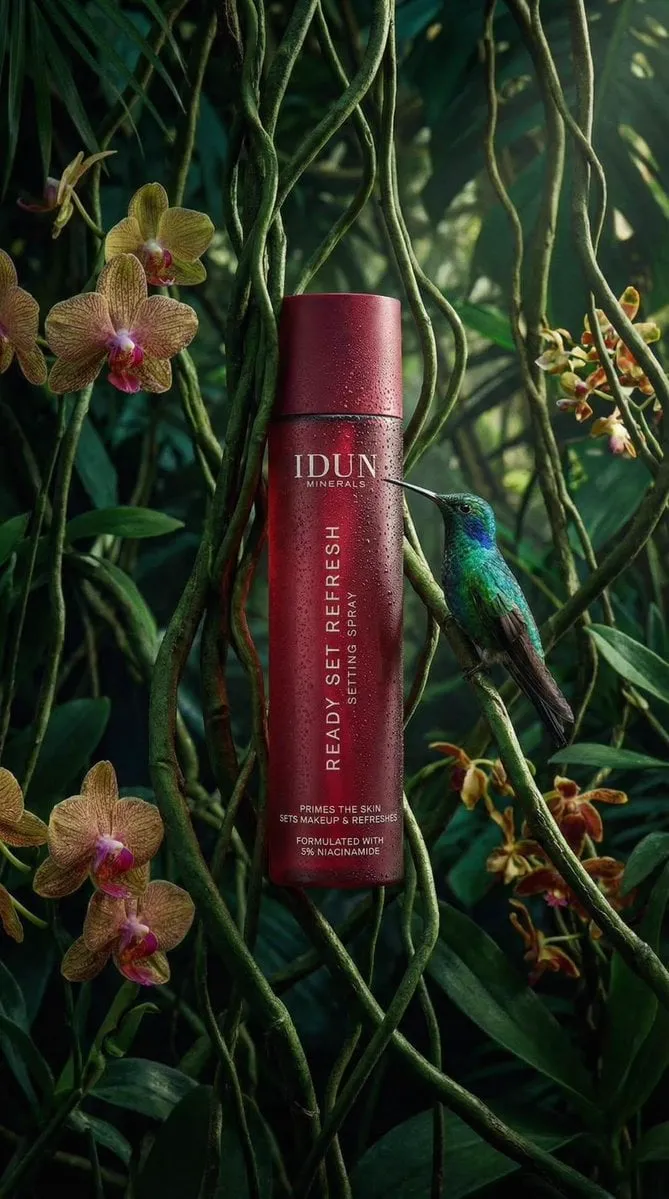
Lead with the product, not the mood. Describe material and finish ("brushed aluminum, matte ceramic, condensation on glass"), then a single hero movement — a slow rotation, a light sweep across the surface, a slow push toward the label. Add clean, controllable lighting and strict negatives for text and logos. Commercial work rarely needs complex narrative; it needs clarity and polish.
Character-driven narrative scenes
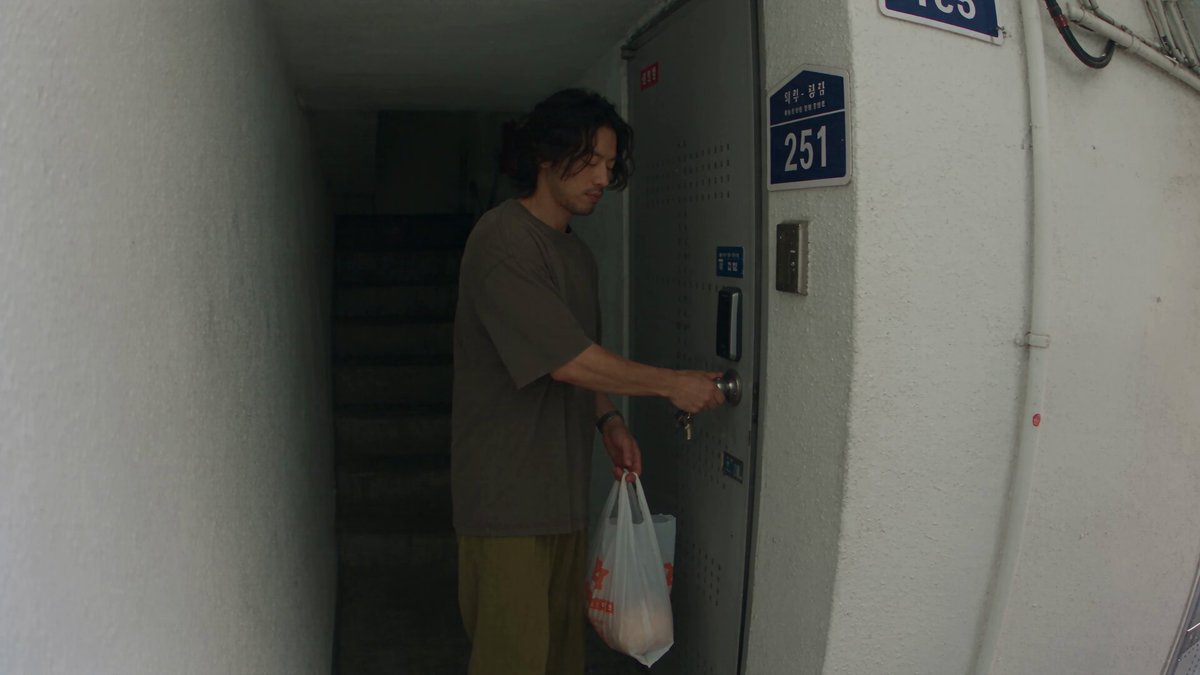
Keep each shot to one emotional beat. Describe micro-expression rather than broad emotion: "her jaw tightens and she exhales through her nose" beats "she is angry." Full-body and face-only shots respond differently to the same prompt, so decide framing first.
Environment and establishing shots
These reward wide focal lengths, deep focus, and atmospheric detail: haze, drifting clouds, moving water, distant traffic. Avoid crowds and dense foreground action, which is where warping shows up. A single slow push or a static frame with internal motion usually looks more expensive than an elaborate move.
Abstract, graphic, and social-first content
For loops and motion graphics, describe rhythm instead of narrative: "ink disperses in water, expands, contracts, repeats." Specify background color, aspect ratio, and whether the loop should be seamless. This is where negative prompts for text and logos matter most, because graphic output invites the model to invent typography.
Common mistakes and how to fix them
Overloading. Twelve style references and four camera moves produce mud. Fix: two or three style anchors, one camera idea.
Contradictions. "Handheld, perfectly stable" or "bright neon night, soft natural daylight." Fix: read your prompt aloud and delete the conflict.
Mood instead of physics. "A sad, lonely shot" tells the model nothing. Fix: translate emotion into light, posture, and pace.
Ignoring aspect ratio and duration. A vertical social clip and a wide anamorphic frame need different compositions. Fix: set format before writing.
Multi-beat action in one clip. The model smears transitions. Fix: split into shots.
No negative prompt. Artifacts repeat forever. Fix: keep a reusable five-to-eight item negative list.
No version control. You find the perfect prompt and lose it. Fix: document every keeper.
Building a prompt library and evaluating results
Treat prompts as production assets. A workable library structure: one file per project, one entry per shot, each entry containing the intent sentence, the prompt blocks, model and settings, a score out of five per criterion, and the link to the winning render.
Run structured comparisons when you are learning a new model. Take one proven prompt, hold everything constant except the model, and generate the same shot across three tools. You will quickly discover which model wants long descriptive prompts and which prefers terse motion instructions, and you will stop blaming yourself for outputs that were never going to work in that engine.
Also revisit old prompts periodically. Model updates change behavior, and a prompt that failed months ago may now produce exactly what you wanted.
FAQ
Do longer prompts always produce better video?
No. Longer prompts help when they add distinct, non-conflicting information. Length without new detail just dilutes attention. If two sentences say the same thing, cut one.
Should I write prompts in English?
English remains the most consistently supported language across major video models, especially for camera and lighting vocabulary. If you are working in another language, write in it for planning and control, then test whether English phrasing improves fidelity for your specific tool.
How many attempts should a single shot take?
Budget three to six generations per shot for exploratory work and one to three once your prompt library is mature. If a shot consistently fails after ten attempts, the problem is usually structural — the action is too complex for one clip.
Can one prompt cover an entire scene?
No. Generate shot by shot and assemble in your editor. Trying to get a full scene from one generation produces incoherent motion and continuity errors.
What is the single most impactful change a beginner can make?
Add camera and lighting blocks. Most beginner prompts describe only subject and action, which leaves composition and mood entirely to chance.
How do I stop characters from changing between shots?
Lock a detailed subject description, reuse it verbatim, use a character reference image where supported, and keep each shot short so the model has less time to drift.
Putting it into practice
Start with one shot. Write the intent sentence, translate it into six blocks, generate three variants, score them, and save the winner. Then do it again with a different shot and the same structure. Within a week you will have a personal prompt library and a working process, which is worth more than any list of magic keywords.
The craft is simple to describe and hard to shortcut: be specific, be consistent, change one thing at a time, and document what works. Every other technique in AI video builds on that foundation.
