
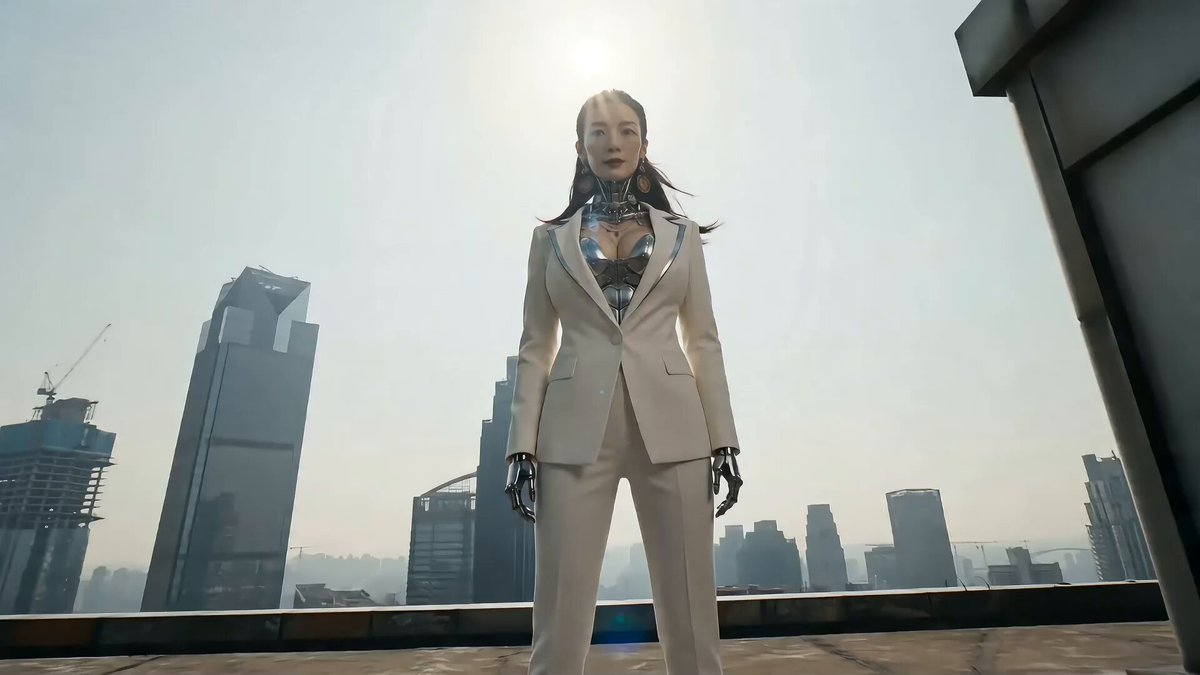
Why Prompt Structure Decides the Cinematic Look
Most disappointing AI video output is not a model failure. It is an instruction failure. When someone types "a woman walking through a rainy city at night, cinematic," the generator has to invent nearly every visual decision: where the camera sits, which lens it implies, how the light behaves, how fast the subject moves, what the palette is, and where the shot begins and ends. Each invented decision is a coin flip. Four good flips and one bad one is enough to make the clip feel amateur.
Structured prompts work because they convert open questions into constraints. A constraint does not guarantee a beautiful frame, but it removes an entire category of randomness. That is the whole discipline: decide what matters most, write it down in an order the model can parse, and leave the rest to chance deliberately rather than accidentally.
The best mental model is a shot card written by a director for a department that has never met them. A gaffer needs to know the source of light. A camera operator needs to know the move. An editor needs to know the beat. Your prompt has to answer those questions in one pass, because the model gets no second read of the script.
A second reason structure matters: consistency across shots. A single beautiful clip is a demo. A sequence of clips that feel like the same film is a production. Sequences only hold together when the repeating variables — palette, lens family, grain, light direction — are named explicitly and reused verbatim.
The Anatomy of a Cinematic Prompt
A cinematic prompt has five functional layers. Not every shot needs all five in equal detail, but knowing which layer is weak tells you exactly what to fix after a bad render.
Layer 1: Subject and Action
This is the only layer most beginners write, and it should be the shortest. Name the subject precisely, describe posture and intent, and specify the action as a continuous verb rather than a series of states. "A fisherman hauling a net, leaning back against the weight" gives the model a body in tension. "A fisherman" gives it a mannequin.
Resist the urge to over-describe wardrobe unless clothing affects silhouette or motion. A coat that billows is a motion decision. A coat that is merely blue is decoration that competes for attention with the lighting words.
Layer 2: Environment and Time
Where and when sets the physics of the light. "Wet cobblestone alley, pre-dawn, thin mist at knee height" tells the model that light is low, diffuse, blue-leaning, and that the ground is reflective. Those implications do everything for you downstream.
Include one or two environmental behaviors rather than objects: drifting smoke, falling snow, wind in the canopy. Environmental motion is the cheapest way to make a static frame feel alive.
Layer 3: Lighting
The single highest-leverage layer. Name the source, the direction, the quality, and the ratio between key and fill. "Single hard key from camera left, deep shadow on the right side of the face, no fill" is far more useful than "dramatic lighting."
Adjectives like moody or cinematic are labels for results. Words like backlit, rim light, practical lamp in frame, soft window bounce are descriptions of causes. Models respond to causes.
Layer 4: Camera and Lens
Specify framing, lens character, height, and movement. "Medium close-up, 50mm equivalent, slightly below eyeline, slow push in" is a shot. "Cinematic shot" is a wish.
Lens language carries emotional meaning. Wide lenses exaggerate space and make people feel small; long lenses compress depth and isolate. Low angles confer power; high angles confer vulnerability. Choosing these deliberately is most of what people mean when they say a clip "looks like a film."
Layer 5: Motion, Mood, and Texture
End with tempo and grade: how fast the shot breathes, and what the image feels like in the hand. "Slow, deliberate pacing, warm highlights, cool shadows, subtle 35mm grain, shallow depth of field" completes the picture.
Texture words are your finishing department. Without them, output tends to look clinically clean, which reads as synthetic even when the composition is perfect.
A Reusable Prompt Template
Template beats inspiration when you are producing volume. Here is a fill-in structure that works across most text-to-video, image-to-video, and video-to-video systems:
- Shot type and lens — framing, focal length, aperture feel, camera height
- Subject and action — who, doing what, with what intent
- Environment and time — location, hour, weather, atmosphere
- Lighting — source, direction, quality, contrast ratio
- Camera movement — push, pull, pan, track, handheld, static
- Tempo — how fast action and camera evolve across the clip
- Grade and texture — palette, contrast, grain, halation, format cues
- Exclusions — what must not appear
Keep the whole prompt between roughly 40 and 90 words for a single shot. Below that you are leaving too much to chance; far above it, later instructions start diluting earlier ones, and models tend to weight the beginning and end of a prompt more heavily than the middle.
Directing Motion and Temporal Coherence
Motion is where AI video separates itself from AI image generation, and it is where most prompts fail. A prompt that describes a static arrangement of objects produces a clip with a slowly drifting camera and nothing else happening.
Name three kinds of motion explicitly:
- Subject motion — what the person or object physically does
- Camera motion — how the frame itself travels through space
- Environmental motion — wind, water, smoke, crowds, light flicker
Then set a tempo. "Slow, sustained push in" and "quick handheld follow" describe completely different films even with identical subjects.
Temporal coherence is the harder problem. Long clips tend to drift: faces morph, props change shape, backgrounds rearrange. You can reduce drift with three habits.
First, keep shots short and cut more. Two coherent five-second shots beat one incoherent twelve-second shot in almost every narrative context.
Second, anchor identity. If you are generating a character across shots, describe the same three or four permanent features every time — hair shape, garment silhouette, a distinguishing prop — and keep that description in exactly the same words in every prompt.
Third, keep the camera move simple. A single slow push is easy to maintain. A push that becomes an orbit that becomes a crane rise inside one clip invites the model to lose track of the world.
Lighting, Lens, and the Language of Cinematography
You do not need a film school vocabulary, but you do need about twenty precise words. These are the ones that change output most noticeably:
- Key, fill, rim, and practical — the four light roles
- Hard vs. soft — shadow edge quality
- High-key vs. low-key — overall brightness ratio
- Backlit, sidelit, top-lit, underlit — direction relative to subject
- Golden hour, blue hour, overcast, hard noon — natural light states
- Shallow depth of field, deep focus, rack focus — what is sharp
- Anamorphic flare, halation, bloom, grain — optical texture
- Handheld, gimbal, dolly, crane, static — camera support and feel
Combine them in pairs that reinforce each other. "Overcast soft light with a subtle rim from a shop window" is coherent. "Hard noon sun with soft diffused shadows" contradicts itself, and the model will pick one arbitrarily, which is exactly the unpredictability you are trying to eliminate.
One more tip: describe what the light does to the subject, not just where it comes from. "Rim light catching the edge of her hair" produces a specific, checkable result. "Good lighting" produces nothing checkable at all.
Shot Lists: Thinking in Sequences, Not Clips
A cinematic result is usually three to six shots, not one. Before writing prompts, write a shot list with one line per shot:
| Shot | Framing | Movement | Beat |
|---|---|---|---|
| 1 | Extreme wide, 24mm | Slow drone descent | Establish scale |
| 2 | Medium, 50mm | Static | Introduce character |
| 3 | Close-up, 85mm | Slow push | Emotional turn |
| 4 | Wide, 35mm | Handheld follow | Action |
| 5 | Insert, macro | Static | Detail payoff |
Now write one prompt per row, reusing the same lighting, palette, and texture phrases across all five. Consistency comes from repetition, so copy-paste those clauses rather than paraphrasing them. If you rephrase "cool shadows, warm highlights" as "warm shadows, cool highlights" in shot four, you have made a different film.
For sequences with a recurring character, generate a reference still first, lock it, and use image-to-video so the model inherits the face instead of reinventing it. Text-only generation is for establishing shots and mood pieces; identity-critical shots belong in an image-driven pipeline.
Iteration: Weights, Negatives, and Controlled Variation
Treat each render as an experiment with one variable changed. If you change framing, lighting, and grade simultaneously, you learn nothing from the result.
A practical loop:
- Render a baseline at low resolution with the shortest acceptable duration.
- Identify the single worst attribute — composition, light, motion, or texture.
- Rewrite only the clause responsible.
- Re-render and compare side by side, not from memory.
Some interfaces support weighting syntax, usually parentheses or numeric emphasis. Use it sparingly. Doubling the emphasis on one phrase often starves the rest of the prompt. A useful rule: if you need heavy weighting to get an element, the element is probably fighting another clause, and deleting the competitor works better than amplifying the winner.
Negative prompts deserve the same discipline. List only defects you have actually seen — "extra fingers, warped hands, watermark text, flickering background" — and keep the list short. A negative list of forty items starts suppressing legitimate detail along with the defects.
When variation is the goal rather than precision, flip the strategy: keep the subject and lighting constant, and vary only camera height and lens. You will get a coherent set of options that a director could actually choose between, instead of five unrelated images.
Common Mistakes and How to Fix Them
Mistake: stacking adjectives. "Cinematic, epic, stunning, breathtaking, masterpiece" adds no information and consumes prompt space. Fix: replace each adjective with the cause it implies.
Mistake: describing a story instead of a shot. A prompt that covers a beginning, middle, and end asks the model to fit a narrative arc into a few seconds. Fix: one shot, one beat.
Mistake: ignoring aspect ratio and format. Vertical social clips, widescreen narrative, and square inserts need different compositions and different focal lengths. Fix: state format and frame your subject for it before writing anything else.
Mistake: contradicting yourself. "Handheld static wide close-up" is noise. Fix: read the prompt aloud and remove any clause that fights another.
Mistake: prompting a face you have not locked. Fix: generate and approve a reference image first, then animate it.
Mistake: judging from a single render. Slow motion, texture, and detail appear inconsistently. Fix: render three takes of the same prompt before concluding anything.
Mistake: letting the model choose the ending. Clips often drift in the final second. Fix: describe an end state — "settles into stillness with her hand still raised" — so the shot lands somewhere intentional.
A Six-Pass Production Workflow
Here is the process that keeps quality high without endless rerendering.
Pass 1 — Script and beat sheet. Write the sequence in plain language with one emotional beat per shot. No AI vocabulary yet.
Pass 2 — Shot list. Assign framing, lens, movement, and duration to each beat.
Pass 3 — Constraint block. Write the reusable clauses: palette, lighting style, grain, lens family, and the character's permanent features. Save this block as a text snippet you paste into every prompt.
Pass 4 — Prompt assembly. Combine the constraint block with the per-shot clause. Keep the constraint block in identical wording across all shots.
Pass 5 — Test renders. Generate low-cost previews, review them as a sequence back to back, and cut any shot that does not belong to the same film.
Pass 6 — Final renders and assembly. Regenerate approved shots at full quality, then edit to a rhythm — cut on motion, not on stillness, and keep each shot only as long as it earns.
A useful constraint on the whole process: if a shot takes more than five rewrites to work, the shot is wrong, not the prompt. Replace it with a simpler idea and move on. Simplicity renders reliably; complexity renders roughly.
FAQ
How long should a video prompt be? For a single shot, 40 to 90 words. Long enough to cover all five layers, short enough that no clause gets ignored.
Do camera terms like "dolly" and "crane" actually work? Yes, and they work better than generic words like "dynamic." Models learned camera vocabulary from captioned footage, so specific support terms map to specific motion patterns.
Why does my character's face change between shots? Because each generation starts from scratch. Lock a reference image and drive every shot from it with image-to-video, repeating the same three to four identity descriptors verbatim.
Should I write prompts in my own language? Write in the language you think in, then check the output. If the results feel generic, test the same prompt in English. Terminology density in English-language training data is often higher, and translation can flatten technical camera terms into vague ones.
How do I get that film look rather than a clean digital look? Add texture: grain amount, halation around highlights, slight lens flare, shallow depth of field, and mild color contrast between highlights and shadows. Clean and sharp reads as synthetic; imperfect and slightly soft reads as photographed.
What about audio and dialogue? Describe the atmosphere in the prompt — room tone, distance, ambient weather — and handle dialogue separately in post. Audio models read lip movement from picture, so a clear, front-facing, well-lit close-up will dub more convincingly than a backlit profile.
Can one prompt produce a whole scene? Rarely with quality. Multi-shot prompts tend to average out, producing one mediocre wide shot. Build sequences shot by shot and cut them together.
What is the fastest way to improve? Keep a log. For every clip you like, save the prompt and note which clause did the heavy lifting. Within twenty renders you will have a personal library of clauses that consistently work, which is worth more than any generic list of magic words.
The Takeaway
Cinematic AI video comes from constraint, not luck. Write the shot like a director: framing and lens first, then subject and action, then environment, then lighting, then movement, then grade. Reuse the same palette, light direction, and texture clauses across every shot in a sequence so the clips belong to one film. Iterate one variable at a time, keep a log of what works, and accept that a shorter, simpler, well-specified shot will almost always beat an ambitious vague one. Do that consistently and the output stops looking generated.
