
Why the Bar for Short-Form Video Moved So Fast
Short vertical video used to be forgiven for looking rough. A phone, a window, a talking head, and a hook were enough. That tolerance has largely disappeared. Viewers now scroll past footage that looks flat within two seconds, and they do it without consciously deciding anything — the thumb just keeps moving. What changed is not that audiences suddenly became film critics. What changed is supply. When millions of creators publish every day and generative tools make competent footage cheap, the only thing left that reliably stops a scroll is craft.
The craft itself, though, has shifted shape. Cinematic short-form does not mean expensive. It means deliberate: a clear subject, controlled light, a camera move that means something, sound that lands on the beat, and a cut rhythm that respects how fast attention decays. Generative video models have made several of those decisions easier — and a few of them harder, because a model will happily give you a beautiful shot that has nothing to do with the shot before it.
This guide walks through the production side of that problem. It covers shot design for vertical framing, how to choose between different AI video models by shot type, how to hold visual consistency across clips using keyframes and reference frames, how lighting and sound separate forgettable work from memorable work, and how to build an editing rhythm that keeps retention high. It ends with a repeatable end-to-end workflow, the mistakes that break most short-form projects, and an FAQ.
The Real Shift: From Novelty to Directing
The early appeal of AI-generated video was novelty — the fact that anything moved at all. That appeal is gone. What replaced it is a directing problem. A tool can produce a convincing close-up of a person walking through rain at night. It cannot decide that the shot should be a close-up, that the rain should arrive on the third beat of the music, and that the character should never be seen from behind because the story depends on their face.
That is the dividing line now. Creators who treat generative tools as a camera department and themselves as directors consistently outperform creators who treat the tools as a slot machine. The directing work looks like this:
- Shot intent. Every clip answers one question: what does the viewer need to know or feel right now? If a clip does not answer that, it is B-roll at best.
- Coverage. Even a fifteen-second piece benefits from three or four angles of the same moment. One continuous generated shot rarely has enough internal variation to hold attention.
- Continuity anchors. A consistent wardrobe, color palette, lens character, or location element that tells the viewer these clips belong together, even when the model generated them separately.
- Sound-first structure. Music, ambience, and impact sounds are planned before generation, not after, because they dictate timing.
If you adopt only one habit from this article, adopt the first one. Shot intent is the cheapest quality upgrade available and it costs nothing but a sentence of thinking before you generate.
Framing for Vertical: Shot Design That Survives a Phone Screen
Vertical framing is not horizontal framing cropped. The aspect ratio changes what a shot can communicate, and it changes how fast a viewer reads it.
Depth over width
Horizontal frames are naturally good at showing relationships — two people, a landscape, a room. Vertical frames are naturally good at showing a single subject with depth behind them. Lean into that. Put your subject in the lower third, let the environment stack above them, and use foreground elements to create layers: a doorway edge, a railing, a branch, a passing figure.
Keep the subject close
At phone size, a full-body wide shot of a person becomes a colored dot. If the story is about a person, the frame should usually be medium or close. Reserve wide shots for establishing location and cut away from them quickly.
Motion should be one-directional
Generative video models handle a single, clearly stated camera move far better than a compound one. "Slow push in" works. "Push in while panning left and tilting up" produces mush. When you need complexity, get it from subject motion inside a stable frame instead of from camera motion.
Plan the top and bottom bands
Vertical platforms often overlay interface elements near the top and bottom of the frame. Compose with that in mind — keep faces and key action in the middle band, and treat the extremes as margin. This single habit prevents the most common complaint about short-form edits: important action hidden behind a caption bar.
Choosing an AI Video Model by Shot Type
Model selection is usually debated in the abstract — which one is best. That question has no answer. The useful question is which model is best for this specific shot, given the constraints of time, consistency, and control.
Use these criteria to evaluate any model against your project:
- Motion fidelity. Does it handle the specific motion you need — walking, water, fabric, hands, vehicles, crowds? Most models have a genre they are strong in and a genre they are weak in.
- Temporal stability. Watch for flicker, texture crawl, and morphing in the background. A shot that looks great in a still frame can fall apart at second four.
- Prompt adherence. How literally does it follow a described camera move and subject action? Some models reward very short prompts; others need structured detail.
- Control surfaces. Keyframes, reference images, depth or pose conditioning, motion strength, seed locking. More control matters enormously when you need consistency across clips.
- Duration per generation. Longer single generations reduce the number of seams you must hide, but they also reduce how tightly you can control each beat.
- Resolution and upscaling behavior. Check whether detail holds after upscaling, especially in faces and text.
A practical pattern that works across most projects: use a general-purpose model for establishing and B-roll shots where a small inconsistency is invisible, and a model with strong reference or keyframe control for any shot featuring a recurring character or repeating location. Never rely on a single model for an entire piece unless the piece is deliberately stylized in a way that hides seams.
Matching model to moment
- Opening hook shot. Prioritize impact and clarity over realism. A slightly stylized frame reads faster on a small screen.
- Character close-ups. Prioritize facial stability and skin detail. Avoid models that drift in eye shape or teeth between frames.
- Action and motion. Prioritize physical plausibility. Slow the described action slightly in the prompt; a shot that moves at 80% speed often looks more expensive than one at full speed.
- Product or object shots. Prioritize edges, reflections, and text. Text rendering is still the most fragile element in generative video, so plan to add text in editing rather than generating it.
- Transition plates. Prioritize abstract, high-contrast imagery that can be cut fast without the viewer noticing continuity gaps.
Keyframe Control and Visual Consistency
Consistency is the single hardest problem in AI-assisted short-form production. A viewer will forgive an unrealistic effect. A viewer will not forgive a jacket that changes color between two shots of the same scene.
Build a continuity kit before you generate
The continuity kit is a small collection of reference assets you reuse across every generation in a project:
- One or two reference stills of each recurring character, ideally from multiple angles.
- A color palette sample — three to five colors that define the piece.
- A location reference image, even a rough one.
- A written style block: lens character, lighting direction, time of day, grain level, aspect ratio.
Paste the style block into every prompt in the same wording. Changing the wording changes the look, even when the meaning seems identical.
Use first and last frames deliberately
When a model supports specifying a starting frame and an ending frame, you gain something close to storyboarding. You can generate the end state of a shot as a still image, then let the model interpolate the movement between your chosen start and end. This dramatically reduces the number of unusable generations, because you have already decided where the shot begins and where it ends.
A useful technique is chaining: the last frame of shot A becomes the first frame of shot B. The cut between them then feels like a continuation rather than a jump, which is exactly what you want for continuous action. For deliberate cuts, break the chain and change the angle instead.
Control variables one at a time
When a generation fails, beginners change five things at once. Professionals change one. Keep the seed fixed, keep the style block fixed, and adjust only the motion description. Once the motion reads correctly, adjust the lighting description. Then adjust framing. This is slower per iteration but far faster overall, because you learn which variable caused the problem.
Accept controlled imperfection
Perfect consistency across many clips is expensive to achieve and often unnecessary. If your edit is fast enough, small differences read as camera variation rather than continuity errors. The exception is faces and branded objects — those must match, always.
Light, Color, and Sound: The Cheap Differentiators
Most short-form work fails on three things that have nothing to do with the model you chose: flat lighting, default color, and unconsidered sound.
Lighting is direction
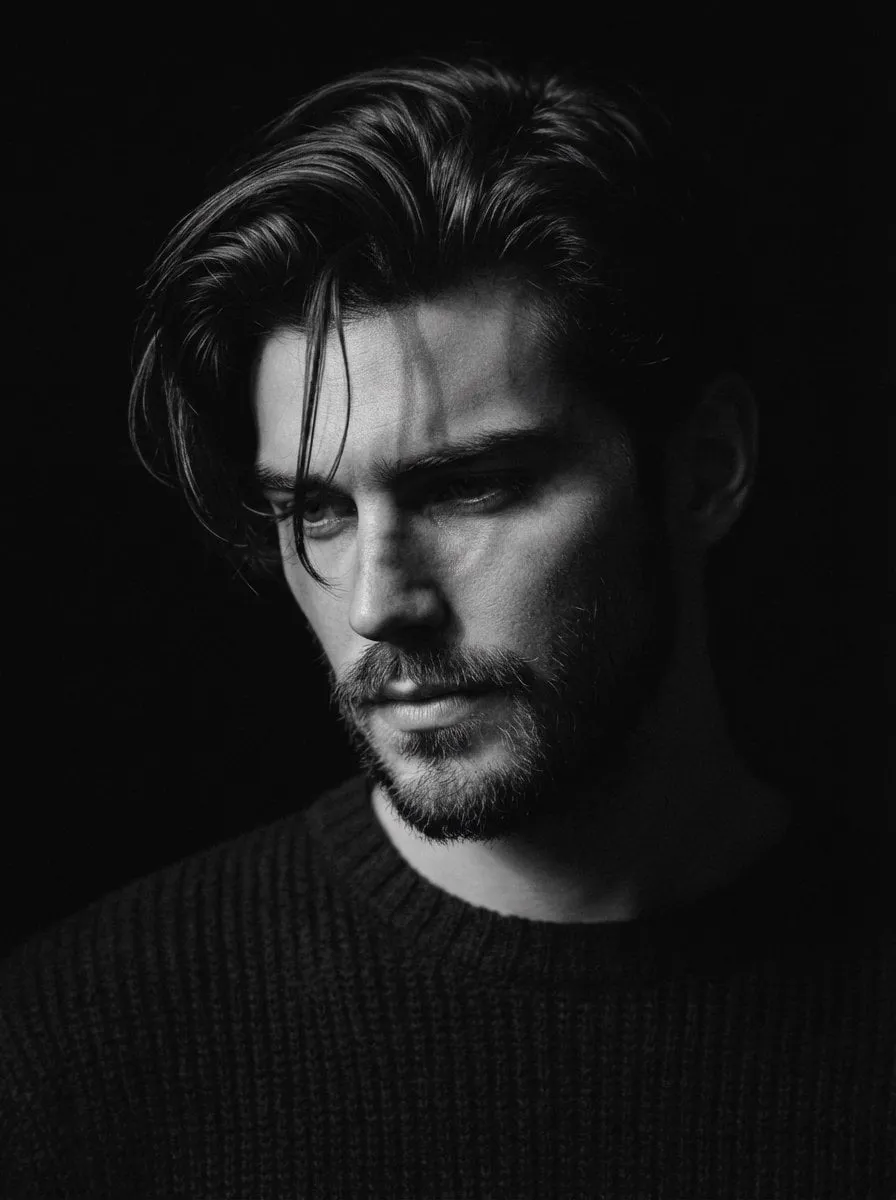
The single most common mistake in generated footage is describing lighting as a mood rather than a direction. "Dramatic lighting" gives you nothing. "Single hard light from camera left, deep shadows on the right side of the face, cool ambient fill from behind" gives you a shot. Specify direction, hardness, color temperature, and where the shadows fall. That is the entire vocabulary you need.
Color should be decided once
Pick a palette and enforce it. A simple approach: choose one dominant color for the environment, one contrasting color for the subject or key object, and keep everything else desaturated. Apply this in your prompts through wardrobe and setting descriptions, and reinforce it in editing with a consistent grade. The viewer will not name the palette, but they will feel that the clips belong together.
Sound carries more weight than resolution
Audiences tolerate soft footage. They do not tolerate bad audio. Build a sound bed in three layers:
- Music. Choose or compose to a defined tempo, and cut on the beat. A 120 BPM track gives you a cut opportunity every half second, which is more than most short-form edits need.
- Ambience. Room tone, wind, traffic, crowd. Ambience is what makes a generated shot feel like a real place rather than a render.
- Impacts. Footsteps, a door, a whoosh on a transition, a low hit on a reveal. Impacts are what make edits feel intentional.
Generate or source audio separately and assemble it in your editor. Do not expect generated video to arrive with usable sound.
Editing Rhythm and Retention Structure
Short-form editing is a retention discipline. The viewer is always one second away from leaving, and your job is to make the next second more interesting than the alternative.
The first two seconds
Open on motion, a face, or a question. Never open on a logo, a wide establishing shot, or a slow fade. If your best shot is at the end, move it to the beginning and rebuild the sequence around it.
The retention curve
Think of a short-form piece as three zones:
- Zone one, zero to three seconds: interruption. A visual or auditory event that breaks the scroll.
- Zone two, three to twelve seconds: escalation. Each shot should add something — new information, a new angle, a faster cut, a louder sound.
- Zone three, final seconds: resolution or loop. Either land the payoff or design the ending to flow back into the opening frame, which encourages rewatching.
Cut on action, not on stillness
Cutting while something is moving hides imperfections and feels energetic. Cutting on a static frame feels like a slideshow. If your generated clips are short, find the frame where the motion peaks and cut one or two frames into it.
Vary shot length intentionally
A sequence of identical-length shots feels mechanical. Alternate long and short. A three-second shot followed by two half-second shots creates a rhythm that reads as professional even when the imagery is simple.
Captions and text
Add text in the editor, not in the generation. Keep captions inside the safe middle band, use one typeface, and animate them in a way that matches the edit rhythm. Avoid animating every line the same way.
A Repeatable End-to-End Workflow
This is the sequence that produces consistent results with the least wasted effort.
- Write the beat sheet. Ten to twenty lines describing what happens, second by second. No visuals yet, just beats.
- Choose the sound. Lock music and key impacts. The beat sheet should now have timings attached.
- Design the shot list. For each beat, decide shot size, camera move, subject action, and lighting direction. Write these as short spec lines.
- Build the continuity kit. Reference stills, palette, style block.
- Generate stills first. Produce key frames before animating anything. Stills are fast and cheap to iterate; video is not. Only animate frames you are satisfied with.
- Animate with keyframes. Use start and end frames where possible, keep the seed fixed, change one variable per attempt.
- Assemble a rough cut with placeholder audio. Judge the sequence before you polish anything. If the rough cut does not hold attention, better footage will not save it.
- Replace weak shots. Identify the two or three clips that drag and regenerate only those. Do not regenerate the whole project.
- Grade and mix. Apply the palette, level the audio, add ambience and impacts.
- Export in the correct aspect ratio and test on a phone. Watch it once on mute, once with sound, once at arm's length. Each pass reveals different problems.
Common Mistakes and How to Fix Them
Too much camera movement. Fix: keep one move per shot, and prefer subject motion in a stable frame.
Inconsistent character appearance. Fix: build a reference set, use reference-conditioned generations for every character shot, and lock the style block wording.
Beautiful shots, no story. Fix: write the beat sheet before generating anything. If a shot does not serve a beat, cut it.
Text baked into generated footage. Fix: remove text from prompts and add it in the editor.
Slow openings. Fix: move your strongest shot to position one. Always.
Uniform pacing. Fix: deliberately vary shot durations and cut on motion peaks.
Neglected audio. Fix: budget as much time for sound as for visuals. In practice, sound is where the perceived quality gap lives.
Over-generating. Fix: generate stills first, animate selectively, and iterate one variable at a time.
Evaluating Results: What to Measure
Aesthetics are not metrics, but the two connect. Track a small set of numbers per piece and compare them across projects:
- Two-second hold rate. The percentage of viewers still watching at two seconds. This measures your opening shot.
- Average watch time as a percentage of length. This measures pacing and structure.
- Rewatch indicator. Looping endings produce this; it is one of the strongest quality signals available.
- Completion rate. Falling completion suggests a weak middle or an overlong piece.
- Save and share behavior. These indicate usefulness or emotional impact, not just entertainment.
Review the numbers alongside the actual edit. If the two-second hold is weak, the problem is the first shot. If completion drops mid-piece, the problem is escalation. If completion is strong but shares are low, the piece is competent but not distinctive.
FAQ
Do I need multiple AI video models?
Not necessarily, but most projects benefit from at least two: one with strong general motion quality and one with strong reference or keyframe control for recurring characters and locations.
How do I keep a character consistent across shots?
Build a reference set from several angles, use a written style block with identical wording in every prompt, use reference conditioning where available, and regenerate only the shots that drift.
Are long single generations better than short ones?
Longer generations reduce seams but reduce control. A practical compromise is generating three to five second shots and chaining them with shared start and end frames.
Should I generate audio with the video?
Treat generated audio as a starting point at most. Assemble music, ambience, and impacts separately in your editor for full control over timing.
How many iterations should a shot take?
If a shot needs more than five or six attempts, the prompt is probably describing something the model cannot do. Simplify the action or change the angle.
What aspect ratio should I master in?
Master in the vertical ratio you publish in, and keep a horizontal version of the project if you also publish to wider platforms. Do not crop a vertical edit horizontally after the fact — recompose instead.
Is cinematic short-form only possible with a big team?
No. The differentiators are shot intent, lighting direction, sound design, and pacing. Those are decision habits, not budget items.
Where to Focus Next
If you take one thing from this guide, make it the order of operations: decide intent, lock sound, design shots, build a continuity kit, generate stills, then animate. Almost every quality problem in AI-assisted short-form traces back to doing those steps out of order — animating before deciding, polishing before structuring, and generating footage for beats that were never worth shooting in the first place.
The tools will keep changing, and the specific model that produces the best rain shot this month may not be the best next month. The directing habits will not change. Framing for vertical, controlling light direction, cutting on motion, and designing sound with intent are portable across every tool you will ever use — and they are the reason some short-form work feels cinematic while equally expensive-looking work feels forgettable.
