
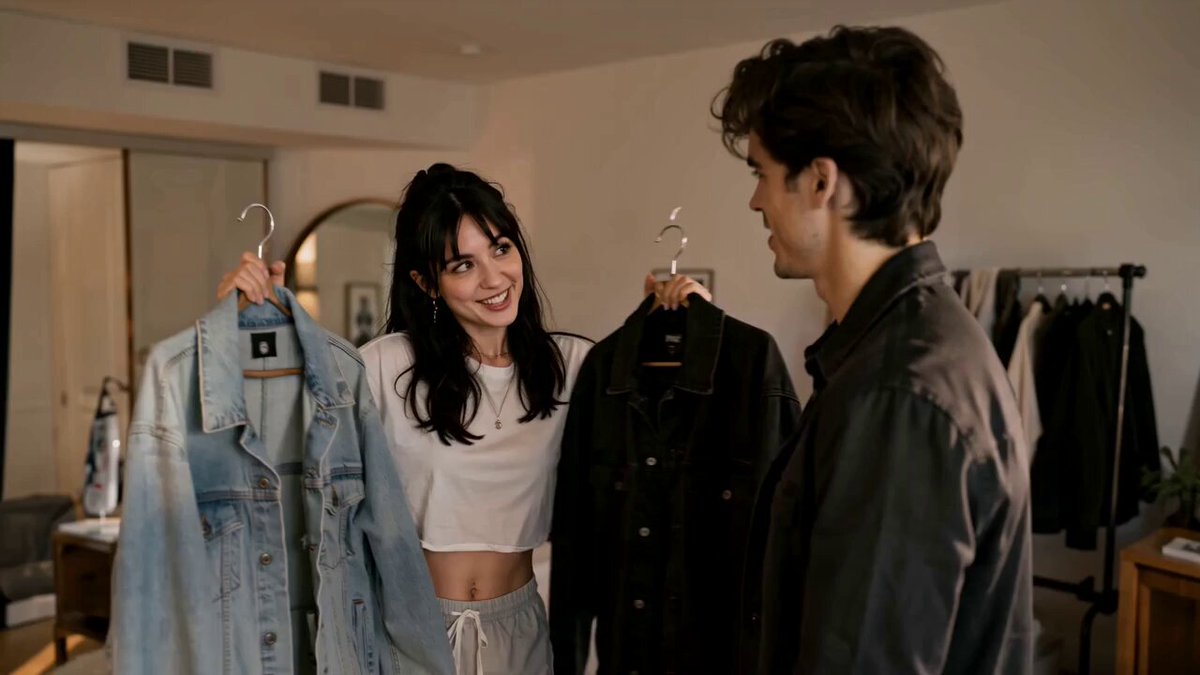

Short-form video is the one channel where distribution is decided by viewers rather than by budgets. A viewer who forwards a clip to a friend is doing something no paid campaign can buy at scale: they are lending their own credibility to your message. That single act is the strongest signal a recommendation system can receive, and it is also the hardest thing to engineer on purpose.
The good news is that shareability is not magic. It comes from a small number of repeatable decisions that can be planned before a single frame is generated, then supported by a production workflow fast enough to test those decisions weekly. This guide walks through the whole chain: what makes a short worth sending, how to design for that outcome, how to build the production pipeline around AI video tools, and how to read the numbers so you know which lever to pull next.
Why Shares Compound Faster Than Views
Views are a vanity metric with a short half-life. Shares, saves, and sends behave differently: each share exposes the clip to a new cluster of viewers who share context with the sender. Those clusters tend to be dense — friend groups, group chats, team channels, niche communities — which means one share can seed several more impressions among people who are unusually likely to care.
That is why platforms weight sharing so heavily. A like is a private nod. A share is a public bet that the recipient will enjoy the clip, and viewers only make that bet when the content does one of a few specific jobs for them.
There are three practical consequences for marketers:
- Reach is downstream of relevance. Broad targeting in the creative brief produces broad, forgettable clips. Narrow creative with a strong point of view travels further because it gives specific people a reason to tag a specific friend.
- Format beats production value. A phone-shot clip with a sharp hook will out-share a polished commercial that takes twenty seconds to get to the point.
- Consistency is a distribution asset. When the same face, colors, and tone appear across every clip, viewers start recognizing the source before they finish the first second. Recognition lowers the risk of forwarding something unfamiliar.
The last point is where AI-assisted production changes the economics. Historically, visual consistency across dozens of clips required a full shoot day with the same talent, wardrobe, and location. Now a locked character reference and a style specification can hold that consistency across clips generated weeks apart — as long as you build the workflow to enforce it.
The Anatomy of a Short People Actually Forward
Before looking at tools, it helps to understand the structure that makes forwarding feel natural. Almost every heavily shared short does three things in sequence.
The first second and a half owns the outcome
The opening frame has one job: make the viewer stop moving. Not explain, not introduce, not set up context — stop. Techniques that reliably work include a visual contradiction (something that should not be where it is), a direct address that implies the viewer is being spoken to personally, a mid-action entry that skips the setup entirely, and a text promise that is specific enough to be falsifiable.
What fails is the calm establishing shot. Opening on a wide landscape with a logo overlay tells the viewer nothing is at stake. In a feed where the next swipe costs nothing, that is enough to lose them.
The middle must pay off a promise, not build suspense
Television builds tension and resolves it at the end. Short-form works in the opposite order: state the payoff early, then deliver it in a tight sequence. A clip that says "three ways to fix bad lighting" should show the first fix by second four. Withholding value to keep people watching is a habit from longer formats and it backfires badly in feeds, because the viewer's alternative is infinite.
The ending must hand the viewer a reason to send it
This is the part most clips skip. A strong ending makes the act of sharing obvious: it names the person who needs it ("send this to the friend who always shoots at night"), it lands a punchline that begs to be screenshotted, or it summarizes a take so cleanly that forwarding it is faster than explaining it in words.
Designing the Share Trigger Before You Write the Script
The most useful planning exercise takes two minutes. Write down the exact message a viewer would send when they forward your clip. Real examples:
- "This is literally what I told you last week."
- "We need this for the launch."
- "Watch until the end, I'm crying."
- "Save this, it's the checklist we needed."
If you cannot write that message, the clip has no share trigger and no amount of editing will rescue it. Most share triggers fall into one of five types:
- Utility — the clip saves the recipient time or solves a specific problem.
- Identity — the clip expresses something the sender believes, so forwarding it is a form of self-expression.
- Emotion — surprise, delight, or a moment of recognition strong enough to want to share the feeling.
- Social currency — the sender looks helpful, informed, or funny for having found it first.
- Insider knowledge — the clip reveals something the audience suspects but rarely hears stated plainly.
Decide which one you are building toward, then let that choice dictate the hook, the pacing, and the ending. A utility clip should end with a summary the viewer can screenshot. An identity clip should end with the strongest statement, not a call to action that dilutes it.
A Repeatable Workflow for AI-Assisted Short-Form Video
The value of AI video generation is not that it removes work; it is that it removes the scheduling bottleneck. You can produce a testable clip on Monday, learn something by Wednesday, and ship an iteration on Thursday. That loop only works if the process is documented.
Step 1 — Write a one-page brief with a beat sheet
Keep it to a single page: the share trigger, the target viewer, the promise in the first line, five to seven beats, and the closing line. Beats are better than scripts at this stage because they give you room to adapt when a generated shot does not look the way you imagined. A beat sheet also makes it obvious when a clip is trying to do three things and should be split into three clips.
Step 2 — Lock character and style references
Before generating anything, define your visual system:
- Character sheet: one or two reference images per recurring person, including face, wardrobe, and a neutral pose.
- Style spec: lens feel, color palette, contrast, film grain, lighting direction.
- Setting kit: three or four recurring environments so the world feels stable across clips.
Store these in a shared folder with a naming convention that a teammate can follow six months later. This is the single highest-leverage habit in the entire pipeline.
Step 3 — Generate in shots, not in whole scenes
Long single prompts invite drift. Generate in short, specific shots — a close-up reaction, a product detail, a wide establishing frame — and treat generation as casting rather than directing. Produce three or four takes per shot, keep the two that read clearly at thumbnail size, and discard the rest without sentimentality.
Step 4 — Sound design and emotional sync
Audio is what makes a technically fine clip feel real. Plan for:
- Voice: consistent tone, pace, and energy across clips. A voice that sounds bored will kill a funny line.
- Foley and ambience: small sounds — a cup set down, fabric movement, room tone — sell the reality of a generated shot more than additional visual detail will.
- Music: choose the emotional register first, then the track. Do not pick a trending sound and reverse-engineer the story around it unless the trend itself is the hook.
Step 5 — Cut for the scroll, not for the timeline
Edit vertically first: hook frame, beats, payoff, ending. Then trim. Most first cuts are twenty to thirty percent too long, and the excess almost always lives in the middle. Check caption safe zones, keep on-screen text to a few words per card, and make sure the clip still works with sound off, because a meaningful share of viewers will watch that way.
Step 6 — Publish, measure, and iterate on one variable
Change one thing per iteration: the hook, the length, the ending, or the platform cut. Changing several at once makes the results unreadable. Keep a simple log — hook type, length, share rate — and patterns will appear within a few weeks.
Keeping Visual Consistency Across Dozens of Clips
Consistency is where most AI-assisted content strategies quietly fall apart. Clip one looks great, clip nine looks like a different brand. The fix is discipline rather than any single feature.
Work from references, not descriptions alone. Describe a person in words and every generation reinvents them. Attach the same reference frames and the model has far less room to drift.
Separate what must stay fixed from what should vary. The face, palette, and setting stay locked. Camera angle, pacing, and wardrobe details can vary. Teams that lock everything produce monotonous content; teams that lock nothing produce unrecognizable content.
Build a style strip. Export six to eight still frames from your best-performing clips and keep them visible during generation. It is a fast sanity check: does the new shot belong in this set?
Version your look. When you intentionally refresh the visual identity, create a new version rather than editing old assets. Old clips should still look intentional in a feed.
One Idea, Many Cuts: Platform Delivery Without Duplication
Publishing the identical file everywhere is the most common reach-limiting mistake. Each platform has its own rhythm, aspect ratio, and audience expectation. Instead of making one cut and posting it four times, plan for variations:
- Vertical full-frame (9:16) for the primary feed placement, with captions above the lowest safe zone.
- A shorter cut that removes the slower middle beat for platforms with faster completion patterns.
- A hook-swapped cut that leads with the second-best beat, useful for retesting a clip that underperformed.
- A text-first version for audiences that watch with sound off.
- A square or landscape crop for placement in community posts or email, which often get better click behavior than a stretched vertical.
Keep the core idea identical across all of them. Repetition of idea builds memory; repetition of file builds fatigue.
The Numbers That Actually Predict Sharing
Most dashboards lead with views, which tells you almost nothing about whether your creative is working. Track these instead:
- Shares per thousand views. The cleanest proxy for creative quality. If this number is flat while views rise, you bought attention rather than earned it.
- Three-second hold rate. Diagnoses your hook. A weak hold rate means the opening frame or first spoken line needs work.
- Completion rate and rewatch. Rewatches suggest the clip is being enjoyed more than once, which usually correlates with sending.
- Saves. A save is a deferred share. High saves with low shares often means your ending lost the momentum the middle built.
- Comment sentiment, not volume. Read the first fifty comments. They tell you which beat landed and which one was misread.
- Follower conversion per share. If shares are high but follows are not, your clips are useful but not attributable — add a consistent visual signature so people know whose work they just enjoyed.
Treat any published benchmark as directional, not as a target. The right comparison is your own clips in the same format, measured week over week.
Mistakes That Quietly Cap Reach
Front-loading brand instead of value. A logo intro consumes the most valuable second you have.
Writing for the algorithm instead of a person. Clips built to satisfy a checklist tend to lack a point of view, and point of view is what people forward.
Over-cleaning the visuals. Hyper-polished footage can read as advertising, which suppresses sharing. Mild imperfection — handheld motion, natural light, small background noise — increases credibility.
Wasting the last second. Ending on a generic call to action instead of the strongest line is the most common self-inflicted wound in short-form.
Ignoring the comment section. Comments contain the exact phrasing your audience uses when they forward your clip. Reuse that phrasing in future hooks.
Publishing without a caption strategy. Captions are not accessibility decoration; for sound-off viewers they are the script.
Generating too much and deciding too late. A pipeline that produces fifty shots with no selection criteria produces fifty mediocre clips.
A Sustainable Weekly Cadence
Volume matters, but only if quality holds. A cadence that works for small teams looks like this:
Monday — plan. Review last week's numbers, pick two share triggers, write two one-page briefs with beat sheets.
Tuesday — generate. Lock references, produce shots for both briefs in one session, select aggressively.
Wednesday — assemble. Voice, music, foley, first cuts. Trim everything by ten percent.
Thursday — adapt and schedule. Create platform variants, write captions, schedule the first clips.
Friday — study. Read comments, log share rate and hold rate, note one hypothesis to test next week.
The rhythm matters more than the specific days. Batching generation and batching editing separately prevents the context switching that slows small teams down.
Frequently Asked Questions
How long should a short-form video be?
As short as the idea allows. Many highly shared clips run between fifteen and forty seconds because the payoff arrives quickly. Length should be dictated by the number of beats the idea genuinely needs, not by a platform maximum.
Do AI-generated clips get penalized?
Platforms care about viewer behavior, not production method. What gets suppressed is content that looks templated and interchangeable. Distinct characters, original voice, and a clear point of view are what keep AI-assisted clips performing.
How do I keep the same character across many clips?
Use reference images rather than text descriptions, keep a written character sheet with wardrobe and palette details, and generate multiple takes per shot so you can discard the drift. Consistency is a process, not a setting.
Should I post the same clip on every platform?
No. Keep the idea and rebuild the cut. Different lengths, hooks, and caption treatments let one idea perform across several audiences without feeling duplicated.
What should I measure first?
Shares per thousand views and three-second hold rate. Together they tell you whether people found the clip worth sending and whether they stopped at all.
How often should I change my visual style?
Rarely, and deliberately. Small refreshes every few months keep things feeling current, but changing the look every week destroys the recognition that makes consistent posting compound.
What if a clip performs badly?
Almost every underperformer fails in one of three places: the hook, the middle payoff, or the ending. Re-cut the same footage with a different opening frame before you abandon the idea entirely.
Start With One Clip, One Trigger, One Variable
The temptation is to rebuild everything at once: new tools, new formats, a new posting schedule. A better first move is smaller. Choose one share trigger, write the forwarding message you want viewers to send, build the clip around it, and record how many shares it earns per thousand views.
Then repeat, changing one variable per attempt. Within a month you will know which hooks your audience forwards, how long they tolerate, and which visual signature they recognize. That knowledge is more valuable than any single clip — and it is what turns short-form video from a gamble into a channel you can forecast.
