
Why AI Video Production Still Feels Complicated
Every few months a new generative video engine arrives with a demo reel that looks like a feature film. The reaction inside most content teams is predictable: the tool gets tested, a handful of clips get generated, someone posts the best one to a team channel, and then the project quietly returns to the old workflow. The demo was impressive; the production reality was not.
That gap is rarely caused by weak models. Current engines can render convincing faces, coherent camera moves, and believable environments. The gap comes from orchestration. A finished video is not one generation — it is dozens of small decisions. Which shot needs a locked character identity? Which sequence needs a specific camera move? Which clips must be upscaled before they can sit next to live-action footage? When those decisions live across five browser tabs and three chat threads, progress slows to a crawl.
The paradox of modern AI video is that more choice creates more complexity. Each engine has its own prompt dialect, its own duration limits, its own interpretation of “cinematic,” and its own way of handling aspect ratios, motion blur, and lip sync. A project that needs forty shots may touch four or five tools, and every switch costs attention. Teams that ship consistently do not solve this by finding one perfect model. They solve it by treating models as interchangeable parts behind a stable process.
Treat Video Models as Interchangeable Parts
The mental shift is simple but powerful: stop asking “which AI video tool is best?” and start asking “which tool is best for this specific shot, in this specific sequence, under this deadline?” That reframing turns a tooling problem into a routing problem, and routing problems are solvable.
Know what each engine class does best
Most generative video systems fall into recognizable categories:
- Text-to-video engines excel at mood, atmosphere, and establishing shots. They are ideal for opening beats, dream sequences, and B-roll where exact subject identity matters less than tone.
- Image-to-video engines give you control over the starting frame. If you can generate or photograph a strong keyframe, you can often get a more predictable result than any text prompt will produce.
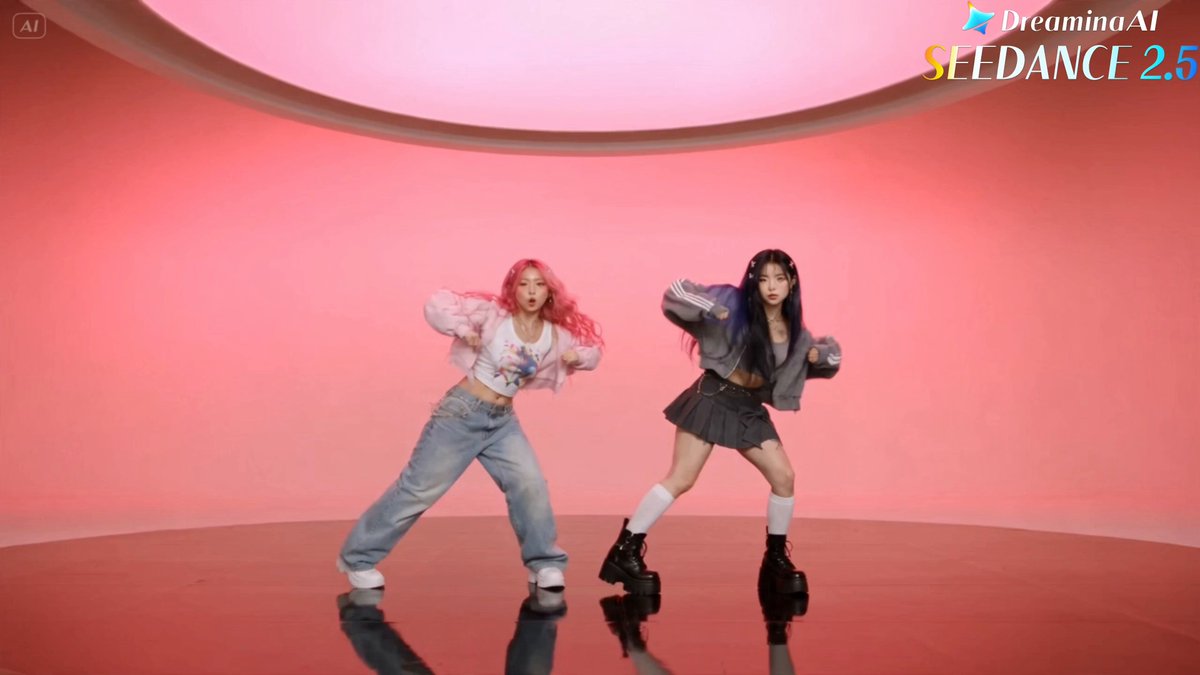
- Motion and pose transfer tools copy choreography, gestures, or camera paths from a reference clip. They are the fastest route to dance sequences, product spins, and repeatable brand motion.
- Dialogue and lip sync engines handle talking heads, presenter segments, and localized versions of the same scene in multiple languages.
- Enhancement tools — upscalers, frame interpolators, denoisers, and stabilizers — rarely get the spotlight, but they determine whether a generated clip can survive contact with a real timeline.
When you classify tools this way, “which model?” becomes a checklist question instead of an identity question.
A five-point rubric for choosing an engine
Score every engine you use on five criteria, and keep the scores in a shared document:
- Fidelity — how close does the first usable output get to your target look?
- Controllability — how precisely can you dictate camera, subject, and motion?
- Consistency — how well does it hold a face, a wardrobe, or a location across shots?
- Latency — how long from prompt to reviewable clip, including queue time?
- Cost per usable second — not cost per generation, because a cheap model that needs nine attempts is not cheap.
The fifth criterion is the one teams most often skip, and it is usually the one that decides the budget.
The hidden tax of constant switching
Every time you move between engines, you re-enter a slightly different mental model. Prompt phrasing changes. Negative prompt conventions change. Aspect ratio handling changes. Duration limits change. Researchers studying creative tool switching have long observed that context reconstruction eats a surprising share of working time, and AI video amplifies this because output quality is so variable.
The fix is not “never switch.” It is to make switching deliberate. Assign a default engine for each shot category, document the prompt patterns that work, and only deviate when the default fails twice.
Character Consistency Is the Real Bottleneck
Ask a hundred creators what limits AI video, and most will not say resolution or frame rate. They will say the face changed between shot two and shot seven.
Character drift is the single most expensive problem in generative production because it forces reshoots at the clip level. A three-second shot that no longer matches becomes a twenty-minute detour.
Build a character bible before you generate
A character bible is a folder plus a one-page brief. It contains:
- Six to ten reference images: front, three-quarter, profile, full body, neutral expression, and two or three emotional states.
- Wardrobe notes with exact color names, because “dark blue” and “navy” can produce visibly different results.
- Lighting notes: the reference images should share consistent lighting so the engine is not averaging conflicting information.
- A short written description of age, build, hair, and any distinguishing features.
- A list of forbidden traits: “no facial hair,” “no glasses,” “no visible logos.”
Test identity across five hard shots
Before committing to a full sequence, run an identity stress test. Generate five short clips that are deliberately difficult: a profile angle, a fast turn, a low-light scene, a close-up, and a wide shot. Look for three failure signals:
- Feature fusion, where the subject inherits traits from multiple references.
- Identity softening, where the face becomes generic after a few seconds of motion.
- Wardrobe and hair color shifts that appear only under certain lighting.
Fixing these at the test stage costs minutes. Fixing them after a twenty-shot sequence costs a day.
Multi-image fusion and reference workflows
Modern engines increasingly accept several reference images at once and blend them into a subject representation. This is the practical path to consistency, but it has rules. Keep references stylistically compatible. Avoid mixing heavily retouched images with natural ones. Prefer images where the subject occupies a similar portion of the frame. And keep the reference set small — three to six well-chosen images usually outperform fifteen mediocre ones.
When a shot refuses to cooperate, the most reliable workaround is to generate a still keyframe first, approve it, and then animate it with an image-to-video model. You trade a little motion spontaneity for a large gain in control, and in narrative work that trade is almost always correct.
Directing With an AI Agent: From Script to Shot List
An orchestration agent — software that reads your script, proposes structure, and coordinates generation — changes the shape of the work. Instead of prompting shot by shot, you brief a system and refine its plan.
Script breakdown and beat mapping
Feed in a script or a rough idea, and a capable agent will return a beat breakdown: which lines are action, which are dialogue, which are visual transitions. From there it drafts a shot list with suggested durations, framing, and continuity notes. This is the same work a first assistant director and storyboard artist would do, compressed into a few minutes.
The output is rarely perfect, but it is a starting point you can edit, which is far faster than building from nothing.
Cinematography suggestions that respect physics
Good agents do more than label shots “wide” or “c lose-up.” They suggest camera movement that a real camera could perform: a slow dolly in, a handheld follow, a crane reveal. They also flag physically implausible requests — an orbit around a subject while also pushing in tight, for example — before you waste generations discovering that the engine cannot resolve contradictory motion instructions.
Feedback loops that shorten review cycles
Where agents shine is iteration. Instead of regenerating blindly, you tell the system what was wrong: “the pacing drags in the middle,” “the character turns too fast,” “the lighting is warmer than the previous shot.” A structured agent can translate that into revised prompts or revised shot plans, which turns vague creative notes into actionable changes.
Multi-reference control for narrative coherence
A director holds continuity in their head across an entire sequence. An agent can hold it in structured data: which locations have been established, which characters appear in which shots, what the light direction was in the previous scene. When you generate shot twenty, the system can warn you that the sun has moved in the wrong direction.
That kind of continuity tracking is the difference between a collection of clips and a film.
A Repeatable Pipeline, Stage by Stage
The teams that produce reliable AI video are not improvising. They follow roughly the same five stages every time.
Pre-production: lock the look
Write the script, cut it to the target length, and build the shot list. Then create visual references: a mood board, a color palette, a lighting plan, and character bibles. Generate three to five test frames per key scene and approve them before any motion work begins. This stage should consume 20 to 30 percent of the total project time, and skipping it is the most common cause of expensive rework.
Generation sprints
Generate in batches organized by scene, not by convenience. Within a batch, keep the same reference images, the same seed where available, and the same prompt template. If the first three clips in a batch show drift, stop and fix the inputs before generating the remaining twelve.
A practical rule: never generate more than eight clips without reviewing and locking the previous eight.
Assembly and sound
Bring approved clips into a standard editing timeline. Cut on motion, not on clip boundaries, so transitions feel natural. Add temporary music early — it exposes pacing problems faster than any storyboard review. Then layer sound design: ambience, foley, impact hits. AI-generated visuals without sound design read as demo footage; the same visuals with sound read as production.
Finishing and delivery versions
Upscale, stabilize, and color-match clips so they sit together seamlessly. Add grain or texture if the footage looks too clean next to practical shots. Then export the delivery matrix: widescreen, vertical, square, and subtitled variants. Building the matrix automatically from one master timeline saves hours and prevents version confusion.
Technical Foundations That Keep Long Projects Stable
Design decisions made early determine whether a project scales or collapses at shot sixty.
Modular architecture and job queues
Generation should run as queued jobs, not as manual clicks. A queue lets you submit twenty variations, walk away, and review a sorted set later. It also makes retries cheap and lets you pause expensive jobs when a deadline shifts. Modular pipelines — separate modules for script parsing, prompt construction, generation, and post-processing — mean a change in one engine does not require rebuilding everything else.
Metadata, naming, and reproducibility
For every generated clip, store the prompt, the model and version, the seed, the reference images, and the parameters. Use a naming convention that encodes scene, shot, and take, such as s03_sh07_t02_v3. Six months later, when a client asks for a different expression in that one shot, you will be able to reproduce the surroundings exactly instead of guessing.
Monitoring and retry policy
Track how often generations fail or get rejected. A rejection rate above roughly half usually means the prompt template is wrong, the references are conflicting, or you are asking an engine to do something outside its strengths. Set an automatic retry limit of two, and then escalate to a different engine or a different approach.
For small teams, this does not require elaborate infrastructure. A shared folder convention, a spreadsheet with prompt columns, and a consistent naming rule deliver most of the benefit.
Decision Criteria: One Engine or a Portfolio?
Use a single engine when your output is stylistically uniform, your volume is low, your deadline is short, and consistency requirements are moderate. Social clips, mood-driven brand content, and internal concept reels often fall here.
Use a portfolio of two to four engines when:
- Your project mixes dialogue, action, and product photography.
- Character identity must hold across more than ten shots.
- You need multiple aspect ratios with the same visual language.
- Your deadline allows staged review rather than a single pass.
- Different scenes have genuinely different aesthetic requirements.
The routing heuristic that works best in practice: choose a default engine that handles about 70 percent of your shots, then route exceptions by shot type. Document the exceptions in your shot list so nobody re-litigates the decision mid-production.
Mistakes That Quietly Kill AI Video Projects
- Starting with a full sequence instead of a test shot. Always validate look and identity on three clips first.
- Prompt-only character work. Without image references, faces drift within a single scene.
- No shot list. Improvising shot by shot guarantees pacing problems in the edit.
- Judging clips individually. A clip that looks great alone can be wrong for the sequence rhythm.
- Ignoring motion physics. Requests that contradict each other produce warped results that no amount of retrying fixes.
- Leaving sound for last. Music and ambience change which visuals even work.
- Treating aspect ratio as an afterthought. Vertical crops destroy carefully composed wide shots.
- Skipping versioning. Without stored parameters, you cannot reproduce or iterate reliably.
- Generating overly long clips. Short clips cut together usually beat one long, unstable take.
- Chasing a new engine mid-project. Adopt new tools between projects, not during final delivery.
FAQ
Do I really need more than one AI video engine?
Not always. If your content is short, stylistically consistent, and does not depend on a recurring character, one strong engine may cover everything. Multi-engine workflows pay off when shots have genuinely different requirements — dialogue, product detail, choreography, and environment work rarely live in the same model.
How do I keep a character consistent across many shots?
Build a reference set of three to six images with consistent lighting, generate a still keyframe for each shot, approve it, then animate it. Test identity on deliberately hard angles before committing. Store the seed values and references so future shots can be produced under identical conditions.
How long does a thirty-second AI video take?
For a team with an established pipeline, expect roughly two to four days including script, shot list, generation, review, assembly, and finishing. The generation itself is a small fraction of that. Review, selection, and sound design dominate the schedule.
Can AI workflows handle dialogue scenes?
Yes, but the bar is higher. Dialogue requires lip sync accuracy, emotional continuity, and often multiple language versions. Generate the performance first with a locked keyframe, then apply lip sync as a separate pass, and always review at full speed rather than frame by frame.
What single change improves quality most?
Replacing prompt-only generation with keyframe-first generation. Approving a still image before animating it eliminates most identity drift, composition errors, and wasted iterations.
How should I budget a generative video project?
Budget by usable seconds, not by generations. Track how many attempts each approved clip required, multiply by your engine cost, and add time for review and post-production. That number is the realistic figure to take into planning.
What about rights and licensing?
Check the terms of every engine you use for commercial reuse, training restrictions, and output ownership. Keep a record of which engine produced which shot so you can answer client questions later without archaeology.
Your First Two Weeks: A Practical Plan
Week one is about calibration. Pick two engines — one for atmosphere, one for controlled subject work — and run the same five prompts through both. Record which handles faces, motion, and text rendering better. Build one character bible and run the identity stress test. Write a one-page pipeline document that names your default engine per shot type.
Week two is about execution. Choose a sixty-second concept, produce a proper shot list, and generate in batches of six to eight clips per scene. Review, lock, and cut. Add music and sound design before you judge the picture. Then deliver two aspect ratios from a single master timeline.
The goal of that first project is not perfection. It is a repeatable process with documented decisions, so the second project takes half the time. Once your pipeline is stable, new models become upgrades you can absorb rather than disruptions you have to survive.
