
Why the Sora vs Kling Question Misses the Real Bottleneck
Whenever a new generation of video models lands, the conversation collapses into a two-name rivalry. Sora versus Kling. Flagship versus challenger. The framing is entertaining, but it is a poor guide for anyone who actually has to deliver a finished video on a deadline.
Here is the uncomfortable truth from production work: the gap between an average clip and an excellent clip has less to do with which model generated it than with the decisions made before the first render — the brief, the shot list, the reference frames, the prompt structure, and the edit. Two teams using the exact same generator can produce work that looks a generation apart, because one team treats the model as a camera and the other treats it as a slot machine.
That does not mean the models are interchangeable. They are not. Modern flagships have genuinely different strengths. Some lean toward cinematic realism and complex scene composition. Others lean toward stylized motion, human performance, and tight control over start and end frames. Specialist tools beat both on narrow jobs such as multi-reference compositing or fast vertical loops.
So the useful question is not which model wins. It is which model fits this shot, and what does the pipeline around it look like. The rest of this article answers that with decision criteria, a step-by-step workflow, consistency techniques, and the mistakes that quietly consume entire afternoons of render time.
What the Next Generation of Video Models Actually Changed
Motion coherence and physical plausibility
Earlier models generated motion that read as plausible for a second or two before collapsing: hands merged, feet slid, objects changed shape mid-shot. Current models hold spatial logic across much longer spans. Cloth reacts, liquid pours, crowds move with individual timing. This matters most for anything involving human performance, because audiences are ruthless at detecting fake body language even when they cannot name what feels wrong.
Native audio and synchronized speech
Audio used to be a separate post-production problem. Several models now generate ambience, sound effects, and dialogue with lip synchronization in the same pass. For talking-head content, explainers, and short narrative beats, this removes an entire layer of work. It also raises the bar: a perfectly synced but emotionally flat delivery is more jarring than a silent clip with a well-written voiceover underneath it.
Instruction following and camera language
Prompt adherence improved more than raw visual quality. You can specify a slow dolly in, a handheld follow, a crane reveal, or a locked-off wide, and get something close to what you asked for. Wide, medium, close-up, over-the-shoulder, low angle — these words now do real work in a prompt instead of acting as vague seasoning. That shift is what makes AI video plan-able rather than purely experimental.
Flexible duration, resolution, and aspect ratios
Clips extend further, extend more gracefully, and export in vertical, square, and widescreen without a separate render. That single change is why AI video stopped being a novelty and became a production input. A campaign can now ship a widescreen hero cut and a vertical social cut from the same generated library, graded once and cropped with intent.
What did not change
Storytelling fundamentals survived the upgrade untouched. You still need a reason for the camera to move, a reason for a cut to happen, and a reason for the viewer to keep watching past the third second. Models got better at rendering. They did not get better at knowing why.
Sora, Kling, and the Specialists: A Working Comparison
Sora
Strongest at cinematic realism: wide landscapes, complex lighting, layered scenes with several subjects in frame. It handles ambitious prompts well, but it rewards precise writing and punishes vagueness. It is also the model most likely to deliver a beautiful shot you did not ask for, which is delightful in a mood piece and frustrating in a product spot with hard visual requirements.
Kling
Kling shines on human performance and motion style — action, dance, stylized drama — and gives unusually strong control through image-to-video, start and end frame specification, and camera directives. If a shot needs a specific pose to land at a specific moment, its control surfaces are often faster to steer than raw text prompting. It also handles stylized aesthetics without drifting into uncanny territory.
Runway
Runway's advantage is the surrounding toolkit: motion brushes, camera controls, inpainting, and a timeline-adjacent editing experience. It is the tool you reach for when a shot needs surgery rather than fresh generation.
Google's Veo family
Veo's draw is audio-native generation with cinematic polish. For dialogue-driven scenes and anything needing sound design baked in, it compresses the pipeline considerably and reduces the number of handoffs between video and audio work.
Luma, Pika, and other iteration-first tools
These optimize for speed and experiment volume. They are ideal for exploring a look before committing to high-fidelity renders elsewhere. Treat them as sketchbooks: cheap, fast, and disposable.
Specialists: MiniMax, PixVerse, Vidu, Hailuo and similar
Specialist models win on narrow jobs: anime and stylized character work, multi-reference image blending, fast vertical loops, and effects that would take a compositor hours to build by hand. They are rarely the whole answer, but they are frequently the missing piece in an otherwise complete pipeline.
A rough way to match need to model class:
| Need | Best-fit class | Why it wins |
|---|---|---|
| Cinematic wide with layered depth | Flagship realism model | Handles complex lighting and scale |
| Precise character action beat | Control-heavy model | Start and end frame steering |
| Dialogue with lip sync | Audio-native model | Sound and mouth shapes in one pass |
| Twenty concept variations by lunch | Fast iteration model | Speed over fidelity |
| Blending multiple product photos | Multi-reference specialist | Consistent object insertion |
| Anime or stylized character loops | Stylized specialist | Trained aesthetic baseline |
When a specialist beats the flagship
Choose the specialist whenever a shot has one dominant constraint. If the constraint is that an exact product must appear from five angles, multi-reference compositing will beat a flagship that keeps hallucinating a slightly different bottle. If the constraint is that the result must look hand-drawn, a stylized model's baseline aesthetic saves dozens of failed takes. Flagships are generalists; generalists lose to specialists at the extremes.
Decision Criteria: Choosing the Right Generator per Shot
Instead of picking one model for an entire project, score each shot against a short list. Nine criteria cover almost every real decision.
1. Shot archetype fit. A sweeping landscape, a two-person dialogue, a macro product turntable, and a crowd scene do not stress the same capabilities. Match the archetype to the model's demonstrated strength rather than its marketing copy.
2. Consistency demands. Will this character or object appear in five shots? If yes, favor models with strong reference-image handling.
3. Motion complexity. Simple camera moves forgive weak motion models. Complex choreography does not.
4. Audio needs. Dialogue, ambience, or nothing. A silent insert shot does not justify an audio-native model.
5. Control surfaces. Can you set a start frame, an end frame, a camera path, a motion region? The more control, the fewer wasted attempts on a precise brief.
6. Iteration economics. Measure the cost per usable second, not the cost per attempt. A cheaper model that needs twelve tries can cost more than an expensive model that nails it in three.
7. Export specifications. Resolution, frame rate, and aspect ratio requirements may eliminate options before aesthetics ever enter the conversation.
8. Licensing and usage terms. Confirm what your client contract allows before the asset exists, not after. This is a legal question, not a creative one, and it belongs in the brief.
9. Failure tolerance. Ask what the worst realistic output looks like. If a mangled face would be unacceptable on a client's homepage, plan shots that hide faces or avoid them entirely.
Build a default model matrix once, then reuse it. A simple two-column note listing shot type and preferred generator will save more time than any prompt trick.
A Repeatable Production Workflow, Step by Step
Step 1: Write the shot brief before the prompt
A shot brief includes the story purpose, target duration, framing, subject, action, setting, lighting, mood, camera movement, audio intention, and delivery aspect ratio. If you cannot write that paragraph, the model cannot shoot it. Ambiguity in the brief becomes randomness on screen.
Step 2: Lock reference material first
Generate or collect keyframes before touching a video model. Build a character sheet with front, three-quarter, and profile views plus wardrobe details. Capture location plates for every setting. Stills are cheap, fast, and easy to revise. Video is none of those things.
Step 3: Structure the prompt
Use a consistent template: shot type, subject with specific details, action in present tense, environment, lighting, camera movement, lens or format feel, and style. Keep it under roughly eighty words. More adjectives do not add information. Specificity does. Avoid listing things you do not want, because many models treat any noun in the prompt as an invitation.
Step 4: Generate variations in controlled batches
Change one variable per batch: first lighting, then camera movement, then action timing. Generate three to six variations at a time. Save the prompt alongside every output. The prompt log is the single most valuable habit in AI video production, because it turns luck into a repeatable recipe.
Step 5: Select ruthlessly
Judge at normal playback speed first, on a small screen. If it does not read well small, it will not read well large. Then inspect the first five frames and the final five frames individually. Most failures hide at the boundaries, where motion accelerates or objects morph.
Step 6: Extend and stitch
Overlap clips by half a second to a full second so the edit has handles. Hide cuts behind motion, a whip pan, a match on action, or a foreground wipe. Match the grade between shots before joining them, or the seam will be visible regardless of how clean the cut is.
Step 7: Run the audio pass
Work in a fixed order: dialogue first, then effects, then ambience, then music. If the model generated audio, still layer room tone to smooth artifacts between clips. If lip sync drifts by a few frames, nudge the video track rather than re-rendering the entire shot. That single habit saves hours.
Step 8: Polish and deliver
Upscale, stabilize lightly, denoise sparingly, and apply consistent grain. Over-processing is the fastest way to make generated footage look generated. Export per platform with the correct aspect ratio, bitrate, and safe-area margins for captions.
Consistency Techniques That Survive Switching Models
Character consistency
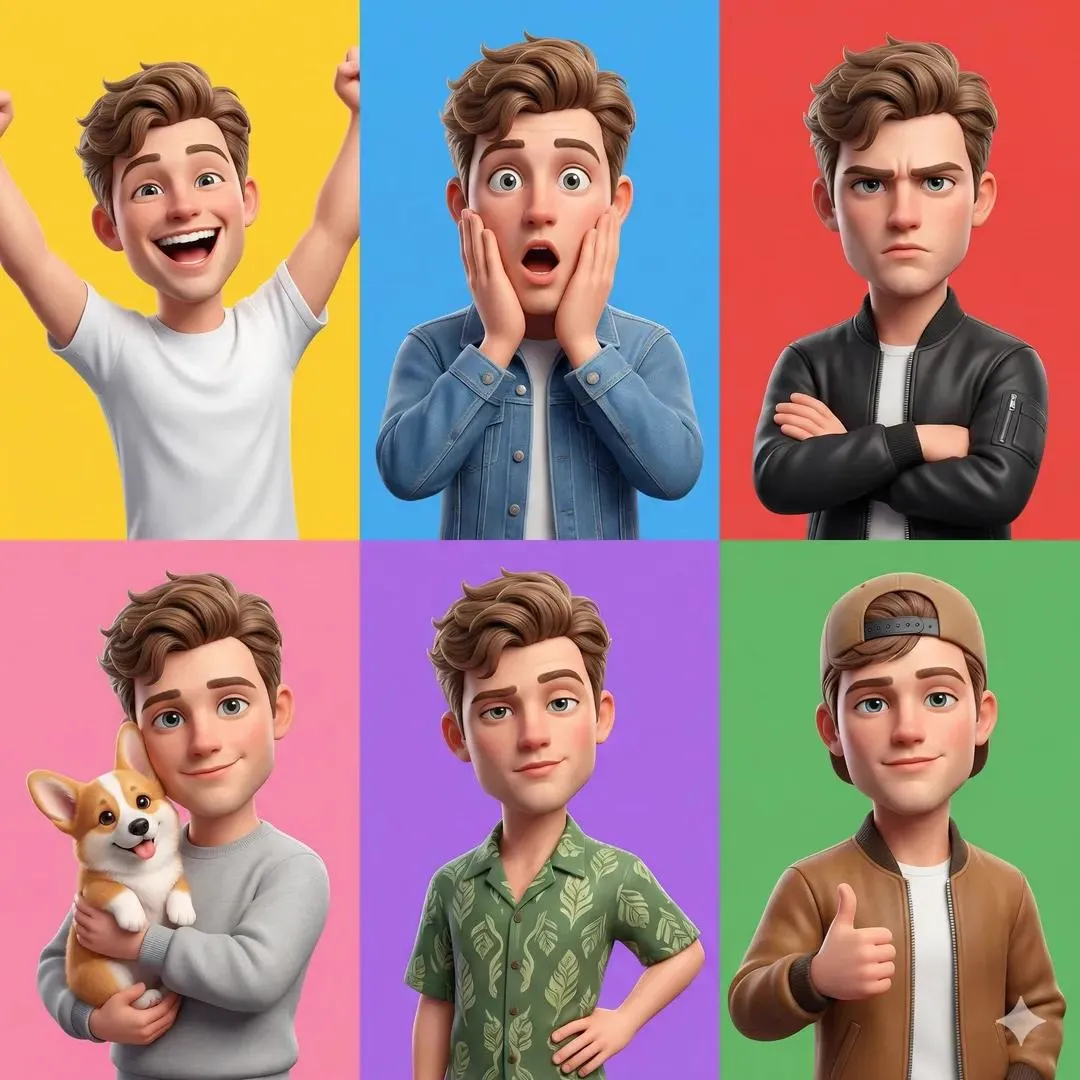
Use a reference image plus a fixed descriptive phrase. Keep the wording identical across every shot: same clothing descriptors, same age cue, same hair description. Models weight repeated phrasing, and small wording changes produce small appearance changes that compound across a sequence. When consistency really matters, generate the character in a neutral pose first and use that still as the input for every subsequent shot.
Location and prop continuity
Generate a location plate, then use it as the image input rather than re-describing the space. For props, isolate the object on a neutral background and composite it in post. Compositing a real product photo onto generated footage frequently looks better than asking any model to invent the product.
Style locking with a grade
Style prompts drift between models, but a color grade does not. Pick a look, build it as a LUT or a saved preset, and apply it after generation. This is the fastest way to make output from three different models feel like one film.
Multi-reference compositing
Blend two to four references. More than that usually degrades fidelity and produces a mushy average of everything you supplied. Keep reference sets tight and thematically consistent.
A continuity document
Keep a plain text log: shot number, model used, seed if available, prompt, references, and notes. Six weeks later, when a client asks for one more variant, that log is the difference between a ten-minute job and a full re-shoot.
Common Mistakes That Waste Renders and Time
- Adjective-only prompts. Beautiful, cinematic, stunning: these words carry almost no directing information. Replace them with concrete nouns and verbs.
- Describing what you do not want. Mentioning an unwanted element often summons it. Rewrite the prompt positively instead.
- Changing several variables at once. You learn nothing from a batch where everything moved.
- No prompt log. Every successful shot becomes unrepeatable.
- Judging on the first frame. Motion problems appear in the middle, not at the start.
- Overloading references. Too many input images blur the identity you are trying to preserve.
- Ignoring boundary frames. The first and last frames of a clip are where artifacts live.
- Marrying one model. Loyalty to a single generator is the most common reason a project looks uneven.
- Accepting bad audio because the picture is good. Viewers forgive soft imagery faster than they forgive harsh or hollow sound.
- Forgetting deliverable planning. Generating everything in widescreen and cropping later loses composition you already paid for.
- Skipping the grade. Ungraded clips from different models never feel like one piece.
Budgeting and Scaling Without Burning Your Allowance
Track four numbers per project: attempts made, attempts accepted, usable seconds delivered, and human review hours. Almost every team is surprised by the fourth number, because review time usually costs more than generation. Optimizing the first three while ignoring the fourth is a losing trade.
Draft cheap, finish expensive. Build every scene as a low-fidelity draft pass first, approve the edit structure, and only then generate hero shots at full quality. Changing an edit before generation costs nothing. Changing it after generation costs the entire scene.
Batch by scene, not by shot. Grouping related shots keeps prompts consistent, keeps references loaded, and reduces the mental switching cost that leads to sloppy briefs.
Prefer image-to-video for repeat setups. Any shot that reuses a location or character should start from a still. It is faster, more consistent, and easier to revise.
Reserve flagship models for hero moments. Establishing shots, title sequences, and the three seconds that appear in every cutdown deserve the best output. Transitional inserts do not.
Plan for client revision rounds. Contract for a defined number of revision passes and define what counts as a revision. Unlimited iteration on generated video is an open-ended commitment.
Separate generation from post. Many teams blur the two and end up regenerating shots that only needed a grade fix or a two-frame audio nudge. Diagnose before re-rendering.
Quality Control Checklist Before Delivery
Run this before anything leaves your machine:
- Every clip plays cleanly at normal speed on a small screen.
- No morphing at clip boundaries or during fast motion.
- Hands, faces, and text overlays inspected frame by frame in close-ups.
- Character wardrobe, hair, and age consistent across all shots.
- Location details — signage, furniture, weather — match between cuts.
- Seam cuts hidden by motion or match cuts.
- Single consistent grade applied across all sources.
- Audio levels balanced, with dialogue intelligible on phone speakers.
- Lip sync verified in every speaking shot.
- No unintended background text or logos visible.
- Aspect ratios correct per platform, with caption safe areas respected.
- Licensing and usage rights confirmed for every asset and model used.
- A disclosure note prepared if platform or client policy requires it.
- Project files, prompts, and references archived in one folder.
- A final watch-through with the sound off, then with the picture off.
That last item sounds excessive and catches more problems than any technical check on the list.
FAQ: Practical Questions About Next-Gen AI Video
Is one flagship model actually better than the other?
Not in the abstract. One tends to win on cinematic realism and complex composition; the other on character performance and frame-level control. Test the specific shot type you need, not the brand.
Do I need more than one generator?
Almost always, yes. A two-model workflow — one for hero shots, one for iteration and inserts — covers the vast majority of production needs without overwhelming your process.
How long should individual clips be?
Five to ten seconds is the practical sweet spot. Shorter clips are easier to control; longer clips need extension passes and careful attention to the boundary frames.
Can I keep the same character across an entire video?
Yes, with discipline. Use a fixed reference image and an identical descriptive phrase in every prompt, then let the grade unify the result. Expect small drift and plan cuts that tolerate it.
Is native audio good enough to ship?
For ambience and many sound effects, yes. For lead dialogue, a recorded or synthesized voice track still outperforms generated speech in emotional range, and you can keep the generated lip sync by matching timing.
How do I avoid the uncanny look?
Favor medium and wide shots over static close-ups, keep subjects moving, use profile or three-quarter angles, and cut before a shot overstays. Long static close-ups of generated faces are the single biggest giveaway.
What about on-screen text?
Add it in post. Generated text is unreliable at any scale, and a single misspelled word undermines an otherwise flawless clip.
How should I plan client work?
Deliver a fixed number of finished cuts plus a defined revision allowance. Estimate generation time from your own log data rather than optimism, and track usable seconds per hour so future quotes are grounded.
Do I need to disclose AI generation?
It depends on the platform, the client, and the jurisdiction. Check the policy before delivery and keep a note documenting what was generated and how.
Where This Is Heading
The rivalry between any two named models will keep generating headlines, and it will keep being a distraction. The teams that win the next few years of AI video work will not be the ones with the strongest opinion about which generator is best. They will be the ones with the tightest briefs, the cleanest reference libraries, the most disciplined prompt logs, and the calmest edit bay.
Pick two or three models, learn their failure modes, and build a pipeline around them. Treat generation as one stage among many rather than the whole job. And keep the story first: no model, however impressive, has ever rescued a video that had nothing to say.
